Posted by bonniebraceysutton on February 21, 2013 in Uncategorized. Edit this Entry

Posted by bonniebraceysutton on February 21, 2013 in Uncategorized. Edit this Entry
Broadband or high-speed Internet access allows users to access the Internet and Internet-related services at significantly higher speeds than those available through “dial-up” Internet access services. Broadband speeds vary significantly depending on the particular type and level of service ordered and may range from as low as 200 kilobits per second (kbps), or 200,000 bits per second, to 30 megabits per second (Mbps), or 30,000,000 bits per second. Some recent offerings even include 50 to 100 Mbps. Broadband services for residential consumers typically provide faster downstream speeds (from the Internet to your computer) than upstream speeds (from your computer to the Internet).
Broadband allows users to access information via the Internet using one of several high-speed transmission technologies. Transmission is digital, meaning that text, images, and sound are all transmitted as “bits” of data. The transmission technologies that make broadband possible move these bits much more quickly than traditional telephone or wireless connections, including traditional dial-up Internet access connections.
Once you have a broadband connection to your home or business, devices such as computers can be attached to this broadband connection by existing electrical or telephone wiring, coaxial cable or wireless devices.

studies/surveys, and how implementation of these best practices can close the broadband adoption gap
among Americans – particularly low-income households, racial and ethnic minorities, seniors, rural
residents, residents of Tribal lands and people with disabilities.
The FCC Broadband Summit was interesting but a lot of it was.. same old same old, but I realize that there is still an unwashed public out there some trying to understand why they should use technology. Not like they are not already benefitting, weather systems, GPS, visualization and modeling and all kinds of medical innovation. Jobs are mostly on line too. There are a lot of benefits that people have gained from using technology, but ..the benefits are invisible to many.
by TIFFANY BAIN on FEBRUARY 18, 2013
The Minority Media and Telecommunications Council has long worked – and sometimes been at odds – with the Federal Communications Commission in MMTC’s efforts to ensure equal opportunity and civil rights in the mass media and telecommunications industries. To address FCC issues, MMTC recently invited four former FCC chairmen to an “FCC Chairs’ Roundtable” panel at its 2013 Broadband and Social Justice Summit. During the panel, the former chairmen provided a deeper look into the federal agency and revealed their thoughts on a few communications industry regulatory matters.
Serving as the panel’s moderator, MMTC President David Honig used the historic opportunityto ask Hon. Michael Powell, Hon. Reed Hundt, Hon. Michael Copps, and Hon. Richard “Dick” Wiley about why the FCC moves so slowly to consider and rule on issues that have been pending for several years. He also inquired about their thoughts on hot-button issues such as media cross-ownership rules and broadband usage-based pricing.
Secretary Duncan visited a classroom at DC’s Scholars Stanton Elementary School. Official Department of Education photo by Paul Wood.
For many, it’s just common sense. The more a student’s family is engaged in their child’s learning and in the improvement of their child’s school, the better off the student and the school. On Wednesday, Secretary Duncan joined more than 80 family engagement thought leaders at DC’s Scholars Stanton Elementary School to discuss the strong correlation between family engagement and academic outcomes, and how the Department of Education can provide more support.
Research supports the common sense idea that family plays a vital role in student performance. Yet despite the evidence and logic, many schools and educators struggle with how to cultivate and sustain effective family engagement initiatives. The Department of Education has taken some steps to provide more support in the area of family engagement, but Secretary Duncan readily admits that it hasn’t done enough.
As part of Wednesday’s event, Dr. Karen Mapp of the Harvard Graduate School of Education, and a consultant to Department, unveiled a draft framework of new ideas about the possible future direction and focus for family engagement at the Department of Education.
The framework had been a year in the making as Dr. Mapp met with a variety of senior staff members to gauge how a framework embedded with research and modeled after best practices would be operationalized at the Department.
Stanton Elementary is an example of how a school can build positive relationships with families and allow teachers to gain family support in and out of the classroom. Stanton’s family engagement strategy is the type of initiative the new framework would endorse. Through a partnership between the Flamboyan Foundation and Scholar Academies, Stanton utilizes Academic Parent Teacher Teams (APTT), replacing traditional parent-teacher conferences.
Stanton Teacher Melissa Bryant explains how family engagement made her want to keep teaching. Official Department of Education photo by Paul Wood.
APTT, developed by Maria Paredes, brings parents into classroom more often than once a year and creates an environment where families work as a team to improve the class’s performance, sharing strategies for supporting their students at home and learning techniques from the classroom teacher. Teachers also visit their students’ families at home, too. Stanton’s success with APTT, as well as help from a Department of Education School Improvement Grant, has contributed to a dramatic increase in the academic performance of students and a cultural shift at the school.
During the visit, which included classroom visits, Secretary Duncan listened to a panel discussion with panelists Principal Caroline John, teachers Melissa Bryant and Megan Lucas, and parents Katrina Branch and Michael Hudson. The panelists spoke passionately in support of family engagement and how it has benefited the entire school community. Bryant said that family engagement “made me want to keep being a teacher.”
Mapp and ED will continue to receive feedback on the framework in the coming year. Stay tuned to the Homeroom Blog for future updates. You can also watch a short video of the APTT model at Stanton.
There are families who have not had the resources to share learning with their students. This ia more a post than an essay.

My friend Mano works in areas of need in rural Virginia. There are lots of us who have the aptitude to teach students. Permission is something else.
There is the content divide, teachers can learn to master information on the web. Here is where to start. You will love learning the Tpack Framework. It seems complicated? Not. It is an ideational scaffolding for teaching and learning. It works and , it is free. Tpack.
A problem that is a dividing factor for many people is the lack of access. Broadband access is a problem and the tools to use technology are a problem.
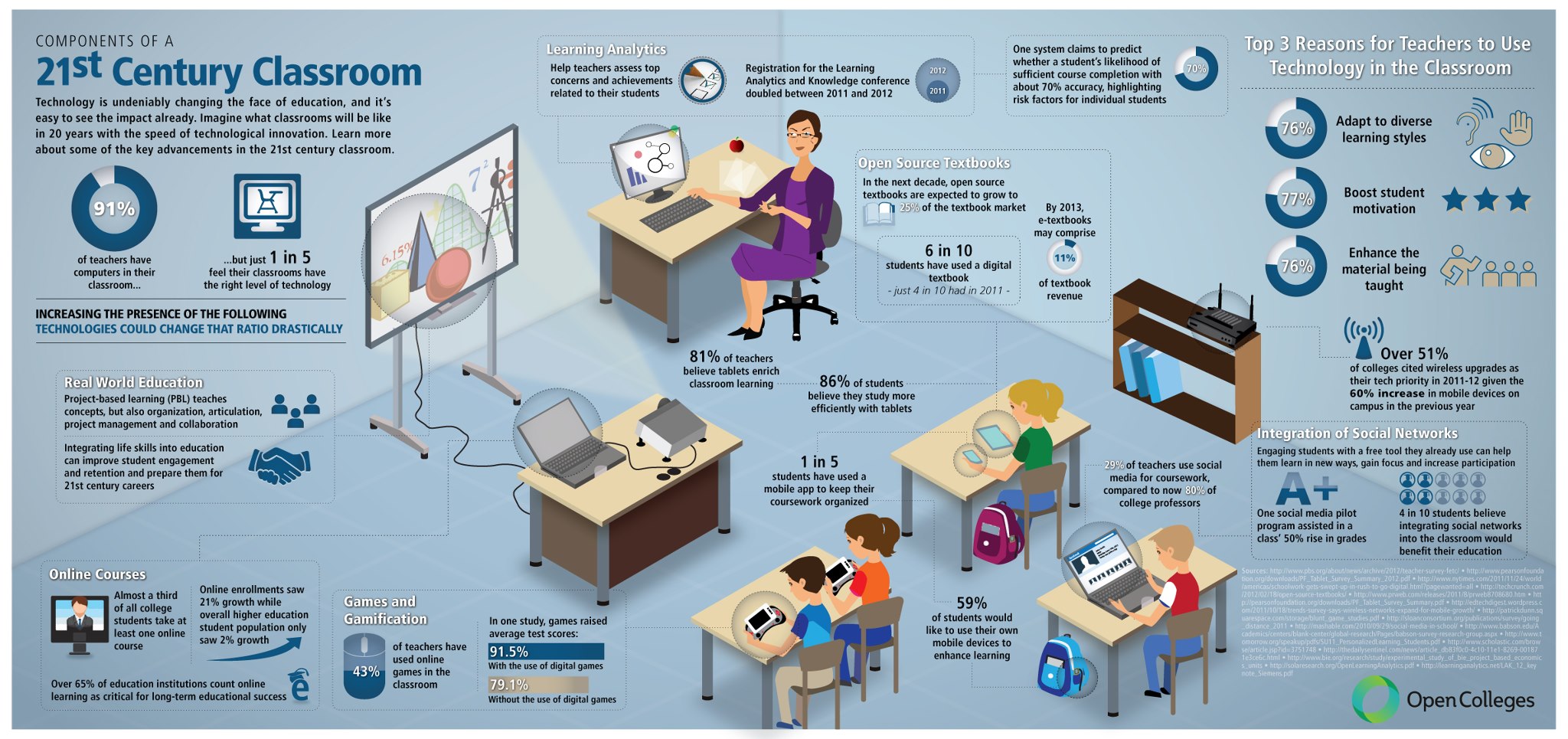
All classrooms do not look like the schema above. For one thing teachers using technology often are in an active classroom. Not a lot of sitting down happens.
Or the classroom may be a flipped classroom. In case you need a good example here is one from Edutopia.http://www.edutopia.org/blog/flip-stem-classroom-ainissa-ramirez and all flipped classrooms do not look alike.
To see how technology transforms or changes view some of the projects in the Digital Generation. The digital generation has a great introduction and then it broadens engagement from gamers to students interested in making change in their community. I love the story of Luiz.
Lisa Baldwin, a chemistry teacher, works with her students to fight through academic challenges.
There is a widespread belief among some teachers that students’ constant use of digital technology is hampering their attention spans and ability to persevere in the face of challenging tasks, according to two surveys of teachers released in November and confirmed in December reports. But then there is this. Digital Generation
The researchers note that their findings represent the subjective views of teachers and should not be seen as definitive proof that widespread use of computers, phones and video games affects students’ capability to focus.
Even so, the researchers who performed the studies, as well as scholars who study technology’s impact on behavior and the brain, say the studies are significant because of the vantage points of teachers, who spend hours a day observing students.
The timing of the studies, from two well-regarded research organizations, appears to be coincidental.
You can find the rest of the article here:
Broadband? Here is a perspective on broadband from the FCC
A challenge for the FCC in recent years has been how to apply the time-honored purposes of the Communications Act to our 21st Century communications platform—broadband Internet—access to which is generally provided by the same companies that provide telephone and cable television services.
Broadband is increasingly essential to the daily life of every American. It is fast becoming the primary way we as Americans connect with one another, do business, educate ourselves and our children, receive health care information and services, and express our opinions. As a unanimous FCC said a few weeks ago in our Joint Statement on Broadband, “Working to make sure that America has world-leading high-speed broadband networks—both wired and wireless—lies at the very core of the FCC’s mission in the 21st Century.”
Over the past decade and a half, a broad consensus in the public and private sectors has developed about the proper role and authority for the FCC regarding broadband communications. This bipartisan consensus, which I support, holds that the FCC should adopt a restrained approach to broadband communications, one carefully balanced to unleash investment and innovation while also protecting and empowering consumers.
It is widely understood—and I am of the view—that the extreme alternatives to this light-touch approach are unacceptable. Heavy-handed prescriptive regulation can chill investment and innovation, and a do-nothing approach can leave consumers unprotected and competition unpromoted, which itself would ultimately lead to reduced investment and innovation.
The consensus view reflects the nature of the Internet itself as well as the market for access to our broadband networks. One of the Internet’s greatest strengths—its unprecedented power to foster technological, economic, and social innovation—stems in significant part from the absence of any central controlling authority, either public or private. The FCC’s role, therefore should not involve regulating the Internet itself.
Want to measure your broadband http://www.speedtest.net. it is easy..
Google’s Coolest Project? Broadband
Steve Hebert for The New York TimesA sign in Kansas City encouraged residents to pre-register for Google Fiber.The business, called Google Fiber, promises speeds 100 times faster than conventional high-speed Internet services. Mr. Schmidt, who was speaking at a New York Times Dealbook conference in New York, said Google was delivering 760 megabits per second to the customer, and taking 720 megabits a second from customers.
Some of our have robust broadband and others of us do not. There are tools that are used to measure broadband, that are national , and some are international.
You can measure broadband in your community and then go raise a ruckus if it is not adequate with this tool.
| |
|

The use of broadband in the area of education is deep and wide, but still in its earliest stages of development. In the pre-broadband era – about 15 years ago – “distance learning” was generally conducted on a set schedule in a professional facility with the capability of satellite video to a small group able to pay a high fee.
With the wide availability of broadband this definition has been turned 180 degrees. Today an individual student can see a lecture at a time and place which best fits his or her schedule at little or no cost. Not only does broadband provide better access to coursework, but students taking those courses appear to do better than those sitting in a traditional classroom.
Broadband permits a wide variety of online learning experiences. Students can be directed to websites different from the course website. There they can stream a video or examine a famous painting; they can have an online chat with their teacher or professor; or students studying the same coursework can come together in learning communities in real time without regard to their physical geographic location. These “virtual study groups” have not been possible before the general availability of broadband.
Of greatest interest is the acceptance of adults to taking courses on-line. According to Philip R. Regier, the dean of Arizona State University’s Online and Extended Campus program, growth will be in continuing education programs In three to five years, he estimates, the current census of 5,000 continuing education students “could triple, with nearly all the growth coming online.” The use of broadband as students’ “in-home tutor” is well-documented. The ability to search the world’s libraries from a student’s home has had an enormous impact on the quality and depth of the educational experience for serious students.
Teachers who have had to use the traditional red pen to correct and edit papers and reports, can now use their computers to “track changes” and send the work back to students (and their parents) via e-mail for their review.
If education is the foundation of society, then broadband is quickly becoming the mortar which binds and strengthens that foundation.
Got Milk? Got Broadband? Then you can learn to transform using whatever tools that are available to you with also some really good face to face , or mentoring examples.
In many urban, distant and rural communities there is a lack of the technology tools, broadband and teachers who know how to use the technology, but once we get connectivity many free resources, ideas, and projects are on line. You need the time to explore, examine, extricate the ideas for your use, learn to evaluate and to engage using your ideas and the prescribed curriculum that you deal with. There are many , many teacher groups that provide lesson plan examples and ideas.
How can you fulfill this ? I am a Challenger Center Fellow and a Christa McAuliffe Educator. I went to minority schools. I did not have science in the elementary school. But I had NASA. Courses and workshops. So wonderful.

There are people who have given me immense gifts in the way of mentoring.NASA gave me the universe and project based learning and the ideas about ecology. I loved learning and helping teachers to learn within the educational groups of NASA. The learning started with projects and went on to large and interesting project based learning, some of these are old, Moon Base America, The Challenger Center Initiative and the online NASA resources. I loved most the programs on Mars. I also use museums to teach with. They have a bigger budget than I have.
What an investment in teachers! You can find resources here. http://www.nasa.gov/audience/foreducators/index.html If you ever do any of the projects and are truly interested, there is much, much more and it is not at costs.
The Challenger Center is a little different but the project based learning is outstanding. You need not go to the Challenger Center, but it would be for kids, a life changing experience. There are lots of teachers who have been prohibited from this type of learning called project based learning because it is not regurgitative test measured information. Project based learning? I loved wearing an astronaut suit and sharing information with students. I felt as if I was sharing , teaching and giving information to the children that was awesome. Here are some teacher resources. Now there is a different way of being involved.

A unique and proven teaching model – Challenger Learning Centers – gives students the chance to become astronauts and engineers and solve real-world problems as they share the thrill of discovery on missions through the Solar System. Using space simulation and role-playing strategies, students bring their classroom studies to life and cultivate the skills needed for future success. Learning Centers reach into communities around the globe, engaging more than 400,000 middle school-age students and 40,000 educators each year.
Challenger Center’s teaching model is an effective approach to strengthen knowledge and interest in Science, Technology, Engineering, and Mathematics (STEM). The McLain 2011 report examined two decades of evaluations from students who experienced a Challenger Learning Center mission, and the findings indicate overall positive gains by students. The study also recognized the psychological nature of career-choice, decision-making embedded in Challenger Center’s model. It found the hands-on simulation experiences are important contributors to that process, perhaps more than any other single experience that might be remembered as extraordinary in a young person’s exposure to STEM. In some cases it is a hard sell to the administrators. They often do not understand this kind of project or are worried about NCLB stats and so well, you are not allowed to do this project based learning. Not on the test they say. In this project you develop sophisticated knowledge that the general public may not know.
We in a 5th grade classroom, knew about the Horsehead Nebulae before the public saw it months later. It helps to talk to astronauts and scientist who care about their subjects.

The STS-118 crew transported plant growth chambers, seeds and watering devices like these to the space station for an in-orbit experiment.
With these kinds of experiences, the imagination of children and critical thinking skills are challenged. It is not just the technology, it is the creation of the learning landscape to enhance learning.
It enhances discovery through simulation and exploration of new concepts
Explore this NASA program it is free.. and excellent..

We connect individuals to new people and ideas and expand content beyond what was previously available.
It promotes equity by providing a diverse array of resources and experiences to those who might not otherwise be able to afford them.
It allows teachers to adapt to and to accommodate different learning styles through modularized , self -paced , just in time learning and non threatening learning
I was challenged to learn new science to be able to teach it well. It was supported with great curriculum and posters and resources.There is also this website
Windows to the Universe What is different about this web site is that it is on three different levels and it is rich in resources.
If your principal will not let you teach during the school day. Do this.. it is fun!!!
Afterschool Universe training sessions are offered throughout the year at locations across the United States. Image Credit: NASA
What does pound cake have to do with the universe? Just like the chemical elements that are the building blocks for all the matter in the universe, pound cake retains its identity no matter how many times it’s divided. Pound cake also plays a key role in an activity that’s part of Afterschool Universe, a NASA-sponsored astronomy program for middle school students.
Afterschool Universe is targeted for settings outside the normal school day. The program consists of 12 standalone sessions in which students explore basic astronomy concepts.
“We saw a need for the program because existing astronomy education materials covering such topics were mostly aimed at high school students. Middle school students were fascinated by these concepts but had few options to learn more about them,” said Anita Krishnamurthi, the program’s project lead. “There’s a great potential to engage students and adults in astronomy in the afterschool setting.”
Each session usually begins with a brief introductory discussion facilitated by the program leader, followed by a hands-on activity in which students participate individually or in groups. A session typically runs about 45-60 minutes and culminates with a wrap-up discussion focusing on what was learned through the activity.
In most cases, program leaders must undergo training before they can run the program or train others to do so. Information sessions and training workshops are offered at various locations across the country, including at the NASA Goddard Space Flight Center in Greenbelt, Md.
Hands-on activities play a role in each of the 12 Afterschool Universe sessions. Image Credit: NASA

Upon completion of training, program leaders receive a NASA certificate, a comprehensive program manual, downloadable files, worksheets and evaluation forms, posters, and a kit of materials that are only available from specialized suppliers. Program leaders are responsible for obtaining the basic materials needed to implement the program. NASA encourages leaders to partner with a local scientist.
The manual provides background information and detailed descriptions of how to conduct each session, including listings of objectives, concepts addressed and materials needed. No activities require use of a computer, though the manual gives suggestions for optional Web-based activities.
Afterschool Universe, funded entirely by several grants for NASA’s Science Mission Directorate including the Chandra Mission, was developed by the education and public outreach team in the Astrophysics Science Division at NASA’s Goddard Space Flight Center in Greenbelt, Md.
Related Resources
Afterschool Universe →
Beyond Einstein →
Imagine the Universe →

I have always loved working with maps, globes and books.Now my learning is facilitated by the use of media and new ways of mapping. And then there is GIS. What is GIS? You use it in invisible ways. GIS.. here is a great video on it. GIS Day is on November 14, 2012.
Ask your elected officials to support funding for geography education.
Geography Awareness Week there are a lot of online tools. There are things to use in your classroom, and a toolkit and a poster. You may want to start with this map tool. Free map kit.. and resources.
While studying at the National Geographic, I became involved in the study of geography. To study our neighborhood we collected various kinds of maps that showed the school community. We were located in Arlington , Virginia and we had a business map, a tourist map, a Virginia transportation map, a real estate map, and a map of historical places as well as a map that showed projections and plans for the future. That was before we all had our fingertips on technology to see this things online. Children drew a map that showed the path from school to home. That was a fun exercise. The children were quite creative about making their personal maps. A person from USGS gave us maps of cities around the world, but they were not identified, they were in effect a view of cities from the air, New Orleans, New York, San Francisco, Cairo, Egypt, The Maldives, and other interesting places.
York, 
Here are some of the resources I used in an elementary program
Geography |
| Helping Your Child Learn Geography A 32-page booklet, published in cooperation with the U.S. Department of Education and the National Geographic Society, that is designed to help adults stir children’s curiosity about geography. Includes many suggestions for simple activities. K-4. |
| Map Adventures This on-line teacher packet for grades K-3 teaches basic concepts for visualizing objects from different perspectives and how to understand and use maps. The kit includes seven lesson plans, activity sheets, and a printable poster. |
| What Do Maps Show? This on-line teacher packet for upper elementary and junior high school students has four lessons on reading and using maps. The packet includes a teacher’s guide, four printable activity sheets, and three maps in PDF format that can be downloaded and printed on 8.5″ x 11″ paper. |
| USGS Geography Products A list of online fact sheets, booklets, and educational resources related to geography and mapping. |
|
The National Atlas of the United States |
| National Atlas of the United States® This invaluable educational tool is a free, interactive version of the traditional paper United States atlas. Most information is designed to depict geographic patterns and trends on a national scale. Topics include agricultural use, forestation, population density, transportation, and more. Use the Map Maker tool to create custom maps or print one of hundreds of pre-formatted page-size maps that are excellent for classroom use. This is the best source for creating quick maps that cover large areas. |
| Outline Maps of the United States – Printable Maps from The National Atlas Download or print PDF files for several different outline maps of the United States, individual states, and counties within a state. Files print on 8.5″ x 11″ paper. |
| Latitude and Longitude – The National Atlas Article describing latitude and longitude and related terms. |
|
|
| Topographic Map Resources for Teachers An overall summary of useful USGS resources for working with topographic maps: where to get them; how to interpret them; how to use them; explanations of coordinates, datums, and projections; and lessons for the classroom. Also available as a 2-page PDF file. |
| Free Digital USGS Topographic Map Quadrangles Download free USGS topographic map quadrangles in georeferenced PDF (GeoPDF) format by clicking on “Map Locator” on the USGS Store Web site. These files were created using high-resolution scans and average 10-17 megabytes in size. |
You can participate, facilitate, learn using GIS.
GIS Day provides an international forum for users of geographic information systems (GIS) technology to demonstrate real-world applications that are making a difference in our society. We who use media on a daily basis use the tools of supercomputing , GIS and visualization and modeling without knowing it.
Never mind that geography and maps were not a part of my training for teaching. Geography? We see the world in media almost daily. Sadly we do not necessarily teach our students formal geography.
I studied at the National Geographic I learned to read, study, analyze and ( fold a map). We had Map Maker Interactive. That is an incredible piece of technology.I
You may need Inspiration. In a way students use some mind mapping programs to think about the world.
When I was a new teacher long ago, people often fought over the maps that were available in schools for students . There were these blue outline maps. They were limited in supply.
Here are some tools.
http://news.bbcimg.co.uk/media/images/63439000/jpg/_63439803_newcomp.jpg
State Interactive maps. You can investigate any state you want to explore.
One treasure chest of a site is MyWonderfulWorld.
interactive map. This is a homicide map of DC. You can check the homicides in your neighborhood. You may not want to know this big data, but in an emergency, it is big data that is collected to allow experts to assess the damages and know what to do.
Teacher? From the My Wonderful World Web Site.
|
||
The digital divide has not gone away
by Vic Sutton*
The digital divide is still very much with us.
In the USA, according to the Pew Research Center’s Internet and American Life Project, one in five adults still does not use the Internet.
To quote:
“Senior citizens, those who prefer to take our interviews in Spanish rather than English, adults with less than a high school education, and those living in households earning less than $30,000 per year are the least likely adults to have Internet access.”
Why do people not access the Internet? The reasons are mixed. Some people just do not have broadband access (see the National Broadband Map at http://www.broadbandmap.gov). This is a problem in rural communities, in particular.
Some cannot afford a subscription to broadband service.
And others simply do not get around to it.
Mobile phones do appear to have made a difference. You no longer have to have a computer and DSL line to access the Internet.
To quote from dotMobi, “As of the end of 2011, there were 6 billion mobile subscriptions around the world, according to estimates from the International Telecommunication Union (ITU). That is equivalent to 87 percent of the world population, and it is a huge increase from 5.4 billion in 2010 and 4.7 billion mobile subscriptions in 2009.
“In the first half of 2012, the number of mobile Web users in China was 388 million, compared to 380 million desktop Web users, according to CNNIC.”
And at a global level, in a world with an estimated population approaching seven billion?
Inequities persist. The following table is based on data from Internet World Stats, which uses ITU and commercial statistics (all figures are rounded):
| Region | Population (est.) | Internet users | Penetration by % |
| Africa | 1,038 million | 140 million | 13.5 |
| Asia | 3,880 million | 1,017 million | 26.2 |
| Europe | 816 million | 501 million | 61.3 |
| Middle East | 216 million | 77 million | 35.6 |
| North America | 347 million | 273 million | 78.6 |
| L. America/Caribbean | 597 million | 236 million | 39.5 |
| Oceania/Australia | 35 million | 24 million | 67.5 |
| World | 6,930 million | 2,267 million | 32.7 |
In other words, only one in three people access the Internet, despite the rapid spread of mobile technology.
So every time someone says “Just go online and…” they are leaving out one in five U.S. residents, and two thirds of the people around the world.
The biggest single factor in this must, of course, be economic. This is not the place to go into details about disparities in income around the world, but the Millennium Development Goals of the United Nations Development Programme (UNDP) will shed a lot of light on them.
* Vic Sutton is the current Chair of the Special Interest Group on Digital Equity (SIGDE) of the International Society for Technology in Education (ISTE).
T
The digital divide is very much alive. Reporters find it boring to discuss and would rather talk about new technologies. I understand. The nature of technology and its ever forward reach , change and transition is one reason that the digital divide continues to exist. There are other components of the divide that many people do not recognize . There is an information divide , a technology divide, a content divide in subject area and a use divide . Many people have devices that they do not use to the fullest because they do not understand, or have professional development to understand.There is always something new to learn. Sometimes we ask too much of our teachers and demand change by evaluation that is difficult to come by. Juggling the effects of poverty and poor schools is a daunting task. See here but I digress . You can see why reporters don’t want to share the sadness of the still existing digital divide in our “education nation”. Positive projects are under-reported. The Jack Kent Cooke Foundation shared a silent past of the problem in this report.

Children need to have technology and active learning in after school, museum and community programs that excite their imagination and fuel their learning.
Current education policy focused on “proficiency” misses opportunity to raise achievement levels among the brightest, lower-income students
Technology changes make learning a constant. Lack of broadband is another reason to know that there is a digital divide that is difficult to leap over. Most do not include the global reach of the technologies, but the daily news brings us the world. There are places in the world where technology is not a given. Some states that are more remote are using technology in new ways. Broadband is still a problem and many people are still on the dark side of the digital divide The Seattle Times shared this story which is one that is hardly shared in the media.
The access to Broadband is a national problem in rural, distant and some urban areas.
. SETDA shares the Broadband problem in a powerpoint.
There are online ways to bridge the divide, using in person and online differ for learners depending on their comfort base. I try to be PC and Apple fluent.. that takes owning both devices and keeping up with the new applications, add a cell phone, the cloud, and a tablet and you will understand . The hierarchy of devices is an article that shares and shows the ideas of how the technology should work. Actually we all have a learning curve to conquer you ,don’t to have to be a nerd, but that iyou do have to pay attention. The media also tells you that you , as a person if not a teenager.. that you can’t be a part of the new ways of using technology . Not true. It just takes immersion, exploration, involvement and sometimes time to learn and practice the new technology . I have been helped by the Supercomputing Conference and the Shodor.org resources.For 24 years, SC has been at the forefront in gathering the best and brightest minds in supercomputing together, with our unparalleled technical papers, tutorials, posters and speakers.
We also know that there are people who cannot afford the devices, Maybe some of them, maybe the ones they really want to have. But they try using what they have and watch for the changes. A printer comes in very handy, as does some kind of camera. You don’t have to have a printer but you do need to have access to a place to print or a way to save your files until you can find a place to print.

This child had never seen an I Pad .. when working with the Teragrid we shared a lot of technology resources with kids who had never, ever seen them.
Everyone does not own all of the devices, but most of the devices are getting cheaper and are more user friendly. For educators with good professional development within their school systems, and who are up on the latest core curriculum, technology is a winning strategy. There are initiatives that are aimed to help people in underserved communities to get technology at low cost, with some training for use of the tools.
There are still people who are intimidated by the use of technology, and there are school systems that do not let teachers personalize, and individualize their technology resources. There are also rural, distant and difficult journeys that speak to the resources available to the community, the school and the local businesses.
Rays oF Hope.. New Directions
Funding and a major initiative in the District of Columbia. Who knew? There is a neighborhood Supercomputer center in DC that is operated by Dr. Jesse Bemley, of JEF. At the highest levels of technology the Supercomputing Conference has Education and Broadening Engagement to involve those populations who have not bee involved.
There are a lot of people who have been toiling in the areas of computational thinking and wonderful things have happened.The Howard University Department of Systems and Computer Science proposes the Partnership for Early Engagement in Computer Science High School (PEECS-HS) program. This program partners Howard University with Washington, D.C. Public Schools (DCPS) and Google, Inc. to introduce a new course titled “Introduction to Computer Science (CS)” across DCPS high schools. The course will adopt and extend the Exploring Computer Science curriculum, originally piloted in the Los Angeles Unified School District (LAUSD). PEECS-HS will introduce students to the broad range of opportunities in CS, and allow them to develop basic competencies in CS fundamentals, and maintain a positive perception of CS. In addition, the program will produce a new unit on Mobile Application Development, which will be added to the general Exploring Computer Science curriculum.. PEECS-HS will prepare in-service and pre-service DCPS teachers to teach the new curriculum. For sustainability, PEECS-HS will prepare in-service teachers to lead future Introduction to CS professional development sessions. As with many urban school districts, DCPS is predominately African-American, an important but often overlooked, component of the groups that need broadening engagement. See “Tackling America’s 21st Century Challenges” a sobering thought is that of the opportunity gap.
The recent SIIA report defines these goals for change for all of education.
The Software & Information Industry Association (SIIA) is the principal trade association for the software and digital content industry .
Software.2012 SIIA’s Vision K-20 Report
SEVEN EDUCATIONAL GOALS represent the instructional and institutional outcomes enabled through technology and e-learning:
FIVE TECHNOLOGY MEASURES may indicate progress for technology and e-learning implementation toward these educational goals:
The Future?
James Morrison states
“A “disruptive innovation” is a potential event that may change the future of educational practice. There are a number of disruptive innovations emerging in the contemporary educational landscape today in response to the demands of the global workplace (e.g., Western Governors University, Peer2Peer University, Khan Academy, ShowMe, the Independent Project, MITx, edX, Coursera, StraighterLine, MOOCs, Udacity, digital textbooks, flipped classrooms; see the “Open Educational Resources” page at the Horizon site’s On-Ramp section). The purpose of this presentation was to stimulate discussion on how and why such innovations have the potential to dramatically change current educational practice. A video of the presentation is now available.”
The National Science Foundation pointed toward the future as well with a Cyberlearning Conference.
The summit was sponsored by the National Science Foundation as a means to engage the community in accelerating the focus on transformative R&D in Cyberlearning and related programs, and was hosted by SRI International, the National Geographic Society, and the Lawrence Hall of Science, signaling a strong commitment to innovative STEM learning both in schools and beyond schools. Additional support was also provided by the Bill and Melinda Gates Foundation.
Fun at school?Games in the Classroom? Click the link and listen to experts.
Bill Nye the Science Guy was the uncle of kids in my classroom. When I was teaching some things they would say. our uncle has some really cool lessons and games on that. Instead of getting upset, I said tell your uncle to send us some of his stuff. He had television games and laser discs and all. Not only did the uncle send things, they were waaaay cool and then he visited the classroom. That was a treat. He would send the class video clips and laser disc copies of his programs. The Nye boys were delighted that their uncle could be a part of their learning.

There are all kinds of games, simulations and events that kids get to experience on devices. We looked at a simulation of the oil spill on the Ipad.
Never mind that in a game it is ok to fail. When kids say that enjoyed learning or that school is fun, parents recoil sometimes. In a game you can practice, play over retain your score or go ahead of the pack. In a game it is ok to fail, it is ok to learn from others, it is ok, to go to the top and post your score. It just is. There are kids who discover shortcuts in games and try again, again and again. I have been in schools since there was a NECC. We had meeting and learned around games, and strategies. I have been saying this since I stared with games in the classroom and have friends who know it. Never mind that I got laughed at at E3 forgetting that games are a business. What was important to me was that MIT invited me to participate in the E3 conference and so I met lots of people who were working on the concept of gaming and at the conference , so many new ideas. At the time the Department of Education was also seeking games as a way to teach, to create interest and to have students involved for in-depth learning.
When I worked for Vice President Gore, President Bill Clinton and Ron Brown, I came home one day to find 20 games that were sent to me to try out in the classroom. It was like finding a treasure chest. I thought… wow. The kids were more excited that I was. These were high level games that I would be using in outreach. The games are now old but they were at that time complicated compared to the Odell Lake Odell W0ods that we were using, and the games we made up were simplistic. But you know.. the kids were fascinated.
We started learning to integrate games into subject matter, ie. Oregon Trail, what goes with that? The search for the Northwest, Lewis and Clark, What maps do we need and who were the people who went there? Are there biographies, poems, recipes, movies, information about the culture? I even got to work on an interaction of Oregon Trail that made it complicated and more fun. Kids will let you expire in game to see how long it takes…
Most of the first Oregon Trail Games only taught me that kids would push the limits to see how to stretch out food, clothing and the elements of weather.
But here’s the fun in games. Children that you don’t know well can demonstrate their knowledge and ways of learning. You the teacher, don’t have to entertain them. You just have to make sure that the do the other things they are supposed to do like, lunch, gym and go home. You the teacher need to know the games so you don’t seem like a dummy. Ok, so the first several times I tried to land a plane in a game the little boys fell over laughing, but there was also a game in which we built a bicycle, a scooter, a hot air balloon and we all failed at first. It is amazing how time flies when you are trying to figure out something.
My supercomputing friends kicked up games and gaming a notch. The George Lucas Educational Foundation in its early days had some games. The students loved them. I did not have as much time as the students so I was always caching to catch up with learning of the kids. It was an interesting task. Heck it was hard, those were good games.
Games are a big feature on Facebook. Here is a passport to games in Education for you.
Read about and download the Game Design Tool Kit here.
The Learning Games Network (LGN), a non-profit spin-off of the MIT Education Arcade and the University of Wisconsin-Madison’s Games+Learning+Society Program, with FableVision, a Boston-based digital media production company, has announced the release of the Game Design Tool Kit (GDTK), a series of free online resources to help teachers integrate game design across the curriculum. LGN has also expanded its professional development program to include Inservice Training Sessions and Game Jams for middle and high school teachers beginning with the current 2012-2013 school year. Local and on-site professional development workshops, such as four-hour Inservice Training Sessions and two- to three-day Game Jams, help school districts and administrators promote successful integration of the GDTK into core curricula and existing teaching methods through new project-based strategies that engage, inspire, and challenge students’ thinking and drive a deeper understanding of new ideas and information.
Available to teachers as a free download, the Game Design Tool Kit consists of a comprehensive handbook, which includes a lesson plan guide, research and design prompts, and step-by-step instructions and discussion guides that enable educators to coach students through four phases of game design: Explore, Discover, Create, and Share. You should join and learn.
From Rome
Learning continues its change , while many try to keep it static. There are so many new ways to teach it makes those people who are afraid of change try even more to chain students to desks and the traditional ways of learning.
Outside of education, children are entranced by the media. But using the media and learning from the media are not enough. There was a time when the available media took part in education in a formal way.Some of those films still exist , you can probably find them on a special channel on your cable offerings.
Children enjoy interaction , and when the interaction is both STEM and art and music , or some representation of the same, that makes it all better.
For many years I worked with the group . an International one that was, ” World Summit on Media for Children” and we started before the Internet was well known. We included it as one of the tools of transition.
Museums have always had to give their programs in interesting ways , either to attract, assist, or involve an audience that may pay money to be involved in an experience.
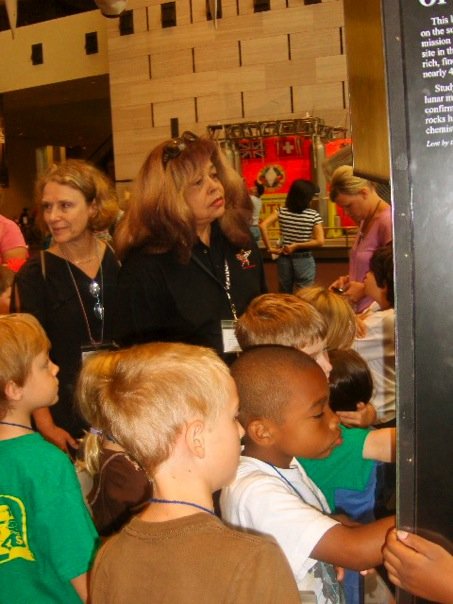
I have several favorite museums, and the Smithsonian was the one that caught my attention early in life and almost through all of my teaching career. The school children and I could put on our Metro shoes and run to the Mall to find out what it was that the museum was offering. They carefully did professional development before their exhibits and it was fun to learn and to be up to date with the information. I don’t have a favorite Smithsonian Museum, I do have a favorite experience which took me to India from participation in an event.At the moment my favorite museum exhibit is the Sant Hall of Science where the Science is awesome.
Later in life I discovered teacher resources in lots of places, but often the teacher resources did not match outreach to the children. So when I found the Exploratorium it , a hands on minds on kind of place .. it suited me just fine.. except that it was in California. But the resources were great and actually using the resources of “ The Accidental Science of Cooking” I was invited to Milan, to Italy, to a forum in Lake Garda, ” You Are What you Eat”. Children and I had looked at the videos, cooked the foods and researched many of the questions on the topics. Who knew it would get me a trip to Italy and published.
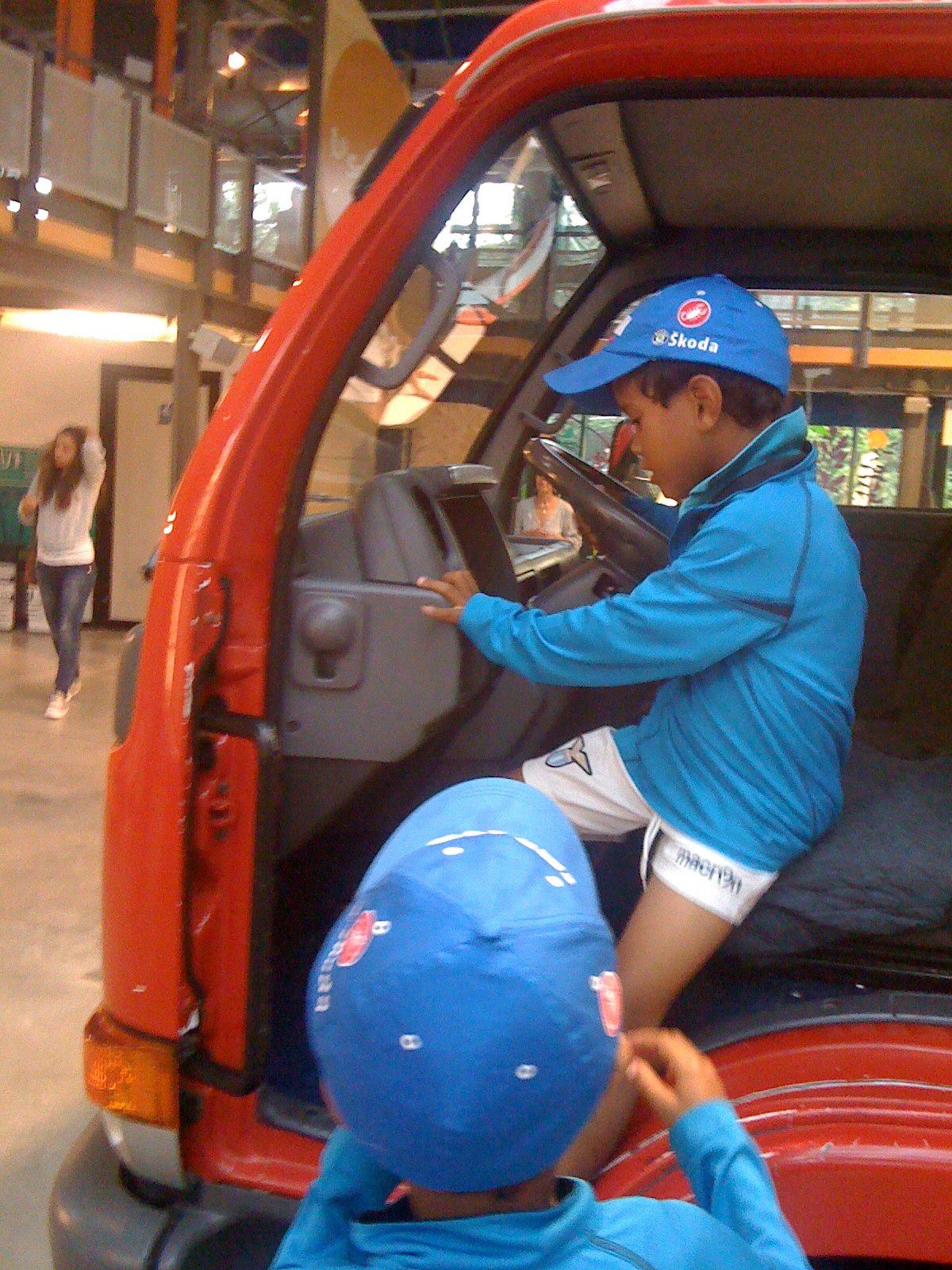
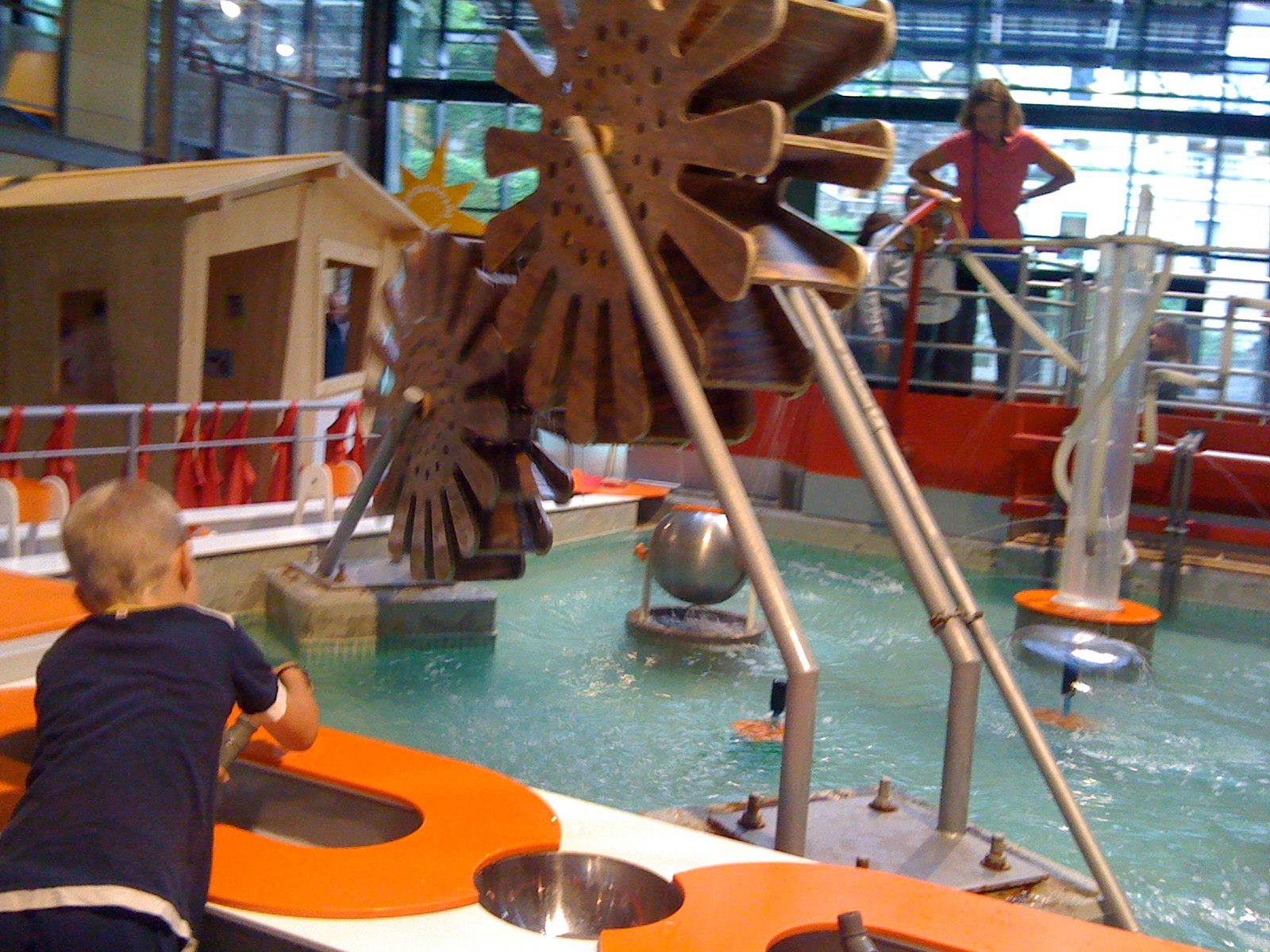
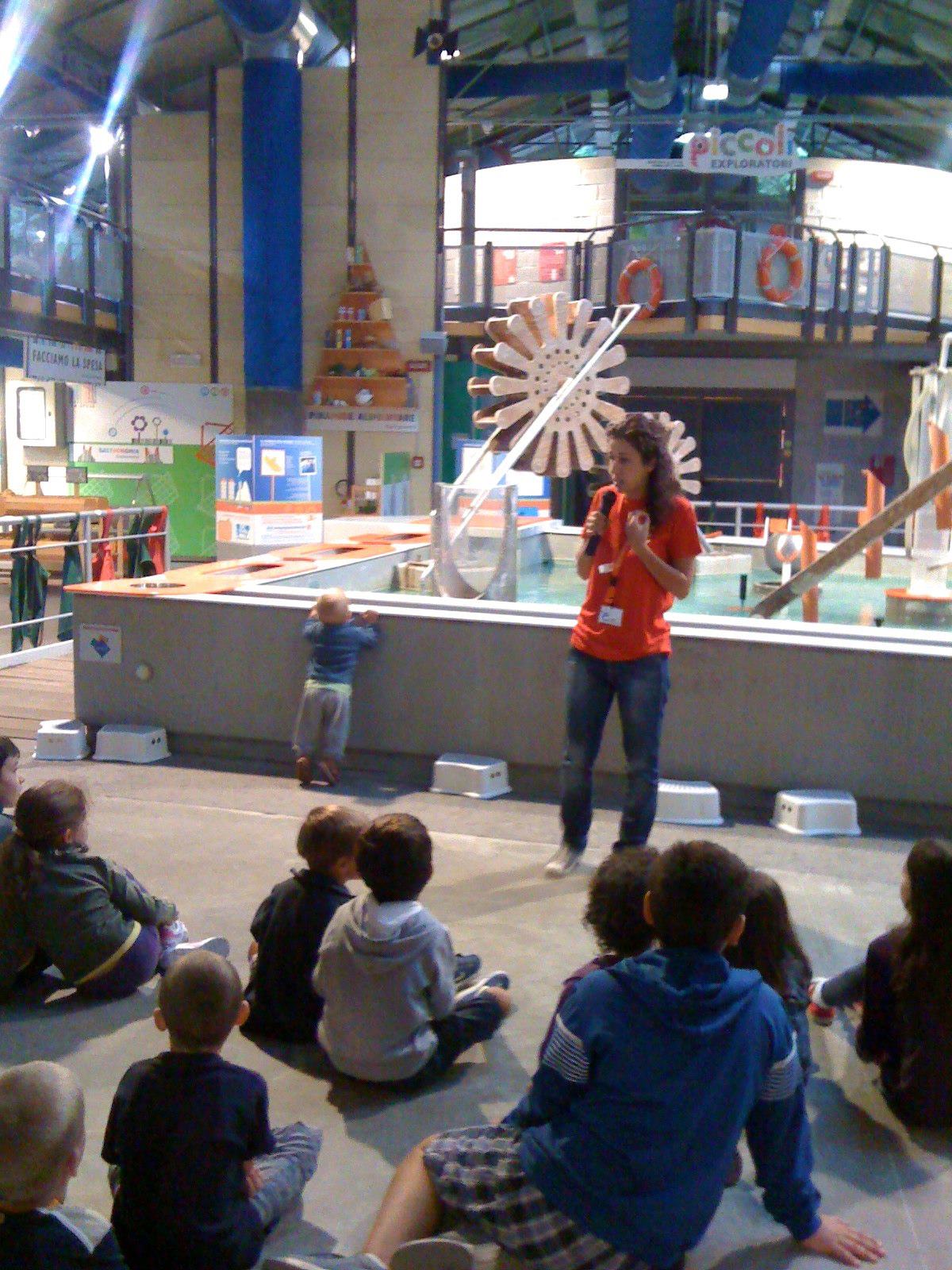
Today I am back in Italy, and the museum of Explora for children with workshops and integrated learning activities. I am tired, I am happy to learn a new place to share and my Ragazzi friends were right. It is a great learning place. It is in Italy but often places that are successful are duplicated replicated and shared.
Here’s to learning places that integrate art, STEM and the humanities .