In the Digital Age, Digital Equity is an Essential

Excerpt by Larry Irving /Fast Forward by Bonnie Sutton

iu
The day America married the Internet

In 1993, the Internet was the province almost exclusively of scientists and hobbyists, with only about 2 million users worldwide. U.S. President Bill Clinton and Vice President Al Gore saw huge potential in connecting all of the United States to the Internet.

They believed that a robust Internet would provide immeasurable benefits to the U.S. economy, would create jobs and would improve the provision of critical services to the American public, including education, healthcare, library services, public safety and government information and data.

As importantly, they believed that the Internet could spur needed private-sector investment and innovation in both the underlying infrastructure and in the platforms, applications and services that would ride on that infrastructure.

They were right on all counts.

images

The vision

“Imagine you had a device that combined a telephone, a TV, a camcorder and a personal computer. No matter where you went or what time it was, your child could see you and talk to you, you could watch a replay of your team’s last game, you could browse the latest additions to the library, or you could find the best prices in town on groceries, furniture, clothes — whatever you needed.”

The above paragraph was the opening paragraph of the Agenda for Action — 20 years ago. It was an eerily accurate vision of a then-distant future. Sometimes having a coherent vision helps propel progress. The administration knew where it wanted to go and knew it needed a plan to drive the progress required to get there.

The plan

The Agenda for Action laid out a series of principles and proposed actions to support them. Virtually all of those principles remain the cornerstones of the United States’ domestic and international technology policies today.

The Agenda for Action stated a strong preference for private-sector development and deployment of the Internet. The administration felt it important to state that preference clearly and unequivocally because of fears that the government would attempt to build the Information Superhighway using public dollars.

In light of the U.S. government’s efforts at that time to encourage increased investment in our domestic infrastructure and to promote privatization of telecommunications networks abroad, the administration clarified its preference for private-sector investment to build the Internet, supported by tax and regulatory policies that would promote an investment-friendly environment.

The Agenda for Action presaged virtually every major policy debate surrounding the Internet and delineated a comprehensive policy approach that protected the rights of consumers while also providing increased certainty for industry and innovators by calling for the following: extending our historic commitment to universal service to the Internet; seamless, interactive user-driven operation of the Internet; information security and network reliability; improved management of wireless spectrum; protection of Intellectual property rights; and increased coordination with state and local governments and with other nations to ensure that the Internet would be fully global.

Looking back today, President Clinton and Vice President Gore got much right. Their vision for the Internet was realized more quickly and more completely than any of us had any right to expect.

Reading the Agenda for Action today, the administration accurately predicted the power of the Internet to increase access to information and to be a key economic driver. As importantly, the administration provided a forward looking and flexible policy template that would underscore the growth of the internet over the following decades.

The astonishing growth of the Internet in the mid-1990s was driven in large part by the innovation, talent, ingenuity and passion of many in the private sector, principally the Internet pioneers in Silicon Valley and other creative centers, as well as the Internet service providers who built the physical networks.

It is unlikely that the Internet’s growth would have been as explosive or that we would have seen as much early acceptance and adoption domestically and internationally without the administration’s leadership and use of the bully pulpit to drive policy prescriptions and procurement efforts designed to support and encourage private-sector investment and innovation.

At a time of increased skepticism about the role of government and widespread derision of visionary leaders, it’s important to note that sometimes the government and its leaders get it right. The United States and the world is at another inflection point today as wireless technology, the Internet of Things, cloud computing, social networks and data analytics become drivers of economic and societal changes.

Revisiting or restating fundamental policy principles to ensure that they provide an environment that will promote investment while also protecting the rights of consumers would seem to be as necessary today as it was 20 years ago.
niiac

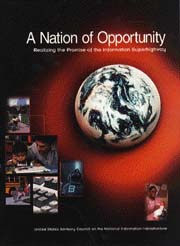
Advances in information technology (IT) are reshaped the U.S. labor market. The demand for workers who can read and understand complex material, think analytically, and use technology efficiently will continue to increase. Congress established the 21st Century Workforce Commission to assess current and future demand for IT workers and the education and training needed to fill IT jobs. By conducting field hearings and site visits and reviewing pertinent research, the commission identified nine keys to success that leaders at all levels can apply to build a highly skilled workforce prepared for high-technology job opportunities in the 21st century. The keys are as follows: (1) building 21st century literacy; (2) exercising leadership through partnerships; (3) forming learning linkages for youth; (4) identifying pathways to IT jobs; (5) increasing acquisition of IT skills; (6) expanding continuous learning; (7) shaping a flexible immigration policy for skilled IT workers; (8) raising student achievement; (9) and making technology access and Internet connectivity universal. During its work, the commission found many examples of how stakeholders at all levels exerted the leadership to put the keys into practice. (Ten tables/figures are included. Concluding the report are a list of the commission members and 85 endnotes.) (MN)

Fast Forward 2016   Are We A Nation of Opportunity for All? Not Yet!!

We still need a plan to engage, inform, educate and create possibilities for all communities.

In the Digital Age, Digital Equity is an Essential

IMG_9951.JPG

 NCDE  Puts forward an Action Plan

We are , in America still trying to solve the problem of the Digital Divide. EDC has allowed us to have a solution. Not to talk about the latest tool, or gadget or even coding.

HOW DO WE SOLVE THE DIGITAL DIVIDE?

Not in an hour to talk about problems, but a whole day to define, to work across communities , schools, libraries, businesses, teacher groups and government to find solutions and to learn from each other.

Dr. McLaughlin  shared thoughts as a framework for our discussions

 Principles for Designing and Evaluating Digital Equity Investments and Initiatives

They were well focused on achieving not only digital equity but also locally determined economic, educational and social impacts.  fostering digital equity not just for its own sake but for its critical contributions to other more fundamental locally determined priorities for equity, social justice, and well-being.


Systemic- providing equitable( free or low cost) access to the full array of essential resources for digital inclusi0n, lifelong learning, workforce development and economic opportunity including:
IMG_8958

-broadband

-computing devices with keyboard ( and assistive devices for those with disabilities}

-multilingual tech support

-librarians skilled in guiding learners to high quality content and tools, keyed to their learning priorities

-low interest financing (or full subsidies) for gamilies with weak or no credit so that when devices are not free they can afford to finance them and still support their families

-educational and productivity apps and software

-open and “Deep Web”educational resources that are universally designed.

The initiative will publish, share videos and the outcome ideas of our Digital Equity Symposium

IMG_9974

The National Coalition for Digital Equity will publish these in greater detail the outcomes of the symposium.

IMG_9980


The KKK? Let me count the ways I learned about it!!

stone mountain

Ku Klux Klan rally cross burning, Stone Mountain, Georgia. © 1986 Robin Nelson

Here is the exchange on television that caused me to write this blog.

http://talkingpointsmemo.com/livewire/jeffrey-lord-van-jones-cnn-kkk


With all of the the hype on the news about the KKK, and the recent CNN confrontation between two broadcasters, I thought we might revisit the KKK and what a minority person like me knows about it.

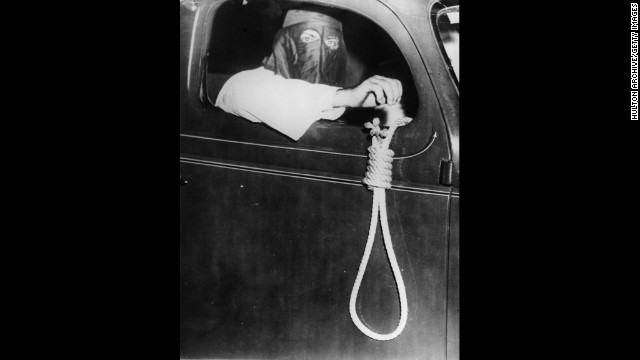
The featured picture was my go to, when I did not feel like studying. There were several pictures of people who were victimized for learning to read.

noose


From literature these are images in my mind. In college I saw the real photos. They were my motivation to learn, to read more and to be excellent in education. It was my revenge for the slaves and people who suffered , I thought.

iu

Wikipedia says

“The Ku Klux Klan (KKK), or simply “the Klan”, is the name of three distinct past and present movements in the United States that have advocated extremist reactionary currents such as white supremacy, white nationalism, and anti-immigration, historically expressed through terrorism aimed at groups or individuals whom they opposed.[6] All three movements have called for the “purification” of American society, and all are considered right wing extremist organizations.[7][8][9][10]”

“The first Ku Klux Klan flourished in the Southern United States in the late 1860s, then died out by the early 1870s. It sought to overthrow the Republican state governments in the South during the Reconstruction Era, especially by using violence against African American leaders. With numerous chapters across the South, it was suppressed around 1871, through federal enforcement. Members made their own, often colorful, costumes: robes, masks, and conical hats, designed to be terrifying, and to hide their identities.[11][12]”89118333ed6NEU

“The second group was founded in 1915, and flourished nationwide in the early and mid-1920s, particularly in urban areas of the Midwest and West. It opposed Catholics and Jews, especially newer immigrants, and stressed opposition to the Catholic Church.[13] This second organization adopted a standard white costume and used similar code words as the first Klan, while adding cross burnings and mass parades.”

“The third and current manifestation of the KKK emerged after 1950, in the form of small, local, unconnected groups that use the KKK name. They focused on opposition to the Civil Rights Movement, often using violence and murder to suppress activists. It is classified as a hate group by the Anti-Defamation League and the Southern Poverty Law Center.[14] It is estimated to have between 5,000 and 8,000 members as of 2012.[2]”

lynch

“The second and third incarnations of the Ku Klux Klan made frequent reference to America’s “Anglo-Saxon” blood, hearkening back to 19th-century nativism.[15] Although members of the KKK swear to uphold Christian morality, virtually every Christian denomination has officially denounced the KKK.[16]”

The last photo , of a lynching, is the one that often comes to my mind. My mother and dad opened a black high school in Salisbury , Maryland.  I was born in Salisbury , Maryland. When I asked why they moved, my mom would say because it was too far from her family.My dad would say, it is all your mother’s fault.

My mother tried on a hat in Salisbury, Maryland . She put it onto her head. That was not allowed . Black women were not allowed to try on hats. My mom tried it on anyway.So the local KKK invited my dad for a ride. The people in town liked him so they did not lynch him. They showed him the tree where people were hanged and told him to take care of his wife to make sure she goes by the rules. They moved. Mother acknowledged the story.

The Ku Klux Klan sought to re-establish Democratic power in the South at the time when Radical Republicans and carpetbaggers dominated Reconstruction. It was founded by ex-servicemen of the Confederate Army in 1866, led by Nathan Bedford Forrest. The original group opposed the reforms enforced on the South by federal troops regarding the treatment of former slaves, often using violence to achieve their goals. Forrest ordered the Klan to disband in 1869, but many of its groups in other parts of the country ignored the order and continued to function.

As a teen I knew to avoid White men in groups, in a car, or in a crowd because of the fear of being raped or groped or being victimized. Black women were routinely assaulted in the south and there was little consequence to rapes.

       The Klan Gets Diverse in Hate, Adding more Minorities and Religions

A second distinct group using the same name was started atop Stone Mountain near Atlanta in 1915 by William J. Simmons. This second group existed as a money-making fraternal organization and fought to maintain the ways of the past by fighting against the increasing numbers of Roman Catholics, Jews, Blacks, Asians, and other immigrants into the United States. This group, although preaching racism, was a mainstream organization with 4 million members at its peak in the 1920s. Its popularity fell during the Great Depression, and membership fell again during World War II presumably because of mass enlistment or conscription to the Armed Forces.

                                         The Violence of the KKK

The violence conducted by the Klan was often sexualized in nature. Although the Klan openly stated their reason for existing was to protect white women from black men, some had no moral qualms about their members sexually abusing or mutilating black men and women in order to show their authority. Often, Klan members would both assault and rape black women (Hodes 66). An example of sexualized violence was given in by the U.S. Commissioner from Raleigh, A. Webster Shaffer, concerning a freed woman named Frances Gilmore. A group of disguised attackers had assaulted her by whipping and beating her, then taking her clothes off to be whipped with a board, and finally forcibly having her pubic hair burned off before she was cut multiple times with a knife (Report 36-37). Gilmore was unable to identify her attackers due to their disguises, and no arrests were ever made.

Another example of sexualized violence was committed on a black man who, because of a simple labor conflict, was forced to cut up his genitals with a knife (Hodes 65). The Klans use of sexualized violence on women and men shows their willingness to assert their social authority over blacks, by any means necessary.

Victims of Violence

The Klan seemed willing to use whatever means necessary to regain political dominance of the South, even if that meant instilling terror via sexual abuse.

Did You Know?
At its peak in the 1920s, Klan membership exceeded 4 million people nationwide.

Where can you find out more?

The Book, Mississippi Burning 

Photo: “Civil Rights and the KKK” At the link.

The Newseum  has lessons on Civil Rights and the KKK.

IMG_8416

According to John Hope Franklin (From Slavery to Freedom: A History of Negro Americans, 1967), “in the last sixteen years of the nineteenth century there had been more than 2,500 lynchings, the great majority of which were of Negroes.” The early twentieth century did not see a significant decrease: “In the very first year of the new century more than 100 Negroes were lynched, and before the outbreak of World War I the number for the century had soared to more than 1,100.” Lynchings declined in number but continued in ferocity during World War I. They were seized on so effectively by the Germans that, despite his Southern sympathies, President Wilson issued a statement against lynching and mob violence, But after the war more than a few returning black soldiers were lynched, some in their uniforms. The “Red scare” of 1919 was eclipsed by the racial violence and lynching fever of what James Weldon Johnson termed “the Red Summer.” Riots and killings, some of them lynchings, occurred in Chicago, Texas, Washington, D.C., and with particular brutality that October in Arkansas. Although lynching was by no means an isolated, aberrant occurrence in the 1920s when the Klan was resurgent or in the 1930s when the depression fueled the hunt for racial as well as political scapegoats, the phenomenon was no longer virulent enough to claim one victim every two to three days. In its sporadic occurrences over the next decades, lynching continued to be a vehicle of terror and a last resort in opposition to the drive for political and civil rights through the 1950s, 1960s, and beyond.


Mummies? Egypt?What Can We Learn?

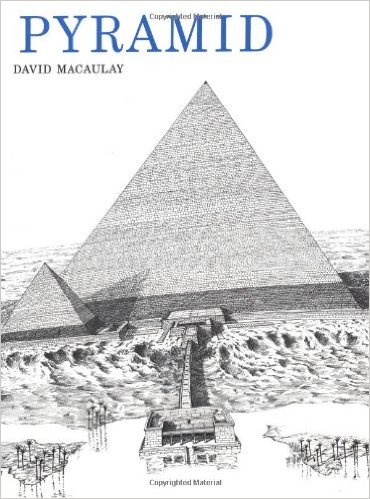
IMG_9840I have traveled to Egypt by thought, by reading, by books, by lectures in geography and by invitation of a friend. My quest was to visit the museum of antiquties in Cairo. Before the newest of technology, I had a laser disc of a mummy, and how they prepared it and like many others , I had done a lot of reading about Sir Howard Carter and his discovery. I also followed an archaeologist on television to see them examine new sites and try to identify new mummies, or tombs.  In school for students I had a remarkable book to use with various movies and videos , by David McCauley.
51o7V71Yi+L._SX368_BO1,204,203,200_

Amazon.com Review
When children catch their first glimpse of a pyramid, a sea of questions inevitably tumbles forth. “Why are they shaped like that?” “How were they made?” “Who made them?” “What were they used for?” Perplexed adults can sigh with relief now that David Macaulay has found a way to thoroughly answer all those deserving questions. His exquisitely crosshatched pen-and-ink illustrations frame the engaging fictional story of an ancient pharaoh who commissions a pyramid to be built for him. With great patience and respect for minute detail (not unlike the creators of the early pyramids), Macaulay explains the sometimes backbreaking tasks of planning, hauling, chiseling, digging, and hoisting that went into the construction of this awe-inspiring monument. Just when the narrative teeters on the edge of textbook doldrums, Macaulay brings us back to the engaging human drama of death and superstition. This respectful blending of architecture, history, and mysticism will certainly satiate pyramid-passionate children as well as their obliging parents. ALA Notable Book. (Ages 9 and older) –Gail Hudson —

Talk about engineering!! STEM and STEAM


base-pyramid-khufu-2-P

ginger

A poor person’s mummy..

pyramids-giza-P

BlackStudent

The Egyptian and I.

Better than that I had large cardboard depictions of the things that Sir Howard Carter found. While in New York, a man in a fez bowed to me and called me a daughter of Egypt , handing me a rose. It may have been flattery but he was visiting a New York Museum and so we talked a bit . I have been studying about Egypt since I was eleven years old and heard about King Tut. Well let me revise that. I was often sent to the library in my Catholic school to read and I found these books about archaeology. They fasscinated me. He sent these huge , beautiful cardboard placards done in gold and blue. They were museum quality and I taught with them.

I was afraid of mummies, but there was a scientist who went ot Egypt who lived near my home. It was rumored that he had a mummy at the top of his apartment building and we kids went to see. It was a mummy. We were speechless and scared all at the same time. We never asked questions as we did not know him.

IMG_9845

The mummy  , or what I saw was I think the case of a mummy. My imagination set in and so my quest to learn about the geography of Egypt,the mummies and Hierogyphics began.


Definition of hieroglyphic
1
: hieroglyph
2
: a system of hieroglyphic writing; specifically : the picture script of the ancient Egyptian priesthood —often used in plural but singular or plural in construction
3
: something that resembles a hieroglyph especially in difficulty of decipherment

Source : Merriam- Webster ( online 2016)

There was in Old Town Alexandria, in an alley a shop of Egyptology. I went there and studied how to make papyrus, and ordered a gold hieroglyph , and studied astronomy using Egyptian science. You can convert your name to a hieroglyph here

WRITE LIKE AN EGYPTIAN

Write your name in a hieroglyh and make a cartouche.

EAT LIKE AN EGYPTIAN

Archeological discoveries have told us much about how ancient Egyptians worshiped, celebrated and mourned. But these scientific finds have also provided tantalizing clues about how–and what–this complex civilization ate. From grains like emmer and kamut to cloudy beer and honey-basted gazelle they dined sufficiently.

Bread and beer were the two staples of the Egyptian diet. Everyone from the highest priest to the lowliest laborer would eat these two foods every day, although the quality of the foods for the priest would undoubtedly be higher. The main grain cultivated in Egypt was emmer. Better known today as farro, emmer happens to be a fairly well balanced source of nutrition: it’s higher in minerals and fiber than similar grains. Breads and porridge were made from the grain, as well as a specially devised product that modern-day archeologists call “beer bread.”

Beer bread was made from dough that used more yeast than normal breads, and it was baked at a temperature that didn’t kill off the yeast cultures. Brewers crumbled the bread into vats and let it ferment naturally in water. This yielded a thick and cloudy brew that would probably disgust our modern palates. But it was also nourishing and healthy, and filled in many nutritive deficiencies of the lower-class diet.

But ancient Egyptians did not survive on carbohydrates alone: Hunters could capture a variety of wild game, including hippos, gazelles, cranes as well as smaller species such as hedgehogs. Fish were caught, then salted and preserved; in fact fish curing was so important to Egyptians that only temple officials were allowed to do it. Honey was prized as a sweetener, as were dates, raisins and other dried fruits. Wild vegetables abounded, like celery, papyrus stalks and onions.

hungry-history-eat-like-an-egyptian-E

Although no recipes from the times remain, we have a fair idea of how the Egyptians prepared their food thanks to dioramas and other objects left in tombs. Laborers ate two meals a day: a morning meal of bread, beer and often onions, and a more hearty dinner with boiled vegetables, meat and more bread and beer.

Nobles ate well, with vegetables, meat and grains at every meal, plus wine and dairy products like butter and cheese. Priests and royalty ate even better. Tombs detail meals of honey-roasted wild gazelle, spit-roasted ducks, pomegranates and a berry-like fruit called jujubes with honey cakes for dessert. To top it all off, servant girls would circulate with jugs of wine to refill empty glasses: the perfect end to an Egyptian banquet.

It was fun to let children make their own hieroglyphs. To translate their name as a scribe might have done.


Today in Pennsylvania students and teachers can do a virtual field trip from the classroom. It is one of several that are offered to schools.

Mummy Makers: (Grades: 5 – 9)
Students will learn how and why ancient Egyptians mummified their dead by stepping into the role of apprentice to an ancient Egyptian embalmer! Using fabricated mummies, students will explore the artificial mummification process as they prepare Mr. Ulysses Penn for his journey to the afterlife. This workshop uses life-like mummies.

Here are some of the things we learned.

Ancient Egyptians believed in an afterlife, a real and beautiful place, where they played and lived after they died. To enjoy your afterlife, you couldn’t just die. You had to prepare. To achieve immortality, you had to satisfy some requirements.

Requirements:

(1) Your name had to be written down. You had to have your name written down somewhere, the more places the better. If it was not written down, you disappeared.

(2) You had to pass the Weighing of the Heart. You had to pass the weighing of the heart test in the Hall of Maat. Your heart was weighed against the weigh of a magic feather. If your heart was light, because you had lived a good, hard working, caring life, the scale would balance, and you would go to heaven. If it did not, well, that was another story.

(3) You had to have a preserved body. Another thing you needed to move on to the afterlife was a preserved body. One way to preserve the body of a person who had died was to dry them out and wrap them up with linen bandages. That process was called mummification.

You needed a preserved body so that your Ba and Ka, the two pieces of your soul, could find their way home at night back to your tomb. Without a body, the Ba and Ka would get lost. And they would no longer be able to reach the heavenly Land of Two Fields.

The poor placed the bodies of their dead relatives out in the desert sand. The bodies dried naturally in the sun. That was a perfectly good system. It assured the dead a place in the afterlife (provided their heart was light from doing lots of good deeds while they were alive, and their name was written down somewhere.) If they had a light heart, they would pass through the field of reeds and reach their afterlife. (The field of reeds is what the ancient Egyptians called death.)

The rich could afford to be more fussy. They hired professional mummy makers, to help them look their very best.

IMG_9842

These are from the British Museum.


The Kennedy Center had a booklet to tell us how to live, make music , make a flute, etc. and to make bread.

A teacher had an extensive website

We used it to do project based learning and thinking about Egypt.

He created a website for teachers to give them background

From The Smithsonian Anthronotes

The Egyptian Afterlife: What to Take with You and Why
Bryan, Betsy M. (2012)
Objects made for and placed in burials were a significant part of a proper Egyptian entombment and demonstrate the belief that life’s activities continued into eternity; for chronology of dynasties and dates mentioned in  this paper.

What Egyptians Took to the Afterlife
There are more than a few similarities between the ancient Egyptian religion, and our modern religions of today. However, a belief that you “could take it with you” is a prime difference. In fact, they thought the dead could take a considerable number of items with them.
What Egyptians Took to the Afterlife
In many cases, the king who were buried in the Valley of the Kings, as well as high officials and others began stocking their tombs with good long before their death. Our knowledge of what they attempted to take with them comes mostly from the intact tomb ofTutankhamun, but there is an abundance of other evidence, including remnants from the tombs of Tuthmosis III (KV 34),Amenophis II (KV 35), Tuthmosis IV (KV 43), andHoremheb (KV 55).

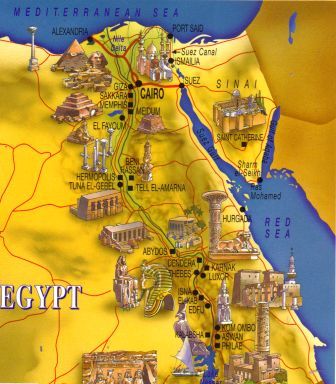
Ancient Egyptian Map 11

Other tombs have provided a few items, and in some tombs such as Sethos II (KV 15), we even have wall illustrations of items placed in his tomb.
In many cases, the king who were buried in the Valley of the Kings, as well as high officials and others began stocking their tombs with good long before their death. Our knowledge of what they attempted to take with them comes mostly from the intact tomb of Tutankhamun, but there is an abundance of other evidence, including remnants from the tombs of Tuthmosis III (KV 34), Amenophis II (KV 35), Tuthmosis IV (KV 43), and Horemheb (KV 55). Other tombs have provided a few items, and in some tombs such as Sethos II (KV 15), we even have wall illustrations of items placed in his tomb.
In the Valley of the King, burials usually included the mummified body of the king, which was placed in a series of coffins nested one inside the other and placed in a stone sarcophagus. The sarcophagus was most often surrounded by gilded wooden shrines. But there were also many other items, including magical items to assist the dead king, and a variety of mundane objects for his use.
The mummy itself was prepared with various items to protect and sustain the king in the netherworld. While some funerary items were very beautiful, items such as the mask had specific purposes. The face mask, a sculpture of the king’s own face, allowed him to be recognized by the deities in his death. Other items found on the mummy included various amulets, such as heart amulets and vulture amulets placed around his neck, all of which were to protect the king from specific threats.
Read more: http://www.touregypt.net/featurestories/equip.htm#ixzz40XtAcxeX


Virtual Reality and Memorable Learning, so Interesting!!

IMG_0061

Teachers Exploring TACC

Education and technology has changed the way we are involved with museums. There are many museums that people may never get to visit. Virtually, there are resources to help students, teachers and community to use museums to learn. One resource that is wonderful is the Google Cultural Institute

I share this blog because often a museum trip is a quick hit and in the words of Mrs. Basil E. Frankweiler, the kids don’t really see much on the trip. So I offer you some ways of seeing, visualizing and being involved in learning.

The Google Cultural Institute has many ways of sharing collections, tours, and artifacts.

Wikipedia says:
“‘Google Cultural Institute is an initiative unveiled by Google following the 2011 launch of the Google Art Project. . It is “an effort to make important cultural material available and accessible to everyone and to digitally preserve it to educate and inspire future generations.”  The Cultural Institute has partnered with a number of institutions to make exhibition and archival content available online, including the British Museum, Yad Vashem, the Museo Galileo in Florence, the Auschwitz-Birkenau State Museum, and the Museum of Polish History in Warsaw among others. Further you can :

Discover exhibits and collections from museums and archives all around the world. Explore cultural treasures in extraordinary detail, from hidden gems to masterpieces.

Create your own galleries and share favorite finds with friends.You can take a tour, Discover artworks, world heritage sites, cultural figures, and more. You can create your own..
Create your own galleries and share favorite finds with friends and take virtual tours.
Participants can Explore & Search


Explore to discover more categories and projects.
Or search for people, events, museums, and works of art.

You Can Share & Discover. This is a hearth. How would you cook on this? That information is available in the Google Cultural Institute.

IMG_9814

Share special finds with friends across all your social networks.
Compare two items side-by side.
Save favorite pieces and access them later, and even create your own gallery.
Or click Discover to see related topics and categories.

The Iron Age in Britain

I was a visitor to the British Museum and shared a few pictures with Facebook.There was so much to see and learn about. I found a new section to explore. Life in the Iron Age of Britain was fascinating. But there was not enough time to study the whole collection.

I live in Washington , DC  within walking distance of most of the Smithsonian Museums . It is always hard to choose which museum to visit and to grasp the new offerings. An entirely new offering is the 3-D Explorer.

Exploring the Smithsonian

You can explore online resources from A to Z online.

The Smithsonian has a new 3-D Explorer. They are excited about it.

Smithsonian X 3D launches a set of use cases which apply various 3D capture methods to iconic collection objects, as well as scientific missions. These projects indicate that this new technology has the potential not only to support the Smithsonian mission, but to transform museum core functions. Researchers working in the field may not come back with specimens, but with 3D data documenting a site or a find. Curators and educators can use 3D data as the scaffolding to tell stories or send students on a quest of discovery. Conservators can benchmark today’s condition state of a collection item against a past state – a deviation analysis of 3D data will tell them exactly what changes have occurred. All of these uses cases are accessible through the Beta Smithsonian X 3D Explorer, as well as videos documenting the project. For many of the 3D models, raw data can be downloaded to support further inquiry and 3D printing. This video explains the topic.Some historic artifacts have been placed in this model and can be printed out in a classroom, or examined online to think about the model.

10422205_10153643669617802_5859067502412981041_n

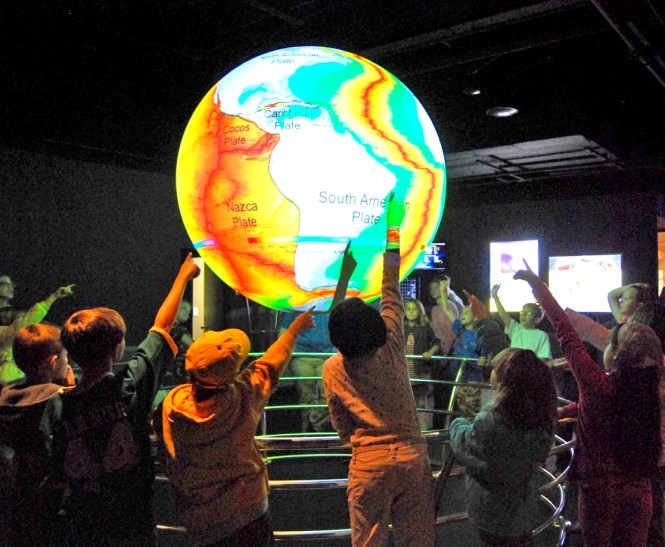
If you come to Washington , DC , the problem is , which museum to visit. I like the Natural History Museum with the Science on a Sphere exhibits that help us understand the whole museums focus on the Earth.iuri

The Smithsonian Museums are competitive .

One of my favorite museums that wraps itself around you is the Monterey Bay Museum.

The Monterey Bay Aquarium (MBA) is a public aquarium located in Monterey, California, United States. The aquarium was founded in 1984 and is located on the site of a former sardine cannery on Cannery Row. It has an annual attendance of more than two million visitors. It holds thousands of plants and animals, representing more than 600 species on display. The aquarium benefits from a high circulation of fresh ocean water which is obtained through pipes which pump it in continuously from Monterey Bay.

IMG_0963

The centerpiece of the Ocean’s Edge Wing, is a 28-foot-high (8.5 m), 333,000-US-gallon (1,260,000 l; 277,000 imp gal) tank for viewing California coastal marine life. In this tank, the aquarium was the first in the world to grow live California Giant Kelp. Visitors are able to inspect the creatures of the kelp forest at several levels in the building. The largest tank in the aquarium is a 1,200,000-U.S.-gallon (4,500,000 l; 1,000,000 imp gal) tank in the Open Sea galleries (formerly the Outer Bay), which features one of the world’s largest single-paned windows. It is one of the few aquariums to hold the ocean sunfish in captivity.iho

Sealife on exhibit includes stingrays, jellyfish, sea otters, and numerous other native marine species, which can be viewed above and below the waterline. The Monterey Bay Aquarium is one of very few in the world to exhibit both bluefin and yellowfin tuna. For displaying jellyfish, it uses a Kreisel tank, which creates a circular flow to support and suspend the jellies. The aquarium does not house mammals other than otters. These are a few of my favorite museums to share.

Other options? Sure

New? Augmented reality and the Hololens. This is how Microsoft wants to change the superbowl. Immersive Superbowl.??

There is of course Google Cardboard, and the use of Skype to talk to people in museums or classes from another country. We don’t want to just look at pretty pictures. Content makes the viewing much more memorable than eye candy.

IMG_1238

Monterey Bay Aquarium

To be in the museum in Monterey and to see this Octopus is one experience. Coming now are ways that are immersive , in that the virtual reality puts the person into the experience, well sort of.  Here is a teaser. A GIF

http://www.montereybayaquarium.org/-/m/images/animated-gifs/kelp-forest.gif?la=en( in case you want to download it.)

Here is one that I find especially awesome. the whale by Magic Leap. Amazing 3D Virtual Reality Leaping Whale. There are other examples within that URL that are awesome.
.
www.magicleap.com  This one has some other fascinating models. It does take a little bit of time to load. Be patient.

The virtual reality tool that I most liked was Google Glass. I could see my way through Russia , have translations, a way of going through the subways. I am sure that it will be back in another form. I can’t wait.


Creating Opportunity for All

 CS is a “new basic” skill necessary for economic opportunity and social mobility. By some estimates, just one quarter of all the K-12 schools in the United States offer CS with programming and coding, and only 28 states allow CS courses to count towards high-school graduation, even as other advanced economies are making CS available for all of their students. The White House aims to change that. There is a new initiative.

Why?

The Opportunity

Providing access to CS is a critical step for ensuring that our nation remains competitive in the global economy and strengthens its cybersecurity. Last year, there were over 600,000 tech jobs open across the United States, and by 2018, 51 percent of all STEM jobs are projected to be in CS-related fields. The Federal government alone needs an additional 10,000 IT and cybersecurity professionals, and the private sector needs many more. CS is not only important for the tech sector, but also for a growing number of industries, including transportation, healthcare, education, and financial services, that are using software to transform their products and services. In fact, more than two-thirds of all tech jobs are outside the tech sector.

How Do We Prepare Students? Teachers ? The Community?

One of the problems is the lack of access, interest and the knowledge of computational thinking and learning and math. There also has been a limited supply of well trained teachers for all. Most of us are aware that there are teachers in rural, urban, tribal, minority based poor communities who don’t have a computer teacher anywhere near a school. There may be teachers who are available in after school program. The Coding week also gives some impetus to making a change but sadly , it may be only for that week. It is an excellent start. It is a way to get things rolling.

Computational thinking and cyber learning and math… we must start at the lower levels to be able to graduate those with the skills that they will need to meet a high school computer teacher.

Coding?Coding in the Classroom: What is Coding and Why is it so Important?

IMG_8970

Computational Thinking?
“Computational Thinking is the thought processes involved in formulating problems and their solutions so that the solutions are represented in a form that can be effectively carried out by an information-processing agent.”

Cuny, Snyder, Wing

Say it again? What was that?

Computational thinking is a way of solving problems, designing systems, and understanding human behavior that draws on concepts fundamental to computer science. To flourish in today’s world, computational thinking has to be a fundamental part of the way people think and understand the world.

Computational thinking means creating and making use of different levels of abstraction, to understand and solve problems more effectively.

Computational thinking means thinking algorithmically and with the ability to apply mathematical concepts such as induction to develop more efficient, fair, and secure solutions.

Computational thinking means understanding the consequences of scale, not only for reasons of efficiency but also for economic and social reasons.

IMG_0909

There have been people working in this field for a very long time with limited success.  One must thank people like Henry Neeman, R.N. Panoff , Concord.org and those who sought to broaden engagement to all with limited resources. Scott Lathrop has certainly impacted broadening engagement.

Fortunately, there is a growing movement being led by parents, teachers, states, districts, and the private sector to expand CS education. The President’s Computer Science for All Initiative builds on these efforts by:

Providing $4 billion in funding for states, and $100 million directly for districts in his forthcoming Budget to increase access to K-12 CS by training teachers, expanding access to high-quality instructional materials, and building effective regional partnerships. The funding will allow more states and districts to offer hands-on CS courses across all of their public high schools, get students involved early by creating high-quality CS learning opportunities in elementary and middle schools, expand overall access to rigorous science, technology, engineering and math (STEM) coursework, and ensure all students have the chance to participate, including girls and underrepresented minorities.
Starting the effort this year, with more than $135 million in investments by the National Science Foundation (NSF) and the Corporation for National and Community Service (CNCS) to support and train CS teachers, who are the most critical ingredient to offering CS education in schools. The agencies will make these investments over five years using existing funds.

857888_10151522587771327_1721823541_o

Early exposure and interest

Calling on even more Governors, Mayors, education leaders, CEOs, philanthropists, creative media and technology professionals, and others to get involved. Today, Delaware, Hawaii and more than 30 school districts are committing to expand CS opportunities; Cartoon Network, Google and Salesforce.org are announcing more than $60 million in new philanthropic investments, and Microsoft is announcing a fifty-state campaign to expand CS; and Code.org is announcing plans to offer CS training to an additional 25,000 teachers this year.

We still need parents and the communities to grasp the important of this project and to sign on. The initiatives mean nothing if schools don’t step up to the challenge. Has your school accepted Connect.Ed?IMG_0078

What Happened to Sharing Technology for All Across the Digital Divide?

This is an update. We are still trying to solve the digital, the economic, the educational and the technical divide.

Here is the group I am working with now. Digital Equity

If you have never heard of the homework gap , look at this video.

A must read if you are a minority in education is to read

The Missing Voices in EdTech: Bringing Diversity Into EdTech 


The real question is who is gating the inclusion of diverse educational leaders in technology?And why?

Martin Luther King Jr.
“But today our very survival depends on our ability to stay awake, to adjust to new ideas, to remain vigilant and to face the challenge of change. The large house in which we live demands that we transform this world-wide neighborhood into a world – wide brotherhood. Together we must learn to live as brothers or together we will be forced to perish as fools.

We must work passionately and indefatigably to bridge the gulf between our scientific progress and our moral progress. One of the great problems of mankind is that we suffer from a poverty of the spirit which stands in glaring contrast to our scientific and technological abundance. The richer we have become materially, the poorer we have become morally and spiritually.”

Martin Luther King Jr.

Man without identity programing in technology enviroment with cy

This is an important book. It may be that the struggle of those of us who are minorities and leaders in education has gone on without the knowledge of the general public. We are missing by design. On his resignation from the Dept. of Education, Dr. Richard Culatta shot a parting shot sharing his concern about digital equity. Some of what he said

“Yes, students can learn without them. Yes, it’s possible to do great teaching without a digital device. Yes, going overboard with computers is a real and pressing problem. But kids who are forced to make do with decade-old computers and slow Internet networks aren’t growing up in an environment that will spark an interest in computers. That matters.”

                                              Illustrating Now . and Then
Sadly, many children are left outside of the loop of Ed Tech. Many have never purposefully
used technology. Rural, urban, tribal, distant and poor groups including many types of minorities are not being included in the use of technology. Many of us who are minorities have tried to intervene to educate teachers and to involve communities.
There are advisory boards, and influencers, and politicians who can make things happen.
What would happen if we focused on content in education? Just a thought.

PIONEERING DIVERSITY

Early in the Ed Tech world, Dr. Frank Withrow and Jennelle Leonard helped teachers to explore the uses of technology. He spoke of inclusion for all.
Dr. Withrow was the Executive Director of Presidents Johnson and Nixon’s Presidential National Committee for the Handicapped and was the Chief Technologist for the US Department of Education for a number of years.

Frank Withrow asked ,”How can we change the educational system? What is the Challenge and Charge?

1. Enlist media as an agent of change.
2. Develop town meetings across the nation that explore and foster better learning environments.
3. Recruit corporate support for this campaign.
4. Create a public relations campaign for better learning environments
5. Develop a consortium of national associations
6. Establish in USED an Assistant Secretary for Reform in the Digital Age
The USA should lead the world in education. The greatest resource for peace in the world is an educated population.  In 1990 161 nations at Jomtiem, Thailand agreed to at least six years of education for all children around the world.
Why not make this a reality? ”

Education for All
”    We fall short of our mission if we fail to include all children in our universal learning systems. The United States of America pioneered the concept of universal education for all children.  In the late 1800s and early 1900s we opened a new high school almost every day across this nation.  Horace Mann established that public schools benefit all people within a society; therefore all people should share in the costs of public education.  Not only has the USA created a great K-12 education system we developed under the federal land grant college program a network of outstanding higher education opportunities for all that can qualify.  Too often we separate K-12 from higher education but in reality the system is one from preschool to graduate school. ”

“The struggle for universal education has not been easy. Each generation has had to fight for the right to enter the schoolhouse door.  For years many children of color were provided separate and unequal educations.  It was not until 1954 that the Supreme Court in its most important decision unanimously struck down segregated schools. Unfortunately, there are those who still fight this decision and send their children to charter, church and/or private schools.”

       We do not like to admit our racial biases but they remain. Dr. Frank Withrow

Here is a way to get there for teachers.

Tpack-contexts

Jennelle Leonard. Pioneer

Jenelle Leonard served nearly a year and a half (1997-1998) as an Expert Consultant at the U. S. Department of Education in the Office of Educational Technology. She consulted and advised on issues related to the development and implementation of technology initiatives and national goals, such as professional development, telecommunications technologies, curriculum integration, and instructional applications. She participated in developing long-range, short-term plans, and strategies for implementing Department programs and initiatives including the evaluation of the effect and impact of the use technology in instruction.

Jenelle Leonard has held supervisory and technology related positions in Prince William County Public Schools, Manassas, VA, at BDM Education Technologies Group, a K-12 systems integrator and consulting company, Center for Instructional Technology and Training in the District of Columbia Public Schools and at the Texas Education Agency (TEA). The TEA position provided her the opportunity to work with over a thousand school districts to implement the state’s Technology Initiatives as mandated by the Texas Legislature.

Jenelle Leonard has over twenty-five years of experience as an educator. She has been a public school teacher and administrator, technology implementation and training consultant, college professor, and a regional and state education department administrator.

Her background also includes designing and developing graduate-level instructional technology courses, technology and software procurement and installation oversight in over 400 hundred schools, and software development. Additionally, she has served on numerous technology advisory boards, and served as a contributing editor for an educational technology magazine. Her most important digital inclusion work in my eyes was this.


Jenelle Leonard served at the U.S. Department of Education as Leader of the Technology Innovation Challenge Grant Program (TICG). In addition to managing the TICG Program, which included developing national guideline materials and policies, reviewing and issuing grants, program monitoring, and program evaluation, she served as an agency expert and authoritative consultant, and provided leadership and guidance within Department of Education as well as to State, and local organizations, institutions, and agencies.

She was in a position to understand the challenge of providing for all.All together

“There can be no gainsaying of the fact that a great revolution is taking place in the world today . . . that is, a technological revolution, with the impact of automation and cybernation . . . . Now, whenever anything new comes into history it brings with it new challenges and new opportunities. . . . [T]he geographical oneness of this age has come into being to a large extent through modern man’s scientific ingenuity. Modern man through his scientific genius has been able to dwarf distance and place time in chains. . . . Through our scientific and technological genius, we have made of this world a neighborhood and yet we have not had the ethical commitment to make of it a brotherhood. But somehow, and in some way, we have got to do this.”

That was Rev. Martin Luther King, March 31, 1968.

There has been great political change. The revolution in education for all is still to come.


digital age


Larry Irving  when at NTIA,helped us to understand this problem with the initiation of the idea of the E-rate.

That helps to provide the technology architecture and learning landscape that is needed.

He further said,” Our efforts are needed in at least three areas: what I call “access,” “aptitude,” and “attitude.” It’s a triple-A plan, and we need to begin work in each of these areas immediately if our students are going to win straight As in technological literacy.


How Do We Improve the State of Teacher Diversity and Assist with Professional Development?

I am from a generation that was taught with 20 year old books and schools in a sad state of being. We could read, and write and do math but the subjects were limited and access to the best of teachers was not usual. Of course there was no technology, and sadly there was no science. Often science gets shoved to the back of the curriculum map for minority students and teachers.

HELP?

National Geographic Education , NASA , NOAA and NSF projects have shaped my knowledge. There is a gold mine of resources at Concord.org

IMG_8168

Most minority teachers do not have access to exemplary professional development even when it is for free because they don’t know about it or they cannot access and learn using technology. There is always the George Lucas Educational Foundation site, Edutopia.  It’s free. There are online assists, but a lot of the webinars are focused beyond beginners. Autodesk University has a series of webinars, as does ISTE, for teachers to learn how to use the technology. Autodesk Design Academy (http://academy.autodesk.com).

ISTE has a series of PLN’s which help teachers to explore, be involved, learn to innovate, and have mentors for learning.

The White House has initiatives too, http://www.esri.com/connected

IMG_0091

HISTORY

It is true that before my time Einstein visited Lincoln University to teach physic but few people know of that mentoring. I know it because my uncle taught at the University in Pennsylvania that he visited , there is a photo on line of Einstein in the classrooms there.

     Internet of Things? Or just plain access and contact?

Today we are talking about technology. Who has it? You really don’t think everyone even in the US has access ? Broadband? Tools and well trained teachers? If you think that you must be dreaming and you may not know how to measure broadband speed.

Professional development is an interesting puzzle. There is a mindset for involving the use of technology. It is called TPACK. You use it for ideational scaffolding and inclusion.http://tpack.org

Here’s the problem. Many teachers in rural , distant, urban, and difficult schools do not have access to technology in meaningful ways and do not have a mentor or technical help that is available to them . So there is fear. There is not a lot of time within the schedule and even though we know that digital pedagogy is important.

Some people cling to the tests as the anchor for finding out what our students know. Sadly in the places where the technology is limited there is a problem that few speak about and that is that the technology that is available is needed to give the tests, so teachers have to release the technology for testing. Certainly most of them will not complain.

Punya Mishra​ has a solution for the professional development. He got funding to link a University to teachers working in schools of need and they work through the summer to be involved, learn, create, innovate and share their learning as they earn a Master’s degree. Publications and lessons are shared. It is one of several ideas to change the skills of teachers working in places of need.

BPDA and LISTA too champion students and teachers. These organization help. They have chapters and mentors who make a difference. I mentioned NSF. There are projects that help to integrate new practices and ideas called CyberLearning.

They ask these questions.

  • How can cyberlearning help empower the next generation of diverse learners?
  • How can we create innovative technologies that draw upon sound theories of learning through productive collaborations among researchers, designers, learners, and formal and informal educators?
  • How can we foster an inclusive design community that balances real world problems and settings with promising cyberlearning approaches?
  • How can we integrate contributions from multiple research projects for broader impact (e.g., combining our theories or combining our tools into a common infrastructure)?
  • Approximately 150 leading researchers along with students, educators, designers, industry experts, and other stakeholders will work together for two days at Cyberlearning 2016 to accelerate the community’s collective work and impact. Here is the call for participation.

IMG_0909

The State of Teacher Diversity in American Education
Albert Shanker Institute
http://www.shankerinstitute.org/resource/state-teacher-diversity-executive-summary
Teacher Diversity in the U.S. is an area of concern. The teacher work force has gotten less ethnically and racially diverse and more female, a development which has had an adverse effect on students, particularly on males of color. It is an impediment to the broader goals of equity and social harmony. ASI is working to better understand teacher labor market trends and identify promising interventions aimed at increased teacher diversity in K-12 education.

This report shows that nationally, progress toward greater diversity is being made, but it is quite modest compared to the need for more minority teachers. In the nine cities studied—Boston, Chicago, Cleveland, Los Angeles, New Orleans, New York City, Philadelphia, San Francisco and Washington, D.C.—the picture is much more bleak, and there are only a few pockets of progress, surrounded by serious setbacks.
You can download the report at the link above.

There is a report that many are looking at the OECD report? what say you about that? http://www.keepeek.com/Digital-Asset-Management/oecd/education/students-computers-and-learning_9789264239555-en#page8

Researchers remind us of this work

Ed Tech researchers would remind them about the field of Media effect research and the classic articles from Kozma and Clark.

I Can’t Breathe… I Can’t Code…and other Significant Modifers.. I Can’t Learn ??(What’s Going On?)

People around the world understand the simple sentence, ” I Can’t Breathe”. For most people no definition is required  to understand the significance of the quote. It has almost universal support in advocacy.

We know I can Code because of an intense media blitz and dedication to the skill.

What would happen if we targeted the other needed skills in the same way? Just saying…

 Maybe the easiest way is to share a powerful photo like this to get the message across.
But there are other messages that contribute to the problem.
One of them would be..
858711_10151522638751327_826085403_o
I  Can’t Read.
Superhero kid. Girl power concept
I CAN”T READ!!
Those of us who have worked with struggling readers know the frustration and angst of their chore.
There is technology that can solve the reading problem. but teachers are limited to the vendor of choice of a school system or school, or of what they know about. Choice is not often given, but a vendored solution is. Skilled teachers can use technology to entice, entrance, involve and snare a reader who is struggling.. if they have time and permission to discover joy. Sesame Street gets it so right.
Often the solutions for struggling readers are more boring work that seems to never end. Students are taken out of class for skill and drill. Gamification helps. I know , I have used it. Here’s the thing about a game. It is ok to fail. It is ok to do it over. It is ok to race against your last score. There are solutions that modify the lack of reading fluency and these solutions provide entry into reading.
Award reading puts interest, ideas and skills into a package of individualization. There are other vendors that do the same. I am not sure why success is a problem. It make be the noise in the vendor space or the confusion in the learning landscape about what to do.
There are solutions. I post about Award reading because it works for me.
Man without identity programing in technology enviroment with cy
Older Struggling Readers ( a real problem)

If children receive instruction in phonological and alphabetic skills and learn to apply that knowledge to decoding words, they are very likely to succeed at reading. Once children fall behind, they seldom catch up, a reason that such states as California, Virginia, and Texas promote early intervention to prevent reading problems. Reading level in 1st grade, moreover, is an astonishingly good predictor of reading achievement into high school (Catts et al., 1999; Cunningham and Stanovich, 1997; Shaywitz et al, 1999; Fletcher et al. 1994). Reading failure begins early, takes root quickly, and affects students for life.

Improvements in reading education in the lower elementary grades, however, are coming too slowly to affect the huge numbers of students beyond third grade who have been the victims of misguided reading instruction and scarce resources. Many people know that about 42 percent of 4th graders score below basic in overall reading skill on the National Assessment of Educational Progress (NAEP). In Washington, D.C., where I am currently studying reading intervention, the proportion of students beyond 3rd grade who cannot read well enough to participate in grade-level work is between 60 and 70 percent, depending on the grade and year of assessment. Too few children can compete in higher education and about half fail to complete high school. In this community, the rate of adult illiteracy — reading below 4th grade level — is 37%, the highest in the nation. Nationally, 25% of all adults are functionally illiterate. 

I Can’t Connect
 child
Boost in Erate Program .. so needed.
 Students at KIPP Austin Obras in Austin, Texas, use their English Language Arts program. Students spend time on the computers working on different standards according to individual need.
What is the state of broadband in the US? 

http://www.pewinternet.org/fact-sheets/broadband-technology-fact-sheet/

In a recent survey we found that 15% of American adults do not use the internet. Those least likely to use the internet:

  • Senior citizens
  • Adults with less than a high school education
  • Those living in households earning less than $30,000 per year

Among adults who do not use the internet, almost half have told us that the main reason they don’t go online is because they don’t think the internet is relevant to them.

Those who are connected seem not to know that there are pockets of people who cannot connect or who do so only in school. Technology delivery to some  school is suspect. More than that the brosdbsnd footprint on a community is a problem in many cases. Too expense, too limited and unavailable in public spaces where children can easily go.
We suggested from the NIIAC, years ago, the school, the cultural centers, the community centers and other structures for access. In some cases this works. There are remote places all over the US
in spite of BYOD and mobile devices. I was there when the idea of E-rate was initiated but others claim the idea. That’s good. That means it is important.
Did I mention that the tool use, and ownership is a problem in urban, rural, distant and remote locations? In some cases ownership is limited to old technology, in some cases there is help but the people who need the tools don’t know how to connect to the resource.
wifi
I have been teaching STEM.. the use of science, technology , engineering and math since I started teaching years ago. At one time it was called SMET by NASA. At another time it was revised and brought out as something new. When a Nation at Risk came forward, some steps were taken to provide national policy but, foremost was the idea of testing, not the idea of creating resources, and teachers who were skilled in technology. the technology wagon was about tools and the investment in teacher proficiency was limited by the imagination of Sesame Street, the George Lucas Educational Foundation, The National Geographic… you can see where this is going. Well, school systems like to provide their own professional development, using vendors or their own personnel. So we got a new layer of administrators. The IT person became important even if connectivity was all they knew. Sigh. Education became a business , and conferences, webinars and meetings were
everywhere. Teachers were running to catch up with the latest pedagogy and technology use. Some of the efforts worked. NASA and NOAA and ESRI and the National Geographic and other groups
provided leadership.
397085_457522240950367_458342711_n
Conferences grew into a huge synergy of tools, transition, workshops and speakers. We are still in that space, but with new additions. National ways of working, Common Core, New Science Standards… we have leapfrogged ” No Child Left Behind ” it is there and it is not there. Common Core is there and it is not there. It depends on your state and your state of mind and your ability to test using technology..
Remember the places that don’t have the technology? If there is limited technology well, the technology is used to test and children may lose access during the pretesting and testing times.
I CAN’T DO STEM !! Why Not?
My dad was an industrial arts teacher. There were also agronomy and career focused schools. There still are some of these places where one can go to learn things like plumbing, carpentry, industrial engineering, animal husbandry, but I fear many of these subjects have been thrown away to the dream of technology as a silver bullet. One of the problems with STEM is that a lot of people seriously , who teach do not have a STEM background, or one that is up to date.
008
I think the people who are connected do not remember that there are people struggling to learn the ways of technology with teachers and people who have limited knowledge. I am not even talking about coding. That’s next. I love the after school programs and CIRCL expanding technology and the games that make learning so different, but who knows these programs and even more interesting who has the skills to write the grants and  put good practices in the learning landscape of their own geographical space. There are gatekeepers, administrators who have choices to make and they don’t make informed choices. I finished a wonderful workshop on GIS and I am not new to GIS, but sharing what I learned seems impossible. I have been put into place by testing, or pushed aside by people who don’t know ESRI Connects and who have their own agenda ( being in power).
To attend, learn and have the skills to share is one thing. To be given permission to teach, to mentor is another thing.
Here is where the organizations come in to make a roadmap. But everyone is not on their radar. There are costs involved . So ESRI gave state licenses and mentors to help. Sadly , there are people who are unconscious to the facilitation of knowledge that ESRI has given in a national push.
This is my favorite picture, but it does not show community projects. The power of GIS is all over our
neighborhoods in meaningful ways.
Powerful , powerful community resource management. Some communities of color are suspect. That’s because they don’t know the job power, the career power of GIS. Understanding innovation should not take so long.

Don’t ignore this powerful message and initiative!

.http://connected.esri.com/

OPEN DOORS TO CAREERS 

We will discuss coding in the next post. There are so many wonderful messages online this week, check them out.

orienteering

Cyberlearning Research Summit – Futuring in the World of Education

10448466_10152452475976327_1349130828318772782_o


To continue to lead in an increasingly crowded space of contributors from other agencies, corporations, and interest groups the community NSF funding fosters felt the need to share the “transformative potential” called for in cyberlearning.

Instructive is the Blog from SRI
SRI Blog
The photos in the original blog are at the site.
http://www.circleducators.org/about.html

National Cyberlearning Summit Features Major Advances in Learning with Technology
By Jeremy Roschelle at 12:57 PM PDT, Wed Jun 18, 2014

On June 9 and 10, 2014, more than 100 investigators, innovators, researchers, and educators convened for a summit at the University of Wisconsin, Madison to identify and communicate major advances in learning with technology. Participants presented findings from diverse projects, yet a common message emerged from the summit: the importance of highlighting new images of what learning looks like.

SRI Blog
The photos in the original blog are at the site.
http://www.circleducators.org/about.html

IMG_5352

National Cyberlearning Summit Features Major Advances in Learning with Technology
By Jeremy Roschelle at 12:57 PM PDT, Wed Jun 18, 2014

On June 9 and 10, 2014, more than 100 investigators, innovators, researchers, and educators convened for a summit at the University of Wisconsin, Madison to identify and communicate major advances in learning with technology. Participants presented findings from diverse projects, yet a common message emerged from the summit: the importance of highlighting new images of what learning looks like.

The images of learning shared at the summit centered on students’ engagement in meaningful inquiry and knowledge creation, while using new tools that enable students to more intuitively and deeply express what they know and can do. The images also emphasized collaboration and conversation with both peers and mentors, and that student inquiry and learning is accelerated and sustained when students participate in supportive learning communities. While technology in learning is growing rapidly through the efforts of many communities, the cyberlearning research community demonstrated unique accomplishments in achieving this new image of learning in several ways:

Through design-based research
By incorporating modern learning theory
By collecting rigorous data to inform improvement
By building partnerships for impact

Further, the cyberlearning community showed unusual strength in approaches to learning that spanned and connected classroom-based, home-based, and community-based learning environments.

Opening presentations featured compelling images of how technology can support students’ engagement in inquiry and knowledge creation. For example, Dr. Ingmar Riedel-Kruse (Stanford University) showed how an undergraduate biology course could engage students in meaningful inquiry despite students’ lack of prior experience in setting up biology experiments.

Dr. Riedel-Kruse demonstrated a robotic apparatus for conducting controlled experiments with real organisms from an internet browser.

This apparatus allowed undergraduates to design their own experiments to explore patterns of growth and to collect data and images from the experiments on their laptops over the internet, from any place and at any time of day. This enabled students’ inquiry process to grow from curiosity about visual patterns to running an extended series of experiments and collecting quantitative data, while supporting newcomers to biology who didn’t have the requisite skills to set up biological experiments and measurement apparatus.

Dr. Jim Slotta (University of Toronto) showed how conventional classrooms could become places where students do field work. Strategically placed monitors in a reconfigured classroom revealed an imaginary, simulated infestation of bugs crawling behind the walls and under the floorboards of the classroom, and students were thrust into the challenging of understanding the insects’ behavior by making observations, developing conjectures, and testing hypotheses.

In another example, the classroom became a rainforest in which a simulated natural disaster had taken place, and students had to make observations and collect data to uncover the cause.
IMG_0509

Dr. Slotta’s central advance was a technique for writing computer-controlled scripts that could immerse students in these experiences, and yet keep them moving towards key learning outcomes—thus relieving the teacher of the need to orchestrate the sequence of learning experiences in these complex, immersive simulations. This allowed the teacher to focus with the students on the content and process of learning science.

Another characteristic of the images of learning at the summit was how they involved new forms of student expression. In a simple, yet mind-blowing demonstration of augmented reality, Dr. Jodi Davenport (WestEd) showed how technology could enable playful, hands-on work to connect with conceptual scientific investigations. Dr. Davenport handed out Lego-like models of molecules that students could hold in their hands and manipulate into new shapes. A tablet computer with special image recognition software was able to recognize what the student was doing and instantly visualize hidden scientific phenomena and variables—heat, energy, chemical bonds, etc.—thus connecting students’ physical moves to scientific models.

In another example overlaying scientific ideas on a familiar substrate, Dr. Tapan Parikh (University of California, Berkeley) showed tools that allowed youth to represent data about their communities by overlaying photographs and symbolic representations on maps on their mobile devices (e.g. from Google Maps). Likewise, Dr. Deborah Fields (Utah State University) demonstrated crafts that incorporate technology. She shared student projects such as making bicycling clothing that could show turn signals and increase safety. Dr. Fields’ message was that expression of STEM knowledge and skill could be grounded in hands-on projects with fabric, wood, and other materials—and not just what students do on paper or on computers. These are but a few of the exciting demonstrations given at the summit.

Although some people foresee technology as taking over human teaching roles, such as tutoring students or making instructional decisions, several of the strongest technological advances at the summit emphasized how technology could augment and complement the roles of people. In one example, Dr. Carolyn Rosé (Carnegie Mellon University) examined how students collaborate in online learning environments via discussion boards. She showed an innovative technology that could analyze the discussion and intervene as an additional discussion partner. Scholars have found that deep learning is fostered by when teachers and students engage in “accountable talk”. Dr. Rosé’s computational agents could join a conversation to bolster the human participants’ engagement in the routines of accountable talk, such as prompting students to ask each other to explain (and not just assert) ideas.

Although some people foresee technology as taking over human teaching roles, such as tutoring students or making instructional decisions, several of the strongest technological advances at the summit emphasized how technology could augment and complement the roles of people. In one example, Dr. Carolyn Rosé (Carnegie Mellon University) examined how students collaborate in online learning environments via discussion boards. She showed an innovative technology that could analyze the discussion and intervene as an additional discussion partner. Scholars have found that deep learning is fostered by when teachers and students engage in “accountable talk”. Dr. Rosé’s computational agents could join a conversation to bolster the human participants’ engagement in the routines of accountable talk, such as prompting students to ask each other to explain (and not just assert) ideas.

In another example, Dr. Janice Gobert (Worcester Polytechnic Institute) showed how a simulated science lab could give students useful feedback not only on multiple choice questions about simple facts, but also about the process of carrying out a scientific inquiry—and this feedback could help students and teachers focus not only on right answers but more importantly on how scientists conduct valid investigation.

Dr. Janice Gobert (Worcester Polytechnic Institute) showed how a simulated science lab could give students useful feedback not only on multiple choice questions about simple facts, but also about the process of carrying out a scientific inquiry—and this feedback could help students and teachers focus not only on right answers but more importantly on how scientists conduct valid investigations.

In a third example, Dr. Sidney D’Mello demonstrated facial recognition technology that could detect when students were confused, frustrated, or bored—and the startling fact that the image recognition technology was more accurate in determining these emotions than typical teachers. Whereas the term “cyberlearning” might sound cold and robotic, Dr. D’Mello highlighted how cyberlearning is actually moving to richly engage with student emotions, and the relationships among emotion and reasoning—for example, that temporary state of confusion can be productive for students’ learning, but not if the confusion shifts into frustration and disengagement. Dr. D’Mello offered that the ability to recognize whether students were productively confused or unhappily frustrated by might help teachers and students better regulate learning experiences.

Participants at the summit also brought many examples of playful learning environments, such as games. However, when people think of video games they often imagine children engaged in solitary, isolated activity. In contrast, a particularly strong consonance among presentations at the summit was on the importance of collaboration and community for learning outcomes in playful environments.

For example, Dr. Nichole Pinkard (DePaul University) shared work from the Cities of Learning program, a summer program in Chicago (and soon, many other cities) that engages youth in a web of related neighborhood activities to increase their participation in STEM activities and build their personal identities as STEM learners. Dr. Pinkard explained how the thoughtful design of multiple opportunities for learning in neighborhoods and communities along with recruitment of different types of mentors and adult leaders led to positive experience for youth as they played games and engaged in playful activities. Here, STEM learning was situated not as a solitary game, but as a social gaming challenge in youths’ neighborhoods.

Dr. Leilah Lyons (University of Illinois, Chicago and New York Hall of Science) highlighted how well-designed tools can foster a particularly productive form of collaborative learning in which students have tools aggregate what they are learning, potentially on different aspects of a shared phenomena or problem.

Dr. Yasmin Kafai (University of Pennsylvania) emphatically demonstrated how programming (an activity which is strongly connected with images of solitary activity) engages learners more strongly when understood and contextualized as a community activity which involves more than writing code—how online youth communities where students tell stories, build games, and make animations can foster learning to code.

As the summit wrapped up, participants reflected on the challenge of achieving large-scale impacts from cyberlearning investigations. Some thought it could take 10 to 20 years until these new images of learning were widely deployed in society and a similar length of time for the necessary technologies to mature and become widespread. Others saw opportunities to deploy cyberlearning advances more immediately, potentially in the context of existing products or classroom practices. Some suggested open source as a means to make technical advances available more broadly, while others emphasized the participation of cyberlearning leaders in start-up companies or as consultants to established companies.

Importantly, representatives from both large and small commercial and nonprofit publishers attended the meeting. Michael Jay of Educational Systemics offered a key insight. Mr. Jay said the overriding challenge was overcoming cultural differences between research communities and practitioner communities, and between research communities and entrepreneurial communities—differences that make communicating about advances and working together difficult. There was broad agreement that it was important to keep exploring and understanding these differences, and to find practical, immediate steps that would enable the cyberlearning community to engage with like-minded, yet complementary partners to achieve greater impacts.

More information about the cyberlearning summit and other activities and accomplishments can be found at the http://circlcenter.org web site. Video recordings of many of the key talks are available at this site and on YouTube.
IMG_0511
The Cyberlearning Summit was hosted by the Center for Innovative Research in Cyberlearning (CIRCL), based at SRI International in collaboration with Educational Development Center (EDC) and NORC. Funding was provided by the National Science Foundation. Dr. Sherry Hsi (Lawrence Hall of Science) served as program chair, assisted by a diverse program committee, as well as a logistics team headed by Sarita Pillai at EDC.

This material is based upon work supported by the National Science Foundation under Grant Numbers IIS-1233722 and IIS-1441631. Any opinions, findings, and conclusions or recommendations expressed in this material are those of the author(s) and do not necessarily reflect the views of the National Science Foundation.

The US Russia Opening Doors Project

The US-Russia Opening Doors project is a project of the Eurasia Foundation. http://eurasia.org/


Opening Doors to Collaboration
(US-Russia)(English version)
1523887_10152192603016327_265439486_o
Bonnie and Vic Sutton have worked, learned and shared best practices in this program, with travel, study and outreach in Russia.We worked with Dr. Yvonne Andres. She says

“As educators, our ultimate goals are two: to open the door to a world of infinite possibility for our youth, and to help them learn how to learn — opening doors, lighting the way and connecting youth.”

Attached is a link to her educational outreach video. This video will be available in both English and Russian. And, there will also be downloadable teaching materials available in August.

We quite are thrilled to have been granted special permission from Pete Townshend (The Who) to use his song, “Let My Love Open the Door.”

Open your Doors to Collaboration
Watch the video – and join the project!

Dr. Yvonne Marie Andres

iPoPP.org – Globally Connecting Every Educator by 2020
Facebook.com/MyiPoPP
Twitter.com/MyiPoPP