Teachers ask about STEM, is it a Flower? No , It is the flowering of new ways to teach Science, Technology , Engineering and Math

Family STEM Learning

AAAS Science Days

Science, technology, engineering and mathematics (STEM) workers drive our nation’s innovation and competitiveness by generating new ideas, new companies and new industries. However, U.S. businesses frequently voice concerns over the supply and availability of STEM workers. Over the past 10 years, growth in STEM jobs was three times as fast as growth in non-STEM jobs. STEM workers are also less likely to experience joblessness than their non-STEM counterparts. Science, technology, engineering and mathematics workers play a key role in the sustained growth and stability of the U.S. economy, and are a critical component to helping the U.S. win the future.

In 2010, there were 7.6 million STEM workers in the United States, representing about 1 in 18 workers.

STEM occupations are projected to grow by 17.0 percent from 2008 to 2018, compared to 9.8 percent growth for non-STEM occupations.

STEM workers command higher wages, earning 26 percent more than their non-STEM counterparts.

More than two-thirds of STEM workers have at least a college degree, compared to less than one-third of non-STEM workers.

 • STEM degree holders enjoy higher earnings, regardless of whether they work in STEM or non-STEM occupations.

application/pdf iconstemfinalyjuly14.pdf

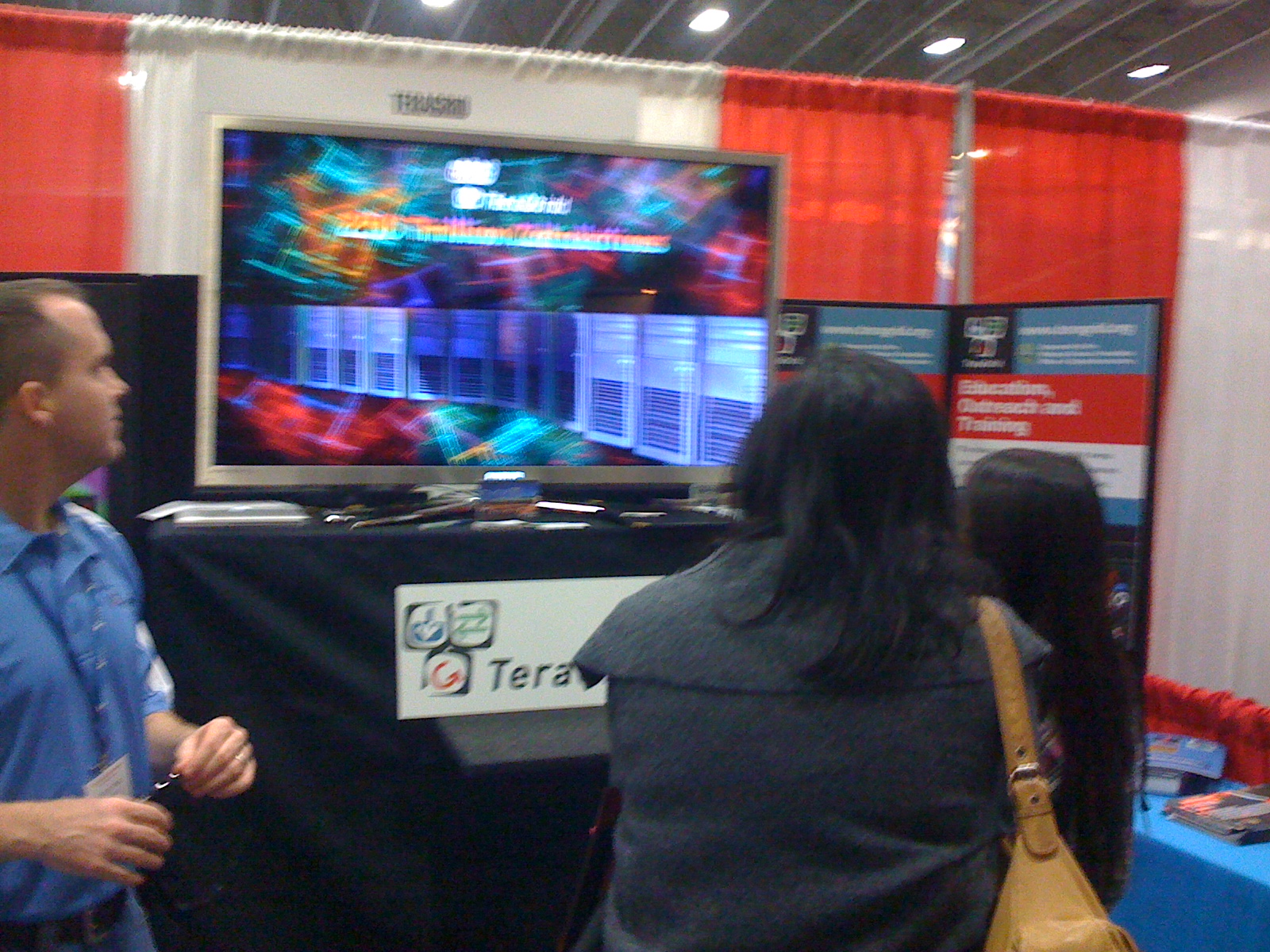
Robert Ping, sharing visualization and modeling images from the Teragrid

STEM Initiatives,, Outreach, Teragrid , Family Science Days

 
What is a girl to do, earn and learn!!
Just a few NCWIT resources for your perusal
NCWIT Resources

NCWIT offers a range of resources to suit your needs.  All of our resources are FREE, easy-to-use, downloadable, and printable.

  • Practices NCWIT promising practices use social science research as a foundation for advice, case studies, and activities that are proven to attract, retain, and advance girls and women in IT.
  • Talking Points NCWIT Talking Points are a series of easy-to-use conversation cards designed to promote the involvement of women in IT by helping people talk about the issues.
  • Programs-in-a-Box NCWIT Programs-in-a-Box offer turnkey solutions to pressing issues facing the IT community. Programs-in-a-Box provide all the components necessary for quick and strategic action, right out-of-the-box.
  • Workbooks & Guides NCWIT workbooks and guides provide you with practical, hands-on steps for changing your recruitment and retention practices and implementing institutional reform.
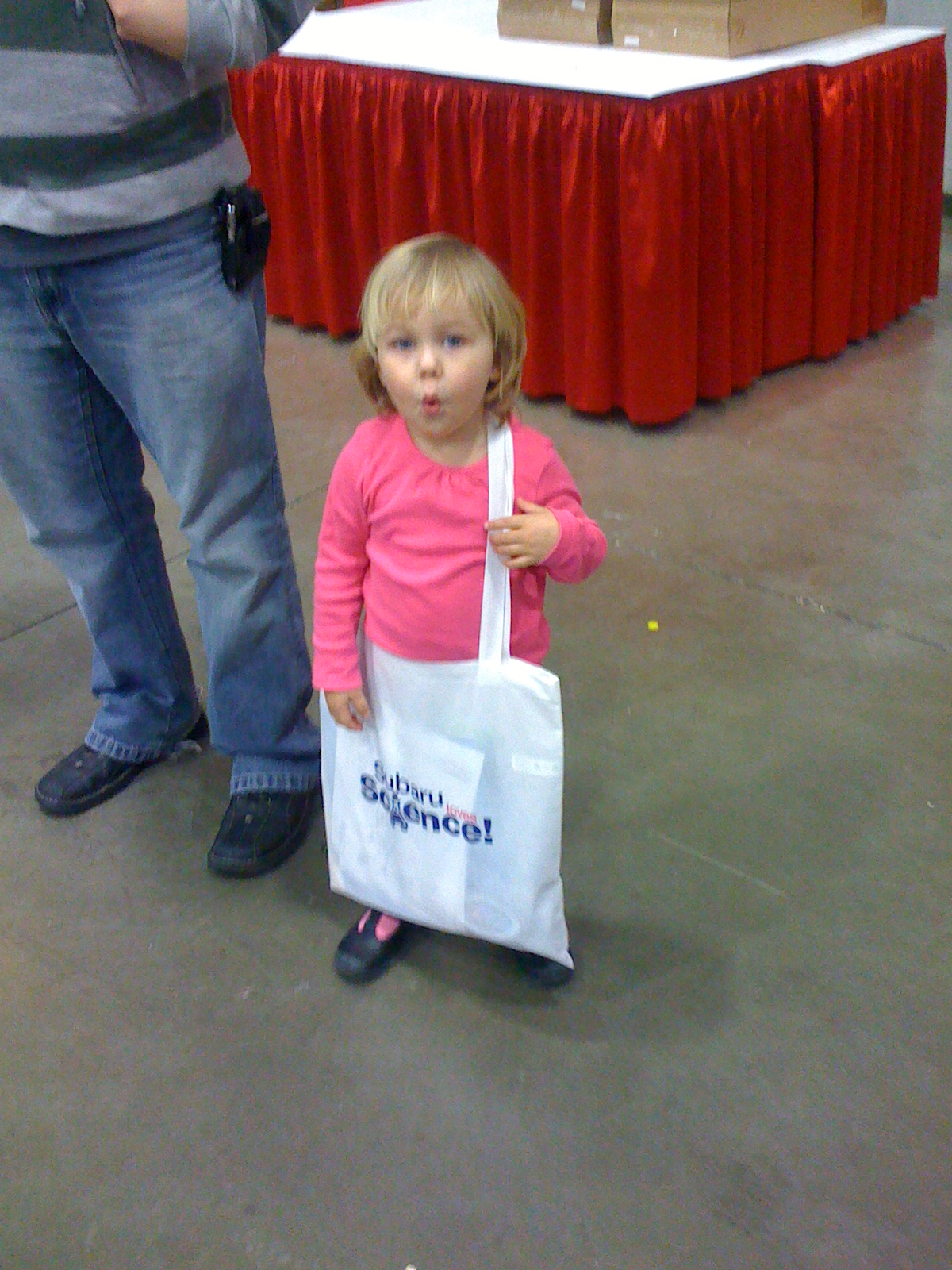
Never too early to learn to love science!

Family science days at AAAS in Washington DC

Women in STEM: An Opportunity and An Imperative

Today Commerce's Economic and Statistics Administration released the second in a series of reports on science, technology, engineering and mathematics (STEM). This report, entitled Women in STEM: A Gender Gap to Innovation (PDF), looked at women and STEM. The results offer an opportunity and an imperative for women and America. The results showed that women are vastly underrepresented in STEM jobs and among STEM degree holders despite making up nearly half of the U.S. workforce and half of the college-educated workforce. That leaves an untapped opportunity to expand STEM employment in the United States, even as there is wide agreement that the nation must do more to improve its competitiveness.

Other key findings are:

Although women fill close to half of all jobs in the U.S. economy, they hold less than 25 percent of STEM jobs. This has been the case throughout the past decade, even as college-educated women have increased their share of the overall workforce.
Women with STEM jobs earned 33 percent more than comparable women in non-STEM jobs–considerably higher than the STEM premium for men. As a result, the gender wage gap is smaller in STEM jobs than in non-STEM jobs.
Women hold a disproportionately low share of STEM undergraduate degrees, particularly in engineering.
Women with a STEM degree are less likely than their male counterparts to work in a STEM occupation; they are more likely to work in education or healthcare
For more information on this topic, read Chief Economist Mark Doms's blog post about the report and ESA's first report on STEM: Good Jobs Now and For the Future.
Women in STEM: An Opportunity and An Imperative

Although women fill close to half of all jobs in the U.S. economy, they hold less than 25 percent of STEM jobs. This has been the case throughout the past decade, even as college-educated women have increased their share of the overall workforce.
Women with STEM jobs earned 33 percent more than comparable women in non-STEM jobs–considerably higher than the STEM premium for men. As a result, the gender wage gap is smaller in STEM jobs than in non-STEM jobs.
Women hold a disproportionately low share of STEM undergraduate degrees, particularly in engineering.
Women with a STEM degree are less likely than their male counterparts to work in a STEM occupation; they are more likely to work in education or healthcare
For more information on this topic, read Chief Economist Mark Doms's blog post about the report and ESA's first report on STEM: Good Jobs Now and For the Future.

Post new comment
Comment Policy
To ensure that everyone can participate in polite conversation, these comments may be moderated. For detailed information on how and what we moderate, view our comment policy.

Women in STEM: An Opportunity and An Imperative

Submitted on August 3, 2011 – 11:30am
Categories:
Printer-friendly version

<a href=”http://www.commerce.gov/sites/default/files/images/2011/august/stem-totalworkforcetotalste.jpg&#8221; rel=”lightbox[field_photo][Gender Shares of Total and STEM Jobs, 2009Download Original]”>Gender Shares of Total and STEM Jobs, 2009

Today Commerce’s Economic and Statistics Administration released the second in a series of reports on science, technology, engineering and mathematics (STEM). This report, entitledWomen in STEM: A Gender Gap to Innovation(PDF), looked at women and STEM. The results offer an opportunity and an imperative for women and America. The results showed that women are vastly underrepresented in STEM jobs and among STEM degree holders despite making up nearly half of the U.S. workforce and half of the college-educated workforce. That leaves an untapped opportunity to expand STEM employment in the United States, even as there is wide agreement that the nation must do more to improve its competitiveness.

Other key findings are:

  • Although women fill close to half of all jobs in the U.S. economy, they hold less than 25 percent of STEM jobs. This has been the case throughout the past decade, even as college-educated women have increased their share of the overall workforce.
  • Women with STEM jobs earned 33 percent more than comparable women in non-STEM jobs–considerably higher than the STEM premium for men. As a result, the gender wage gap is smaller in STEM jobs than in non-STEM jobs.
  • Women hold a disproportionately low share of STEM undergraduate degrees, particularly in engineering.
  • Women with a STEM degree are less likely than their male counterparts to work in a STEM occupation; they are more likely to work in education or healthcare

For more information on this topic, read Chief Economist Mark Doms’s blog post about the report and ESA’s first report on

STEM: Good Jobs Now and For the Future.http://awesome.good.is/transparency/web/1107/stem-education/flash.html


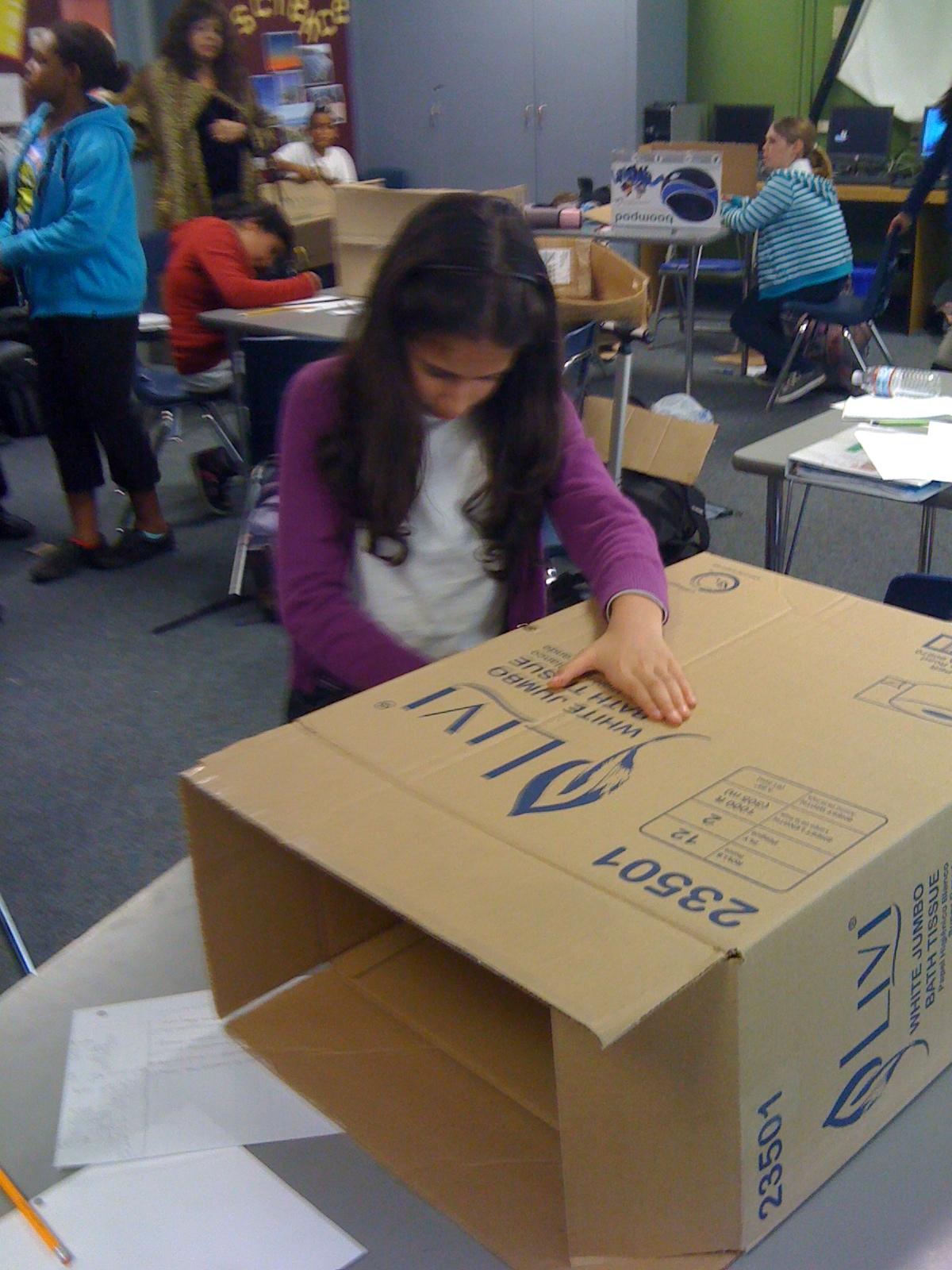
Engineering new ideas at Tracy Sdhool, Tracy Learning Center, Tracy, CA.

Girls can learn to engineer.

What Science Pipeline? Making Sense of STEM Offerings! Part One

Family Outreach Days at AAAS Family Days  - Teragrid Booth

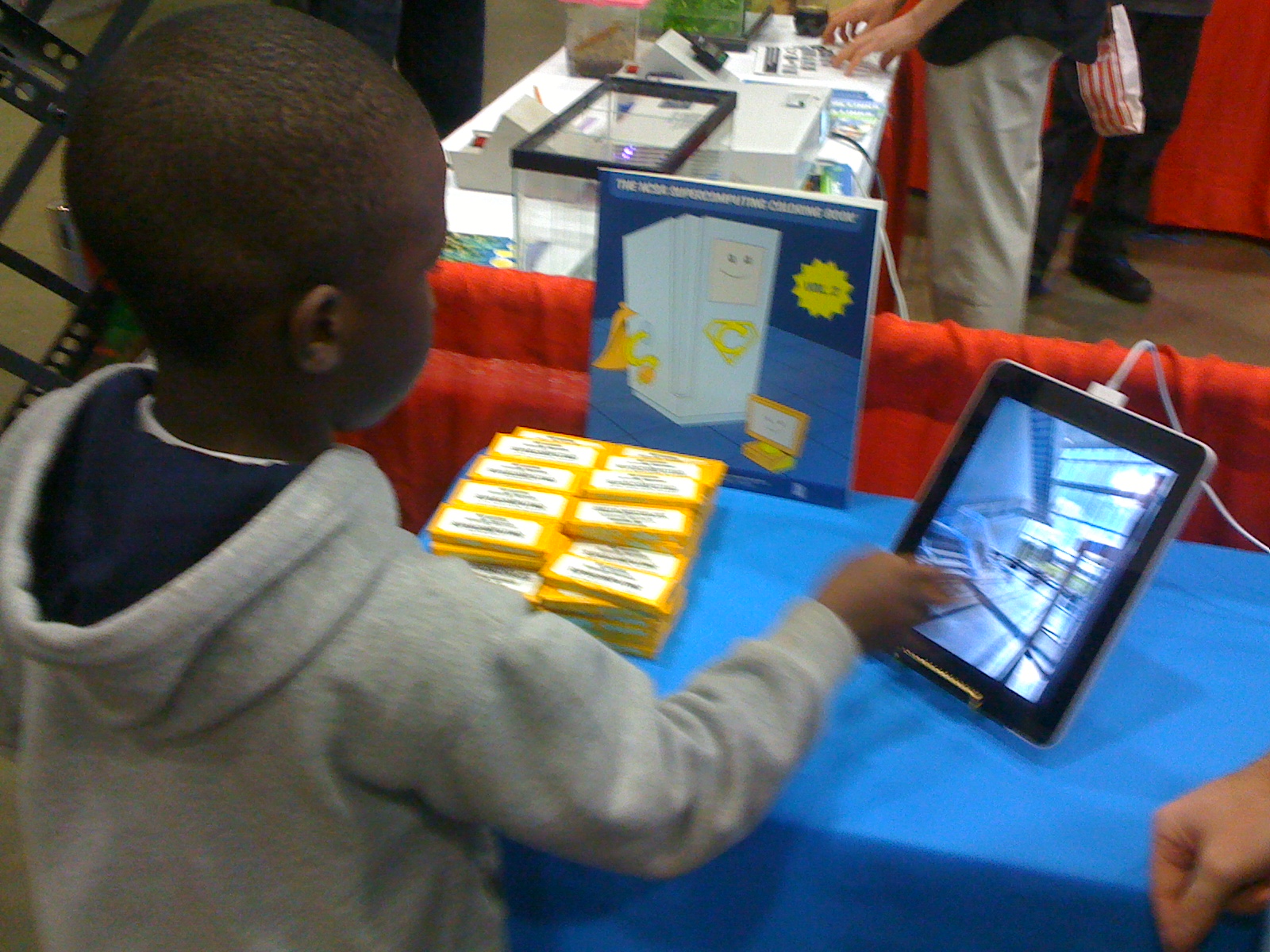
Students explore visualizations of the oil spill.

We all know that many students are not anywhere near talented teachers who can give them the information they need to be curious, understanding, interested and involved in the STEM initiatives. For many there is no pipeline, no indepth knowledge of any of the subjects that will create workforce, or future readiness for careers.

As a career STEM teacher, I was teaching science, math, problem solving, engineering and the use of technology early, i caught a lot of flack.  There were helpful groups of people and organizations that  reached out to me, to others and who helped us to become the teachers that need to be STEM educated. There were these teachers an d we were ridiculed during the Bush administration for teaching science. It was the bottom of the needs totem pole for M. Spellings. So we were not groomed, by our school systems or regarded in a good light. Political winds blew us away.

There was

NASA has many resources that a teacher can personalize and share with no cost.

Astronomy , space science education, the Chalenger Center Programs, so many offerings

,  NASA’s Education Materials Finder will help teachers locate resources that can be used in the classroom. Users may search by keywords, grade level, product type and subject. With hundreds of publications and Web sites indexed, the finder is the best way to locate NASA educational resources.

›  Find Materials Now

We meet the world on the news , but do students know where in the world the news is coming from?

The National Geographic Society and its Outreach to Teachers

Community, Education, and Student Outreach, http://www.informationweek.com/news/231003049

education.nationalgeographic.com  

Most remarkable in the way of transformational and experiential teaching was the experience offered by the National Geographic. It was not just an experience for me. There are Alliance groups within the Geographic. There are opportunities. I had a month of involvement in all things geographic. What they have to offer changes as the programs expand. There is a section on education, there are special programs, , there are lesson plans and there are mentorships to be had in the AAGE.

National Geography Standards

The first ever national geography standardsGeography for Life, were published in 1994 and are being voluntarily adopted around the country. These geography standards are benchmarks against which the content of geography courses can be measured. Standards will affect the education of all children in the United States, and they should be part of the program of instruction of schools in your community. Copies of Geography for Life are available for purchase from the NCGE store.

The Geography Standards Framework consists of two levels. At the first level, the subject matter of geography is divided into six essential elements. By essential we mean that each piece is central and necessary; we must look at the world in this way. By element we mean that each piece is a building block for the whole. At the second level, each essential element contains a number of geography standards, and each geography standard contains a set of related ideas and approaches to the subject matter of geography.

National Geography Standards

The first ever national geography standards, Geography for Life, were published in 1994 and are being voluntarily adopted around the country. These geography standards are benchmarks against which the content of geography courses can be measured. Standards will affect the education of all children in the United States, and they should be part of the program of instruction of schools in your community. Copies of Geography for Life are available for purchase from the NCGE store.

The Geography Standards Framework consists of two levels. At the first level, the subject matter of geography is divided into six essential elements. By essential we mean that each piece is central and necessary; we must look at the world in this way. By element we mean that each piece is a building block for the whole. At the second level, each essential element contains a number of geography standards, and each geography standard contains a set of related ideas and approaches to the subject matter of geography.

 Earthwatch Education

Earthwatch fellowships enable critical partners to participate in research expeditions worldwide. Each year, Earthwatch’s Fellowship Programs enable hundreds of studentsteachersconservation professionals, and corporate employees to join expeditions at little or no out-of-pocket expense. Earthwatch Fellows are emissaries of the Earthwatch mission, sharing their experiences and new knowledge with thousands of students, teachers, and colleagues upon their return.

Educator Fellowships

Summer Fellowships
Get out of the classroom and head into the field to learn about cutting edge research and conservation efforts, to develop professional skills, and to make a difference for our shared environment! As a summer educator fellow, you’ll spend 1-2 weeks of your summer recess on an Earthwatch expedition alongside a diverse team of volunteers led by prominent field researchers. After your expedition, you’ll bring the world back into your classroom and to your students as you’ve never done before.

Learn more about our Summer Fellowship program.

Live From the Field
Live From the Field educator fellows join Earthwatch research teams during a brief portion (7 to 10 days) of their school year and share their experiences with classrooms at home using blogs containing, photos, videos, lessons, and activities. Live From the Field educator fellows also connect with students through live video and phone conferencing at scheduled times during their expedition.

I joyously participated with other teachers in Earthwatch Outreach.  It was fun to be an Earthwatch fellow. Working with a scientist in the field using technology to share the archeological findings was hard work, but rewarding. I learned the culture of the island, the history of Mallorca, I learned about archeological excavation , and how we could use technology to map the site and the finds. Many teachers have been Earthwatch Fellows. The experience can be a life -changing event. Who knew about the other history I learned so much about . The cultures of the Med were unknown to me. Dr. William Waldron was the PI at the time. I participated in a further grant, we mapped the Mongoose popution of St. Martins .. and then volunteered to do Turtle nests , at night , another project. Nothing in a textbook can match the experience. Nothing!

K-12 classroom educators of any subject(s) from public or private schools nationwide are eligible to apply for Earthwatch fellowships. The strongest applicants are those who are passionate about teaching, excited about making a difference with their time and talents, and committed to engaging their communities using their knowledge, passion, and energy.

A starting point is the Education Department of the National Geographic. I don’t remember why I knew about them, or what I saw that made me apply to a summer institute.

, NSTA and their workshops, NCTM and their initiatives , Shodor.org and their free resources, the Fish and Wildlife Service, 4H and the SET program, the Exploratorium, and wait there are more, but I won’t name them all.

There is a digital divide, and there are resources everywhere, if teachers can access them, but given the state of broadband, in many areas that are rural and distant , the people who are concerned about STEM , are creating a false illusion that teachers create the problem.

There is also the knowledge that we in the classrooms have a mandated methodology which we can tweak but the management, ie the school boards and policy people make most of the decisions. So, what ‘s a teacher to do? Stay tuned. The age of Sputnik is over!!

The age of Transformation , has begun in Education.

http://chronicle.com/article/A-Size-That-Fits-All-for-the/128421/

Exploring the Teragrid

Outreach to the public sharing research = Oil Spill simulation

Michael Morgenstern for The Chronicle

By Hal Salzman and B. Lindsay Lowell
The strength and size of the nation’s science-and-engineering work force are the subject of much concern, following the Obama administration’s education initiatives; international testing that shows students in Shanghai at the top of the world; and, last year, an update of the influential report “Rising Above the Gathering Storm.” That report finds the deterioration of America’s competitiveness so severe that it is likened to a Category 5 hurricane. It calls for the United States to create a “New Sputnik” education initiative and expand our science-and-engineering work force. It reinforces a common worry over American students’ lackluster international standing compared with those in several Asian nations and in a handful of small European nations.

We believe that those concerns are overstating and misidentifying America’s challenges in science and engineering, and that they are missing the real opportunities for improving the nation’s education and work force. As we examined the evidence, several points became clear: The United States needs to improve education broadly rather than expand particular fields of study; look inward rather than abroad for exemplary educational models, in light of the limits of international comparisons; and focus on the core lessons about improving the lowest-performing group of students. There is actually no compelling evidence that, over all, the educational pipeline is failing to meet demand.
Our recent analysis of Department of Education data for three decades followed students from high school to the job market. We found little in the way of overall change in students’ pursuit of science-and-engineering studies or their entry into those careers over the past 30 years. We found that while a steady proportion of college students graduated in science and engineering, no more than half of them landed jobs in a formally defined core science or engineering occupation.
So, given a steady supply, why do companies report difficulty in finding ideal workers? Listen carefully and it sounds as if the employers would like entry-level workers to have skills not typical of newly graduated students. Leading engineering companies seek technologists with a depth of skill in a technical area combined with a broad education across technical fields, business, and the social sciences. Colleges find it difficult to develop all of that in only four years. So the hiring difficulty may reflect problems with pedagogy, the structure of higher education, the unwillingness of some employers to train new workers, and a lack of collaboration between academe and industry. It does not, however, indicate a loss of student interest or a shrinking pool of science-and-engineering graduates.
Nevertheless, some policy makers and industry leaders believe that to meet the demands of our knowledge economy, more such education is needed. They even think it is preferable to other fields of study. While acknowledging the value of science-and-engineering knowledge, we find that it is but one of many forms of valuable knowledge. Moreover, the science-and-engineering managers we interviewed expressed dissatisfaction with the “soft” communication, or teamwork, skills of their new engineers. And changes in hiring patterns suggest that the nation’s economic future depends on developing a balanced portfolio of well-educated workers across the spectrum of skills, knowledge, and disciplines.

Finally, some industry lobbying groups and high-tech companies seek to augment the supply of domestic workers by importing foreign labor on temporary visas. But this confuses the purpose of those programs with the country’s immigration policy for citizens-in-waiting. Immigration policy is driven by a long-term vision and a wide range of social and political objectives. The original intent of temporary-visa programs, on the other hand, was to meet short-term, not structural, labor shortages. Ensuring that labor markets are not distorted by short-term visas, which in their current form lead to a number of labor-market and social problems, is not anti-immigrant, and does not undermine the strength of U.S. science and engineering. In fact, raising the numbers of temporary visas for foreign workers during cyclical talent shortages can distort labor markets and discourage domestic students from careers in engineering and the sciences.

While we do not maintain that our study, or any one study, is definitive, we do believe that influential groups should consider new evidence in their quest to advance science, technology, and economic growth. When we look at the past three decades, the data support a far more favorable set of conclusions on student performance and supply than those promulgated by critics of the so-called STEM (science, technology, engineering, and math) pipeline. At the same time, our research supports the widely recognized fact that women and minorities are the most likely future source of STEM workers, and, discouragingly, that where the education system is most clearly failing is precisely for those populations. Of course, focusing on the big picture leaves out clear-cut examples of unfilled shortages of workers in esoteric but crucial occupations.
The classic tried and true formulation is that supply follows demand or, less sanguinely, that depressed wages and discouraged workers result if supply outstrips demand. To avoid those problems, a number of demand-side policies should receive support from all quarters. These policies include stable and increasing government financing for research, reinvigoration of lagging private-sector investments in research, tax breaks and other incentives for research-and-development activities, and the creation of an environment that encourages entrepreneurship. In terms of education, however, the evidence clearly points to improving basic education for low-performing students, schools, and populations—not an attempt to artificially inflate the number of science-and-engineering degrees awarded.
Hal Salzman is a professor of public policy at Rutgers University at New Brunswick. B. Lindsay Lowell is director of policy studies at the Institute for the Study of International Migration at Georgetown University.

THE JACK  kENT COOKE FOUNDATION

No Gifted Child Left Behind?  First, the good news: It turns out, millions of kids from low-income families are acing standardized tests. Now, the bad news…http://www.jkcf.org/news-knowledge

With the tests we find that there are many who have the capacity to learn, to create to innovate, but, sadly nothing happens.  Download the report, here is the summary.

Today in America, there are millions of students who are
overcoming challenging socioeconomic circumstances
to excel academically. They defy the stereotype that poverty
precludes high academic performance and that lowerincome
and low academic achievement are inextricably
linked. They demonstrate that economically disadvantaged
children can learn at the highest levels and provide hope
to other lower-income students seeking to follow the
same path.
Sadly, from the time they enter grade school through
their postsecondary education, these students lose more
educational ground and excel less frequently than their
higher-income peers. Despite this tremendous loss
in achievement, these remarkable young people are
hidden from public view and absent from public policy
debates. Instead of being recognized for their excellence
and encouraged to strengthen their achievement, highachieving
lower-income students enter what we call the
“achievement trap” —
educators, policymakers, and the
public assume they can fend for themselves when the facts
show otherwise.
Very little is known about high-achieving students
from lower-income families — defined in this report as
students who score in the top 25 percent on nationally
normed standardized tests and whose family incomes
(adjusted for family size) are below the national median.
We set out to change that fact and to focus public attention
on this extraordinary group of students who can help
reset our sights from standards of proficiency to standards
of excellence.
This report chronicles the experiences of highachieving
lower-income students during elementary
school, high school, college, and graduate school. In
some respects, our findings are quite hopeful. There
are millions of high-achieving lower-income students
in urban, suburban, and rural communities all across
America; they reflect the racial, ethnic, and gender composition
of our nation’s schools; they drop out of high
school at remarkably low rates; and more than 90 percent
of them enter college.
But there is also cause for alarm. There are far fewer
lower-income students achieving at the highest levels than
there should be, they disproportionately fall out of the
high-achieving group during elementary and high school,
they rarely rise into the ranks of high achievers during
those periods, and, perhaps most disturbingly, far too few
ever graduate from college or go on to graduate school.
Unless something is done, many more of America’s brightest
lower-income students will meet this same educational
fate, robbing them of opportunity and our nation of a
valuable resource.
This report discusses new and original research on
this extraordinary population of students. Our findings
come from three federal databases that during the past 20
years have tracked students in elementary and high school,
college, and graduate school. The following principal
findings about high-achieving lower-income students are
important for policymakers, educators, business leaders,
the media, and civic leaders to understand and explore as
schools, communities, states, and the nation consider ways
to ensure that all children succeed:

Studying the Chesapeake Bay, Using Digital Resources and the Arts!!

Exploring the Chesapeake Bay
Children who may not know the way of estuaries to the sea can learn using valuable online resources.
I use a different way of teaching. Marc Prensky is right. There are people who know a lot more than I do about the Chesapeake Bay.I became the facilitator for learning, connecting the dots and some of them were using the arts , digital media and hands on science by mistake really. I had training from the National Geographic which included maps, history, art and a great video.
I wanted to think how to fund all of this and how to create a rich environment . I wrote some grants, the parents and I had a meeting and we enlisted some help from the Fish and Wildlife Service.
The Chesapeake Bay is the most important water way in this area. I took courses at the National Aquarium in Baltimore , and learned to write curriculum  . For three years I investigated

estuaries, and then the Bay as a system and then the ocean. I think I would have become a Marine Biologist if I had not been swayed by technology and the Clinton administration. But I had the curriculum , but as usual not the permission to use it at my grade level and so I reached out to NASA, NOAA, National Geographic, the Chesapeake Bay Society and parents and I found a way to get a grant. When money is given in schools and principals sign their permission , you can do wonderful things.
The final trip was ito Baltimore
We started by sharing resources from the Fish and Wildlife Service
We did Duck Stamps. We drew Duck Stamps  and learned about the various ducks who come to the Chesapeake Bay.
Here is a set of photos and resources from the Fish and Wildlife Service
http://digitalmedia.fws.gov/  The people who came from the Fish and Wildlife Service brought posters and resources too.
The Fish and Wildlife people gave us a bus to the Blackwater facility. We saw ducks in the wild and had an outdoor excursion.
National Aquarium in Baltimore
The National Aquarium in Baltimore is a beautiful place. It is expensive for students and we decided to do a bus tour.
Thank heavens for grants.
The education program is fantastics, we did adaptations and studied the salinity, turbidity waves and tides, microscopic life , seined and did pollution studies from different sites on the Chesapeake.But we did our homework. We read stories about the CHesapeake Bay, and wrote some of our own. We studied the maps of the bay and the estuary.
Smithsonian Estuary Research Center
You can see that we did a lot of work at this research center, before we had our “Eat a Crab Lab” and other activities
3.   About Crabs – Lesson 1
…ere the River Meets the Sea: Exploring Life in the Chesapeake Bay with Smithsonian Scientists SERC Project Home Page Project Team Members Activities & Lesson Plans Project Resources Photo Gallery S E R C Schenectady City School District +————-+—————-+———– Lesson About Index Crabs Lesson Worksheet 108 1 Education Drive Schenectady, NY 12303 Blue Setting Crab Up A SERC: 518.370.8100 Observation Salt Tales of the Water Blue Crab Aquarium About Crabs Lesson No. 1 OBJECTIVES: 1. Students will use the Internet to learn about the Blue Crab. 2. Students will be able to identify the…
User Rating:
    Grade Level: K-5
4.   About Crabs
Where the River Meets the Sea: Exploring Life in the Chesapeake Bay with Smithsonian Scientists SERC Project Home Page Project Team Members Activities & Lesson Plans Project Resources Photo Gallery S E R C Schenectady City School District Lesson About 108 Index Crabs Lesson Worksheet Education II 1 Drive Schenectady, NY 12303 Blue Setting 518.370.8100 Crab Up A SERC: Observation Salt Tales of the Water Blue Crab Aquarium About Crabs Lesson No. 2 OBJECTIVES: 1. Students will observe a live Blue Crab. 2. Students will be able to distinguish between a male and fema…
User Rating:
    Grade Level: 9-12
That service has a portable traveling lesson. I can’t think it is as exciting as being at the place.
If you look at the pictures you can see how fantastic it is. The children go out on a pier where there are stations . They have science experiments to perform.  We learned the data we needed to do the experiments back in the classroom.
One of my students surprised me. Since we were so early in the year in the crab season. I said if they caught a crab I would
buy a bushel to steam back at the school. Well this child had a plan. Her mother was a biologist. She captured an immature
stage of the crab and precisely identified it.  So we did have an eat a crab lab extra session.
The National Geographic had maps of the Chesapeake Bay and we took a canoe trip on one of the rivers we studied.
Blackbirds in the reeds, a smooth adventure.
National Geographic is partnering with groups – across a range of scientific disciplines – that are interested in exploring how FieldScope can better support student geographic learning and outdoor investigations.

FieldScope Projects  http://www.fieldscope.org/

This is awesome.

National Geographic FieldScope is a web-based mapping, analysis, and collaboration tool designed to support geographic investigations and engage students as citizen scientists investigating real-world issues – both in the classroom and in outdoor education settings. FieldScope enhances student scientific investigations by providing rich geographic context – through maps, mapping activities, and a rich community where student fieldwork and data is integrated with that of peers and professionals, adding analysis opportunities and meaning to student investigations.

Chesapeake Bay

The Chesapeake Bay FieldScope Project is a “citizen science” initiative in which students investigate water quality issues on local and regional scales and collaborate with students across the Bay to analyze data and take action. Chesapeake Bay FieldScope is a project of National Geographic’s Education Programs in collaboration with the Chesapeake Bay Foundation and the NOAA Chesapeake Bay Office.
Serc does on line teaching for everyone. But I did it from the Pier and Reed Center.
Marc Haddon was my contact for a long time there.

See the  SERC Lab
This was a teacher workshop
Art was mosaics, writing a play about the bay, drawing the animals of the bay, creating a workbook for people who loved the bay, and writing a grant, the kids did this, to be able to take field trips to photograph the bay.
I never knew that there was a  boating minority connection to the study of the Chesapeake Bay regarding Frederick Douglass.
He created with others , a boat building facility for blacks to be able to be involved in the shipbuilding enterprise.
Who knew?
We collected books and read them about the bay and its children.
In the end we loved best the study of Anoxia Mae.
We wrote a grant with the help of parents and had $5000.oo to spend on field trips, excursions, making movies and posters.
This was at Ashlawn School  in Arlington, Virginia.
We did a lot more than this. One of the things you learn from being a teacher trained by the National Geographic is that children with an interest in geography learn and share with the community. So my children went to the school board to complain about the filth in local streams, and got some help on organizing a clean up day with the Arlington County  Board.
I did not plan that idea. The kids did. You can see why theme based, supported project based learning is wonderful for students.
I am thankful for the training I had at the National Geographic Society as an educator.
If I was teaching now, in a classroom, I could add the GIS information to this program.
ESRI and the National Geographic help make for a rich learning experience for kids.
More resources for everyone are at My Wonderful World .org.

Transforming Teacher Use of Technology with Use of Teragrid Outreach Resources

 
Sharing the Vision of THe Teragrid

Family Science Days AAAS Teragrid Outreach

Three Dimension/Film of the Teragrid Outreach in the AAAS Science booth

You may ask, what is the Teragrid?

Teachers find it an empowering resource…

A formal definition is this:

TeraGrid is an open scientific discovery infrastructure combining leadership class resources at 11 partner sites to create an integrated, persistent computational resource.

Using high-performance network connections, TeraGrid integrates high-performance computers, data resources and tools, and high-end experimental facilities around the country. Currently, TeraGrid resources include more than 2.5 petaflops of computing capability and more than 50 petabytes of online and archival data storage, with rapid access and retrieval over high-performance networks. Researchers can also access more than 100 discipline-specific databases. With this combination of resources, the TeraGrid is the world’s largest, most comprehensive distributed cyberinfrastructure for open scientific research.

TeraGrid is coordinated through the Grid Infrastructure Group (GIG) at the University of Chicago, working in partnership with the Resource Provider sites: Indiana University, the Louisiana Optical Network Initiative, National Center for Supercomputing Applications, the National Institute for Computational Sciences, Oak Ridge National Laboratory, Pittsburgh Supercomputing Center, Purdue University, San Diego Supercomputer Center, Texas Advanced Computing Center, and University of Chicago/Argonne National Laboratory, and the National Center for Atmospheric Research.

The research community supports teachers, and education through outreach in several ways.  Each of the research communities has a specific education section . Gateway if you will to the use of the research .

San Diego Supercomputing Center features the subject of Computational Thinking using a well thought out project that was written by Pat Phillips of Microsoft. You can find that here:  http://education.sdsc.edu/resources/CompThinking.pdf

You may have noticed that the major teacher organizations, CSTA, ISTE, CoSN, and SITE featured papers, workshops and discussions on the use of computational thinking in the classroom. This was a planned outreach started by the network of educators and researchers within the Teragrid network.

Here is one of the papers presented at the Consortium for School Networking in New Orleans in 2011:

http://etcjournal.com/2011/04/01/white-paper-21st-century-education-computational-thinking-computational-science-and-high-performance-computing-in-k-12-education/

Executive Summary

The 2010 National Educational Technology Plan says “…technology is at the core of virtually every aspect of our daily lives and work…. Whether the domain is English language arts, mathematics, sciences, social studies, history, art, or music, 21st-century competencies and such expertise as critical thinking, complex problem solving, collaboration, and multimedia communication should be woven into all content areas.”

Since the late 1990s, the US has been trying to describe what a 21st century education should look like. Futurists are trying to divine the skills that will be needed for jobs that do not yet exist, employing technologies that have not yet been invented. However, a careful look around can allow us to see many areas that have been virtually unnoticed by those who are focused on 21st century skills.

Supercomputing – sometimes called high performance computing – is not a new technology concept, but the supercomputers of 25 years ago were about as powerful as a cell phone is today, and likewise the supercomputers of today will be no better than a laptop of 10 to 15 years from now. As the world of the biggest and fastest computers has evolved and these computers have become increasingly available to industry, government, and academia, they are being used in ways that influence everyday life, from the cars we drive, to the food in our cupboards, to the movies we enjoy.

Supercomputing is not an end in itself, but rather the technological foundation for large scale computational and data-enabled science and engineering, or computational science, for short. It is a collection of techniques for using computing to examine phenomena that are too big, too small, too fast, too slow, too expensive, or too dangerous to experiment on in the real world. While problems with small computing footprints can be examined on a laptop, the grand challenge problems most crucial for us to address have enormous computing footprints and, thus, are best solved via supercomputing.

As a result, in order to be competitive as a nation, we need to produce knowledge workers in far greater numbers who understand both what supercomputers can do and how to use them effectively to improve our understanding of the world around us and our day to day lives.

The thinking about large scale and advanced computing has evolved, too. Today, we realize that, while not everyone will be using big computing in their jobs, they will need to understand the underlying concepts.

These concepts collectively are referred to as ‘computational thinking’, a means of describing problems and how to solve them so that their solutions can be found via computing (paraphrased from Jeanette Wing, Jan Cuny, and Larry Snyder). Computational thinking includes abstraction, recursion, algorithms, induction, and scale.

Our 21st century citizens, entrepreneurs, leadership, and workforce will be best positioned to solve emerging challenges and to exploit new opportunities if they have a strong understanding of computational thinking, how it applies to computational science, and how it can be implemented via high performance computing. These are true 21st century competencies that will serve our nation well.

The authors of the paper have been immersed, involved and integrated into the Teragrid community through attending workshops, NCSI initiatives, online contact with the researchers and outreach specialists over a period of time that has proved to create a powerful network of educators sharing the story of possibilities within the Teragrid.

An initial outreach , Teacher Bridge Day , which preceded  an ISTE and CSTA conference, united teachers and educators who then continued to work together over the period of months . The teachers benefitted from the combined efforts of the many researchers and outreach specialists who participated and contributed to the very first workshop.  Following that workshop, there were involvements with ITest through Joyce Malyn Smith.

I am pleased to say that this year , Joyce and the educators at SITE.org reported a large number of people interested in the strand. Joyce took the idea and developed it into a specialized strand for the ITest Community.

Here are a few of the 2011 presentations from the Aera Annual Meeting.

There may be more resources that link to the outreach of the Teragrid. I have chosen these to share.

Joyce was also a force at the SITE conference in Nashville, TN. The informal outeach team, those of us who try to broaden engagement and show diversity were there to shake up the force within SITE.org . We established a SIG for Computational Thinking and fielded a number of workshops.

We worked also at the K-12 levels of technology in Texas at TCEA.

Everything  is Big in Texas:  TACC and Supercomputing , at  TCEA

Ranger?    Stallion ? Computational Thinking and Learning

I  go to Texas a lot. My brother lives there, friends live there,  NASA holds events. I have been to Lockhart for BBQ, to Galveston for a wedding, to San Antonio and other places. I even know lots of recipes and ways to BBQ. But Austin put the icing on the cake for those of us doing digital outreach and broadening engagement in Supercomputing.I took classes at Rice (Teacher Tech) with a Supercomputing scholarship.  I have digital sisters and brothers in Texas.

TEXAS

Why not? Texas is a huge state and I have found lots of friends and educators who support my ways of thinking there.

I participated in a Teacher Tech  workshop at Rice University in Houston, and met Karen North and Dr. Richard Tapia. For a long time I was in constant email touch with a LOT of Texans. We were not sure what kind of reception we weuld get in 2011, this being a new topic to many people. I have been to Austin a lot, so when I see the statue of Barbara Jordan and the big guitars, I feel at home. We had a Supercomputing conference in Austin a few years ago as well.

Ray Rose, Henry Neeman, Vic Sutton and I have been a team at other conferences, we were literally breaking the ice in Austin for educators. It was scary to do.

. (It was very , very cold)  The keynote was a very warm one by Leigh Anne Touhy. The Blind Side was written about her true life experience. She set the tone for broadening engagement and social justice for me. She shared how her life was changed . I had not seen the movie , but I will.

We think that in education there is a blind side to the understanding of technology, particularly computational science, so we put together a workshop for Supercomputing and the use of the Teragrid and we did  a workshop for Emerging Technologies, and a tour of the TACC center.on the campus.

TCEA  Supercomputing and the Teragrid…  no limits, remember?

Henry Neeman has a great presentation , ” What in the World is Supercomputing!“. We took it to a state conference. Did I mention he is from Okahoma? They razzed him a lot, but he just kept on presenting. The interesting thing about it is that he is a reseacher, who can bring the ideas down to earth with fun, and understanding. Henry can do this in person, on line or in a course online. You can fund a lot of the information here.

http://www.oscer.ou.edu/Symposium2003/neeman_bio.html

Nothing like being with him in person however. Think Puzzle. Think a guy moving around at the speed of light, absolutely able to help you understand Supercomputing. This is Henry.

http://www.facebook.com/photo.php?pid=5653613&l=8267b33412&id=593996326

Dr. Neeman also has taught a series of workshops titled “Supercomputing in Plain English”, directed at an audience of undergraduates, graduate students, faculty and staff not only in computer science but also in a variety of physical science and engineering fields. Dr. Neeman’s research interests include high performance computing, scientific computing, parallel and distributed computing, structured adaptive mesh refinement, scientific visualization, Grid computing and computer science education. You can find his materials on line. He is the Education and Outreach Chair for Supercomputing 2012 in Seattle.

We embarked , engaged, energized , and educated teachers so that they could be empowered to understand the computational sciences. We had outreach materials from the Teragrid. So well put together, and such a hit with the educators.

All three of the sessions were a success. We did not have supertech people except one or two and we had about 50 people in the first workshop.

TOURING TACC

The second was the tour.My heart fell when I went to the bus, because at first I could not see it was full. We had a grand tour of TACC. I love the visualization images .http://www.tacc.utexas.edu/scivis-gallery/

The University of Texas at Austin is one of the nation’s leading universities, an academic institution of enormous breadth and depth, with 50,000 students and 3,000 faculty. It’s an economic powerhouse that pumps more than $8.2 billion into the Texas economy each year. It ranks fifth in the world for academic citations and is the recipient of more than 400 patents. Seven of its doctoral programs rank among the top 10 in the nation.

The University of Texas’ intellectual firepower extends far beyond its classrooms and labs. In addition to ongoing research in 18 colleges and schools, the university sponsors 100 separate research units and 10 organized research units, such as the Texas Advanced Computing Center (TACC).

TACC plays a pivotal role in the new culture of computational science at The University of Texas at Austin and is central to UT’s success as a major public research university. TACC boasts world-class resources and expertise that enable scientists and researchers to find solutions to the biggest problems facing science and society. From climate change to medical research to energy resources, traditional and renewable, advanced computing provides the tools that are critical to discovery in science and across disciplines. Faith Singer-Villalobos lead the presentation and discussion.

TACC’s education and outreach programs support their mission to enable discoveries that advance science and society through the application of advanced computing technologies. We all benefit from advanced computing in our everyday lives, from more accurate weather reports, to safer automobile designs, to smaller, lighter electronic gadgets.

TACC’s education & outreach programs introduce K-12, undergraduate and graduate students to the power of advanced computing for science, technology, computer science, engineering, and mathematics. It believes that the students are the next generation of Einsteins, Curies, and Hawkings, who will someday make breakthrough discoveries that we can’t even imagine today.

We wanted to touch the future through sharing with the teachers what the university and supercomputing had to offer.

Teachers touch the future.

Our last presentation was to identify the real 21st Century Literaraies.  about data visualization, and computational thinking, data mining and global collaborations. We were able to share partnership organizations to teachers for field experiences, National Geographic, Earthwatch, NASA , NOAA but most importantly to show ans share curriculum opportunities that were free.

Shodor.org

http://www.shodor.org/activities/

and Scalable Game Design

http://scalablegamedesign.cs.colorado.edu/wiki/Scalable_Game_Design_wiki

http://scalablegamedesign.cs.colorado.edu/gamewiki/index.php?title=Scalable_Game_Design_wiki&oldid=3534#Game

Meanwhile San Diego is doing outreach of this kind.

Upcoming Computer Science Courses for High School and Undergraduate Students

http://education.sdsc.edu/

Introduction to C++ Programming
Mondays, January 10 – March 14, 2011– 4:30pm- 6:30pm (weekly)

This class  introduces programming concepts to students, with no previous programming experience required, and will focus on learning to read and write programs in C++. The class will focus on in-class programming and participation. The course will move quickly and students are required to have access to a computer at home. The course will cover IDEs, programming basics, compilation, execution, flow control, functions, arrays, pointers, file I/O, structures and classes. Weekly homework assignments solidify understanding in preparation for a comprehensive final project.

Introduction to Programming in Python ( this already started)
Tuesdays, January 11 – March 15, 2011– 4:30pm- 6:30pm (weekly)

This course offers an introduction to computer programming via the Python programming language. Students listen to weekly explanation-demonstrations of and gain simultaneous practical experience with basic coding concepts such as calculations, string formatting/manipulation, conditional statements, iteration, file i/o, and the abstraction of functions, as well as programming style. Weekly homework assignments solidify understanding, and a final project offers the opportunity to creatively deploy the class materials. This course is designed to prepare students for the class’s final project, the creation of a computer program that generates a poem.

In our network we can identify lots of opportunities for K-12. Teragrid even features them in a booklet.

How much data is that? Check out the visual idea of it.

http://www.focus.com/images/view/52784/

CyberBullying

  • Keep kids safe from cyberbullies pdated Thur February 17, 2011
  • Cyberbullying is a growing national concern, with roughly 75 percent of teenagers using cell phones, the most common instrument of harassment. The U.S. education secretary has been talking about it, and the Department of Justice held a cyberbullying summit.
  • Here is a web site with basic knowledge and information to get started.  Stop Cyberbullying.org

    There is also an interview with Parry Aftab on this electronic journal.

    Cyberbullying: An Interview with Parry Aftab

    Posted on February 17, 2011 by admin

    Bonnie BraceyBy Bonnie Bracey Sutton
    Editor, Policy Issues

    Introduction: Parry Aftab, J.D., is the executive director of WiredSafety, a site where victims can receive one-on-one assistance when they have been bullied online. She is the author of a number of books on Internet safety, including A Parent’s Guide to the Internet (1997) and The Parent’s Guide to Protecting Your Children in Cyberspace (2000).

    ETCJ: What is cyberbullying? How is it different from traditional bullying?

    Parry Aftab: Cyberbullying is “any cyber-communication or publication posted or sent by a minor online, by instant message, e-mail, website, diary site, online profile, interactive game, handheld device, cellphone, game device, digital camera or video, webcam or use of any interactive digital device that is intended to frighten, embarrass, harass, hurt, set up, cause harm to, extort, or otherwise target another minor” (WiredSafety). Snip!!

    There is also an interview with Nancy Willard on this site.

    Bonnie Bracey Sutton

    Power of US

    Science at the Street Level -Family Science Days

    I have been involved in science expos, family days and the Teragrid outreach. Most of our customers are kids. What the sad part is , is that they come and share and learn and leave with a sense of wonder. What happens in the school most say, is very different. I want to share a few pictures with you from the last Family Days at AAAS. We of the Teragrid were invited to display a booth.

    1. I am sharing this information because the link and information is  here for parents and teachers and some idea of what we were able to participate in. I am also sharing this in case you decide to do science cafes or festivals in your area. This is  a blue print to using community and national resources. There is funding for science cafes and festivals.
    Fabulous images from the Teragrid

    Working the Booth, learning about 3 D Visualization

    [Family Science Days]

    We Met the Scientists at AAAS Family Science Days!

    If you visited  Family Science Days during the Annual Meeting of the American Association for the Advancement of Science (AAAS).You would have had a wonderful experience. But you actually needed the two days to see it all.

    We browsed interactive tabletop exhibits, learn about cool science jobs, and had your questions answered by experts convened by AAAS! This FREE event was open to all

    All Family Science Days events took  place on Saturday and Sunday, 19-20 February in Exhibit Hall D of the Walter E. Washington Convention Center in Washington, D.C.

    This community science showcase—featuring hands-on demonstrations and other family and kid-friendly activities—shines a spotlight on a broad range of educators working to promote an interest in science among the general public. You can see from some of the pictures here

    Exhibitors at Family Science Days

    AAAS Kinetic City
    Kinetic City (www.kineticcity.com) is a fun, web-based series of science clubs and other resources produced by AAAS. Children learn standards-based science through art, writing, and physical education challenges by using hands-on and on-line activities. Featured this year in our booth will be activities from our Science Gym program, focusing on health, exercise and nutrition. Science Gym is a workout for your body and your mind! 

    American Chemical Society (ACS)Apply for an ACS Hach High School Chemistry Grant. Applications due April 1, 2011!
    Celebrate the International Year of Chemistry through hands-on activities with ACS. Our bodies, world, and universe are all based on the miraculous science of chemistry. Children, teens, and adults are invited to visit with our scientists and join them in hands-on experiments, such as polymer investigations, that will illustrate how chemistry improves people’s lives every day through its transforming power. 

    American Society of Agricultural and Biological Engineers (ASABE)
    ASABE is a global community of individuals dedicated to the advancement of engineering and technology for a sustainable tomorrow. Its 9,000 members are consultants, designers, educators, researchers, and others with unique expertise in agricultural, food, and biological systems. Worldwide, they help provide the necessities of life: a safe and abundant supply of food; clean water; a healthy environment; and the renewable sources timber, fiber, fuel, and energy. 

    American Society of Plant Biologists (ASPB)
    What’s so cool about plant biology and scientific thinking? To find out, try the fun, informative, hands-on plant science activities offered by ASPB. Dig in to make a Lilliputian garden necklace. Peek into plants with easy-to-use microscopes. Collect fun activities to share with your school or community. Meet real plant biologists to learn more about how important plants are to your everyday life. 

    ARKive (Wildscreen USA)
    ARKive, often called the Noah’s Ark of the web, is a unique global initiative gathering together films, photographs, and audio recordings of the world’s threatened animals, plants, and fungi into one centralized digital library. ARKive is leading the virtual conservation effort by creating comprehensive and enduring multimedia species profiles, complementing other species information datasets, and making this key resource available to scientists, conservationists, educators, and the general public. These important audiovisual records are being preserved and maintained for the benefit of future generations and freely available. 

    Brookhaven National Laboratory (BNL)
    BNL, funded primarily by the Office of Science of the U.S. Department of Energy, houses large-scale scientific instruments and facilities—some available nowhere else in the world. Each year, more than 5,000 researchers use these facilities to delve into the basic mysteries of physics, chemistry, biology, materials science, energy, and the environment. 

    Carnegie Academy for Science Education (CASE)
    http://case.carnegiescience.edu/
    CASE’s mission is to improve the science and mathematics experiences of the children of the nation’s capital. Our programs for teachers operate pre-K to high school and include MathforAmerica. Our current children’s programs are intended for students in grades 6-12. Come learn about: First Light; DCBiotech, Outreach Loaner Labs and Bead Into BioInformatics; STEM Teacher Professional Development; Carnegie’s NASA Education and Public Outreach programs; and MathforAmerica. 

    Carnegie Mellon University: School of Computer Science (SCS)
    Students from SCS invite you to their booth to find out what Computer Science is really about. Also, join us and participate in our stage-show presentation! Guess who is the Computer Scientist? Tickle your brain cells with Computer Science Puzzles! Did you know Computer Science is about Magic? … or is it? Meet “Billinda” our robot dog! 

    Deep Earth Academy
    Deep Earth Academy develops programs and materials based on ocean research expeditions. Come learn about the JOIDES Resolution—our amazing research ship—and how scientists on board pull core samples from the ocean floor, use them to learn about our Earth, and live for months at sea. 

    Fab@Home
    Fab@Home will change the way we live. It is a platform of printers and programs which can produce functional 3D objects. It is designed to fit on your desktop and within your budget. Fab@Home is supported by a global, open-source community of professionals and hobbyists, innovating tomorrow today. The community includes hundreds of engineers, inventors, artists, students, and hobbyists across six continents. The Fab@Home is used in fields as diverse as model making, manufacturing, education, bioresearch and cooking. Come learn about 3D printing of items from chocolate and cookies, to plastic and human organs. 

    FONZ
    FONZ is the dedicated partner of the National Zoological Park and provides exciting and enriching experiences to connect people with wildlife. Together with the Zoo, FONZ is building a society committed to restoring an endangered natural world. 

    GenSpace
    GenSpace is the country’s first community biotech lab. We dedicate ourselves to promoting education in biotechnology for both children and adults. Our members work in-and-outside of traditional settings, providing a safe, supportive environment for training and mentoring. We come to underserved schools to work with students, but can also be found at street fairs and green markets. We are strong advocates of hands-on science, using our lab to develop fun activities that both engage and educate. As our programs grow and more community labs like ours develop, we believe our community-based efforts will not only help generate a new generation of researchers, but also inform public science debate. 

    How the Weather Works
    How the Weather Works is a full-service weather education provider. This includes conducting teacher workshops, leading in-school field trips, offering public science education programs, providing quality weather-based photography to clients, and writing books and web content about weather. How the Weather Works prides itself in having a unique meteorologist-educator team to ensure that science and education are blended through multidisciplinary thematic study units. Mathematics, geography, language arts, history, and much more are “webbed” in our programs and products. 

    Earthquakes
    Jump up and down, create an earthquake, and watch your seismic waves. Create a larger earthquake with the help of your family and friends. Be a seismic detective and answer these questions: Did any earthquakes happen around the world today? Where do most earthquakes occur? Where do you think the next earthquake will occur? Explore these topics and more with IRIS, a university consortium funded by the National Science Foundation to provide facilities for education and research in seismology. IRIS provides free educational activities and resources for audiences including K–16 students and teachers and the general public, and it operates global seismic networks, portable seismic instrumentation, and data access facilities.
     

    Koshland Science Museum
    The Koshland Science Museum of the National Academy of Sciences engages the general public in current scientific issues that impact their lives. The museum’s state-of-the-art exhibits and programs stimulate discussion and provide insight into how science supports decision-making. Current Koshland exhibits include Infectious Disease: Evolving Challenges to Human Health, which explores the microbial world we live in and how our response determines the spread of disease;Global Warming Facts & Our Future, which explores ecological and societal issues related to global warming; and Wonders of Science, which explores ground-breaking scientific research through interactive multimedia. 

    NASA MESSENGER
    In March 2011, MESSENGER will become the first spacecraft to go into orbit around the planet Mercury. Come learn about the spacecraft and the planet at this fun, interactive exhibit! 

    NASA Solar Dynamics Observatory (SDO)
    SDO is NASA’s newest eye on the sun. Scientists are using SDO to study how solar activity is created and how space weather comes from that activity. Solar activity affects our modern society. Solar flares and coronal mass ejections can disable satellites, cause power grid failures, and disrupt GPS communications. They can also have a big impact on astronauts in space. Come learn all about the sun and space weather, and create your own Space Weather Report. 

    Scheduled to open in 2013, the NCM is a world-class cultural and educational institution dedicated to engaging children and empowering children. Its mission is to inspire children to care about and improve the world. Through 2013, NCM is operating as a Museum Without Walls, participating in a variety of community events and working with other organizations to develop creative partnerships that benefit kids and families. In 2009, NCM opened the Launch Zone, a 2,700 square-foot space at National Harbor, MD, where kids and families can prototype and test exhibit and program concepts. 

    National Institute on Alcohol Abuse and Alcoholism (NIAAA)
    NIAAA works to promote youth understanding of the effects of alcohol on coordination and the dangers associated with these effects. NIAAA will present the “Cool Spot Carnival,” which will use resources and messages from the Institute’s Cool Spot website geared toward young adolescents, aged 8 to 18, to show the negative effects that alcohol can have on the brain. Kids can try their hand at a football-toss game while wearing “fatal vision goggles.” These glasses distort the vision of the wearer to mimic the effects of alcohol on motor skills. 

    National Institute of General Medical Services (NIGMS)
    NIGMS is a component of the National Institutes of Health, one of the Public Health Service agencies within the U.S. Department of Health and Human Services. NIGMS primarily supports basic research that lays the foundation for advances in disease diagnosis, treatment, and prevention. The Institute’s programs encompass the areas of cell biology, biophysics, genetics, developmental biology, pharmacology, physiology, biological chemistry, bioinformatics, computational biology, research training, and work-force diversity. 

    National Institutes of Health (NIH)
    NIH is the nation’s medical research agency—making important medical discoveries that improve health and save lives. NIH strives to uncover fundamental knowledge in science that will enhance health, lengthen life, and reduce the burdens of illness and disability. In doing so, NIH seeks to strengthen our nation’s research capacity, broaden our research base, and inspire a passion for science in current and future generations of researchers. 

    NIH Division of Occupational Health and Safety
    The Division invites you to play STAR-LITE (Safe Techniques Advance Research—Laboratory Interactive Training Environment), an interactive, safety training technology that enlightens and expands your knowledge of working safely in a laboratory environment while simultaneously applying critical thinking proficiencies and problem solving skills. STAR-LITE is a free, downloadable, game-based learning experience that incorporates common gaming functionality with laboratory safety and risk assessment content. Sit down at a computer, walk through a virtual laboratory environment, and participate in a series of quests that require interaction with characters and laboratory equipment. 

    National Institute of Standards and Technology (NIST)
    From automated teller machines and atomic clocks to mammograms and semiconductors, innumerable products and services rely in some way on technology, measurement, and standards provided by NIST. Founded in 1901, NIST is a non-regulatory federal agency within the U.S. Department of Commerce. Its mission is to promote U.S. innovation and industrial competitiveness by advancing measurement science, standards, and technology in ways that enhance economic security and improve our quality of life. 

    National Oceanic and Atmospheric Administration (NOAA) Education
    NOAA is a federal science agency providing free information about weather, climate, oceans, coasts, satellites, data, and fisheries. Every day, NOAA’s science touches the lives of all Americans. NOAA Education’s mission is to advance environmental literacy and promote a diverse workforce. 

    Saint Joseph’s University
    Fish Cam is an on-line site that allows teachers and students to participate in research on shoaling (aggregation) behavior in fish. Fish choose shoalmates on the basis of looks, behavior, and familiarity, and we design experiments in which fish are provided with distinct shoaling choices. Teachers and students can visit Fish Cam from their homes and classrooms to collect data from real fish displayed in real time. We change the experimental set-up regularly (as described in the Fish Cam Calendar) enabling classes to complete entire experiments and gain experience in the study of animal behavior. 

    Science, Naturally!
    Science, Naturally! is an independent press creating products that bridge the gap between the blackboard and the blacktop. Our materials, for kids ages 8-14, include both fiction and non-fiction titles. We try to make potentially intimidating science and math topics accessible and compelling for kids and adults alike. To date, all of our titles have been recognized with the NSTA Recommends designation. 

    Smithsonian Institution: National Air and Space Museum
    The Smithsonian Institution’s National Air and Space Museum maintains the largest collection of historic air and spacecraft in the world. It’s also a vital center for research into the history, science, and technology of aviation and space flight as well as planetary science and terrestrial geology and geophysics. Its mission is to commemorate, educate, and inspire the nation by preserving and displaying aeronautical and spaceflight equipment; developing educational materials and programs to increase the public’s understanding of, and involvement in, aviation and spaceflight; and conducting and disseminating new research in the study of aviation and spaceflight and their related technologies. 

    Society for Science & the Public (SPP)
    SSP is a nonprofit 501(c)(3) membership organization dedicated to public engagement in scientific research and education. Our vision is to promote the understanding and appreciation of science and the vital role it plays in human advancement. 

    TeraGrid
    The TeraGrid is the world’s largest, most comprehensive distributed cyberinfrastructure for open scientific research. Using high-performance network connections it integrates computers, data resources and tools, and high-end experimental facilities at 11 partner sites around the country. TeraGrid resources include more than a petaflop of computing capability and more than 30 petabytes of online and archival data storage, with rapid access and retrieval. It includes more than 100 discipline-specific databases. TeraGrid works with educators and students in all fields of study to recruit and engage a large and diverse community in science and engineering. Join us to learn about the opportunities for participation, view 3D videos about astronomy and climatology, and view science/supercomputing videos on IPAD technology! 

    U.S. Department of Energy (DOE): Atmospheric Radiation Measurement (ARM) Climate Research Facility
    Come meet Professor Polar Bear and become a climate kid! Teacher Turtle and PI Prairie Dog will be represented too. Affected by climate change in different ways, these three friends share their experiences with you through the Education and Outreach program at DOE’s ARM Climate Research Facility. The ARM Facility provides measurements to support climate research around the world. ARM Education and Outreach strives to promote basic science awareness and understanding of climate change studies by providing lesson plans and an activity book to teachers and students. 

    [PHOTOGRAPH] Melissa Garren collects coral samples during a dive on the Palmyra Atoll 

    Meet the Scientists at AAAS Family Science Days!

    This was what happened if you visited Family Science Days during the Annual Meeting of the American Association for the Advancement of Science (AAAS).

    We   browsed interactive tabletop exhibits, learn about cool science jobs, and have your questions answered by experts convened by AAAS. This free event was open to all, but organized especially for middle- and high-school students.

    This community science showcase—featuring hands-on demonstrations and other family and kid-friendly activities—shines a spotlight on a broad range of formal and informal science educators who promote an interest in science among the general public.

    The Power of US Foundation


    The Power of US Foundation is a grassroots organization focused on growing support for transforming America’s K-12 public schools from their traditional teacher-centered model to a new student-centered model that customizes education for every child and in parallel with that effort, to improve educational and digital equity across all demographics.


    The Power Of US Foundation, connects teachers, parents, educational communities, business leaders, and government representatives across K-12 who share our goal to create transformation in education with powerful information and collaborative ideas.


    To achieve this goal of transformation we are engaged in a number of related programs.

    • Website – We are building a website that will serve as the central clearinghouse for a wide range of research and communications activities.
    • Blogs – establishing communities of interest and providing a virtual place for exchanging ideas and organizing activities.
    • Research – Collecting, cataloging and posting links to relevant research, publications, and reports.
    • Communications – providing a means for people to be kept informed of events and information in which they have expressed an interest.
    • Relationships – There is a wide assortment of interest groups that are working separately on specific components of the larger problems of educational quality and digital equity.  Our plan is to work with them, identify those areas of common interest and assist them in sharing resources where appropriate.
    • Resources –
    • We gather examples of what powerful ideas are needed to transform schools, and then educate communities as to what they can do by example.
    • We are building relationships with a broad spectrum of individuals and organizations that have developed or are developing student-centered educational resources in all disciplines across the curriculum.  We will then provide annotated links to these resources so they gain greater use and impact.  One of these relationships will ensure that all of the resources are integrated into the Discovery Learning System curriculum.
    • Digital Equity – We see the pursuit of digital equity, social justice and an ability to use the new technologies as a new civil rights issue.  Because simply having access to technology does not fix the problem, we are working to fuse the digital and educational equity issues into a single effort.
    • Conferences and workshops – We provide informational presentations and chair panel discussions at major educational, technical, and digital equity events and conferences.
    • Program planning – We initiate and participate in grassroots initiatives to promote change. We participate in formal and informal conferences, forums, and initiatives to gather ideas, information, and innovation.  For those people on the digital dark side of the road or those without proper connectivity, we provide examples, ideas, and information about funding sources.

    Most school teachers work largely in isolation from their peers, and many interact with their colleagues only for a few moments each day. In contrast, most other professionals collaborate, exchange information, and develop new skills on a daily basis. Teachers in disadvantaged communities are often in the classroom where the bell and the loudspeaker or PA system may be the most significant technology they see/hear all day.  In many schools the cellphone is forbidden and the Internet, even if accessible, is not a given 24/7 opportunity. We provide new models and examples of teacher communications and collaboration.

    .

    The way public education is funded through local property tax assessment results in enormous resource inequities among and between communities.  Providing for equality of educational opportunity at racially isolated, disadvantaged, distant, and rural schools continues to be an important area of concern for educational policy makers. Quality teachers are essential to promoting equal opportunity and for broadening engagement .There are examples of excellence that are shared, shown and talked about that escape even the schools that are connected.  Our programs will give these exemplary programs wider visibility for emulation and adoption.  We are working to provide support for the under-resourced schools and districts to write grants, be involved in the conferences, or to conquer the other factors of their digital divide. We participate at many levels to provide examples of grassroots initiatives, toolkits and professionals to start the conversation, and to create transformational educational landscapes.


    Support – We donate most of the intellectual energy required for pursuing our goals.  Living in Washington DC allows us to be involved and influential in a number of important programs, but we rely upon outside support for covering the cost of travel and participation in the many relevant conferences and events.


    Bonnie Bracey Sutton, Executive Director.


    I Kids..IPhone, I Read with Joy..I Read

    Recently a small relative, who is under 2 yeas old made me think a lot about the new ways of learning that we should be considering and monitoring, and learning from. The participatory culture has a new addition. None readers can do interactive learning. He had books, and I think I saw Nemo over and over again until I was tired of it. But the IPad changed his habits. I also had some other tricks up my sleeve, but I never had to use them. He still gets a good reading activity from his mother, a bedtime story that is in traditional form.

    Using the IPad

    New ways of exploring learning, vaulting the digital divide

    The article, the rise of the IKids caught my attention.

    http://www.mercurynews.com/news/ci_16860666?nclick_check=1

    I am from the Grandma and Me generation. That is there were some CD Roms, that I used to teach students , at a higher level than non reader, and I was fascinated then by the attention, time and interest of students.  A principal challenged me to make use of the programs and I did. Unfortunately, the programs worked so well, that I had to find a new way to schedule students into the lab. We were a small school with a tiny lab, with a window to the world.  Linda Roberts did not approve of the programs, but I used them to enrich and change the interest level of readers. Ok, I also was able to do individualized conferencing since all of the kids were busy, and to introduce children to many books in that format with ease, no matter which language they spoke at home. The school I worked in was a school in which there were many immigrant children. English was.. sort of spoken by most , but not necessarily by the book.

    I started the use of the CD Roms ( which I found in a closet) with special education students. I liked the individual ways in which students could progress through the materials and it also gave me time to do small group work.

    I knew the materials were a hit when some of the children literally ran with their walkers to the lab with a smile on their faces trying to escape going to recess. There were about ten programs in this category and those that I did not have, we purchased.

    A lot of people would say.. how is that reading??  Well the program could read to you, you could click on the images on the program, and you could go through the program in Spanish, in English and Japanese.  There were variable resources as well. Many people thought that these little books were not academic enough. I saw them as an invitation to read, to explore, to think, to be imaginative to get lost in the reading experience. Living Books they were called. I individually purchased every one I could get. They were that inspirationally different from the thick , boring textbook with the workbooks and word tablets that were never ending. I am not sure but this is what Wikipedia says about where the Living Books are and how they can be found except on UTube.  I am just learning to be a facilitator for a pre-reading child. I should explain that I escaped teaching for a while, the tedium of the reading circles got to me.  But I did return.

    “The Living Books series was a series of interactive animated multimedia children’s books produced by Brøderbund and distributed on CD-ROM for Apple Macintosh and Microsoft Windows. The series began with the release of Just Grandma and Me (an adaptation of the book by Mercer Mayer) in 1992; other titles in the series included The Tortoise and the Hare,Arthur’s Teacher Trouble (and other adaptations of books by Marc Brown), Dr. Seuss andBerenstain Bears titles. [1]

    Living Books became quite popular in the mid-1990s and were even used in some classrooms to teach English. Some home-computer users reported purchasing CD-ROM drives and sound cards specifically to run Living Books.

    Many of them had selections for other languages, namely Spanish and Japanese.

    The series did have an official website, http://www.livingbooks.com[1], but after the series was canceled by Broderbund, the site was up for grabs and bought by Scholastic. It was then converted into a jungle book series website that sold books published by Scholastic.

    So , now on IPad and IPhone there are newer interactive programs. How do we use them in schools? Do we?

    Little Critter certainly helped me to charm a group of students who were not all that interested in reading to read. We progressed to the Jack Prelutsy poetry, to the other offerings of this genre. The special education teacher and I were on a roll for a long time until the teachers saw the excitement in the lab through our goldfish window. Then, even the teacher who gave me the programs stating that the were useless, demanded lab time.

    We had a solution. earphones from the Dollar Store, and a selection of the programs for the special education class so that they could continue their explorations during class.

    Reading is a very special joy, interactive reading , is a new way of sharing. Soon there was the Cat in the Hat and other offerings.. I loved being able to take the kids from the CDRoms to a real book, but I also had surprises. One day a child spoke the story to me in Japanese.

    This opened my eyes to limitations we place on students with gated reading. Often teachers would not let you go to the next level. You know, it was a grade leveled thing reading. NOT.

    The IPad and other reading programs give wings to students who enter the world of reading with true interest, and joy. The little relative who wanted to find sites on IPad, was introduced to the stories, and demanded them from time to time. I have been told that there are applications on the IPhone as well that are of interest to students.

    Award Reading uses the magic of the technology in a cloud based reading program and I suppose that there are other programs who see the new ways of learning that are personal. interative and individual. Certainly the textbooks as we know them, good stories carved out of books that are a year long assignment are doomed.

    Individualized learning … personalized learning. Do read the article. It is an eye opener.

    Here is a small segment. This will calm the fears of those who think we will run out of reading materials and ideas in teaching and learning.

    “Before, during and even between classes at Hillbrook School this fall, seventh-graders have been spotted on the Los Gatos campus, sometimes burbling Spanish or Mandarin phrases into the glowing screen in their hands, other times staring into it like a looking glass.

    iPads — the Apple of almost every adolescent’s eye — are being provided to students at several Bay Area public and private schools this year, including Hillbrook, which claims to be the only K-8 school in America using tablet computers in class and sending them home. This has led to a lot of 12-year-olds swanning around the wooded hillside campus, talking to their iPads.

    “Summoning up a virtual keyboard recently, Sophie Greene quickly typed a note to herself in iCal, a calendar program, then played back an audio file in which she was speaking Spanish. “We record a conversation, e-mail it to our teacher, Señorita Kelly,” she explained, “then she critiques the lesson in Spanish and sends that back to us.”

    Conquering the digital divide to provide the mobile tools. Well, that’s another problem. Not mine to solve. I believe that the inattention and the behavior problems in schools of need are caused by the old fashioned idealogy and ideational scaffolding .. using industrial models of reading to teach 21st Century media kids. There are probably students who would love school even more with the right tools. I know that the students I had loved games, books, and the personalization of knowledge. We must transition into new ways of sharing good ideas. What are yours in reading? What magic have you seen?

    I have a friend who does 3 dimensional reading .. but I don’t know if that work is in books. One of the things that Living Books did was to encourage me to have students write their own books. Little books. Now with gaming technology , I believe we could at higher levels create some animations of our own to share the ideas of the book.

    What have you seen? What captures your imagination in new ways of reading?

    I love technology, but I still have a house full of books. That however is a different discussion we can have. What is the best mobile  tool? I certainly don’t know.

    What is the power of us to make reading exciting, enchanting, involving and imaginative? That power, give to the disaffected students can change their world and ours. I am thinking three dimensional books. Works for me.

    Much Ado About Education.. Circa 1995, So Why has it Not Happened?

    Alex Repenning

    What book are you reading?.. I have three on education that are catching my attention. Some of us have been talkking about preparing for the 21st Century for about 20 years.  Some of this has happened, but many people are on the digital dark road.

    Time to put the Edge into Education


    Revisiting Common Ground. an NIIAC Document 1995 -Why didn’t this happen?
    by Bonnie Bracey Sutton
    How much of this has happened? Take a look.
    What are the impediments besides the lack of broadband.
    I believe the lack of sufficient teacher professional development and the lack of school infrastructure are a part of the problem. Bad teachers? Who says?What about the lack of
    understanding what was needed to meet the challenge of transformation?What about the slow understanding of how the world has changed with social media and the ways in which
    the whole world has become internationalized? How has thinking changed about content?

    Your thoughts , ideas ? What happened? Why did not a lot of this happen?


    A Transformation of Learning:

    Use of the NII for Education and Lifelong Learning

    Bonnie Bracey <bbracey@aol.com>

    Today, we have a dream for a different kind of superhighway that
    can save lives, create jobs and give every American young and old,
    the chance for the best education available to anyone, anywhere.

    I challenge you. . .to connect all of our classrooms, all of our
    libraries, and all of our hospitals and clinics by the year 2000.

    Vice President Al Gore, speaking to communications industry
    leaders, January 11, 1994

    I am a classroom teacher. I am a member of the National Information
    Infrastructure Advisory Council, appointed by the President and we are
    involved in sharing our documents, which we wrote and the “Common Ground”
    that links the ideas that will allow Americans to see the future, using
    technology.

    I want to share with you scenarios of technology at work from the Office of
    Technology Assessment video, the overarching themes, or Common Ground of the
    National Information Infrastructure Advisory Council
    and the National Institute of Standards vision for the thinking which will
    take us into technology.

    Education and Lifelong Learning

    Communications technology is transforming the way we live by
    connecting us with information and each other. The National
    Information Infrastructure (NII) promises every business,
    government agency, hospital, home, library, and school in the
    nation access anywhere to voice, data, full-motion video, and
    multimedia applications. The impact of these capabilities on
    learning — for the children, for higher education students, and
    for lifelong learners — will be substantial.

    The way Americans teach, learn, transmit and access information
    remains largely unchanged from a century ago. We find the following
    conditions in American education and training:

    – The textbook remains the basic unit of instruction. Absorption of
    its contents tends to be the measure of educational success.

    – Teachers and instructors use “chalk and talk” to convey
    information. Students are often recipients of instruction rather
    than active participants in learning.

    – School teachers work largely in isolation from their peers.
    Teachers interact with their colleagues only for a few moments each
    day. Most other professionals collaborate, exchange information and
    develop new skills on a daily basis.

    – Although half of the nation’s school teachers use passive video
    materials for instruction, only a small fraction have access to
    interactive video, computer networks, or even telephones in the
    classroom.

    – While computers are a frequent sight in America’s classrooms and
    training sites, they are usually used simply as electronic
    workbooks. Interactive, high performance uses of technology, such
    as networked teams collaborating to solve real-world problems,
    retrieving information from electronic libraries, and performing
    scientific experiments in simulated environments, are all too
    uncommon.

    – “U.S. schooling is a conservative institution, which adopts new
    practice and technology slowly. Highly regulated and financed from
    a limited revenue base, schools serve many educational and social
    purposes, subject to local consent. The use of computer technology,
    with its demands on teacher professional development, physical
    space, time in the instructional day, and budget … has found a
    place in classroom practice and school organization slowly and
    tentatively.”[note 1]

    Events of the last two decades have proven that we can do better.
    We have found that most American children are capable of learning
    at dramatically higher levels — levels of performance we now
    expect only of our best students. We have learned this from
    research in cognitive science, from the educational achievements of
    other countries, and from pioneering efforts in our own schools.
    Moreover, after 35 years of research, we have found that technology
    can be the key to higher levels of achievement.[note 2]

    Similarly, in the American workplace we have found that workers can
    achieve levels of productivity and quality equal to the best in the
    world.[note 3] Well-educated, well-trained, motivated workers can
    produce high-quality goods and services at low cost, enhance
    industrial productivity and competitiveness, and sustain high
    living standards. High-quality education and training payoff for
    the individual whose skills are upgraded, for the company seeking
    a competitive edge, and for the nation in achieving overall
    productivity and competitiveness.

    Our major foreign competitors place much greater emphasis on
    developing and maintaining workforce skills than we do. Experienced
    production workers at Japanese auto assembly plants, for example,
    receive three times as much training each year as their American
    counterparts. Research in our country has shown that workers who
    receive formal job training are 30 percent more productive than
    those who do not. Again, we have found that technology is the key
    to making training accessible and affordable — especially for
    small- to medium-sized firms with few resources of their own to
    devote to producing and implementing the training and lifelong
    learning their workers need and for workers who, on their own, are
    attempting to improve their skills or transfer them to new areas of
    endeavor.

    Finally, in preparing students for the workplace, we have learned
    that interactive, high performance technology can produce
    immersive, real world instructional environments. These
    environments can smooth longterm school-to-work transitions while
    helping to meet the immediate objectives of both schools and
    workplaces. Our efforts to develop this capability have been
    fragmentary and shortlived at best.

    A Vision for the Use of the NII

    The NII, will be the vehicle for improving education and lifelong
    learning throughout America in ways we now know are critically
    important. Our nation will become a place where students of all
    ages and abilities reach the highest standards of academic
    achievement. Teachers, engineers, business managers, and all
    knowledge workers will constantly be exposed to new methods, and
    will collaborate and share ideas with one another.

    Through the NII, students of all ages will use multimedia
    electronic libraries and museums containing text, images, video,
    music, simulations, and instructional software. The NII will give
    teachers, students, workers, and instructors access to a great
    variety of instructional resources and to each other. It will give
    educators and managers new tools for improving the operations and
    productivity of their institutions.

    The NII will remove school walls as barriers to learning in several
    ways. It will provide access to the world beyond the classroom. It
    will also permit both teachers and students access to the tools of
    learning and their peers — outside the classroom and outside the
    typical nine to three school day. It will enable family members to
    stay in contact with their children’s schools. The NII will permit
    students, workers and instructors to converse with scientists,
    scholars, and experts around the globe.

    Workplaces will become lifelong learning environments, supporting
    larger numbers of high skill, high wage jobs. Printed books made
    the content of great instruction widely and inexpensively available
    in the 18th Century. The interactive capabilities of the NII will
    make both the content and interactions of great teaching
    universally and inexpensively available in the 21st Century.

    Education and Lifelong Learning Applications for the NII

    The NII will provide the backbone for a lifelong learning society.
    Education and training communities will better accommodate an
    enormous diversity of learners in an equally diverse variety of
    settings. In addition to schools and work places, interconnected,
    high-performance applications will extend interactive learning to
    community centers, libraries, and homes. Education, training, and
    lifelong learning applications available from the NII may include:

    – Multimedia interactive learning programs delivered to homes to
    immigrant children and their parents to collaborate on learning
    English as a second language.

    – Troubleshooting and operating applications that access the
    computer-assisted-design (CAD) databases used to design workplace
    technology and to integrate the CAD data with instructional and
    job-aiding capabilities to provide just-in-time training and
    maintenance assistance.

    – Comprehensive interconnectivity for students that allows them to
    receive and complete assignments, collaborate with students in
    distant locations on school projects, and interact with teachers
    and outside experts to receive help, hints, and critiques.

    – Simulated learning activities such as laboratory experiments and
    archeological digs.

    – Universal access interfaces for computers and telecommunications
    devices for students, workers and others with disabilities to allow
    access to the NII.

    – Affordable, portable personal learning assistance that tap into
    the NII from any location at any time and provide multimedia access
    to any NII information resource.

    – Immersive, realistic interactive simulations that allow emergency
    teams made up of geographically dispersed members to practice
    together on infrequently used procedures that may be urgently
    needed to meet local exigencies.

    The Educational Benefits of Technology

    Evidence from research, schools, and workplaces around the country
    tells us that communications technologies are powerful tools in
    reaching the highest levels of educational performance.

    – Students with disabilities, who previously had at best limited
    access to most educational and reference materials, will have
    fuller access and will have the ability to participate in the
    learning experience with their peers.

    – A 1993 survey of studies on the effectiveness of technology in
    schools concluded that “courses for which computer-based networks
    were used increased student-student and student-teacher
    interaction, increased student-teacher interaction with
    lower-performing students, and did not decrease the traditional
    forms of communications used.”[note 4]

    – Research on the costs of instruction delivered via distance
    learning, videotape, teleconferencing, and computer software
    indicates that savings are often achieved with no loss of
    effectiveness. Distance learning vastly broadens the learning
    environment, often providing teaching resources simply not
    available heretofore. Technology-based methods have a positive
    impact on learner motivation and frequently save instructional
    time. Savings in training time produce benefits both by reducing
    training costs and by shortening the time required to become and
    remain productive in the workplace.

    – A review of computer-based instruction used in military training
    found that students reach similar levels of achievement in 30% less
    time than they need using more standard approaches to
    training.[note 5]

    – A Congressionally mandated review covering 47 comparisons of
    multimedia instruction with more conventional approaches to
    instruction found time savings of 30%, improved achievement, cost
    savings of 30-40%, and a direct, positive link between amount of
    interactivity provided and instructional effectiveness.[note 6]

    – A comparison of peer tutoring, adult tutoring, reducing class
    size, increasing the length of the school day, and computer-based
    instruction found computer-based instruction to be the least
    expensive instructional approach for raising mathematics scores by
    a given amount.[note 7]

    – A landmark study of the use of technology for persons with
    disabilities found that “almost three-quarters of school-age
    children were able to remain in a classroom, and 45 percent were
    able to reduce school-related services.”[note 8]

    Of course, these benefits depend upon several contextual factors,
    including the instructional methods used, the quality of the
    applications, the availability of professional development for
    educators, accessibility of instructional materials, the presence
    of school technology support staff, and family involvement.[note 9]
    We must learn through experience how best to ensure that the
    benefits we intend to obtain from NII-based applications become
    routinely realized in practice.

    Telecommunications networks provide a range of resources to
    students and educators that were never before available or
    affordable. Students and workers can now gain access to mentoring,
    advice, and assistance from scientists, engineers, researchers,
    business leaders, technicians, and local experts around the globe
    through the Internet, using a level of access and connectivity that
    was previously unimaginable. High school students in West
    Virginia, for example, can now study Russian via satellite and
    telephone with a teacher hundreds of miles away. Few West Virginia
    school districts could afford to offer such a course any other way.
    Less well understood are changes in the types of learning that
    occur with the use of certain technologies. Current evidence
    suggests that some technology applications are more effective than
    traditional instructional methods in building complex problem
    solving capabilities for synthesizing information and in improving
    writing quality. The effects are achieved in part by permitting
    alternate methods of “reaching” and motivating learners.

    The Administration’s National Information Infrastructure initiative
    can trigger a transformation of education, training, and lifelong
    learning by making new tools available to educators, instructors,
    students, and workers and help them reach dramatically higher
    levels of performance and productivity. The impact of this
    transformation in teaching and learning is in-estimable, but
    clearly enormous. Knowledge drives today’s global marketplace. The
    NII will permit us to take learning beyond the limitations of
    traditional school buildings. It will take our educators and
    learners to worldwide resources. Learning will be our way of life.

    PART II: Where Are We Now?

    Today, compelling teaching and learning applications are the
    exception, not the rule. Several federal agencies provide services
    that meet specific, focused needs, while hundreds of state and
    local networks and private service providers have begun to address
    the technology needs of education. Current uses, while expanding
    rapidly, reach only a small number of technologically-literate
    school communities.

    Current application of NII capabilities to work place training is
    more extensive and technologically advanced than educational
    applications, yet it lags well behind what is needed and available.
    The story of workplace training seems to be a case of the haves
    receiving more and the have-nots remaining neglected. Small firms,
    those with 100 employees or less, provide about 35 percent of total
    U.S. employment, but they lack the expertise to provide in-house
    training, the resources to pay for outside training, and sufficient
    numbers of people who need training at any one time to justify
    focused training efforts. Larger firms are more likely to provide
    training than smaller ones, but the training they provide is mostly
    limited to college-educated technicians and managers. The lower the
    level of skills possessed, the less likely the worker is to receive
    training from any source. Transportable, quality controlled
    training and lifelong learning could be made readily and
    inexpensively accessible using the NII and will have a major impact
    on improving worker skills and workplace productivity.

    While much remains to be done, the opportunities offered by the NII
    put many of the needed capabilities within reach of schools, homes,
    and the workplace.

    Current Uses of Telecommunications for Education

    The existing telecommunications infrastructure is composed of
    telephone, broadcast, cable, and electronic networks. It is used
    for education, training, and lifelong learning in five basic ways:
    1) instructing with video; 2) gathering information from remote
    libraries and databases; 3) communicating using two-way
    asynchronous capabilities such as e-mail and information bulletin
    boards; 4) distance learning; and 5) electronic transfer of
    instructional software and simulations.

    – Instructional video. Seventy-five percent of America’s schools
    have cable television, and half of its teachers use video material
    in their courses.[note 10] The Stars Schools program is reaching
    200,000 students in 48 states with advanced placement courses in
    mathematics, science, and foreign language instruction using fiber
    optics, computers, and satellites.[note 11] Cassette videotapes
    for instruction are widely used in schools and work places, and the
    development of these videotapes for both education and training has
    become a vigorous industry.

    – Information collection. This activity includes location and
    retrieval of documents such as lesson plans and research reports,
    but it also includes newer data sources such as CAD databases for
    workplace technologies and equipment, and multimedia information
    retrieval from digital libraries that can be accessed by students,
    workers, or people in homes, libraries, and museums. Over 60,000
    electronic bulletin boards are used by more than 12 million
    Americans every day.[note 12] The annual rate of Gopher traffic on
    the Internet, which directly represents an effort to use NII
    facilities to gather information, is growing at an annual rate of
    approximately 1000%[note 13] The Department of Education has a
    Gopher server which points to or contains educational research
    information, such as the AskERIC service and information from
    sources such as CNN, Academy One, and the Educational Testing
    Service. NASA Spacelink makes lesson plans on space flight and
    related science topics available on the Internet.

    – Two-way communication. This includes communication via electronic
    mail and conferencing among teachers, students, workers, mentors,
    technicians, and subject matter experts of every sort.
    Approximately one-quarter of the teachers in Texas regularly sign
    on to the Texas Education Network, or TENET, to share information,
    exchange mail, and find resources. A professor at Virginia
    Polytechnic Institute and State University teaches a writing course
    entirely online. Students swap writing projects and discuss their
    assignments online. In the workplace, electronic mail is used by
    more than 12 million workers, increasing to over 27 million workers
    by 1995. Just less than a sixth of U.S. homes now have at least one
    computer connected to a modem, and this percentage is growing
    rapidly. As of July, 1993, there were four Internet hosts for
    every 1000 people in the United States. There are now 60 countries
    on the Internet. About 137 countries can now be reached by
    electronic mail.[note 15]

    – Distance learning.
    Hundreds of thousands of students in schools,
    community colleges, and universities now take courses via one-and
    two-way video and two-way audio communication. In South Carolina,
    high school students across the state study with a teacher of
    Russia based in Columbia through South Carolina Educational
    Television. Boise State University offers a masters degree program
    conducted entirely over networked computers to students all over
    the country. The Department of Defense is investing well over $1
    billion in the development and implementation of networked
    distributed interactive simulation. This technology, which allows
    dispersed learners to engage in collaborative problem solving
    activities in real time, is now ready for transfer to schools and
    workplaces outside of the defense sector.

    – Transfer of instructional software and simulations. Instructional
    programs, simulations, materials, and databases can all be accessed
    over the NII and delivered to schools, homes, libraries, and
    workplaces wherever and whenever it is desirable to do so.
    Currently, there are massive exchanges of software, databases, and
    files using the Internet, but relatively little of this activity
    occurs in the service of education, training, and lifelong
    learning.

    Nonetheless, compelling applications that will become indispensable
    to teachers, students, and workers are not yet available. All the
    capabilities of computer-based instruction and multimedia
    instruction can be distributed using NII facilities to schools,
    workplaces, homes, libraries, museums, community centers, store
    fronts — wherever and whenever people wish to learn. Yet the
    infrastructure and applications to support this level of
    accessibility for education, training, and lifelong learning uses
    have yet to be developed. Until compelling applications are
    available, educations will not realize the potential of the NII.

    Efforts to Build the NII for Education and Lifelong Learning: Roles
    of the Private, Nonprofit, and Public Sectors

    Successful implementation of the NII to serve the nation’s
    education and lifelong learning needs will require significant
    contributions by the private sector, state and local governments,

    Reference

    D. Lewis and E. McCracken, Common Ground: Fundamental Principles for the
    National Information Infrastructure, NIIAC,
    March 1995.(gopher@ntiaunix1.ntia.doc.gov)

    A new book by Milton Chen of the George Lucas Educational Foundation, picks up the discussion.

    Where are we now?

    Since information is no longer bounded by time and space, and I know you are all savvy digerati who get all your information from the Internet, you can listen to the live stream or archive at this link, where you’ll also see info on how to call in or send an email during the show:

    http://www.kqed.org/radio/programs/forum/

    For more info about the book and a short video of me introducing it on edutopia.org:

    http://www.edutopia.org/educationnation

    Now that we’re into a new school year, it’s time to put “the edge into education”!

    Games in the classroom? They’re serious business

    Serious Games

    Charleston, WV – August 2010. Games in the classroom? It might sound like the antithesis of serious learning, especially for those of us whose school years were spent working through weighty textbooks.

    But there is a serious body of research to suggest that games are a valuable learning tool. Robert J. Marzano, an educational researcher who has made many studies on the use of games in education and their effects on student achievement, suggests that using games to teach can lead to a 20% increase in student results.1
    And Karl M. Kapp, in his book Gadgets, Games and Gizmos for Learning, explores in some detail how a new generation of techno-savvy gamers is replacing the boomer generation. They are perfectly at home with new methods and tools such as Flash mobs and cheat codes, video iPods, instant messaging and blogging.2
    One organization that has built a very successful program to build on the potential of games for education is the World Wide Workshop Foundation.3 Its ‘Globaloria’ program, launched  in the spring of 2006,  trains students of ages 12 and up to create educational games and interactive simulations, for their own personal and professional development, and for the benefit of their communities.
    Globaloria students work independently or in small teams to develop their own original games from idea to finished product. They learn game design and programming through a hands-on online curriculum that teaches Adobe Flash.
    Students learn to use a wiki; make social profile pages and team game pages; produce and post interactive game content, prototype videos, simulations, graphics, music and sound effects; and write blogs about their gaming ideas and content research. They receive feedback and support from their classmates, Globaloria students at other schools, and professional game makers.
    The largest Globaloria pilot was launched in West Virginia in 2007. Currently, educators in 41 middle schools, high schools, community colleges and universities offer Globaloria as a game-design elective or as a vehicle for teaching core subjects such as biology, chemistry, English, and civics. Globaloria educators customize and align the curriculum with the West Virginia Department of Education’s Content Standards and Objectives and 21st-Century Skills.
    East Austin College Prep Academy in Austin, Texas is the first school to apply Globaloria as a school-wide teaching and learning program. During the 2009-10 school year, all students took a daily, 90-minute Globaloria class, where they developed original math games.  The curriculum is aligned with Texas state standards.
    Some of the educators who take part in Globaloria learn about the initiative from colleagues. Others may be referred by their principals or superintendents. If their application is successful, Globaloria provides them with training, and pays them a stipend of $3,000 p.a.

    The latest professional development initiative for recently-recruited, returning and beginner Globaloria educators recently wrapped up in Charleston. It brought together 50 West Virginia educators, and 3 colleagues from Texas, organized into 26 teams, with each team using Flash software to develop an educational game for classroom use. The group first met in July, for a three-day workshop to introduce Globaloria to the educators who were new to the program, and to provide returning educators with updates and advanced training. Now they have learnt how to teach the program. The subject areas covered by these 53 educators range from history to math to civics and social studies, taught at different grades of middle and high school as well as college.
    Some examples of the games developed earlier in the program?4
    Should They Stay or Should They Go is a game developed by Tracy Halsey and Sheila Robinson.5 This is a role-play game in which the user assumes the role of Deszo, an Arizona police officer responsible for determining immigration status. The game is based on the controversial Arizona Senate Bill 1070.
    Once students successfully complete the three scenarios in the game, a final page provides them with a link to the Web sites of Arizona State Senators John McCain and John Kyl, so they can find out more or get involved.
    The game uses a cartoon-style Deszo against an Arizona desert background.
    Pythagorize the Fire was developed by Melanie Sheppard and Aaron Lester.6 The game challenges students to use the ratios of the Pythagorean Theorem while learning safety and fire prevention tips. For example: “If the fire is 12 feet above the ground and the fire hydrant is 16 feet away, how long is the hose?”. The question is illustrated by a picture of a firefighter aiming his hose at the fire in a burning house.
    If the student gets the answers right, a fire hydrant fills with water to allow them to put the fire out. The wrong answers leave the hydrant empty.
    Figuratively Singing is a game built by Jennifer Hayes and Nora Smith.7 The game uses snatches of lyrics from country, rap and rock songs – sung by appropriately-depicted avatars – to teach metaphors, alliteration and similes.
    Race to Vote is the brainchild of Lana Turner and Tammy Holcomb.8 The game is designed to allow 18-year-olds to learn how to register to vote, how to learn about candidates, and to understand the voting process. The user has to drive a car around town and collect various items. After completing each level of the game, students are asked to answer a trivia question related to voting.
    Learning Games to Teach

    Globaloria Academy, West Virginia

    Many of the games devised by the latest-recruited group of educators are still in the process of planning and development. But all benefit from a Globaloria approach which involves educators as partners in piloting the program. The goal is transparent, social learning, using the Globaloria West Virginia wiki and blogs to manage students’ work and report on their progress. These reports are also used by the Globaloria leadership to evaluate program success.
    The games developed by Globaloria educators are fun for students to use. Nonetheless, their goal is serious business: improving the learning process for all that they reach. (END)
    Notes:

    1 Cited by Barbara Pytel on http://www.suite101®.com, see: http://educationalissues.suite101.com/article.cfm/educational-games-in-the-classroom

    2 Gadgets, Games and Gizmos for Learning: Tools and Techniques for Transferring Know-How from Boomers to Gamers, by Karl M. Kapp. Pfeiffer Essential Resources for Training and HR Professionals, 2007.

    3 See http://www.globaloria.org

    4 A gallery of games can be found at: http://myglife.org/usa/wvwiki/index.php/Special:GlobaloriaGamesGallery

    5 Tracy Halsey teaches at Liberty High School, Beckley and Sheila Robinson at Oak Glen High School, New Cumberland

    6 Melanie Sheppard is at Eastern Greenbrier Middle School and Aaron Lester is at Sandy River Middle School

    7 From Eastern and Western Greenbrier Middle School

    8 Lana Turner teaches at Chapmanville High School and Tammy Holcomb at Webster County High School