Dinosaurs and Many Ways of Learning!!

What is a field trip? It could be VR, AI or real. It could be short, a day field trip or long as in Earthwatch , or the Fulbright Experience. It could be online and after school in learning places in the neighborhood. I love it when they are journeys of the mind.  I love taking kids to a place prepared to stretch their minds with a head full of knowledge. We prepared for our field trips and profited from pre-learning.

IMG_1942

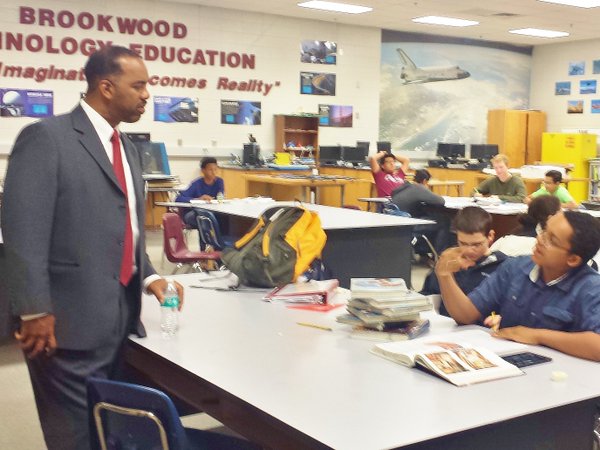
This was a field trip with students to the Science and Engineering Festival. It would be hard to prepare for this one, but we had been studying Dinosaurs, reading books, looking at images online, seeing videos, using ramification ( Dynotycoon) and making them out of clay. We can’t take a real dinosaur field trip, but we know where to go to learn more.

We could learn with a game. That is not a field trip, but a trip using ramification to explore a mythical Dinopark. Here

You can just imagine the shrieks of joy as students programming a robotic  dinosaur. This learning venture required some base knowledge, some reading, some knowledge of geography and study of a special kind of dinosaur. As far as I know the closest dinosaur field trip a real one is to Saltville , Va.

HISTORY

After nearly 100 years of study, the town’s ancient fossil beds continue to yield surprises.

ETSU paleontologists are the most recent in a long line of researchers to collect specimens in the Saltville Valley. This year is the 50th anniversary of a Virginia Tech agreement with the Smithsonian Institution to excavate and study specimens found here in the 1960s, including a 7-foot-long section of mastodon tusk.

Scientific digs began much earlier, in 1917, when a collapsed industrial salt well revealed a rich layer of prehistory that drew the attention of the Carnegie Institution. The town’s Museum of the Middle Appalachians, which now oversees the digs, is planning to celebrate next year with a centennial symposium, executive director Janice Orr said.

But accidental finds go back at least to the 18th century, and possibly much further.

In a letter dated 1782, Arthur Campbell wrote to Thomas Jefferson, former Virginia governor and future U.S. president, about the discovery at Saltville of the bones of a “large jaw tooth of an unknown animal lately found at the Salina in Washington County.”

MUSEUMS AND MAPS?

The Smithsonian used to have a dinosaur outside of the museum. I was missing a child from a field trip. He had been mesmerized by the dinosaur and climbed it. He could not get down. I spotted him from the bus and a parent went to help him climb down. That dinosaur is no longer available to climb.

WHO  WHAT  WHERE  WHEN AND WHY?

Those are the questions we asked.

Where in the world did the dinosaurs live? Here and a global map

Where in the US did the dinosaurs live? Here

You can learn a lot studying paleobiology at this Smithsonian web site. Here

Who can teach me more about dinosaurs?

What are ten things Kids need to know about dinosaurs?Here

Why do we care about dinosaurs? What are the known dinosaurs?

What did they eat? 

The first blockbuster movie that influenced my teaching was about dinosaurs, I was about Jurassic Park. I had never been interested in them but I had to rise to the challenge and fit the interest of those who loved the big beasts. First, I had to see the movie and then think of ways to add, augment, share , expand their knowledge in meaningful ways. The movie is online at Amazon Prime ( the whole movie).

Jurassic Park ( the movie)https://www.youtube.com/watch?v=f5C7dqrAItM

I also needed to share the movie experience with the students who had not seen it and make available the book and the many books and magazines about dinosaurs.

IMG_6870

You may not know what the learning places and museums have to offer you and your children or students. Take a planning trip there. See how they do outreach. Talk to them.

I explained to a group of interested people that 2 field trips a year were often the most that children could take and suggested use of some of the budget for a bus. Or to do outreach to the school. My school scheduled a Museum bus on Saturdays for parents and students.

I also wrote grants and requests for field trips , movies, and realia for the classroom. Virtual field trips are good, real ones are good , a combination with Skype is good.

Museums have gone digital and they have much to share online.

https://learninglab.si.edu/news/creative-introduction-into-geography

Smithsonian

There are many experiences that are virtual

Walking with Dinosaurs

Virtual Reality Dinosaur Game

Dinosaur Art ( K-3)

High School   Geniversity ( Build a Dragon)

http://geniverse.concord.org/geniversity/


What is Jim Crow? Make America White Again!

fear mongering

Here is what many bigots would like to re-impose on the communities of color in America. If you are not of African American descent, but an immigrant, many of these rules apply to immigrants too. I went to school with immigrants who were the same color as I am and who had to work by these rules as well. Some vestiges of this still exist in America.   In Virginia,

The Ku Klux Klan (KKK), also known as the Klan or the Invisible Empirehas emerged in three time periods, mostly in the South, at three distinct periods of U.S. history: from 1865 to the 1870s, from 1915 to 1944, and from the 1950s to the present. Klan movements have targeted—through political rhetoric and violent actions—African Americans, immigrants, Catholics, Jews, and organized labor, as part of their white supremacy movement. The Klan never achieved a political foothold in Virginia that it had in other states. It was most prominent in in Virginia during the 1920s and resurged during the 1950s and 1960s to target civil rights activists. (More from Encyclopedia Virginia)

Marshal Robert Kornegay (1928–1975), a North Carolina native, was the United Klans of America Grand Dragon of Virginia from 1965 to 1968. During his tenure the small and mostly inactive Klan of Virginia revitalized and greatly increased membership mostly in the Southside, in a large part as a backlash to the desegregation of schools and other civil rights struggles.

jimcrow3

When Was Jim Crow the Law of the Land?

Jim Crow ruled the South from about 1890 to well into the 1960s. Four generations of African Americas endured this system of segregation. Present day race relations in the United States continue to be affected by this history. The Jim Crow system emerged towards the end of the historical period called Reconstruction, during which Congress had enacted laws designed to order relations between Southern whites and newly freed blacks, and to bring the secessionist states back into the Union. Southern whites felt profoundly threatened by increasing claims by African Americans for social equality and economic opportunity. In reaction, white-controlled state legislatures passed laws designed to rob blacks of their civil rights and prevent blacks from mingling with their “betters” in public places.

Make America Jim Crow Again!!!?????

First, I have to say that the South lost the war, but won the peace with the installation of “Jim Crow”

This is from the museum of Jim Crow. I don’t have permission to share the pictures.. and actually they are so sad I will let you peruse them on your own. I share the content because I want you to know what it means and how it might affect the political situation. Here is the link to the Jim Crow Museum. It is a very rich site.

Jim Crow Museum

http://www.ferris.edu/jimcrow/

Jim Crow is a way of making America the way it was during segregation ..

jimcrow2

JIM CROW MUSEUM

Here is a video that tells some of the story .

To look at the video, imagine being a child or woman, or a man who was subjected to this trauma. Think about how they might have felt intimidated or hurt and what inside emotional harm might have happened because of Jim Crow.

Jim Crow was the name of the racial caste system which operated primarily, but not exclusively in southern and border states, between 1877 and the mid-1960s. Jim Crow was more than a series of rigid anti-black laws. It was a way of life.

Under Jim Crow, African Americans were relegated to the status of second class citizens. Jim Crow represented the legitimization of anti-black racism. Many Christian ministers and theologians taught that whites were the Chosen people, blacks were cursed to be servants, and God supported racial segregation.

Craniologists, eugenicists, phrenologists, and Social Darwinists, at every educational level, buttressed the belief that blacks were innately intellectually and culturally inferior to whites. Pro-segregation politicians gave eloquent speeches on the great danger of integration: the mongrelization of the white race.

Newspaper and magazine writers routinely referred to blacks as niggers, coons, and darkies; and worse, their articles reinforced anti-black stereotypes. Even children’s games portrayed blacks as inferior beings (see “From Hostility to Reverence: 100 Years of African-American Imagery in Games”). All major societal institutions reflected and supported the oppression of blacks.

jimcrow waiting room

WHAT WAS THE JIM CROW SYSTEM?
The Jim Crow system was undergirded by the following beliefs or rationalizations: whites were superior to blacks in all important ways, including but not limited to intelligence, morality, and civilized behavior; sexual relations between blacks and whites would produce a mongrel race which would destroy America; treating blacks as equals would encourage interracial sexual unions; any activity which suggested social equality encouraged interracial sexual relations; if necessary, violence must be used to keep blacks at the bottom of the racial hierarchy.

Black women were at the absolute bottom of the system.

The following Jim Crow etiquette norms show how inclusive and pervasive these norms were:

A black male could not offer his hand (to shake hands) with a white male because it implied being socially equal. Obviously, a black male could not offer his hand or any other part of his body to a white woman, because he risked being accused of rape.

Blacks and whites were not supposed to eat together. If they did eat together, whites were to be served first, and some sort of partition was to be placed between them.

Under no circumstance was a black male to offer to light the cigarette of a white female — that gesture implied intimacy.

Blacks were not allowed to show public affection toward one another in public, especially kissing, because it offended whites.

Jim Crow etiquette prescribed that blacks were introduced to whites, never whites to blacks. For example: “Mr. Peters (the white person), this is Charlie (the black person), that I spoke to you about.”

Whites did not use courtesy titles of respect when referring to blacks, for example, Mr., Mrs., Miss., Sir, or Ma’am. Instead, blacks were called by their first names. Blacks had to use courtesy titles when referring to whites, and were not allowed to call them by their first names.

If a black person rode in a car driven by a white person, the black person sat in the back seat, or the back of a truck.

White motorists had the right-of-way at all intersections.
Stetson Kennedy, the author of Jim Crow Guide (1990), offered these simple rules that blacks were supposed to observe in conversing with whites:

Never assert or even intimate that a white person is lying.
Never impute dishonorable intentions to a white person.
Never suggest that a white person is from an inferior class.
Never lay claim to, or overly demonstrate, superior knowledge or intelligence.
Never curse a white person.
Never laugh derisively at a white person.
Never comment upon the appearance of a white female.

How Did This Happen?

What changed the consciousness of the US?

Black Codes
Jim Crow etiquette operated in conjunction with Jim Crow laws (black codes). When most people think of Jim Crow they think of laws (not the Jim Crow etiquette) which excluded blacks from public transport and facilities, juries, jobs, and neighborhoods. The passage of the 13th, 14th, and 15th Amendments to the Constitution had granted blacks the same legal protections as whites.


However, after 1877, and the election of Republican Rutherford B. Hayes, southern and border states began restricting the liberties of blacks. Unfortunately for blacks, the Supreme Court helped undermine the Constitutional protections of blacks with the infamous Plessy v. Ferguson (1896) case, which legitimized Jim Crow laws and the Jim Crow way of life.

The “Jim Crow ” way of Life becomes the norm.

In 1890, Louisiana passed the “Separate Car Law,” which purported to aid passenger comfort by creating “equal but separate” cars for blacks and whites. This was a ruse. No public accommodations, including railway travel, provided blacks with equal facilities. The Louisiana law made it illegal for blacks to sit in coach seats reserved for whites, and whites could not sit in seats reserved for blacks. In 1891, a group of blacks decided to test the Jim Crow law. They had Homer A. Plessy, who was seven-eighths white and one-eighth black (therefore, black), sit in the white-only railroad coach. He was arrested. Plessy’s lawyer argued that Louisiana did not have the right to label one citizen as white and another black for the purposes of restricting their rights and privileges. In Plessy, the Supreme Court stated that so long as state governments provided legal process and legal freedoms for blacks, equal to those of whites, they could maintain separate institutions to facilitate these rights.

The Court, by a 7-2 vote, upheld the Louisiana law, declaring that racial separation did not necessarily mean an abrogation of equality. In practice, Plessy represented the legitimization of two societies: one white, and advantaged; the other, black, disadvantaged and despised.

Blacks were denied the right to vote by grandfather clauses (laws that restricted the right to vote to people whose ancestors had voted before the Civil War), poll taxes (fees charged to poor blacks), white primaries (only Democrats could vote, only whites could be Democrats), and literacy tests (“Name all the Vice Presidents and Supreme Court Justices throughout America’s history”). Plessy sent this message to southern and border states: Discrimination against blacks is acceptable.

Jim Crow states passed statutes severely regulating social interactions between the races. Jim Crow signs were placed above water fountains, door entrances and exits, and in front of public facilities. There were separate hospitals for blacks and whites, separate prisons, separate public and private schools, separate churches, separate cemeteries, separate public restrooms, and separate public accommodations.

In most instances, the black facilities were grossly inferior — generally, older, less-well-kept. In other cases, there were no black facilities — no Colored public restroom, no public beach, no place to sit or eat. Plessy gave Jim Crow states a legal way to ignore their constitutional obligations to their black citizens.

Jim Crow laws touched every aspect of everyday life. For example, in 1935, Oklahoma prohibited blacks and whites from boating together. Boating implied social equality. In 1905, Georgia established separate parks for blacks and whites. In 1930, Birmingham, Alabama, made it illegal for blacks and whites to play checkers or dominoes together.

Here are some of the typical Jim Crow laws, as compiled by the Martin Luther King, Jr., National Historic Site Interpretive Staff:

Barbers. No colored barber shall serve as a barber (to) white girls or women (Georgia).

Blind Wards. The board of trustees shall…maintain a separate building…on separate ground for the admission, care, instruction, and support of all blind persons of the colored or black race (Louisiana).

Burial. The officer in charge shall not bury, or allow to be buried, any colored persons upon ground set apart or used for the burial of white persons (Georgia).

Buses.All passenger stations in this state operated by any motor transportation company shall have separate waiting rooms or space and separate ticket windows for the white and colored races (Alabama).

Child Custody. It shall be unlawful for any parent, relative, or other white person in this State, having the control or custody of any white child, by right of guardianship, natural or acquired, or otherwise, to dispose of, give or surrender such white child permanently into the custody, control, maintenance, or support, of a negro (South Carolina).

Education.The schools for white children and the schools for negro children shall be conducted separately (Florida).

Libraries. The state librarian is directed to fit up and maintain a separate place for the use of the colored people who may come to the library for the purpose of reading books or periodicals (North Carolina).

Mental Hospitals. The Board of Control shall see that proper and distinct apartments are arranged for said patients, so that in no case shall Negroes and white persons be together (Georgia).

Militia. The white and colored militia shall be separately enrolled, and shall never be compelled to serve in the same organization. No organization of colored troops shall be permitted where white troops are available and where whites are permitted to be organized, colored troops shall be under the command of white officers (North Carolina).

Nurses. No person or corporation shall require any White female nurse to nurse in wards or rooms in hospitals, either public or private, in which negro men are placed (Alabama).

Prisons. The warden shall see that the white convicts shall have separate apartments for both eating and sleeping from the negro convicts (Mississippi).

Reform Schools. The children of white and colored races committed to the houses of reform shall be kept entirely separate from each other (Kentucky).

Teaching. Any instructor who shall teach in any school, college or institution where members of the white and colored race are received and enrolled as pupils for instruction shall be deemed guilty of a misdemeanor, and upon conviction thereof, shall be fined… (Oklahoma).

Wine and Beer. All persons licensed to conduct the business of selling beer or wine…shall serve either white people exclusively or colored people exclusively and shall not sell to the two races within the same room at any time (Georgia).1
The Jim Crow laws and system of etiquette were undergirded by violence, real and threatened. Blacks who violated Jim Crow norms, for example, drinking from the white water fountain or trying to vote, risked their homes, their jobs, even their lives. Whites could physically beat blacks with impunity. Blacks had little legal recourse against these assaults because the Jim Crow criminal justice system was all-white: police, prosecutors, judges, juries, and prison officials. Violence was instrumental for Jim Crow. It was a method of social control. The most extreme forms of Jim Crow violence were lynchings.

Lynchings were public, often sadistic, murders carried out by mobs. Between 1882, when the first reliable data were collected, and 1968, when lynchings had become rare, there were 4,730 known lynchings, including 3,440 black men and women. Most of the victims of Lynch Law were hanged or shot, but some were burned at the stake, castrated, beaten with clubs, or dismembered. In the mid-1800s, whites constituted the majority of victims (and perpetrators); however, by the period of Radical Reconstruction, blacks became the most frequent lynching victims. This is an early indication that lynching was used as an intimidation tool to keep blacks, in this case the newly freed people, “in their places.” The great majority of lynchings occurred in southern and border states, where the resentment against blacks ran deepest. According to the social economist Gunnar Myrdal (1994): “The southern states account for nine-tenths of the lynchings. More than two thirds of the remaining one-tenth occurred in the six states which immediately border the South” (pp. 560-561).

Many whites claimed that although lynchings were distasteful, they were necessary supplements to the criminal justice system because blacks were prone to violent crimes, especially the rapes of white women. Arthur Raper investigated nearly a century of lynchings and concluded that approximately one-third of all the victims were falsely accused (Myrdal, 1994, p. 561).

Under Jim Crow any and all sexual interactions between black men and white women was illegal, illicit, socially repugnant, and within the Jim Crow definition of rape. Although only 19.2 percent of the lynching victims between 1882 to 1951 were even accused of rape, lynch law was often supported on the popular belief that lynchings were necessary to protect white women from black rapists. Myrdal (1994) refutes this belief in this way: “There is much reason to believe that this figure (19.2) has been inflated by the fact that a mob which makes the accusation of rape is secure from any further investigation; by the broad Southern definition of rape to include all sexual relations between Negro men and white women; and by the psychopathic fears of white women in their contacts with Negro men” (pp. 561-562). Most blacks were lynched for demanding civil rights, violating Jim Crow etiquette or laws, or in the aftermath of race riots.

Lynchings were most common in small and middle-sized towns where blacks often were economic competitors to the local whites. These whites resented any economic and political gains made by blacks. Lynchers were seldomly arrested, and if arrested, rarely convicted. Raper (1933) estimated that “at least one-half of the lynchings are carried out with police officers participating, and that in nine-tenths of the others the officers either condone or wink at the mob action” (pp. 13-14).

lynching

Lynching served many purposes: it was cheap entertainment; it served as a rallying, uniting point for whites; it functioned as an ego-massage for low-income, low-status whites; it was a method of defending white domination and helped stop or retard the fledgling social equality movement.

Lynch mobs directed their hatred against one (sometimes several) victims. The victim was an example of what happened to a black man who tried to vote, or who looked at a white woman, or who tried to get a white man’s job. Unfortunately for blacks, sometimes the mob was not satisfied to murder a single or several victims. Instead, in the spirit of pogroms, the mobs went into black communities and destroyed additional lives and property. Their immediate goal was to drive out — through death or expulsion — all blacks; the larger goal was to maintain, at all costs, white supremacy. These pogrom-like actions are often referred to as riots; however, Gunnar Myrdal (1944) was right when he described these “riots” as “a terrorization or massacre…a mass lynching” (p. 566). Interestingly, these mass lynchings were primarily urban phenomena, whereas the lynching of single victims was primarily a rural phenomena.

James Weldon Johnson, the famous black writer, labeled 1919 as “The Red Summer.” It was red from racial tension; it was red from bloodletting. During the summer of 1919, there were race riots in Chicago, Illinois; Knoxville and Nashville, Tennessee; Charleston, South Carolina; Omaha, Nebraska; and two dozen other cities. W.E.B. DuBois (1986), the black social scientist and civil rights activist, wrote: “During that year seventy-seven Negroes were lynched, of whom one was a woman and eleven were soldiers; of these, fourteen were publicly burned, eleven of them being burned alive. That year there were race riots large and small in twenty-six American cities including thirty-eight killed in a Chicago riot of August; from twenty-five to fifty in Phillips County, Arkansas; and six killed in Washington” (p. 747).

The riots of 1919 were not the first or last “mass lynchings” of blacks, as evidenced by the race riots in Wilmington, North Carolina (1898); Atlanta, Georgia (1906); Springfield, Illinois (1908); East St. Louis, Illinois (1917); Tulsa, Oklahoma (1921); and Detroit, Michigan (1943). Joseph Boskin, author of Urban Racial Violence (1976), claimed that the riots of the 1900s had the following traits:

In each of the race riots, with few exceptions, it was white people that sparked the incident by attacking black people.

In the majority of the riots, some extraordinary social condition prevailed at the time of the riot: prewar social changes, wartime mobility, post-war adjustment, or economic depression.

The majority of the riots occurred during the hot summer months.

Rumor played an extremely important role in causing many riots. Rumors of some criminal activity by blacks against whites perpetuated the actions of the white mobs.

The police force, more than any other institution, was invariably involved as a precipitating cause or perpetuating factor in the riots. In almost every one of the riots, the police sided with the attackers, either by actually participating in, or by failing to quell the attack.

In almost every instance, the fighting occurred within the black community. (pp. 14-15)
Boskin omitted the following: the mass media, especially newspapers often published inflammatory articles about “black criminals” immediately before the riots; blacks were not only killed, but their homes and businesses were looted, and many who did not flee were left homeless; and, the goal of the white rioters, as was true of white lynchers of single victims, was to instill fear and terror into blacks, thereby buttressing white domination. The Jim Crow hierarchy could not work without violence being used against those on the bottom rung. George Fredrickson (1971), a historian, stated it this way: “Lynching represented…a way of using fear and terror to check ‘dangerous’ tendencies in a black community considered to be ineffectively regimented or supervised. As such it constituted a confession that the regular institutions of a segregated society provided an inadequate measure of day-to-day control” (p. 272).

Many blacks resisted the indignities of Jim Crow, and, far too often, they paid for their bravery with their lives.

© Dr. David Pilgrim, Professor of Sociology
Ferris State University
Sept., 2000
Edited 2012

1This list was derived from a larger list composed by the Martin Luther King, Jr., National Historic Site Interpretive Staff. Last Updated January 5, 1998. The web address is: http//www.nps.gov/malu/documents/jim crowlaws.htm.

References

Boskin, J. (1976). Urban racial violence in the twentieth century (2nd ed.). Beverly Hills, CA: Glencoe Press.

Dubois, W. E. B. (1986). Writings. N. Huggins, (Ed.). New York NY: Literary Classics of the United States.

Kennedy, S. (1959/1990). Jim Crow guide: The way it was. Boca Raton, FL: Florida Atlantic University Press.

Myrdal, G. (1944). An American dilemma: the Negro problem and modern democracy. New York, NY: Harper.

Raper, A. F. (1933). The tragedy of lynching. Chapel Hill, NC: University of North Carolina Press.


Jason Ohler’s ‘4Four Big Ideas for the Future: Understanding Our Innovative Selves’ — Educational Technology and Change Journal

By Jim Shimabukuro Editor Jason Ohler, who wrote “Whither Writing Instruction in the 21st Century?” for ETC five years ago, released a new book last month, 4Four Big Ideas for the Future: Understanding Our Innovative Selves. Jason developed a disease called idiopathic pulmonary fibrosis from which he never expected to recover. It slowly and literally […]

via Jason Ohler’s ‘4Four Big Ideas for the Future: Understanding Our Innovative Selves’ — Educational Technology and Change Journal

Is Science Fun? Kinda, Sorta, Sometimes

by Bonnie Bracey Sutton

Before NCLB, I was introduced to hands on science through AAAS. I rolled with the activities of kids finding out things through discovery. I did the steps of the scientific method sometimes when needed. But I had boxes of AAAS magic and then my own ideas to contribute. But NCLB came along and killed that kind of science in many places. Now the cat is out of the box and science is relevant again. Some teachers have never met Bassam Shakasheri. You may not know him, but he made chemistry fun. But the fun in science is being able to use it , understand it, and acknowledge areas of interest. Here is his web site.Science is Fun! Go there and find interesting things to do. There are all kinds of examples of interest. I first saw Dr. Shakasheri at an NSF meeting. I envy the students who  attended his classes.

Science was fun! Most people won’t get a chance to have him as a teacher except maybe online or from the website. Here are lots of little videos for you to peruse.

Maybe chemistry is not your thing. Enjoy anyway.

Physics? Math? Astronomy? Math and more..go here.
Founded in 2002 by Nobel Laureate Carl Wieman, the PhET Interactive Simulations project at the University of Colorado Boulder creates free interactive math and science simulations. PhET sims are based on extensive education research and engage students through an intuitive, game-like environment where students learn through exploration and discovery.


IMG_6827

To get the attention of students sometimes we have to amaze. To get the attention of teachers we have to show how interesting and amazing the students might find this work.

Here is a great site. Science On a Sphere® (SOS) is a room sized, global display system that uses computers and video projectors to display planetary data onto a six foot diameter sphere, analogous to a giant animated globe. Researchers at NOAA developed Science On a Sphere® as an educational tool to help illustrate Earth System science to people of all ages. Animated images of atmospheric storms, climate change, and ocean temperature can be shown on the sphere, which is used to explain what are sometimes complex environmental processes, in a way that is simultaneously intuitive and captivating.You could get a grant to have your own Science on a Sphere.iu

There are so many new ways we can use to teach. You don’t have to have a lot of monkey, but you do need to know content.This photograph shows Science on a Sphere. You can actually do a laptop version of this science. It is an amazing site. The laptop site is excellent too.

http://sos.noaa.gov/SOS_Explorer/ it is not hard to navigate.

Notice that we are doing science in many ways at this site. It’s free. It’s interesting

ESRI has resources for schools. Look here.

Your students should know some GIS too. You use it on your cell phone or computer to find things, to go places, and to map a journey. GIS 1

Schools can get free software to learn GIS here. Teachers can get free online tutoring and lessons.

iho


If you talk about engineering most people would say, they never had it in school. But there are resources and ideas to get one started in engineering and architecture… and in building ideas. In my classes we started with clay, straw, pins and string. We went on to build /plan a school playground. That was an awesome feat of engineering.

IMG_1941

Science is life. Science is about every day things, your health, your climate. your food.Increasingly with the help of technology we can understand how science impacts our lives. The science.. the accidental science of cooking is one of my favorite ways to share the magic of science.

You eat every day. Why not investigate “The Accidental Science of Cooking!!
Discover how a pinch of curiosity can improve your cooking! Explore recipes, activities, and Webcasts that will enhance your understanding of the science behind food and cooking.

In some cultures science is seen as a hard slog. Well, maybe if you don’t learn to love problem solving. Ot maybe if you don’t like accumulating knowledge about something. Or maybe if you never were allowed the magic of discovery science.

The Concord Consortium is a great place to find problem based learning. All the STEM resources you will need are gathered here.

Some teachers have never experienced the power of science as it draws the attention of kids. I had to learn about dinosaurs and legos from students.

This is what I wish I had now. I would write a grant to get this dinosaur.

IMG_1942

Jurassic Park, games, books, Amber, ..I was the one who was learning a lot about dinosaurs and one of the parents worked at the Smithsonian. We got to go see him work .

I worked the kids with Chickscope, Bugscope, and a classroom garden. You have the 4-H to help you get those projects together. Chickscope is a project that is about hatching chickens.  Bugscope was not my choice. Students wanted to learn more about bugs.But since students wanted to know.. we did it. Bugscope is getting newer equipment so check back from time to time to see when they are ready for you.


You thought I forgot NASA. Not in a million years. So much to share so many ways to learn. They have an incredible set of resources all free. But NASA deserves its own blog.

Is all of this old news to you????. Then go to learn about CIRCL.. Cyberlearning.

Space Nut???


https://www.washingtonpost.com/news/the-switch/wp/2016/05/18/nasa-and-the-author-of-the-martian-tell-us-exactly-how-well-get-to-mars/


Washington , DC.. City Wide Tree Canopy

treesWe have trees from the famous Monument Core — the National Mall and its monuments and memorials — the heart of our nation’s capital is home to 17,000 trees. The District also houses the nation’s first urban park, Rock Creek Park, as part of its more than 7,000 acres of parkland and has two major rivers within its city limits.

2B71FFE3-1DD8-B71C-07CBAC5BFE127E18-large

Through a combination of city and federal staff, nonprofits and citizens, the District of Columbia has developed a healthy 35 percent tree canopy and a wide range of greening initiatives, including environmental justice work and green jobs training.

 10678787_10152766920476327_4400333605484524108_n

D.C. Urban Forest Facts*

Washington, D.C., Urban Forest Fact Sheet


  • The city has 1,928,000 trees.
  • Most common tree species are American beech, red maple and box elder.
  • Approximately 56 percent of trees are less than six inches in diameter.
  • The city’s trees:

o Remove  540 tons of pollution per year, valued at $2.5million.

o Store 526,000 tons of carbon,valued at $9.7 million.

o Sequester 16,200 tons of carbon per year, valued at $9.7million.

o Reduce building energy usage by $2.6 million per year,which results in value of $96,000 in avoided carbon emissions.

o Have a structural value of  $3.6billion.

• D.C.’s urban tree canopy is 35 percent.+

Washington, D.C., Urban Forest Fact Sheet

2B6D0FC9-1DD8-B71C-070CE694DDA056DE-large

  • The city’s trees:

o Remove 540 tons of pollution per year,valued at $2.5million.

o Store 526,000 tons of carbon, valued at $9.7 million.

o Sequester 16,200 tons of carbon per year,valued at $9.7million.

o Reduce building energy usage by $2.6 million per year,which results in

value of $96,000 in avoided carbon emissions.

o Have a structural value of $3.6 billion.

• D.C.’s urban tree canopy is 35 percent.+FA94C5D6-1DD8-B71B-0B3EF71D393D7C2A


In the Digital Age, Digital Equity is an Essential

Excerpt by Larry Irving /Fast Forward by Bonnie Sutton

iu
The day America married the Internet

In 1993, the Internet was the province almost exclusively of scientists and hobbyists, with only about 2 million users worldwide. U.S. President Bill Clinton and Vice President Al Gore saw huge potential in connecting all of the United States to the Internet.

They believed that a robust Internet would provide immeasurable benefits to the U.S. economy, would create jobs and would improve the provision of critical services to the American public, including education, healthcare, library services, public safety and government information and data.

As importantly, they believed that the Internet could spur needed private-sector investment and innovation in both the underlying infrastructure and in the platforms, applications and services that would ride on that infrastructure.

They were right on all counts.

images

The vision

“Imagine you had a device that combined a telephone, a TV, a camcorder and a personal computer. No matter where you went or what time it was, your child could see you and talk to you, you could watch a replay of your team’s last game, you could browse the latest additions to the library, or you could find the best prices in town on groceries, furniture, clothes — whatever you needed.”

The above paragraph was the opening paragraph of the Agenda for Action — 20 years ago. It was an eerily accurate vision of a then-distant future. Sometimes having a coherent vision helps propel progress. The administration knew where it wanted to go and knew it needed a plan to drive the progress required to get there.

The plan

The Agenda for Action laid out a series of principles and proposed actions to support them. Virtually all of those principles remain the cornerstones of the United States’ domestic and international technology policies today.

The Agenda for Action stated a strong preference for private-sector development and deployment of the Internet. The administration felt it important to state that preference clearly and unequivocally because of fears that the government would attempt to build the Information Superhighway using public dollars.

In light of the U.S. government’s efforts at that time to encourage increased investment in our domestic infrastructure and to promote privatization of telecommunications networks abroad, the administration clarified its preference for private-sector investment to build the Internet, supported by tax and regulatory policies that would promote an investment-friendly environment.

The Agenda for Action presaged virtually every major policy debate surrounding the Internet and delineated a comprehensive policy approach that protected the rights of consumers while also providing increased certainty for industry and innovators by calling for the following: extending our historic commitment to universal service to the Internet; seamless, interactive user-driven operation of the Internet; information security and network reliability; improved management of wireless spectrum; protection of Intellectual property rights; and increased coordination with state and local governments and with other nations to ensure that the Internet would be fully global.

Looking back today, President Clinton and Vice President Gore got much right. Their vision for the Internet was realized more quickly and more completely than any of us had any right to expect.

Reading the Agenda for Action today, the administration accurately predicted the power of the Internet to increase access to information and to be a key economic driver. As importantly, the administration provided a forward looking and flexible policy template that would underscore the growth of the internet over the following decades.

The astonishing growth of the Internet in the mid-1990s was driven in large part by the innovation, talent, ingenuity and passion of many in the private sector, principally the Internet pioneers in Silicon Valley and other creative centers, as well as the Internet service providers who built the physical networks.

It is unlikely that the Internet’s growth would have been as explosive or that we would have seen as much early acceptance and adoption domestically and internationally without the administration’s leadership and use of the bully pulpit to drive policy prescriptions and procurement efforts designed to support and encourage private-sector investment and innovation.

At a time of increased skepticism about the role of government and widespread derision of visionary leaders, it’s important to note that sometimes the government and its leaders get it right. The United States and the world is at another inflection point today as wireless technology, the Internet of Things, cloud computing, social networks and data analytics become drivers of economic and societal changes.

Revisiting or restating fundamental policy principles to ensure that they provide an environment that will promote investment while also protecting the rights of consumers would seem to be as necessary today as it was 20 years ago.

niiac

Advances in information technology (IT) are reshaped the U.S. labor market. The demand for workers who can read and understand complex material, think analytically, and use technology efficiently will continue to increase. Congress established the 21st Century Workforce Commission to assess current and future demand for IT workers and the education and training needed to fill IT jobs. By conducting field hearings and site visits and reviewing pertinent research, the commission identified nine keys to success that leaders at all levels can apply to build a highly skilled workforce prepared for high-technology job opportunities in the 21st century. The keys are as follows: (1) building 21st century literacy; (2) exercising leadership through partnerships; (3) forming learning linkages for youth; (4) identifying pathways to IT jobs; (5) increasing acquisition of IT skills; (6) expanding continuous learning; (7) shaping a flexible immigration policy for skilled IT workers; (8) raising student achievement; (9) and making technology access and Internet connectivity universal. During its work, the commission found many examples of how stakeholders at all levels exerted the leadership to put the keys into practice. (Ten tables/figures are included. Concluding the report are a list of the commission members and 85 endnotes.) (MN)

Fast Forward 2016   Are We A Nation of Opportunity for All? Not Yet!!

We still need a plan to engage, inform, educate and create possibilities for all communities.

In the Digital Age, Digital Equity is an Essential

IMG_9951.JPG

 NCDE  Puts forward an Action Plan

We are , in America still trying to solve the problem of the Digital Divide. EDC has allowed us to have a solution. Not to talk about the latest tool, or gadget or even coding.

HOW DO WE SOLVE THE DIGITAL DIVIDE?

Not in an hour to talk about problems, but a whole day to define, to work across communities , schools, libraries, businesses, teacher groups and government to find solutions and to learn from each other.

Dr. McLaughlin  shared thoughts as a framework for our discussions

 Principles for Designing and Evaluating Digital Equity Investments and Initiatives

They were well focused on achieving not only digital equity but also locally determined economic, educational and social impacts.  fostering digital equity not just for its own sake but for its critical contributions to other more fundamental locally determined priorities for equity, social justice, and well-being.


Systemic- providing equitable( free or low cost) access to the full array of essential resources for digital inclusi0n, lifelong learning, workforce development and economic opportunity including:

IMG_8958

-broadband

-computing devices with keyboard ( and assistive devices for those with disabilities}

-multilingual tech support

-librarians skilled in guiding learners to high quality content and tools, keyed to their learning priorities

-low interest financing (or full subsidies) for gamilies with weak or no credit so that when devices are not free they can afford to finance them and still support their families

-educational and productivity apps and software

-open and “Deep Web”educational resources that are universally designed.

The initiative will publish, share videos and the outcome ideas of our Digital Equity Symposium

IMG_9974

The National Coalition for Digital Equity will publish these in greater detail the outcomes of the symposium.

IMG_9980


Let’s Explore Global Forests!

When I was a child, I was a city girl. going to the out-of-doors, I considered that the country. But, my mom was from a rural area so, summers came and I was thrust into a farming area. At that time, I knew what a forest was, through reading. I was not amused.

It was a long time until I really learned about forests. A science supervisor invited me to learn in a school outdoor lab. Dr. Phoebe Knipling kept creating courses that increased my knowledge and soon, I was certified to teach environmental science.

We took birding courses, learned the seasonal wildflowers, studied the streams, and navigated the various trails on the property. It was fun!! Ok, it was hard fun, but being successful felt good! The children loved the lessons. Talk art. poetry, and drawing. We even did newsletters.


Some of my first field trips were difficult for me. The kids got so excited that they lost the pencil and papers, and clipboard and guidebooks. I had to think of a strategy.

We learned in small teacher groups in all seasons. We wrote lessons and tried out ways to know forests and the lab landscape. We learned to read the landscapes and to see what animals and plants were there.

We added. patterns in nature, the science of a rotting log, quadrat studies, stream studies.and a star party or, stories at night. * we spent several nights at the lab.


The 4 -H leader, and the Park service pointed out to us all of the various parks, different types.. and forested areas.There is all kinds of information on the National Park Service’s site.

11816105_867532499967099_6710867566967151451_o

magical-forest

What is a forest?

“The forest is a complex ecosystem consisting mainly of trees that buffer the earth and support a myriad of life forms. The trees help create a special environment which, in turn, affects the kinds of animals and plants that can exist in the forest. Trees are an important component of the environment. They clean the air, cool it on hot days, conserve heat at night, and act as excellent sound absorbers.”

“Plants provide a protective canopy that lessens the impact of raindrops on the soil, thereby reducing soil erosion. The layer of leaves that fall around the tree prevents runoff and allows the water to percolate into the soil. Roots help to hold the soil in place. Dead plants decompose to form humus, organic matter that holds the water and provides nutrients to the soil. Plants provide habitat to different types of organisms. Birds build their nests on the branches of trees, animals and birds live in the hollows, insects and other organisms live in various parts of the plant. They produce large quantities of oxygen and take in carbon dioxide. Transpiration from the forests affects the relative humidity and precipitation in a place.”

The FAO (Food and Agriculture Organization) has defined forest as land with tree crown cover (or equivalent stocking level) of more than 10% and area of more than 0.5 hectare. The trees should be able to reach a minimum height of 5 m at maturity in situ. Forests are further subdivided into plantations and natural forests. Natural forests are forests composed mainly of indigenous trees not deliberately planted. Plantations are forest stands established by planting or seeding, or both, in the process of afforestation or reforestation.

Forests can develop wherever the average temperature is greater then 10 °C in the warmest month and rainfall exceeds 200 mm annually. In any area having conditions above this range there exists a variety of tree species grouped into a number of forest types that are determined by the specific conditions of the environment there, including the climate, soil, geology, and biotic activity. Forests can be broadly classified into types such as the taiga (consisting of pines, spruce, etc.), the mixed temperate forests (with both coniferous and deciduous trees), the temperate forests, the sub tropical forests, the tropical forests, and the equatorial rain  forests..

Global Forest Initiative  join us. Explore global forests, link global classrooms.

11048284_10153226665121424_8538442603643895639_n


The Phoebe Hall Knipling Outdoor Lab is a 225-acre facility that provides science and outdoor education to the students of Arlington County Public Schools. In this natural classroom, urban youth — often for the first time — can run in a meadow, climb a mountain, hike beside a stream, or fish in a pond.


So You Think You Know the Oregon Trail Game?The History?

Meek's Cutoff

Subject: for ent On 2011-05-10, at 4:13 PM, Teplitsky, Ariel wrote: Meek’s Cutoff Ariel Teplitsky Movies Editor Toronto Star Twitter: @WhatsOnToronto meekscutoff_01.jpg


OregonTrailMap-600

As we enter a new phase of technology awareness, many of the technology pioneers got started on Gamification with a little game called ” Oregon Trail”?

USA Today “The 1990 MECC version of The Oregon Trail, where players face various trials and tribulations while trying to make it from east to west, is among them. The popular game was often used in schools to teach geography and history. It’s currently the top-viewed game on the archive with more than 170,000 clicks. (The 1992 version is also in the archive and has more than 37,000 views.) As we explore virtually, and learn history in depth , we learn more about the Oregon Trail.

OT

Did you know the game? You thought you did, right?

I had kids working on teams as we played Oregon Trail. We learned to negotiate the trail starting by hitching up the wagon and hit up the general store for supplies because it’s time to head West.

My students and I had a pull down map of the trail and seven other major trails, and the resources of the Smithsonian. Ever seen a porcelain potty, and or a replica of the wagon? We put on our Metro shoes to go look and see the artifacts of the trail. We had literature that described the life of the pioneers on the trail.

1024px-Conestoga_Wagon_1883

                                       WHAT WAS THE GAME ABOUT?

Here is how the game is described
“As a covered wagon party of pioneers, you head out west from Independence, Missouri to the Willamette River and valley in Oregon. You first must stock up on provisions, and then, while traveling, make decisions such as when to rest, how much food to eat, etc. The Oregon Trail incorporates simulation elements and planning ahead, along with discovery and adventure, as well as mini-game-like activities (hunting and floating down the Dalles River).” Here is the location of the game online

The 1990 version.

There is a National Park dedicated to the Oregon Trail , it covers several states.

Westward Migration
Imagine yourself an emigrant headed for Oregon: would promises of lush farmlands and a

OLYMPUS DIGITAL CAMERA

OLYMPUS DIGITAL CAMERA

new beginning lure you to leave home and walk for weeks? More than 2,000 miles of trail ruts and traces can still be seen along the Oregon National Historic Trail in six states-reminders of the sacrifices, struggles, and triumphs of early American settlers.

The National Park Service updates the images here on the Oregon Trail Road Trip.

The National Historic Trail covered these  states.A journey of about 2000 miles.
ID,KS,MO,NE,OR,WA,WY

National Geographic Education Division shares information about the trail here.

On the National Geographic site, listed above ( Click the Link) there is a file that can be downloaded.

On May 16, 1842, a group of more than 100 pioneers left Elm Grove, Missouri, on the 3,500-kilometer (2,200-mile) Oregon Trail. Pioneers had been trickling into the Oregon Territory for decades, but this was the first major wagon train to embark on the famous route.

The Oregon Trail stretched from the banks of the Missouri River to what is today western Oregon. The route had long been established by fur traders, missionaries, trackers, and military scouts. It crossed what are today the states of Kansas, Nebraska, Wyoming, Idaho, and Oregon.

Pioneers packed up all they could in covered wagons, as well as on pack animals such as horses, donkeys and, crucially, oxen. Travelers had to be prepared for flat plains, steep mountains (the Rockies), and dry deserts (the Great Basin) before reaching the fertile valleys of Oregon. Many pioneers feared attacks by hostile Native Americans, but weather, landscape, and disease were much bigger threats.

Wagon trains to Oregon usually departed in spring, and took about four or five months to reach their destination. The settlers of 1842 arrived in September. More than 400,000 people migrated west on the Oregon Trail before the transcontinental railroad made it obsolete in 1869. Some history in this Video.

There is history that is left out. Want to know it? Click here. Amazing history at your fingertips. One excerpt to get your attention. These are fun.

At the National Geographic Workshop, we laughed out loud at the authentic lyrics of some of the songs that they sang. They are not what you think.

Indian attacks were relatively rare on the Oregon Trail.

Contrary to the depictions of dime novels and Hollywood Westerns, attacks by the Plains Indians were not the greatest hazard faced by westbound settlers. While pioneer trains did circle their wagons at night, it was mostly to keep their draft animals from wandering off, not protect against an ambush. Indians were more likely to be allies and trading partners than adversaries, and many early wagon trains made use of Pawnee and Shoshone trail guides. Hostile encounters increased in the years after the beginning of the Civil War, but statistics show only around 400 settlers were killed by natives between 1840 and 1860. The more pressing threats were cholera and other diseases, which were responsible for the vast majority of the estimated 20,000 deaths that occurred along the Oregon Trail.

In my class we changed how the game was played and used it to probe the life of those on the trail through their books, diaries recipes, medicines, toys and the things they created.

What did they eat and how did they cook it? How did they celebrate events? What were the most valuable items? What was gathered along the way?

But wait, there is more…

Holy freaking wagon tongues! Don Rawitsch, one of the creators The Oregon Trail just did an AMA on Reddit all about Oregon Trail..Click here.That.. childhood computer game. Don answered questions from fans, and here the highlights. Here are all the things you never knew about the game including strategies, fun facts and more.

pioneer

Honestly, if you could go back in time with this information, you would be the coolest game player  in your class.I had students who were experts who could make that game last so long. I will never forget the time that the team of boys I was playing with let me die to see how long it took for a person to starve.We made it to the end of the game without dying. We were fifth graders and they nuanced the game in every way possible.

pioneers_wagon(color)


I alway hated it when the wagon overturned. Click here.
How Did People Die on the Oregon Trail?

Grab a chuckle and look at all of the ways you could die that were a part of the game.

Pioneer skills for Children to learn…Enrichment. Learning to be a Pioneer Child

Living History School  – Skills for Pioneer Children.


The KKK? Let me count the ways I learned about it!!

stone mountain

Ku Klux Klan rally cross burning, Stone Mountain, Georgia. © 1986 Robin Nelson

Here is the exchange on television that caused me to write this blog.

http://talkingpointsmemo.com/livewire/jeffrey-lord-van-jones-cnn-kkk


With all of the the hype on the news about the KKK, and the recent CNN confrontation between two broadcasters, I thought we might revisit the KKK and what a minority person like me knows about it.

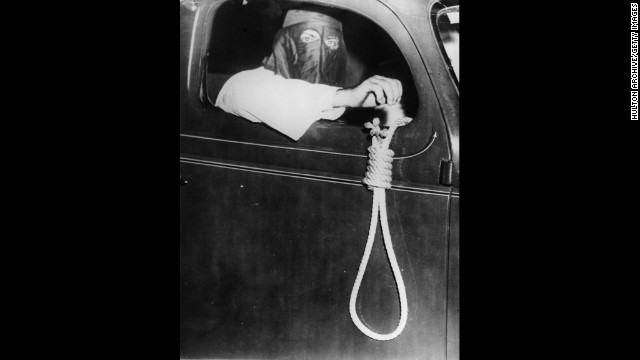
The featured picture was my go to, when I did not feel like studying. There were several pictures of people who were victimized for learning to read.

noose


From literature these are images in my mind. In college I saw the real photos. They were my motivation to learn, to read more and to be excellent in education. It was my revenge for the slaves and people who suffered , I thought.

iu

Wikipedia says

“The Ku Klux Klan (KKK), or simply “the Klan”, is the name of three distinct past and present movements in the United States that have advocated extremist reactionary currents such as white supremacy, white nationalism, and anti-immigration, historically expressed through terrorism aimed at groups or individuals whom they opposed.[6] All three movements have called for the “purification” of American society, and all are considered right wing extremist organizations.[7][8][9][10]”

“The first Ku Klux Klan flourished in the Southern United States in the late 1860s, then died out by the early 1870s. It sought to overthrow the Republican state governments in the South during the Reconstruction Era, especially by using violence against African American leaders. With numerous chapters across the South, it was suppressed around 1871, through federal enforcement. Members made their own, often colorful, costumes: robes, masks, and conical hats, designed to be terrifying, and to hide their identities.[11][12]”89118333ed6NEU

“The second group was founded in 1915, and flourished nationwide in the early and mid-1920s, particularly in urban areas of the Midwest and West. It opposed Catholics and Jews, especially newer immigrants, and stressed opposition to the Catholic Church.[13] This second organization adopted a standard white costume and used similar code words as the first Klan, while adding cross burnings and mass parades.”

“The third and current manifestation of the KKK emerged after 1950, in the form of small, local, unconnected groups that use the KKK name. They focused on opposition to the Civil Rights Movement, often using violence and murder to suppress activists. It is classified as a hate group by the Anti-Defamation League and the Southern Poverty Law Center.[14] It is estimated to have between 5,000 and 8,000 members as of 2012.[2]”

lynch

“The second and third incarnations of the Ku Klux Klan made frequent reference to America’s “Anglo-Saxon” blood, hearkening back to 19th-century nativism.[15] Although members of the KKK swear to uphold Christian morality, virtually every Christian denomination has officially denounced the KKK.[16]”

The last photo , of a lynching, is the one that often comes to my mind. My mother and dad opened a black high school in Salisbury , Maryland.  I was born in Salisbury , Maryland. When I asked why they moved, my mom would say because it was too far from her family.My dad would say, it is all your mother’s fault.

My mother tried on a hat in Salisbury, Maryland . She put it onto her head. That was not allowed . Black women were not allowed to try on hats. My mom tried it on anyway.So the local KKK invited my dad for a ride. The people in town liked him so they did not lynch him. They showed him the tree where people were hanged and told him to take care of his wife to make sure she goes by the rules. They moved. Mother acknowledged the story.

The Ku Klux Klan sought to re-establish Democratic power in the South at the time when Radical Republicans and carpetbaggers dominated Reconstruction. It was founded by ex-servicemen of the Confederate Army in 1866, led by Nathan Bedford Forrest. The original group opposed the reforms enforced on the South by federal troops regarding the treatment of former slaves, often using violence to achieve their goals. Forrest ordered the Klan to disband in 1869, but many of its groups in other parts of the country ignored the order and continued to function.

As a teen I knew to avoid White men in groups, in a car, or in a crowd because of the fear of being raped or groped or being victimized. Black women were routinely assaulted in the south and there was little consequence to rapes.

       The Klan Gets Diverse in Hate, Adding more Minorities and Religions

A second distinct group using the same name was started atop Stone Mountain near Atlanta in 1915 by William J. Simmons. This second group existed as a money-making fraternal organization and fought to maintain the ways of the past by fighting against the increasing numbers of Roman Catholics, Jews, Blacks, Asians, and other immigrants into the United States. This group, although preaching racism, was a mainstream organization with 4 million members at its peak in the 1920s. Its popularity fell during the Great Depression, and membership fell again during World War II presumably because of mass enlistment or conscription to the Armed Forces.

                                         The Violence of the KKK

The violence conducted by the Klan was often sexualized in nature. Although the Klan openly stated their reason for existing was to protect white women from black men, some had no moral qualms about their members sexually abusing or mutilating black men and women in order to show their authority. Often, Klan members would both assault and rape black women (Hodes 66). An example of sexualized violence was given in by the U.S. Commissioner from Raleigh, A. Webster Shaffer, concerning a freed woman named Frances Gilmore. A group of disguised attackers had assaulted her by whipping and beating her, then taking her clothes off to be whipped with a board, and finally forcibly having her pubic hair burned off before she was cut multiple times with a knife (Report 36-37). Gilmore was unable to identify her attackers due to their disguises, and no arrests were ever made.

Another example of sexualized violence was committed on a black man who, because of a simple labor conflict, was forced to cut up his genitals with a knife (Hodes 65). The Klans use of sexualized violence on women and men shows their willingness to assert their social authority over blacks, by any means necessary.

Victims of Violence

The Klan seemed willing to use whatever means necessary to regain political dominance of the South, even if that meant instilling terror via sexual abuse.

Did You Know?
At its peak in the 1920s, Klan membership exceeded 4 million people nationwide.

Where can you find out more?

The Book, Mississippi Burning 

Photo: “Civil Rights and the KKK” At the link.

The Newseum  has lessons on Civil Rights and the KKK.

IMG_8416

According to John Hope Franklin (From Slavery to Freedom: A History of Negro Americans, 1967), “in the last sixteen years of the nineteenth century there had been more than 2,500 lynchings, the great majority of which were of Negroes.” The early twentieth century did not see a significant decrease: “In the very first year of the new century more than 100 Negroes were lynched, and before the outbreak of World War I the number for the century had soared to more than 1,100.” Lynchings declined in number but continued in ferocity during World War I. They were seized on so effectively by the Germans that, despite his Southern sympathies, President Wilson issued a statement against lynching and mob violence, But after the war more than a few returning black soldiers were lynched, some in their uniforms. The “Red scare” of 1919 was eclipsed by the racial violence and lynching fever of what James Weldon Johnson termed “the Red Summer.” Riots and killings, some of them lynchings, occurred in Chicago, Texas, Washington, D.C., and with particular brutality that October in Arkansas. Although lynching was by no means an isolated, aberrant occurrence in the 1920s when the Klan was resurgent or in the 1930s when the depression fueled the hunt for racial as well as political scapegoats, the phenomenon was no longer virulent enough to claim one victim every two to three days. In its sporadic occurrences over the next decades, lynching continued to be a vehicle of terror and a last resort in opposition to the drive for political and civil rights through the 1950s, 1960s, and beyond.