Digital Citizenship ,Preservice Education Initiative

On SITE 2012 in Austin: So What Is Digital Citizenship?

Posted on March 7, 2012 by JimS in the ETCJournal

Report from SITE2012 AACE in Austin, Texas.

Social Justice and Digital Equity SIG has, with Mike Searson, created a project in Digital Citizenship that is funded by Facebook. We have had our initial planning meeting.. We were at the SITE.org Conference in Austin, Texas.

Digital Citizenship is a concept which helps teachers, technology leaders and parents understand what students/children/technology users should know to use technology appropriately. Digital Citizenship is more than just a teaching tool; it is a way to prepare students/technology users for a society full of technology. Too often we are seeing students as well as adults misusing and abusing technology but aren’t not sure what we can do. The issue is more than what the users do not know but what is considered appropriate technology usage.

You have probably heard about the parent who shot his child’s computer. There was an interview with the student and parent on NBC to explore the incident.

We know a lot of ways in which people have blocked the use of the Internet by cutting the cords, taking away the computer. We think education works better. We use the topic of social networking, but since Facebook is the elephant in the room, here are their resources from the Facebook page:

Facebook Resources for Educators
https://www.facebook.com/education?sk=app_4949752878

Why a PreService Initiative for Colleges and Universities?
We want to give knowledge to pre-service and inservice teachers to prepare for teaching in a digital world. We want to create a curriculum to explore the learning landscape.

Who Else is Interested in Education for the use of Social Media?
In the CyberLearning Conference held at the National Geographic which involved SRI, NGS, and NGS, they shared this information.on Social Media. http://cyberlearning.sri.com/w/index.php/Cyberlearning:Social_Media

 Some National Groups
http://wiredsafety.org/

Family Online Safety Institute

Net Family News

Childnet International

Center for Safe and Responsible Internet Use

Cyberbullying.org

Youth Safety on a Living Internet” NTIA
The Online Safety and Technology Working Group (OSTWG) reviewed and evaluated: 1. The status of industry efforts to promote online safety through educational efforts …

You may also have seen this headline. Lady Gaga Goes to Harvard:

Pop star Lady Gaga descended on Harvard University with some powerful friends Wednesday to launch her new foundation aimed at empowering young people. The singer was joined by Oprah Winfrey, spiritual leader Deepak Chopra, and Health and Human Services Secretary Kathleen Sebelius to kick off the Born This Way Foundation that Gaga’s mother and inspiration will help steer. Gaga spoke to more than 1,100 students from several states, faculty and invited guests at Harvard, urging the young audience to “challenge meanness and cruelty.”

There was a Born this Way Foundation symposium of educators and groups at Harvard, funded by Lady GAGA who is intent on creating a difference using her connection with her audiences to fund an initiative by bringing together McArthur Foundation, Harvard law and education faculty, and Danah Boyd, a Microsoft researcher, as well as other people who have projects in this area. Students were also invited to the initiative, and they had their own meeting with Lady Gaga. Her foundation is BornThisWay.

So we talk about many subjects inclusively when we talk about Digital Citizenship.

The topic of digital citizenship is certainly gaining momentum. In June 2010, the Online Safety Working Group sent a report to Congress titled “Youth Safety on a Living Internet.” There are many organizations and individuals that are working on this topic.

Let us know if you are interested  helping with or being a part of our preservice initiative.

Bonnie Bracey Sutton

The Power of Kindness and Caring about Students and Teachers.. Parry Aftab

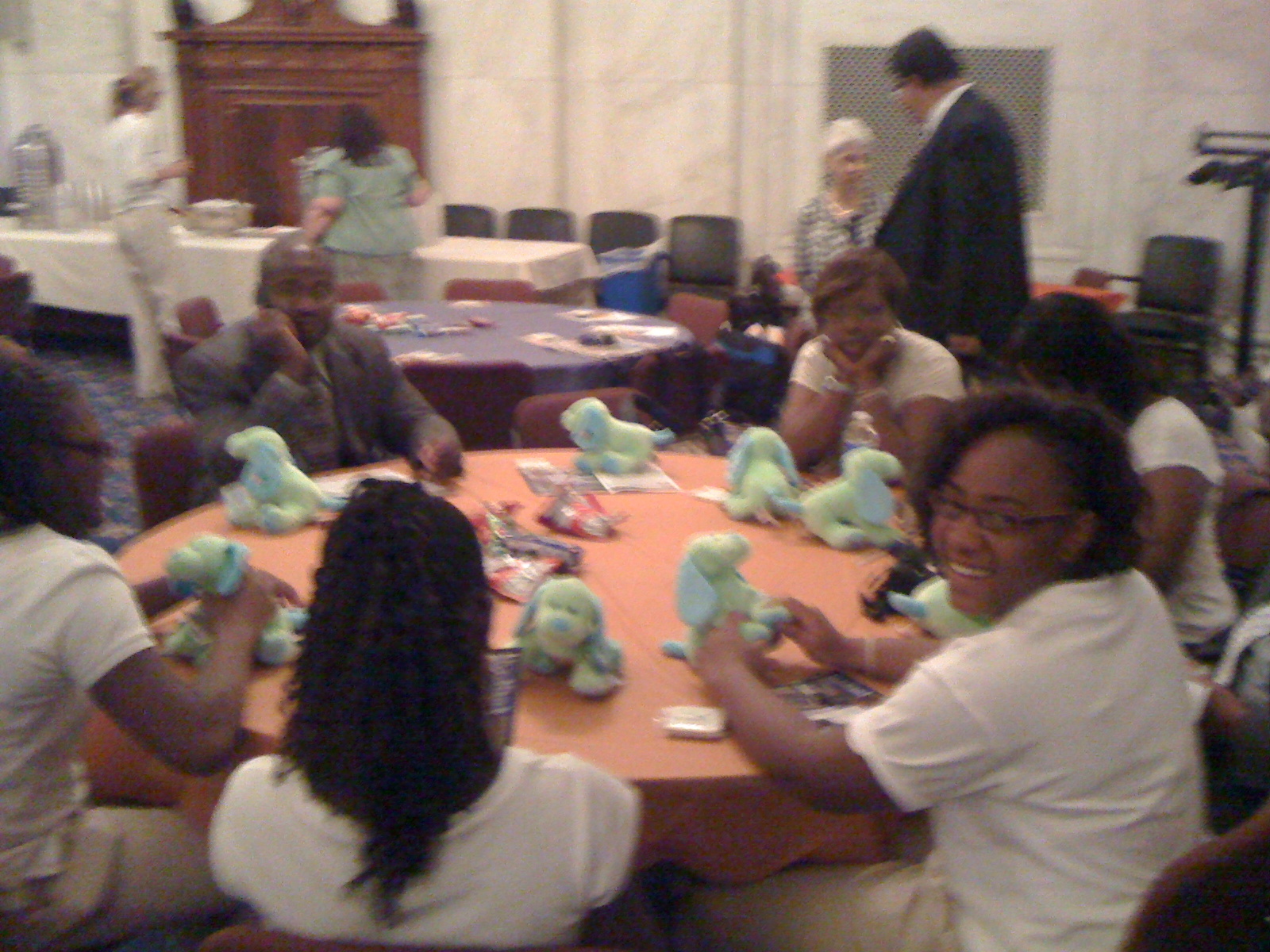
As a teacher, most of what I do was prescribed, though I found permission to do many things I liked within the school groups, and groups that support teachers. I found surprising support for students and all the things I care about in emotional learning and intelligence with a group that I never knew about in school. Art Wolinsky and I are friend who have worked together in preparing teachers for the use of technology. He invited me to attend a special conference in Washington DC.  I attend a lot of workshops in DC. I was surprised that this one seemed to be run by kids. What I mean is that children were organizing the events of the day. That was refreshing. There were experts all around. When you travel in DC, you notice the people who come to workshops. It seems we were there to listen and then participate. That was different. We did get to do panels, but the stories of sharing, the events were mostly done by students.

*Art Wolinsky and I have been friends since the use of technology in schools was started. OII.org so we are tech savvy.

The Wired Safety Conference

You may want to know about it so that you can participate in the next one,

http://wiredsafety.org/

You will find lots of resources, information and ideas here.,

About Parry Aftab – WiredSafety.org

Parry is one of the leading experts in cyberlaw and Internet safety and security in the world. Her Internet safety charity, WiredSafety.org, is comprised of thousands of unpaid volunteers, including Parry herself. They help Internet users with anything that goes wrong online and help teach safe, private and responsible interactive technology work. They deal with predators, cyberbullying, harassment and stalking, hate, piracy, privacy and misinformation and hype. Her educational videos and animations are available to share and use.  This was interesting to me that the resources were free.
In schools , usually we have to pay to get good resources . I was thrilled to find out that not only are there great resources , but that the students, were grass roots activists in the program, and I met my first teenangel. You can meet some here.
Nice videos here for you.

Parry comes to the educators at SITE.org

This is how she became an ambassador to the SITE.org community.

As a teacher I never had much instruction about digital citizenship, cyberbullying and the problems of students with technology tools. I am a pioneering educator, but the field has become very large and there are lots of problems to tackle. Social networking is also an area of concern for many parents.

So here were a lot of students, kids, at various levels of learning who were sharing their stories, ideas and creating synergy in their schools. It was fascinating . Parry was the architect of the project, but clearly the students were well trained,  and savvy. Some were doing internships and others creating opportunties for others.

WiredKids Summit – June 8, 2011

Senate Russell Building, Washington D.C.

The summit is given each year entirely by Tweenangels and Teenangels. They give awards to their favorite sites and to people they recognize have made the Internet safer. Kids on the stage, adults in the audience; industry, policymakers, law enforcement. They present research they conduct and teach adults what they need to know.

Often cybersafety messages come from the top down, parents to kids. But almost as often the kids know more about technology than their parents. Every year this summit is given on Capitol Hill, giving the teens and tweens a chance to show leaders in industry and government how much they know.

Senator Menendez provided the room for the summit and was in attendance. Here arecomments from his Facebook page.

Bonnie Bracey’s Blog Post shares pictures and her thoughts about the day.

Art Wolinsky’s Blog Post talks about what WiredSafety and the annual summit means to him amd the thousands of other volunteers around the world.

Leticia’s Tech Saavy Mom’s Blog Post shares what the day meant for her and others.

ABCsThe Ridgewood Chapter of WiredSafety’s Tweenangels presented their version of the ABC’s of Cyberbullyiing. You can download a PDF version of the presentation for use with elementary school children.
Animoto Video of the 12th Annual WiredKids Summithttp://animoto.com/play/X65aiQIriuZ88S1F2ycGEQ?utm_source=teenangels.org&utm_medium=player&utm_campaign=player

Teenangels are WiredSafety’s award-winning teen cybersafety expert group who have been specially trained by the local law enforcement, and many other leading safety …

teenangels.org
But wait there is more. I was working in an educational community of thought and we needed to think about how we could do
preservice education. So I invited Parry Aftab to the SITE.org conference. She accepted, came and shared knowledge with our learning community.  She shared websites, a game, and posters. She shared the idea of the teacher tool kit with us.
Most of all I like the game. I like the game because it is a way for teacher to share the ideas of Cyberbullying and for teachers who use it to learn. I was an alpha learner. Parry teases me about the fact that I got some of the information wrong. It’s true, so the game was modified to create learning and teacher resources. I love it and this website.  Parents, and community people can learn a lot just from the flash presentation on the site.
Stop Cyberbullying
Parent Information
Here is information for parents to learn with
This is a tool and a game. Alex Wonder
We are also reprogramming our multimedia feeder tool, so while we code, visit StopCyberbullying.org and download the Alex Wonder Game from there. And come back for the real thing soon. Trust us, it’s worth the wait. And here are two of our cyberbullying videos/animations. Enjoy!
Wake up and smell the silicon: From smartphones and apps to computers and social networks, technology has permanently invaded kids’ lives, much to the benefit of parents and educators. But with the iPhone, iPod touch and iPad now topping children’s wish lists, kids aged 2 to 5 are more equipped to run apps than tie their own shoelaces. In the rush to place high-tech and mobile devices in so many hands, we’re also doing perilously little to prepare adults and kids alike for life in a connected world, potentially endangering future generations. We must be on the move to create digital citizenship initiatives.
Bonnie Bracey Sutton

Austin the Destination, Integrating Computational Thinking Into K-12, Sharing Supercomputing Resources and Education

Austin, Texas

Theme: Teaching in Exponential Times! K-12 to Teragrid  and the Future of Supercomputing!XSEDE

In case you are advanced .. go to https://www.xsede.org/education-outreach-blog

We Raise the Bar for K-12 and Preservice Candidates

Years ago, members of the Supercomputing Conference and the Teragrid allowed us as teachers  to create a window of interest into SC and computational thinking for the SITE members. We had involvement from Henry Neeman and Diane Baxter over the years and support to become a part of the SITE community and to do workshops over several years. We have had incredible support and exposure to the educational activities including the work of Shodor.org  and the resources at that site and their workshops.We learned from the Broadening Engagement community how to share the message.

We learned at the SC Education conference and then disseminated lessons and practices. Ray Rose, ManoTalaiver, Vic Sutton, and I have been quietly integrating the computational sciences and HPC into K-12 practices. Mano works in rural areas to bring the dreams of education into reality with NSF funding. Ray is now a college instructor in technology at an HBCU in Austin. Vic and I are working with a K-12 School, Tracy Learning Center to infuse computational thinking into the curriculum. Bob Plants is the researcher in our group and he has a STEM initiative in Mississippi. He shares resources on line as outreach to teachers too.

Dr. Paul Resta is about Broadening Engagement

Change takes a Visionary!

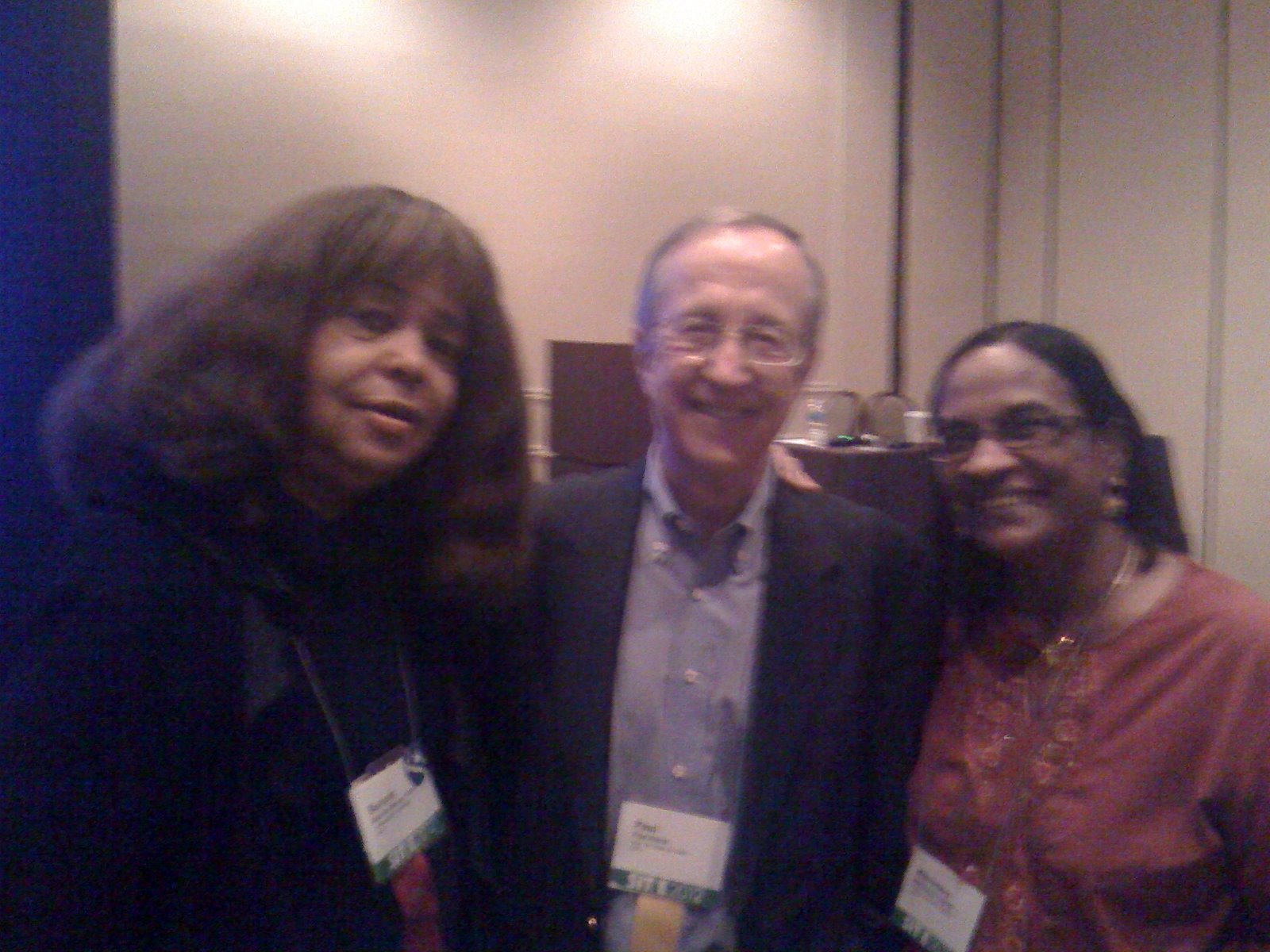
One of my best friends is Dr. Paul Resta who put ideas of education into reality. We were so proud of his accomplishments and his center that we planned a tour for participants at SITE, Austin. The resources are a great way to create change in the learning landscape. Dr. Resta is a leader in teacher education nationally and internationally. He has worked with tribal groups in the Four Corners Project and works Internationally in education as well.

Middle School

East Austin Academy College Prep
 – This middle school is designed to help low-income minority inner city students prepare for college and success in the future. All students participate in an innovate program known as Globaloria. Globaloria is a social network for learning, in which they learn to create educational web-games for social change. East Austin College Prep Academy is the first charter school to integrate the Globaloria network and curriculum as a school-wide teaching and learning opportunity, and offers required daily curriculum to all students starting at 6th grade.

Project on Games and Workforce Readiness. Globaloria.org

Idit Harel Caperton works in areas of need with her Globaloria project. Ray, Vic and I also encouraged her to share her project, Globaloria.org with the SITE membership. We , Ray, Vic and I also were involved with the group in training and research as learners in professional development.

We have come of age. Look at the tours and the participants of SITE who were involved in thinking , learning, planning, and being involved in a special resource for educators at UT. The university of Texas.

Highlights

Manor New Tech High School (NTHS) This high school is a technology-rich learning environment using a constructivist approach to learning. It has become a model NTHS site and educators from newly established NTHSs come to Manor for orientation and training. Participants will meet with the district superintendent and the director, faculty and students at the school. (Limit 30) Depart 9:30 AM, Return 1:30 PM

View the Student-Generated Video for a Preview of this tour!

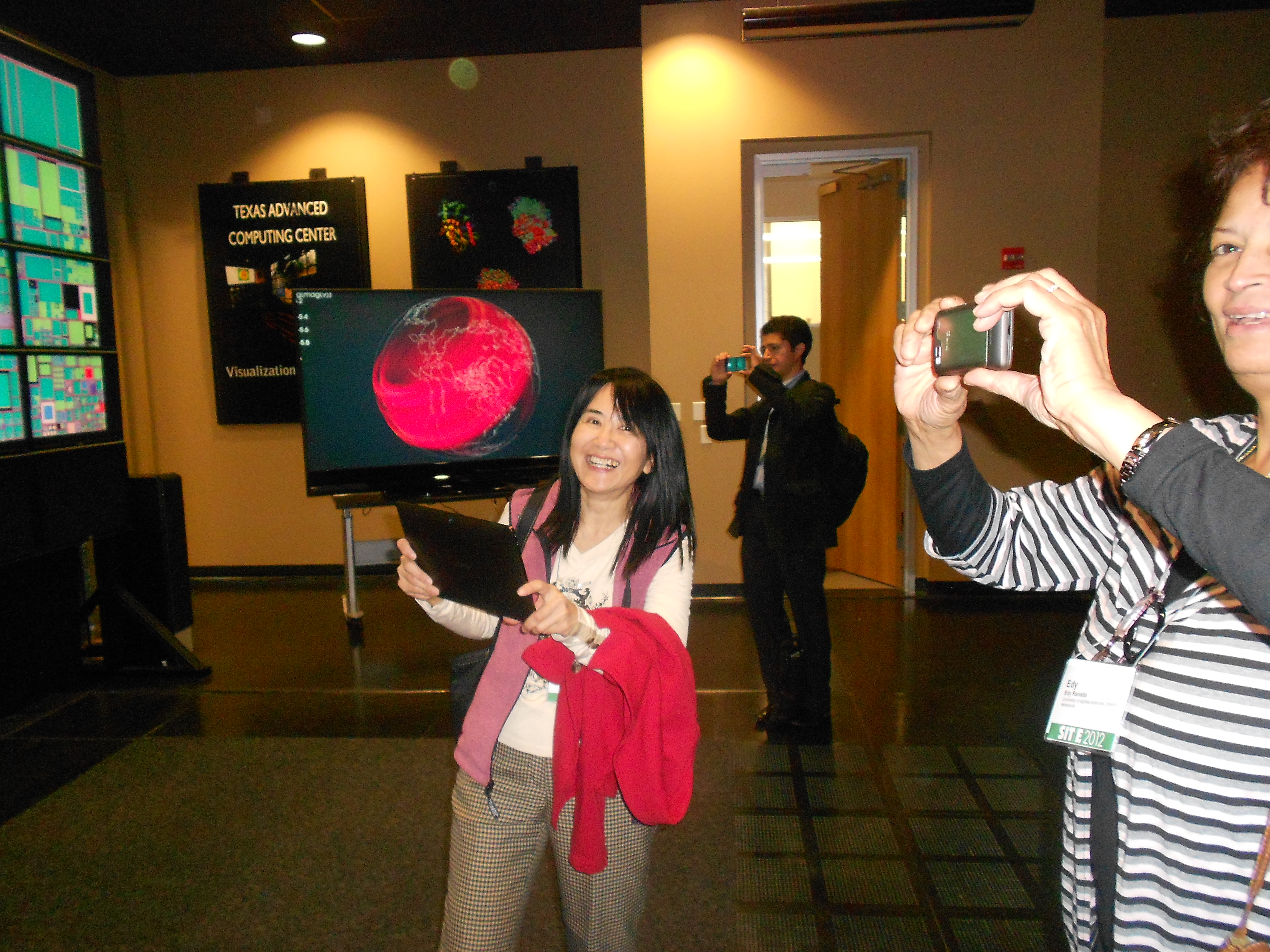
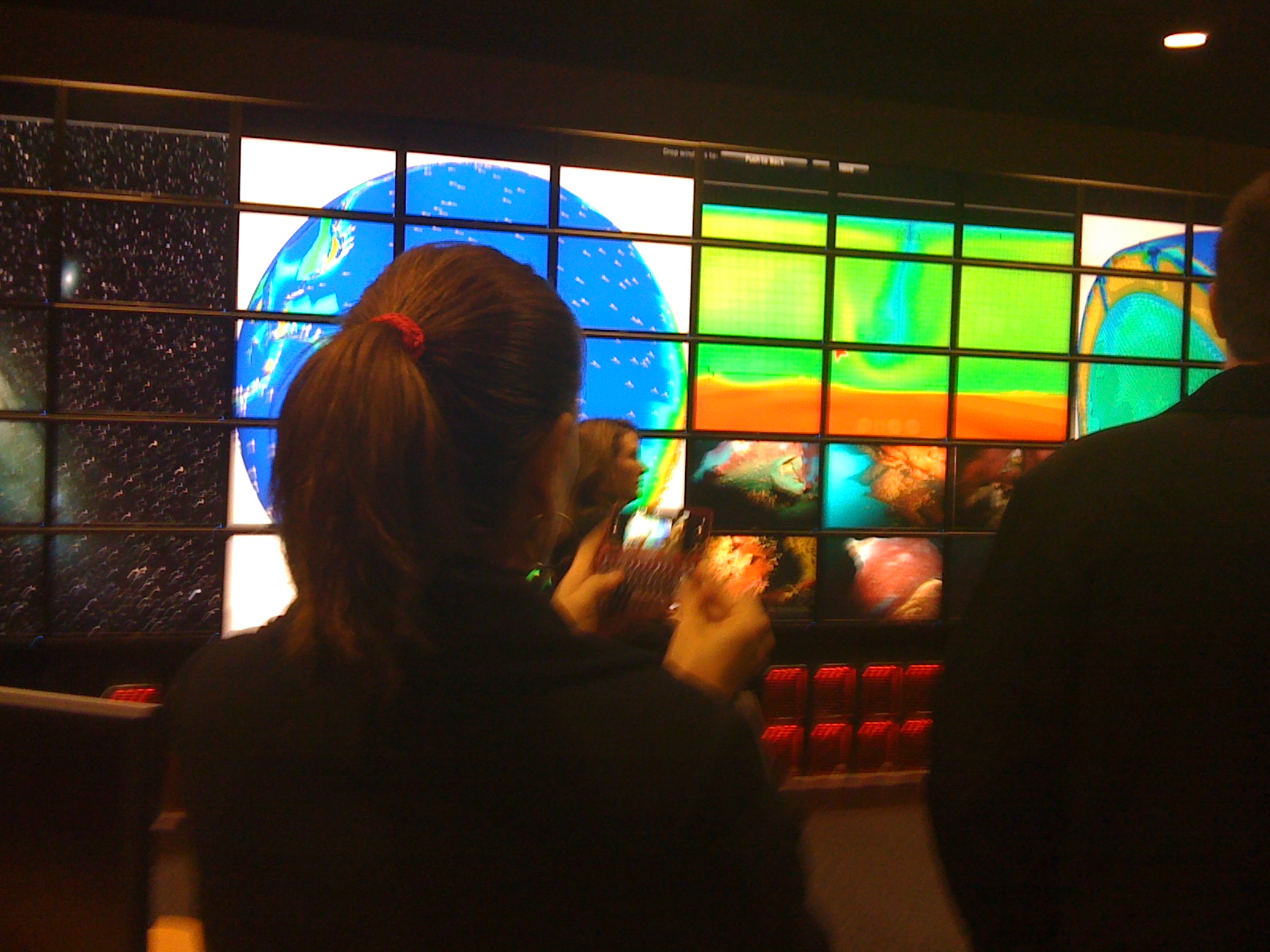
Education Visualization Lab and Visualization Center, The University of Texas at Austin – The Learning Technology Center Educational Visualization Lab is focused on the use of visualization technologies to understand patterns and relationships in massive education data sets. The visit will include a tour of the Learning Technology Center and

also a visit to the TACC Visualization Center that includes, Stallion, the highest resolution tiled display in the world; Longhorn, the largest hardware accelerated, remote, interactive visualization cluster. Was used by NOAA in predicting path for Katrina. » Newsletter

The Learning Technology Center in the College of Education at The University of Texas at Austin supports the instructional and research activities of the College’s students and faculty by providing computer facilities, telecommunications services, and digital media production equipment. The LTC also participates in projects that advance the use of technology to meet the educational needs of learners throughout the state and nation, and around the world.

You can check equipment out to use.

You can take your laptop to be checked.

You can work in the lab.

You can sit with professionals who can help you plan your lessons to be technology integrative.

Teachers can plan to be in workshops to enhance their knowledge .

I have many photos , and I am sure that I am only sharing a bit of what is possible.

Learning at the University of Texas

There are links and resources that have been created for teachers in this center for national, regional and local learning on the website

The information here comes from the newsletter and information gathered during the tour.

Kelly Gaither, Director of Visualization for the Texas Advanced Computing Center, describes the information conveyed in a simple mapped visualization.

Kelly Gaither, Director of Visualization for TACC, led the workshop, which included an overview of information visualization and visual analytics concepts and how they apply to educational data. Attendees learned the basics of Processing, a popular visualization programming language, to develop information visualizations with their own data. They were later able to view their work on the EdVisLab’s large display.

A participant learns Processing, a visualization programming language.

Both Google Apps for Education and visualization techniques for educational research represent new directions for the College of Education and its use of technology in education. The LTC is constantly exploring new technologies and their benefit to education, and has led the way in bringing these new technologies to the College. The apps will be part of the online tools that are replacing TeachNet and will allow student groups to have increased online collaboration, including co-creation of documents, presentations, and Web sites. The EdVisLab will allow faculty to better analyze large and complex data sets, more easily seeing and understanding patterns, trends, and relationships. For more information about the Google Apps for Education pilot, contact Karen French. Contact Ken Tothero to learn more about the EdVisLab. ( If you live in Tcxas)

.

The LTC equips teaching professionals with new knowledge.

 COE Education Visualization Lab

LTC Director Paul E. Resta speaks to those gathered for the EdVisLab grand opening.

The College of Education (COE) community, staff of the Texas Advanced Computing Center (TACC), and many others interested in visualization on campus gathered Friday, in early February 3 to celebrate the Learning Technology Center’s grand opening of the COE Education Visualization Laboratory (EdVisLab). The event culminated more than a year of planning the lab and designing its equipment and software systems.

Brandt Westing, TACC Research Engineer, shows visitors how visualization can help researchers detect trends and patterns in large amounts of data.

The lab is a joint project with TACC, which provided technical assistance and will help run the lab. The new facility will allow COE researchers to use visualization techniques to better analyze large data sets. The lab features a 15-monitor high resolution tiled display, a 3-D visualization system and a workstation with specialized visualization software.

COE Dean Manuel Justiz spoke first during the opening, praising LTC Director Paul Resta for all his efforts over the years to make the LTC a top-notch, nationally recognized learning technology facility. Dr. Resta then spoke, thanking the Dean for the lab’s funding and thanking all the LTC and TACC staff for the long hours spent creating the lab. Finally, Jay Boisseau, TACC Director, described how the process of adapting TACC visualization programming for use in the EdVisLab led to the development of an improved version of the software.


Texas Advanced Computing Center – Texas Advanced Computing Center is a leading resource provider in the NSF TeraGrid and operates two of the most powerful high performance computing systems in the world, which are used by thousands of scientists and engineers each year to perform research in nearly every branch of knowledge. TACC’s largest supercomputer, Ranger, can perform 579.4 trillion operations per second (or teraflops), and is nearly 30,000 faster than today’s desktop computers. TACC’s newest system, Lonestar 4, which went online in Feb. 2011, clocks in at more than 302 teraflops and offers nearly 200 million computing hours per year to researchers around the world.

The Society for Information Technology & Teacher Education is an international association of individual teacher educators, and affiliated organizations of teacher educators in all disciplines, who are interested in the creation and dissemination of knowledge about the use of information technology in teacher education and faculty/staff development.

The Society seeks to promote research, scholarship, collaboration, exchange, and support among its membership, and to actively foster the development of new national organizations where a need emerges. SITE is the only organization that has as its sole focus the integration of instructional technologies into teacher education programs.

As the official blog of SITE, this website exists to promote dialog and interaction among SITE members as well as non-members about a variety of issues relating to our mission.

Bonnie Bracey Sutton

Digital Citizenship, a SITE Initiative

When I started thinking about the use of the Internet, I remembered all of the people who could not read who asked me to teach them to read when they found out I was a teacher.  That was many years ago and reading literacy is still a problem.

Now I have a new way of thinking, there needs to be more than just reading literacy, I believe digital literacy is a civil rights issue. The headline here talks about the urban poor but it is more than just the urban poor who are worried.

Digital Divide

Without Internet, Urban Poor Fear Being Left Behind In

Digital Age


You must read this article and then think urban, rural, distant, tribal and isolated .http://www.huffingtonpost.com/2012/03/01/internet-access-digital-age_n_1285423.html

Originally published: March 1, 2012

Author: Gerry Smith

[Commentary] An estimated 100 million Americans have no way of accessing the Internet at home. They are on the wrong side of the so-called “digital divide” — the chasm between those who are connected to technology and those who are not.

Some live in remote areas where broadband service doesn’t exist. Many live in blighted urban neighborhoods, unable to afford a computer, let alone Internet service. But being disconnected isn’t just a function of being poor. These days, it is also a reason some people stay poor. As the Internet has become an essential platform for job-hunting and furthering education, those without access are finding the basic tools for escaping poverty increasingly out of reach. “The cost of being offline is greater now than it was 10 years ago,” said John Horrigan, vice president of policy research at TechNet, a trade association representing high-tech companies. “So many important transactions take place online. If you don’t have access to high-speed Internet, you’re missing out on a lot.

 FCC workshops ,  taught me these descriptors.

Barriers to Use

  • Affordability: 36 percent of non-adopters, or 28 million adults, said
    they do not have home broadband because the monthly fee is too
    expensive (15 percent), they cannot afford a computer, the installation
    fee is too high (10 percent), or they do not want to enter into a
    long-term service contract (9 percent). According to survey
    respondents, their average monthly broadband bill is $41.

    We know that there are initiatives for that change. We also know that community organizations can create learning spaces such as libraries, civic centers and chapter houses, or other venues to allow people to have community access.


    Digital Literacy: 22 percent of non-adopters, or 17 million adults,
    indicated that they do not have home broadband because they lack the digital skills (12 percent) or they are concerned about potential
    hazards of online life, such as exposure to inappropriate content or
    security of personal information (10 percent)

    This is a gating reason for many, not just homes but schools. We hope to create awareness , information and resources that will create a pathway to great use of the Internet in our project.

    Relevance: 19 percent of non-adopters, or 15 million adults, said they do not have broadband because they say that the Internet is a waste of time, there is no online content of interest to them or, for dial-up users, they are content with their current service.

    Having been a  teacher Internet pioneer, and having many professionals in our SITE.org to help disseminate  best practices, we in the educational field can help to bridge the gap. There are long-standing projects like Project Zero that provide a model of dissemination. There is the Digital Generation Project. Many of today’s kids are born digital — born into a media-rich, networked world of infinite possibilities. But their digital lifestyle is about more than just cool gadgets; it’s about engagement, self-directed learning, creativity, and empowerment if they have the right learning landscape. The Digital Generation Project tells their stories so that educators and parents can understand how kids  can learn, communicate, and socialize in very different ways than any previous generation was able to do.


    Digital Hopefuls, who make up 22 percent of non-adopters, like the idea of being online but lack the resources for access.
    Few have a computer and, among those who use one, few feel comfortable with the technology. Some 44 percent cite affordability as a barrier to adoption and they are also more likely than average to say digital literacy are a barrier. This group is heavily Hispanic and has a high share of African-Americans.

    There are still some community center initiatives and funding that are created that need replication. Tutor Mentor in Chicago is a great example. 


Literacy today depends on understanding the multiple media that make up our high-tech reality and developing the skills to use them effectively

Years ago Andy Carvin wrote this.

Giving people access doesn’t instantly solve the manifold woes of our communities and schools. If it did, every kid with Internet access would be getting straight A’s and every adult with access would be gainfully employed and prosperous. It’s just not that simple. Technology access is only one small piece of a much larger puzzle, a puzzle that if solved might help raise the quality of life for millions of people. None of us can rightfully say we’ve found all the individual pieces yet, but some of the pieces are obvious enough that we can begin to put the digital divide puzzle together:

The digital divide is about content. The value of the Internet can be directly correlated to the value of its content. If all you can find online is shopping, Pokémon trading clubs, and porn, you could make a pretty good argument that it’s not very important to give people access to the Internet. As anyone who’s used it knows, the Internet can offer a wealth of opportunities for learning and personal enhancement, but we’ve only scratched the surface in terms of its potential. As more underprivileged and disenfranchised communities gain access, the Internet itself must provide the right tools so people are able to take advantage of and use it for more varied purposes, more learning styles, more languages and cultures. The Internet may feel like a diverse place, but when compared with the wealth of diversity and knowledge amongst humanity in the real world, it’s still pretty weak. Until the Net contains content that has true value to all of its potential users it will remain a place for the elite.

There is a bifurcation in use as well. Many only play with 2.O applications, they are good users of simple tools, but building the Internet and creating ideas takes computational thinking. But that’s another subject. Thinking about data mining, visualization, use of languages to build, and other skills needed to do Supercomputing are not in the thinking of educators. Here is the problem, ten years later, there are still people who are not on the Internet.The Pew Charitable Trust gives an update to Andy’s ideas. The slides are here In short they say,.Pew – The emerging information landscape – 8 realities of the “new normal”

“Pew Director Lee Rainie gave a keynote at the NFAIS annual conference about the way the internet and mobile connectivity have transformed the worlds of networked individuals. He discussed how normal life has changed in the past decade because of three revolutions in technology: 1) the spread of broadband; 2) the rise of mobile connectivity; and 3) the emergence of technological social networks. He discussed trends and likely future developments in technology that will shape the way people learn, share, and create information. The slides are here.”

The digital divide is about literacy. As much as we hate to admit it, functional illiteracy amongst adults is  one of America’s dirty little secrets. Millions of adults struggle to fill out forms, follow written instructions, or even read a newspaper. The 1993 National Adult Literacy Survey suggest as many as 44 million American adults—one out of four—are functionally illiterate, while another 50 million adults are plagued by limited literacy. We often talk about the importance of information literacy when it comes to using the Internet. Information literacy is an obviously vital part of the equation, but how can we expect to conquer the digital divide when nearly half of all American adults can’t even process written information competently? Literacy must be tackled at the most basic level in order to afford more people the opportunity to use technology effectively.

The digital divide is about pedagogy. As I wrote recently in the e-journal the Digital Beat  Internet access in schools isn’t worth a hill of beans if teachers aren’t prepared to take full advantage of technology. Research has shown that educators who are resistant to constructivist teaching practices are less likely to utilize the Internet in their lessons, while educators who are more comfortable with constructivist practices are more likely to do so. Teachers who employ more real-world interaction are thus more inclined to employ online interaction. How can professional development be reformed to take these differences into account?

The digital divide is about community. One of the greatest strengths of the Internet is in its facility for fostering communities. Communities often appear in the most low-tech of places: You can surf the Web until your knuckles implode and yet not feel like you’ve actually bonded with anyone, but you can subscribe to a simple e-mail listserv and join a gathering of people who have been enjoying each others’ wisdom for years. It’s paramount for people coming to the Internet for the first time to have opportunities to join communities and forge new communities of their own. Public spaces must be preserved online so that people can gather without feeling like direct marketing or more popular and powerful voices are crowding them out. If people can’t build meaningful relationships online, how can they be expected to gravitate to it? 

We must continue fighting the scourge of illiteracy—among students, their parents, and among the community—by expanding formal and informal opportunities that improve reading and critical-thinking skills. We must demand engaging content from online producers and refuse to buy into mediocre content when it doesn’t suit our teaching needs. We must encourage all learners to be creators as well, sharing their wise voices both online and offline. And we must open our schools and libraries to more connections with our communities—no computer lab or training room should sit idly during evening and weekend hours. These are but a few examples of what the education community can do.These five puzzle pieces—access, content, literacy, pedagogy and community—may not be enough to complete the entire digital divide puzzle, but they go a long way in providing us a picture of what’s at stake. Giving people access to technology is important, but it’s just one of many issues that need to be considered. Schools, libraries, and community centers have taking that first step in getting wired, but they must also consider the needs of the learners, the teachers, and the communities that support them. Broadband accessibility and speed are a problem.

Digital Citizenship is a concept which helps teachers, technology leaders and parents to understand what students/children/technology users should know to use technology appropriately. Digital Citizenship is more than just a teaching tool; it is a way to prepare students/technology users for a society full of technology. Too often we are seeing students as well as adults misusing and abusing technology but not sure what to do. The issue is more than what the users do not know but what is considered appropriate technology usage.

Cyberbullying and Adults

Cyberbullying isn’t just for kids. It never was. But when adults are involved, it’s called “cyberharassment” not “cyberbullying.” WiredSafety’s award-winning website dedicated to the issue of cyberbullying and young people is StopCyberbullying.org . It’s the most popular cyberbullying website in the world. Adult cyberharssment is handled here at WiredSafety.org’s cyberbullying section
* Pew – The emerging information landscape – 8 realities of the “new normal”

“Pew Director Lee Rainie gave a keynote at the NFAIS annual conference about the way the internet and mobile connectivity have transformed the worlds of networked individuals. He discussed how normal life has changed in the past decade because of three revolutions in technology: 1) the spread of broadband; 2) the rise of mobile connectivity; and 3) the emergence of technological social networks. He discussed trends and likely future developments in technology that will shape the way people learn, share, and create information. The slides in PDF are here.”

.

  Facebook’s Digital Citizenship Research Grants

Introduction

Facebook’s Digital Citizenship Research Grants support world-class research to improve our understanding of how social media can impact the next generation. In August 2011, we invited academic and non-profit institutions to apply for the $200,000 in grants funding research that highlights trends associated with digital citizenship. Nearly 100 researchers from more than 10 countries submitted outstanding applications. Based on in-depth evaluation from a team of Facebook employees and our Safety Advisory Board, we are awarding the inaugural Digital Citizenship Research Grants to FOUR researchers who will advance our global understanding of digital citizenship.

Original

Our leader

Dr. Michael Searson, SITE

Dr. Searson is President of the Society for Information Technology & Teacher Education (SITE) and heads the School for Global Education and Innovation program at Kean University. SITE represents approximately 1500 educators, from about 500 institutions of higher education throughout the world. In these roles, Dr. Searson works with educators across the globe to explore issues related to information technologies, informal learning, mobile devices and social media.The SITE project will bring together a coalition of international scholars, researchers and practitioners who will develop an open source course and course modules for the preparation of future teachers to teach digital citizenship.

Original

http://www.netfamilynews.org/?p=31281

Should You” shoot” your Child’s Computer? Digital Citizenship is a Better Solution

     
Is it Ever OK to Shoot Your Child’s Computer?
 

                                                  We have a better solution.


                                                   digital citizenship      

                                              Here is a  description of sooial media and digital citizenship.

 The Project Digital Generation

 Many of today’s kids are born digital — born into a media-rich, networked world of infinite possibilities. But their digital lifestyle is about more than just cool gadgets; it’s about engagement, self-directed learning, creativity, and empowerment. The Digital Generation Project tells their stories so that educators and parents can understand how kids learn, communicate, and socialize in very different ways than any previous generation.

    Facebook’s Digital Citizenship Research Grants

Introduction

Facebook’s Digital Citizenship Research Grants support world-class research to improve our understanding of how social media can impact the next generation. In August 2011, we invited academic and non-profit institutions to apply for the $200,000 in grants funding research that highlights trends associated with digital citizenship. Nearly 100 researchers from more than 10 countries submitted outstanding applications. Based on in-depth evaluation from a team of Facebook employees and our Safety Advisory Board, we are awarding the inaugural Digital Citizenship Research Grants to these four researchers who will advance our global understanding of digital citizenship.

Original

Our Grantees


Dr. Shaheen Shariff, McGill University

Professor Shaheen Shariff, undertakes research focused on youth and digital media. She guides schools, parents, teens and policy-makers to navigate a balance between online free expression, privacy and safety. Her recent bilingual website, Define the Line helps develop resources, workshops and interactive online forums to reduce cyberbullying and enhance responsible digital citizenship. The DFL team will survey how school kids define the lines between friendly online joking or teasing, and hurtful cyberbullying. They will also examine how teens define the lines between public and private online spaces.

Original

Dr. Michael Searson, SITE

Dr. Searson is President of the Society for Information Technology & Teacher Education (SITE) and heads the School for Global Education and Innovation program at Kean University. SITE represents approximately 1500 educators, from about 500 institutions of higher education throughout the world. In these roles, Dr. Searson works with educators across the globe to explore issues related to information technologies, informal learning, mobile devices and social media.The SITE project will bring together a coalition of international scholars, researchers and practitioners who will develop an open source course and course modules for the preparation of future teachers to teach digital citizenship.

Original

Shari Kessel Schneider, Education Development Center (EDC)

Shari Kessel Schneider is a researcher with the Education Development Center, Inc. (EDC), a global nonprofit dedicated to designing and evaluating programs that address challenges in health and education. Schneider has done extensive work in the fields of bullying and suicide prevention and has been conducting research on cyberbullying trends since 2006. Working with a large group of school districts, the EDC will engage school leaders, parents, and teens to examine existing programs and policies but also to uncover ideas for new strategies and linkages to encourage positive use of social media. Schools across the country are being mandated to take steps to address cyberbullying and protect the health and safety of youth both at school and online. This research will look at the roles of educators, parents and social networking sites to determine how they can work together.

Original

Janice Richardson, European Schoolnet (EUN)

Janice Richardson is a senior adviser at European Schoolnet (EUN), an umbrella organization that works with 33 Ministries of Education across Europe to raise internet safety awareness and to transform teaching and learning through the integration of innovative technology. EUN’s grant will be used for their Social Media in Learning and Education (SMILE) Action Research project to investigate the issues of how much teachers are benefitting from the full potential of social media tools. In addition, the SMILE project will create an online learning course and mentoring techniques for educators.

Original

In Farmville, Learning from Others , Transforming the Teaching and Learning World

Longwood University / Farmville

Do you know Farmville? not the game but the place.


Mano works closely with 25 school divisions in Southside Virginia, particularly in promoting research based instructional practices and expanding the interactive videoconferencing projects using H.323.

My friend, Dr. Manorama Talaiver and I atended a conference in the fall. I learned from it we both shared information from it. She created a project from the Wireless Summit and other information she has gathered to create new opportunities for Virginia participants , She shared what she learned and crafted outreach, courses and people to learn from for the participants.There is also a page that was created to link participants with funding strategies, and grant information. At the conference you could sign up for summer workshops and projects.

One of the presenters sharing ideas.on augmented reality

One of our guru is Dr. Chris Dede, who puts together the Wireless Conference. Here is the URL to his conference so you can at least get the resources.( He also shared his resources at the ISTE Conference)resources from that conference are here.

The Wireless EdTech website includes the speaker presentations, recorded sessions and photos from the conference. Well you don’t need to glue yourself to the website, but you can research , and download the white paper on wireless at your leisure.

Bringing the Ideas Home to Farmville … and Virginia

It was a recipe for success that Dr. Manorama Talaiver used to create outreach in a rural University, called Longwood. She excels at bringing the ideas to the learning community in Virginia. It is in Farmville , Va. It is a wonderful place to learn.

This was the 5th Annual STEM Summit, Entitled“ Formal and Informal STEM , Learning with Mobile Devices“ on Valentine’s Day. Frederick Bertley gave us a great keynote.

The keynote, Frederic Bertley, from the Franklin Institute in Philadelphia, was brilliant — talking about informal science learning. In particular, he had some great slides about minority STEM  role models in science who should be better known (instead of just movie stars and singers). He shared photos of people we should know who are minorities important in STEM.

We learn about the Franklin Science Institute and how it nurtures rural and community

Can you name ten minority STEM  people?
The Center for Innovation in Science Learning, initiated in 1995 as the learning research and development arm of The Franklin Institute, is led by Frederic Bertley, Ph.D. Dr. Bertley is responsible for the sustained development of the learning research portfolio in school partnerships, educational technology programs, gender and family learning, and youth leadership in science and technology.  link

Augmented Reality

from  wikipedia

Augmented reality (AR) is a live, direct or indirect, view of a physical, real-world environment whose elements are augmented by computer-generated sensory input such as sound, video, graphics or GPS data. It is related to a more general concept called mediated reality, in which a view of reality is modified (possibly even diminished rather than augmented) by a computer. As a result, the technology functions by enhancing one’s current perception of reality. By contrast, virtual reality replaces the real world with a simulated one.

Augmentation is conventionally in real-time and in semantic context with environmental elements, such as sports scores on TV during a match. With the help of advanced AR technology (e.g. adding computer vision and object recognition) the information about the surrounding real world of the user becomes interactive and digitally manipulable. Artificial information about the environment and its objects can be overlaid on the real world. The term augmented reality is believed to have been coined in 1990 by Thomas Caudell, working at Boeing.[1]

Research explores the application of computer-generated imagery in live-video streams as a way to enhance the perception of the real world. AR technology includes head-mounted displays and virtual retinal displays for visualization purposes, and construction of controlled environments containing sensors and actuators.

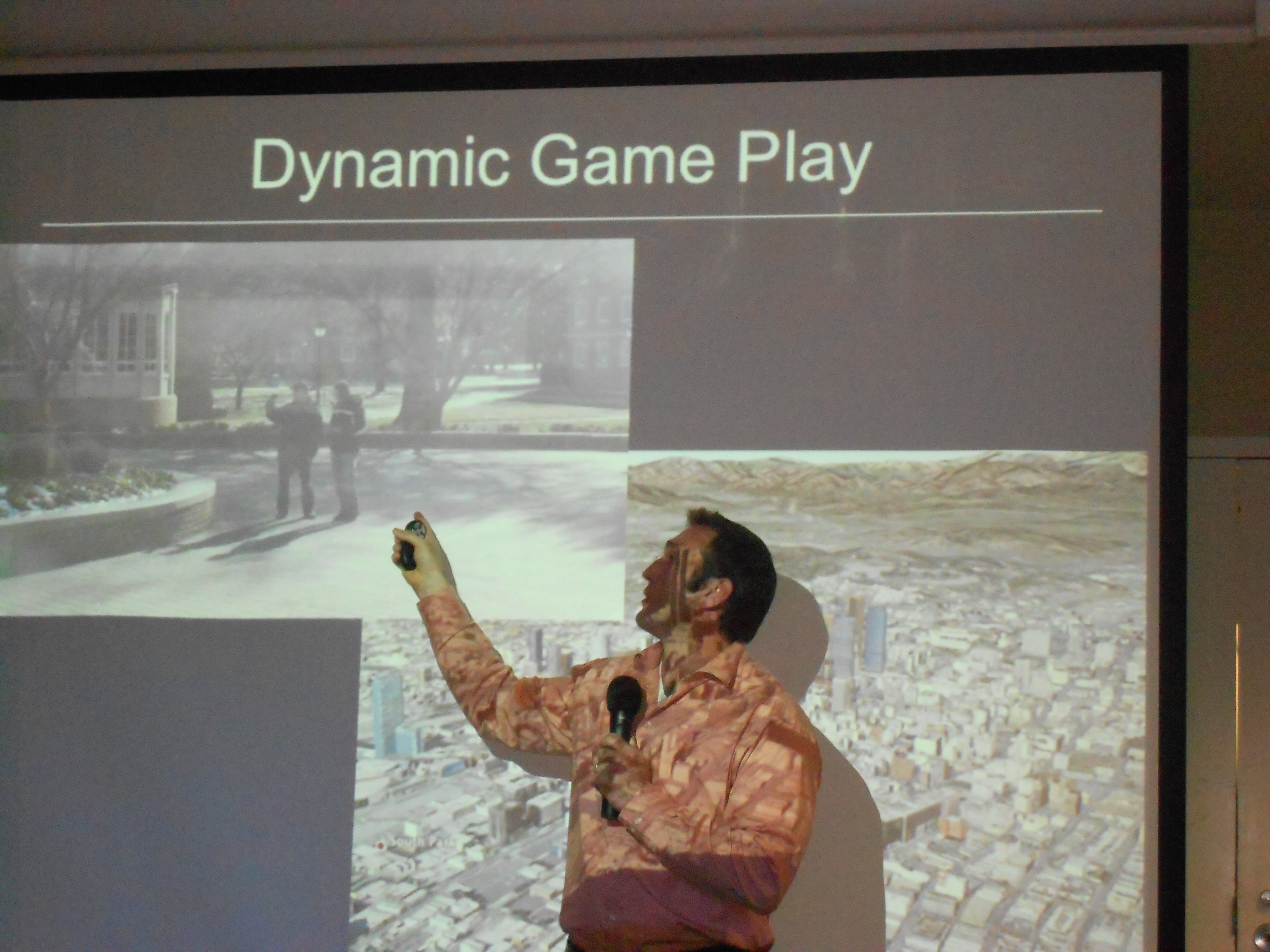
Matt Dunleavy, from Radford University, also had a good presentation on ‘Mobile augmented reality for teaching and learning’.

Video

The story-based, participatory AR games developed by the ROAR team are played on Apple iPhones and Android-based smartphones and use GPS technology to correlate the students’ real world location to their virtual location in the game’s digital world.

As the students walk and run around their school grounds, a map on their handheld displays virtual objects and characters (fig. 1 and 2) who exist in an AR layer superimposed on real space. When students come within approximately 30 feet of these digital artifacts, the AR and GPS software trigger video, audio, and text files, which provide academic and problem solving challenges as well as narrative, navigation, and collaboration cues.
John Hendron  shared– iOS Apps for STEM on Mobile Devices  this was fast and furious so I do not have the URLS

One of many dynamic sites he shared.

G21 – 21st Century Skills

MIT – lifelong K group – always learning, he shared the original work of Papert but then told of us new developments
Scratch app created for iPad but taken down after one day
Apple doesn’t want to use iPad for developers

Apps: That he shared and demonstrated for us.

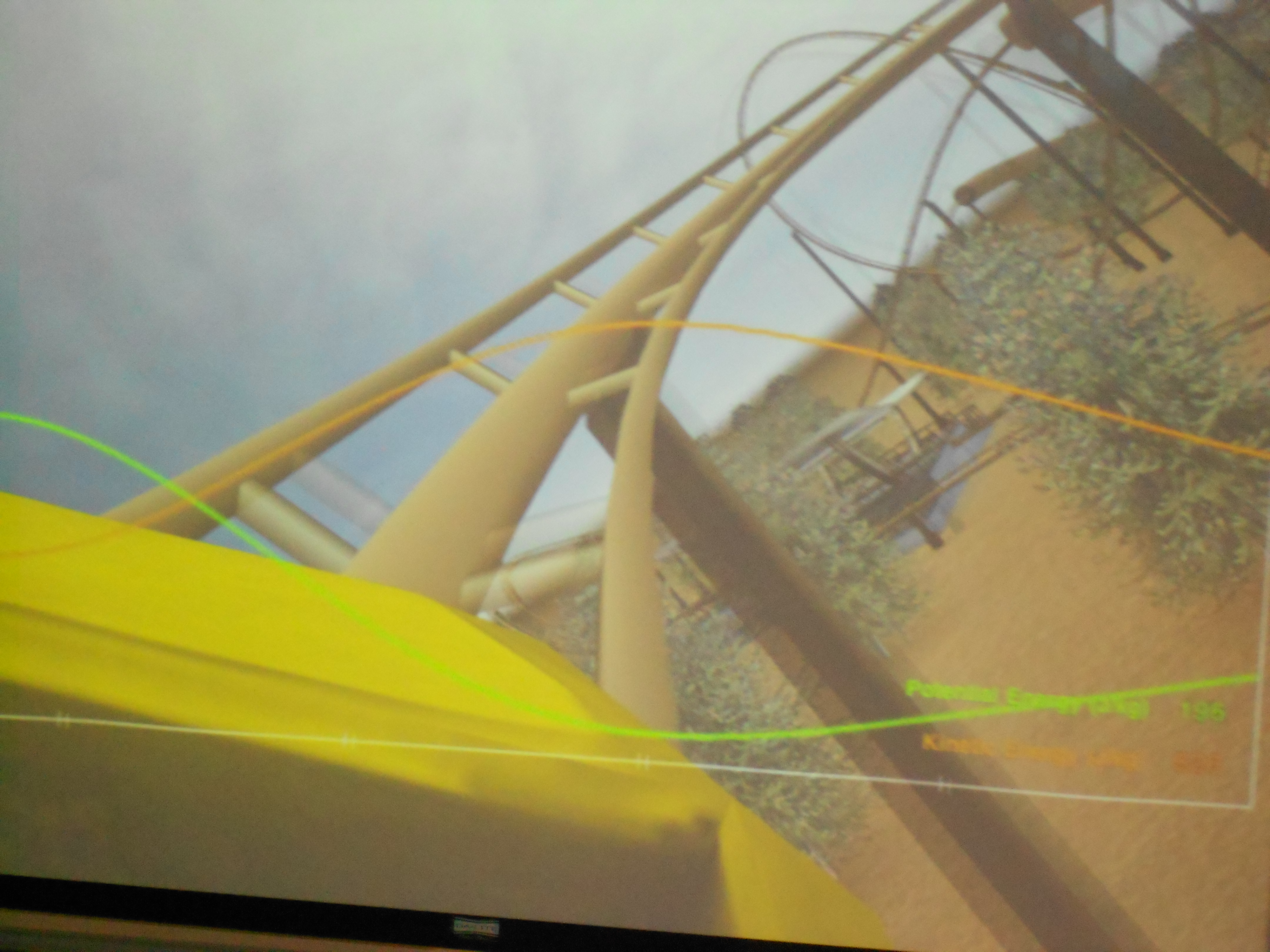
Roller coaster physics

Virtual Roller Coasters powered by mobile devices..

Tinker box
Sketchpad explorer
Protractor
Clean energy

CSTA is piloting AP  computer science course and he shared how to be involved.

\

Shodor Foundation – Patricia Jacobs & Jennifer Houchins gave  a  presentation on math flyer.

What better to start with than Math Flyer?

Math Flyer addresses a long-standing gap in Math Education. Traditional education uses static, motionless graphs to indicate the relationships between variables. While this works for some concepts, a student with a function and a picture of a graph gains no intuitive sense of the elements of the function and the relationship of each to the shape of the graph. With Math Flyer, we transform the static world of a graphing calculator into a truly dynamic experience. A student can plot a graph and manipulate all of the variables and constants in that graph, allowing him or her to see the relationships firsthand. For example, if a student plots “mx+b” within Math Flyer, he or she gets a graph of a straight line, but also two sliders labeled “m” and “b”. When the student moves these sliders, the graph updates in real time, giving immediate feedback on the role of “m” (the slope of the line, how steep it is) and “b” (the base or y-intercept, that is, the value of y when x=0) in this function. By focusing on the graph and its equation, rather than on the mechanics of plotting a single line, the student more rapidly builds an intuition about the meaning of “m” and “b” in that equation.

Interactivate
Some of the most popular math teaching software on the web!

All Online Activities →

Shodor’s  mission: to improve math and science education through the effective use of modeling and simulation technologies — “computational science.”

Shodor, a national resource for computational science education, is located in Durham, N.C., and serves students and educators nationwide. Our online education tools such as Interactivate and the Computational Science Education Reference Desk (CSERD), a Pathway Portal of the National Science Digital Library (NSDL), help transform learning through computational thinking.

In addition to developing and deploying interactive models, simulations, and educational tools, Shodor serves students and educators directly through workshops and other hands-on experiences. Shodor offers innovative workshops helping faculty and teachers incorporate computational science into their own curricula or programs. This work is done primarily through the National Computational Science Institute (NCSI) in partnership with TeraGrid, NCSA, and other NSF-funded initiatives.

A mentor works with students in the Shodor Scholars Program

For students from middle school through undergraduate levels of education, Shodor offers workshops, apprenticeships, internships and off-site programs that explore new approaches to math and science education through computational science.

Time and time again, Shodor has been recognized as a national leader and a premier resource in the effective use of computers to improve both math and science education. At this conference, the  primary information shared was the Math  Flyer.

Stephanie Playton – Using cell phones with young students

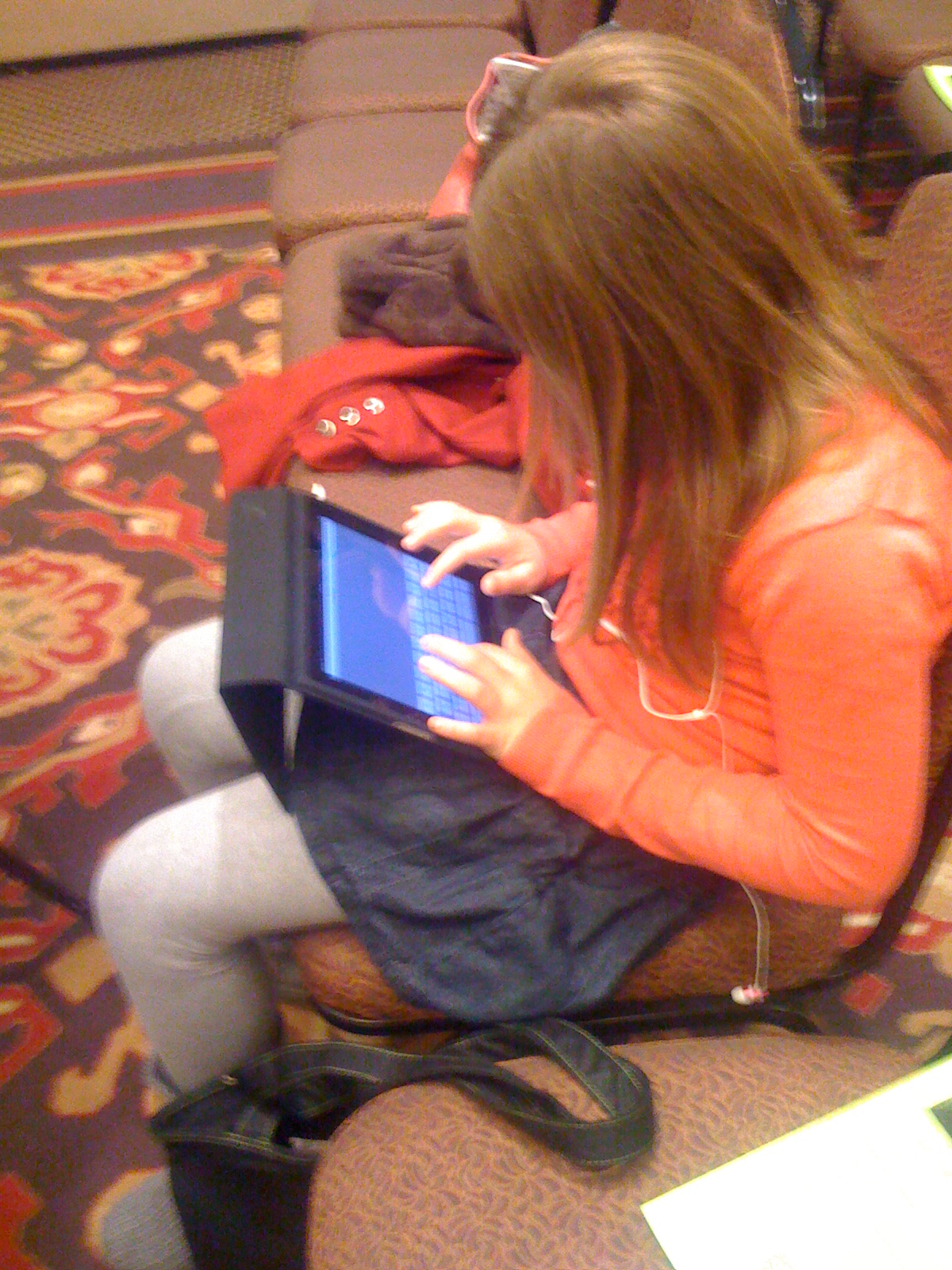
Even the smallest child in K-12 can be served by mobile devices. This presenter used cell phones to enrich and empower children on a field trip. They had to learn to use the device, they did some texting and used the phone to take pictures of the animals they saw. I don’t have the video on this, but it was so exciting to see that we can change the digital divide by involving students at the lowest levels.


Dr. Kevin Kochersberger – Va Tech is a flyer. Look here He flew the replica of the Wright brothers plane, and shared with us the ideas of  aviation and engineering. He practiced the recreation of the Wright Brothers experience with a simulator , Click through his pictures and you will see it. He also shared these items.


SmartPhone Robotics: Concepts for the Wireless Generation
Using smartphones are much more friendly to program a simulation than using VEX robot!

Mission statement:

The Unmanned Systems Laboratories bring together a diverse collection of researchers to a common facility dedicated to autonomous and remotely operated systems development and integration. Areas of expertise include acoustics, vision and LIDAR systems, image and signal processing, robotics, air and ground vehicle design, ground control stations, communications and vehicle test

Dr. Mary Kasarda and Dr. Brenda Brand, Virginia Tech
Dr. Kasarda gave information on pre-engineering, the STEM workforce, and Virginia Tech’s online courses for teachers. Dr. Kasarda proposed that the Commonwealth require at least one pre-engineering course in the preK-12 curriculum.r. Kasarda and Dr. Brand have developed two online, in-service teachers training classes to better prepare teachers to teach engineering concepts in the classroom.

Dr. Brand discussed the difficulty in attracting underrepresented populations to the STEM fields in the preK-12 system. One successful program highlighted by Dr. Brand was a high school elective class built around and integrated with the FIRST Robotics program. Their presentation was entitled unpack STEM.

There are barriers to use for teachers in technology. One thing is that we
often are given 2.0 resources as if they are the answer to the uses of technology. People are playing around on the web with light weight applications when they could be technofluent with technology in new and meaningful ways.

Mano offered us, Smartphone Robotics, MathFlyer, Mobile Augmented Reality for Teaching and Learning, Logo Draw with Ipad and more than that..

I enjoyed meeting a new person, Stephanie Playton, who shared how she used cell phones with little learners, and how we could get the resources. Her presentation was awesome as well.

Red Tails, Black Stories.. Two Kinds of American History , Who’s Story?

When I was a little girl dark old men told me stories. . .but in the books that I read, I did not see what they said. So I did not believe most of them. I would listen politely, and remember, but I did not believe them.

I had the whole world to learn about ..I did start out with a reputable book.

Slavery, the Peculiar Institution, by Kenneth M. Stampp

What is Black History

This student is searching for home, which for her is South Africa

Here are a few of the stories….

Tuskegee Airmen

There are many sites about the Tuskegee Airmen. “Tuskegee Airmen” refers to all who were involved in the so-called “Tuskegee Experience”, the Army Air Corps program to train African Americans to fly and maintain combat aircraft. The Tuskegee Airmen included pilots, navigators, bombardiers, maintenance and support staff, instructors, and all the personnel who kept the planes in the air. But who knew to look for them? Most museums in the US have a cost associated with them so how would most people see the information. Here is a museum site.

Some of my friends said that black men flew in the war. He said that they were still teaching people to fly from Croom, Maryland. Now back in the day who would ever think that there were black pilots. They were called Tuskegee Airmen. I found a few pictures at the Smithsonian. There was a picture of Elinore Roosevelt who insisted that they be able to  fly. I have never seen this information in a school history book and I am a teacher of many years.

Bessie  Coleman

Never mind that there was a black woman too, who flew. I first learned of her at a NASA workshop.  And Bessie Coleman? Who ever heard of her. I thought it was just a painting  .I thought she was a singer.

 In 1921, Bessie Coleman became the first black women to gain an international permit to fly. After learning French, she attended the famous flight school, Ecole d’Aviation des Frères Caudron in Northern France. No schools in America would train a black person. She was inspired to fly by the stories of Frenchwomen flyers told by her brother John, who had served in France during World War I. Coleman performed acrobatics in air shows around the country and gave lectures inspiring audiences that included many children. She believed that there was freedom in the skies and would not perform in an air show with a segregated audience. On April 30, 1926, she was killed in an airplane piloted by a William Wills as he flew her over the field of the next day’s air show where she was slated as the star.

Coleman was born in Atlanta, Texas, in 1892 as the tenth of thirteen children. They settled in Waxahachie, Texas, and worked as sharecroppers. Her mother encouraged Bessie’s schooling when she showed an aptitude for math. She eventually moved to Chicago and lived with her brother Walter, a Pullman porter. She became a manicurist and worked in the White Sox barbershop. When she returned from Paris, she also worked as a restaurant manager to save money to purchase an airplane. She was helped in this endeavor by friends who included Edwin Beeman from the chewing gum family and Robert S. Abbott, editor and publisher of the Chicago Defender newspaper.

Her dream to open a flying school was never realized, but several years after her death, black aviators formed a network of Bessie Coleman Aero Clubs. In 1990, a road near Chicago’s O’Hare International Airport was renamed for her and five years later the U.S. Postal Department issued the Bessie Coleman Stamp. She was inducted into the Texas Aviation Hall of Fame in 2000.

Sources:
Elizabeth Coleman, Bessie Coleman: The Brownskin Lady Bird (New York: Garland Publishers, 1994);

A Black Explorer? Matthew Henson

Henson at the poles? My childhood friend ‘s father said he was an explorer. I ran to the library.  We ignored him and that history.But I never found a single thing about it in a book until I went to learn in a summer institute at the National Geographic. There are different divisions within the society. We learned from all.

First I learned about Matthew Henson

Born in Maryland on August 6, 1866, Matthew Henson became an orphan when he was only 11 years old. At age 13, he began working on a ship based in Baltimore, Maryland, as a cabin boy. The ship’s skipper taught Henson to read and write.

In 1890, Henson joined Peary’s first Arctic expedition across the northern tip of Greenland. From June 1891 to August 1902, Henson spent seven years in the Arctic with Peary, covering 9,000 miles (14,500 kilometers) on dogsleds across northern Greenland and Ellesmere Island, in Canada.

In 1906, after drifting pack ice repeatedly blocked earlier attempts to reach the Pole, Henson and Peary set out again on their new three-masted steamship schooner, the Roosevelt. “It’ll work,” said Henson, “if God, wind, leads, ice, snow, and all the hells of this damned frozen land are willing.” Blizzards and cracking ice sheets forced their return once again, although Peary wrote in his diary, “When my observations were taken … they showed that we had reached 87°6′ north latitude, and had at last beaten the record, for which I thanked God.”

Then on August 18, 1909, Henson and Peary boarded the Roosevelt with 22 Inuit men, 17 Inuit women, 10 children, 246 dogs, 70 tons (64 metric tons) of whale meat from Labrador, the meat and blubber of 50 walruses, hunting equipment, and tons of coal. In February, Henson and Peary departed their anchored ship at Ellesmere Island’s Cape Sheridan, with the Inuit men and 130 dogs working to lay a trail and supplies along the route to the Pole.

Many Inuits admired Henson for his hunting and sled-driving skills, as well as his ability to speak their language. Peary said, “He was more of an Eskimo than some of them.” On April 6, 1909, Henson arrived at Camp Jesup, 89°47′, 45 minutes ahead of Peary, concluding by dead reckoning that he had reached the Pole. Henson greeted Peary, “I think I’m the first man to sit on top of the world.Born in Maryland on August 6, 1866, Matthew Henson became an orphan when he was only 11 years old. At age 13, he began working on a ship based in Baltimore, Maryland, as a cabin boy. The ship’s skipper taught Henson to read and write.

In 1890, Henson joined Peary’s first Arctic expedition across the northern tip of Greenland. From June 1891 to August 1902, Henson spent seven years in the Arctic with Peary, covering 9,000 miles (14,500 kilometers) on dogsleds across northern Greenland and Ellesmere Island, in Canada.

In 1906, after drifting pack ice repeatedly blocked earlier attempts to reach the Pole, Henson and Peary set out again on their new three-masted steamship schooner, the Roosevelt. “It’ll work,” said Henson, “if God, wind, leads, ice, snow, and all the hells of this damned frozen land are willing.” Blizzards and cracking ice sheets forced their return once again, although Peary wrote in his diary, “When my observations were taken … they showed that we had reached 87°6′ north latitude, and had at last beaten the record, for which I thanked God.”

Then on August 18, 1909, Henson and Peary boarded the Roosevelt with 22 Inuit men, 17 Inuit women, 10 children, 246 dogs, 70 tons (64 metric tons) of whale meat from Labrador, the meat and blubber of 50 walruses, hunting equipment, and tons of coal. In February, Henson and Peary departed their anchored ship at Ellesmere Island’s Cape Sheridan, with the Inuit men and 130 dogs working to lay a trail and supplies along the route to the Pole.

Many Inuits admired Henson for his hunting and sled-driving skills, as well as his ability to speak their language. Peary said, “He was more of an Eskimo than some of them.” On April 6, 1909, Henson arrived at Camp Jesup, 89°47′, 45 minutes ahead of Peary, concluding by dead reckoning that he had reached the Pole. Henson greeted Peary, “I think I’m the first man to sit on top of the world.

Some of the men who lived in my block told a different tale. They said they helped to dig the tunnel. Since we are not talking about John Henry , who was black, or black diamonds( coal) This information is hard to find and annotate. Much of it is classified. Explore this on your own. I went to school with a grandchild of Matthew Henson. No one ever mentioned his grandfather’s name, ever.

I am a descendant of Thomas Jefferson, My friend told me!

I was dating a guy in Petersburg, Virginia. As we got serious about the relationship he told me that he was a descendant of Thomas Jefferson. This was before all the Sally Hemmings stories and all, and being from Virginia I knew that the politics of permission would not allow such a liaison no matter what. Slave women had been burned and or shunned because of this. Before Obama became president there was simply the idea that if you had one drop of black blood that you were black. So confusing. Black people are of many colors.

FOR the first time, in 1999  Black descendants of U.S. President Thomas Jefferson recently attended the annual Jefferson family reunion at his Monticello estate in Charlottesville, VA.

At the emotional and at times angry family meetings, White descendants of President Jefferson refused to let Black relatives of his slave Sally Hemings join the family’s Monticello Association.

I decided that this guy was crazy. I  had asked for proof but he said that the data was in the hands of the family. He was going to law school and we sort of drifted apart after that. I did not know what to believe. Years later , I saw him on television being recognized as a descendant of Thomas Jefferson.

Russell Cooley here is his interview from a PBS presentation

   Robert Cooley is a retired US Army lieutenant colonel currently practicing as an attorney in Richmond, Virginia. He formerly served as a US magistrate and state judge in Virginia and as a military judge in the US Army.
  What is your relationship with Thomas Jefferson?
Thomas Jefferson is my great-great-great-great-great-grandfather.

“Thomas Jefferson is my great-great
-great-great-great-
grandfather.”

  How did that come about?
Well, my grandfather told me about it when I was 10 years old. He called me into his livingroom in Pittsburgh and he said, “Son, it’s time for you to learn about your heritage.” And my grandfather was the president of the Western Pennsylvania Historical Society, and he said, “You’re a special person. You’re part of a special family. You, through your mother and me, and my mother and so on, are a descendant of Thomas Jefferson, the third president of the United States.” I was 10 years old at the time. I was very precocious, too. I was a graduate of high school at the age of 15 and college at 19 and I was a JD at the age of 22. But I knew who Jefferson was. I didn’t know who Sally Hemings was but I knew who Jefferson was. And, for a moment, I was very thrilled by that revelation.

  So without a doubt, Sally Hemings was Thomas Jefferson’s mistress?
Yes. That is…Sally was, without a doubt, Thomas Jefferson’s mistress, lover, substitute wife, for 38 years. No question about it.

“We didn’t know one another, but each of us had virtually the identical oral history.”

  How does your family know that Sally had a relationship with Thomas Jefferson?
Oh, we know it because Sally was a very articulate woman, contrary to current characterizations. She was very articulate. She was very educated. She told us. She told her son Thomas, and Thomas told others in his family. And so, in my family, I have the benefit of 200 years of consistent, solid oral history. And this history was carried on by representatives of at least five different sons and daughters of Thomas Woodson, and later by people who didn’t know one another. There were families in Pennsylvania, in Ohio, in Texas, and in Tennessee. We didn’t know one another, but each of us had virtually the identical oral history.   

See the whole interview at the given URL.

Black Men in the Army Corps of Engineers?

Army Corp of Engineers A tunnel to West Virginia from the White House and there is. Recently it has been expanded but back when I was a kid, I thought those old men had been in the sun too long. I used to think you could find information in books.

Tunnel to West Virginia from the White House

. They said that there was a tunnel that went all the way to West Virginia.They said that they worked it with the Army Corps of Engineers. I listened politely to their stories, but my imagination could not handle a tunnel from DC to West Virginia. I shook my head and ran off to play a game. When I worked at the White House for a technology initiative I was shown the tunnel. When I was in West Virginia I saw the place that is the end of the tunnel. There has been a new “safe” place developed. But I still marveled that such a feat had been accomplished.  I am able to find this information on the Internet about the tunnel and newer projects.

Egyptians are Black, Greek and Arabic

Another old man who wore a Fez talked to me about Egypt. I listened to his stories but did not have the books to read about and learn if he was telling the truth or not. He said that there  were Nubians, black people in Egypt too.

I loved the stories about King Tut and liked reading stories about Egypt. So I decided to go to Egypt. Alone. That was probably not a good idea, but I went. It was totally different than anything I had read I saw the mix of people and read the history of upper and lower Egypt and of the Greek era. It was amazing to me. The people on the street looked like relatives , well some of them. I spent  two weeks in Egypt and had read a lot of books about Upper and Lower Egypt and the Nile. Thanks to the National Geographic I knew how to do the research. I had been razzed because I was wearing a necklace that showed a beautiful woman from Egypt. I was told by some people that she was not black. Neferititi and a person yanked the necklace from around my neck. Never mind  talking about Cleopatra.

Nefertiti

Nefertiti – History.com

Queen Nefertiti (ca. 1370 BC- ca. 1330 BC) was the wife of Akhenaten, one of the most controversial rulers of the 18th dynasty of Ancient Egypt. As … Read more

Here from Wikipedia, is an explanation of race in Egypt. I was living in Greece at the time and they had told me this, but I did not believe it. Here is the information from Wikipedia

Since the second half of the 20th century, scholarly consensus has held that applying modern notions of race to ancient Egypt is anachronistic. Frank M. Snowden asserts that “Egyptians, Greeks and Romans attached no special stigma to the color of the skin and developed no hierarchical notions of race whereby highest and lowest positions in the social pyramid were based on color.”.[2][3] Additionally, typological and hierarchical models of race have increasingly been rejected by scientists.

In the late 20th century, the typological model was revived in the domain of Afrocentric historiography and Black nationalism which tends to insist that Ancient Egypt was a “black civilization”, with particular focus on links to southern African cultures and on the race of specific notable individuals from Dynastic times, including Tutankhamun,[4] Cleopatra VII,[5][6][7] and the king represented in the Great Sphinx of Giza.[8][9

thank you George Lucas for making us aware of some  real hidden history.

Transformational Learning in a CyberLearning Summit

Some of us as pioneers in STEM and in technology, have been working in computer learning and use of technology so long that we had begun to think that change would never happen. Working in minority areas we are always running to catch up.

I was participating in technology well  enough to be on the National Information Infrastructure Advisory Council. We helped to frame the vision of what technology would be in the United States. We wrote documents and shared methodology. But change was slow in coming. Years have passed and not much has happened in some teaching and learning spaces. Some of our dreams and ideas are still waiting to be fulfilled, like Broadband for all. In case this information is history here is a link if you need a history lesson.

So we go from conference to conference and speak those who believe change will come. We continue to learn and try to keep carrying the message of the use of technology. But it has been hard. We pioneers are talking about computational sciences and the latest headlines from Apple regarding the repurposing of textbooks. You have to look at that picture, because the end of the conference talked about the reality of that happened. That was Chad Dorsey of Concord.org. He is the reason I was able to sit and sit and sit.. though the conference was great it was a long time to actually BE on line. Did I mention NSF? I take it for granted having taught in Arlington, with access  to their information. I remember being laughed at when we used the first iterations of digital media, but NSF was firmly in support. CUSEEME? the reporters said it was stupid. So much they did not know.

There was a reference to a cyber conference from the National Geographic . If you have ever had professional development from the National Geographic you would jump at the chance….the resources for teachers are so many. Their  training is outstanding and it is inclusive learning. So with NSF and SRI and National Geographic  I knew the offerings would be outstanding.  You can still participate in the portal to help build knowledge.

This was the site, for the webcast. If you know me,You know that I do not love webcasts because so many of them are really bad.  I also love the excitement of talking to the participants and the exchange of ideas. What I usually do  to go to the National Academy of Sciences and attend the workshops , when I know about them. It is a singular joy to learn in this way, but the experience from yesterday expanded the audience, created a collaborative group of people even beyond the projects that I love the most wbich are the Supercomputimg Comference and Cilt.org which is no longer an entity but a great model for what happened yesterday.So I was not included.. well really I was, there was the online group  you can look here to see the program  for the webcast. My friend from SRI gathered the best and the brightest to inform the public and to share the resources. I knew their work was from excellence since they were a part of Cilt.org. This may be their new way of :

What a powerful example of transformational learning . Here’s to the creators of the conference. You should join the thought parade. Thanks to all who created an inspirational day. Hopefully some of these ideas will be made a part of the national conversation on the use of technology.

How Do We Involve Girls in STEM? What would make them be able to say, “I Got This!!!”for STEM

In the media, we hear Jennifer Hudson say, ” I got this! ” She muses about building her first mansion.  Similarly, we hear about Beyonce and the birth of her child. I guess it could be jealousy, that I pay so much attention to it. But then JLo.. we see her and some other women splashed about the media. I guess except for Hillary Clinton , and a few astronauts, girls don’t see accomplished women or successful STEM people. They see Angela Jolie, or Snookie,Lady GAGA or Nicki Minaj, and  Paris Hilton coms to mind. So what does that tell girls about thinking about the future? You tell me. What do they see on television? You know, it certainly is not role models for STEM. I am not jealous, been there done that. I stated my adult life as a model. But academics lured me away. Teaching was what I loved.

I remember seeing an icon of supercomputing in my community. Grace Hopper used to visit Arlington Schools. All I knew was that she was an older woman that the Navy seemed to worship and I kept thinking, what is it that she does? She wore a wristlet and told us about a nanosecond, but I did not have a context in which to place her outreach. This is the story of  a computer pioneer. I only knew that my mother did card punch at the Navy Annex and she thought Grace Hopper was really smart. Grace Hopper

NASA empowered Christa McAuliffeto mesmerize another generation of students and teachers and to engage them in space science education . I was lucky enough to be a Christa McAuliffe Educator, for the NEA, NFIE and we did transformational teaching and created a seminar at Stanford. We got some headlines and inspired some students boys and girls. It may have been the astronaut suit or the frequent visits that scientists made to my classroom.

Boys and Girls learned from a teacher who had great professional development and resources,

There were also astronauts who worked with teachers, and students in the Christa McAuliffe Center and my kids and I were excited to work those programs.  Mae Jemison may now be the person that girls could pay attention to , if they knew who she is and what she does.

Mae Jemison Wikipedia/NASA

A project to pave the way for humanity’s journey to the stars will be helmed by a former astronaut, Mae Jemison, already a pioneer in her own right. She will lead DARPA’s 100-Year Starship project, the BBC says, citing DARPA documents.

Jemison, the first black woman in space, was one of scores of people to submit proposals for DARPA’s ambitious project. It doesn’t seek to build an actual starship per se but rather a program that can last 100 years, and might one day result in one. As DARPA told us last summer, it’s more of a thought experiment than a construction project. The idea itself sparked some other pretty audacious proposals, including one by J. Craig Venter to send human genomes toward the stars and reconstruct them.

For all girls there is this,

Talking Points
Comparing U.S. K-12 Students’ Math
and Science Performance Internationally
What are the facts, what do they mean for educational reform,
and how do I talk effectively about the issues?
In the popular press and in public debate, one ofte

AAAS , Teragrid, AAUW and the NCWIT groups help teachers to lead STEM initiatives

There are groups who work to trnasform education

hears that U.S. students are performing poorly in math and science in comparison to other countries. What is the basis for these claims? What are students’ actual scores and rankings? How should we interpret and use these scores? A better understanding of the evidence is important for making effective policy decisions that affect computer science and other STEM fields.

Here is the place to analyze the informaiton and to be educated about the reality of these
statements
What is the basis for the
international comparisons?
The source for these comparisons is the Trends in International Math and Science Study (TIMSS), an international test administered every four years to 4th and 8th graders.* The test was first given in 1995 in approximately 20 countries. The most recent test was administered in 2007 to 4th graders in 36 countries and to 8th graders in 48 countries. The average score for each country is determined and used to rank all participating countries.
*The Program for International Student Assessment (PISA) is a similar international test given to 15-year-olds. While PISA is less frequently cited, it also has limitations similar to TIMSS.

Jemison apparently won a contract for her proposal titled “An Inclusive Audacious Journey Transforms Life Here on Earth & Beyond,” BBC said. Her organization, the Dorothy Jemison Foundation for Excellence, is already a partner on the project with a non-profit called Icarus Interstellar and a group called the Foundation for Enterprise Development.

To Engage Girls in STEM, Include Role Models and Watch the Messaging

Posted: 11 Jan 2012 05:19 AM PST

Two recent stories illuminate the benefits of after-school STEM programs for girls. Plus, teachers go back to school to learn how small classroom changes can improve girls academic achievement in STEM subjects.

http://mindshift.kqed.org/2012/01/steering-girls-to-science-and-tech-careers/

Girlstart   http://www.girlsinstem.org/

LEGO has released a new line of building toys called LEGO Friends aimed at bringing in more of a female based audience. This line has miniature figurines of girls that come with “girlish” accessories like lipstick …NJ.com · 1/3/2012
This new project was not so well received, but at least to me it was a start.
Some parents and educators think LEGO could attract more female users if the company featured more girls in its general products and advertising, instead of dividing boys and girls into different markets. Even Riley Maida, who is 4, has questioned why toys for girls seem to come in only one color, and she has garnered much attention for her tirade against the pinking of toy aisles: “Why do all the girls have to buy princesses? Some girls like superheroes, some girls like princesses. Some boys like superheroes, some boys like princesses. So why does all the girls have to buy pink stuff and all the boys have to buy different color stuff?” (Diane Sawyer was impressed.)Peggy Orenstein, author of “Cinderella Ate My Daughter: Dispatches From the Front Lines of the New Girlie-Girl Culture,” recently wrote anop-ed in The New York Times on the nature vs. nurture debate as it relates to children’s toys. Orentstein notes that while research shows that boys and girls generally have different playing styles and gravitate toward different toys (though they unite around stuffed animals and books), that’s not justification for enforcing a divide. In fact, there are many good reasons to do the opposite:

The Future of Education and its Technology ( Guest Post)

The Future of Education and its Technology

Posted by Ebonstorm on April 27, 2009  snagged to share with those who think about these things

Imagine the Future

We like to see the future filled with possibilities. Education would be freely available to everyone and would come in a variety of new experiences; students using their telephones to attend classes online, while they are on their way to work, content management technologies connecting classmates from areas of the world once considered unreachable, and interactive 3D environments replicating real-time classrooms with tele-presence students and real students in the same lecture hall. In this new world, education would enhance the lives of the people who use it and they are able to freely interact with universities and business organizations instantly, in real time, to find collaborative answers to pressing and difficult questions and having the best sources to choose from all over the planet. Such collective efforts will permeate all areas of business, art and engineering, harnessing the power of multiple minds in a way never conceived of in earlier periods of history. They are sending video messages, having tele-presence conferences, storing and accessing data, and sharing results with the best and brightest of their generation regardless of their social status, race, creed or color. Computers and robotic machines handle the grunt work of society keeping us in the electronic tools and devices we will one day take for granted. Meaningful work is plentiful, no one works doing anything that doesn’t mean something to them. Some work on reclaiming the Earth from earlier generations of abuse, others are organizing the planet’s resources for better accessibility, many are managing the remaining plants and animals of the world for future generations. Businesses of all sizes are handling tasks and filling the needs of a happy and industrious planet. Sounds nice, doesn’t it?

Learning from the Past

Building that future is much more difficult. Any responsible advocate of higher education must address the nature of change in our society. Change is unavoidable. All institutions experience it, and some weather it better than others. The education engine of America has failed to maintain pace with the changes in society and the economic realities faced by people working today.

This is not a new problem. Its echoes can be traced back to the end of the Agricultural Age. During the late 1800’s as mechanization overtook the worker-heavy farming industry (i.e. the cotton gin), education became the means for people to transition to life in the cities with non-farming jobs, crafts and work in the industrial guilds. By the advent of the Industrial Age in the early 20th century, education was used to prepare workers to be absorbed into the new factories and industrial engines of that period’s productivity. Note there was an economic collapse during that period of transition. Like a computer after a crash, the societal infrastructure needed a restart to handle that transition. This was a second opportunity to recognize the imminent threat to American culture.

As the Industrial Age began to wane, again due to mechanization and process improvements in the early 1970’s (i.e. factory robotics and better information management) more was able to be done with less input by workers. This transition began to move people into the Service Industry as the birth of the Information Age began to create more advanced calculation devices to aid in the development of new sciences. Computers would change the landscape of the working world in ways unseen even by their creators.

We are at that crucial point again. An economic collapse has made it clear that business as usual has ended. The Information Age has made new waves of unemployment as factories close down and the service industry burgeons with the masses of workers displaced from the only life many have ever known. There is more information available than can be managed effectively by any single individual but the educational engine is still the one from the 1950’s, with its emphasis on individual achievement, its designated work periods and repetitive mind-numbing tasks, ready to churn out people to work in factories that no longer exist.

Now people are relegated to an overburdened service industry that employs them poorly and wastes their human potential. No matter the rhetoric spoken in government, education cannot continue to be last of our social priorities, if for no other reasons than, without quality education and its reform, the fabric of society continues to erode and tatter. The resource of the future will be innovation and problem-solving ability. Our only path to innovation can be found in the development of the human capital through education. Welcome to the Innovation Age.

At the Crossroads

Community college campuses are uniquely positioned to capture the population of the future workforce and direct it into one of the most economically powerful areas of the world today. California, being the world’s fifth largest economy will need a workforce constantly updating its skills, its knowledge and its capabilities to continue to compete in a more aggressive, world-wide, world-wise, and diverse economic structure.

In addition, students will need access to the most advanced concepts possible. Cooperative thinking, adaptive reasoning, an understanding of natural law and scientific thinking will be the keys to the workforce of the future. It will not be enough to simply memorize rote facts, the employees of the future need to be able to link those facts, find hidden relationships and solve problems from those facts, with skill and alacrity. They will need to have greater facility with language, mathematics, analysis, cultural awareness, and environmental consequences than any humans in history. A community college’s ultimate goal should be to allow its location at the center of the information technology, bio-technology and new sustainability revolutions to prepare its students for opportunities as members of a future when the synergistic explosion of these technologies co-mingle and improve each other.

Technology’s advance in our society has continued to change how workers and employers interact and provide services for each other. This constant growth and evolution has removed more workers from the workforce than it has employed, thus creating a form of ‘technological unemployment’ or unemployment created by the success of our technology! Fewer workers, armed with technology and technological concepts (robotics, development protocols, software and hardware) are producing more goods than ever in history. This fact has not been lost on governments concerned with educating and employing their populations. Unfortunately, the solution cannot be addressed without planning for future periods of unemployment, similar to what we are experiencing now. This problem can only be addressed with innovation, new ideas, and a revolution in the educational process.

A Modest Proposal

I propose Community College Districts nationwide begin to prepare their technological future to address the issues of a workforce whose path has become uncertain. The future of community colleges is to prepare for this new model of work by assisting students (who will eventually become employees and later employers) in the development of smaller, problem-solving enterprises. Ideally, these enterprises will be staffed by individuals who can see a way to improve society’s ills with the application of reasoning skills, technological acumen, attention to detail and access to a nexus of resources available to them, before, during and after they leave college. The future of education revolves around teaching people that they will perpetually be scholars, and their livelihood will revolve around their ability to creatively solve problems and promoting innovation in all that they do.

We can ill afford to throw money at problems hoping for a solution. We cannot expect the issues of Oakland, or of California or of the United States to be solved by people who do not live here. Nor do we have the luxury of time to resolve issues such as global warming, population overcrowding, and disease management. These problems need solutions now. People are disheartened with the recent economic collapse and many Baby Boomers struggle with their own obsolescence and the realization that their work lives have left them no better off than indentured servants. Society’s security blankets (Medicare, Social Security, 401K, IRA) have continued to lose value in the face of economic collapse. It is likely that older workers will continue to have to support themselves long after they expected to retire. Generation X and Y see little value in aspiring to the same fate as their parents. They view their parent’s dilemma as a systemic failure of our educational model; hence their lack of trust in society and their indifference to education.

A community colleges goal should be no less than the development of a way of thinking that allows its students to constantly be willing and able to adapt new ways of interacting with the world and to be a resource to the workforce no matter where they may be, since with the breadth of the Internet, that workforce can and will likely be anywhere (that also means that students may also be anywhere). The same way FaceBook, Twitter and MySpace have invaded the lives of young workers, community colleges and other organizations promoting education will need to perpetuate a love of continual learning in their students and to be a resource for them to make data-driven decisions no matter what career they are involved in; any place able to define itself as an always available resource will not lack for returning students, seeking an environment that promotes intellectual advancement and continues preparing them for the constantly changing workforce.

IT Challenges of Higher Education

With all of these things as challenges, the question is asked, what part does Information Technology (hereafter, IT) play in this? The developed world has to adopt a more global paradigm that inter-relates all manner of human endeavor, science, technology, education, environment, physics, psychology, sociology, and medicine shifting from the archaic industrial age to the advanced technology of the information age. Our educational model must be revamped, retooled and re-energized, in order to prepare our students to meet the challenges of the new global paradigm. IT is the architect of that paradigm.

Learning institutions need to empower our students to address issues based on information-based decision making using reason, training and problem solving skills enhanced by technology. IT is a vital element in that ability to solve problems by potentially providing ready access to real-time information for decision making; However, a real-time monitored and data-driven environment has not been created (unless you work at the Pentagon) and will be the first real challenge of the proactive organizations of the future. The ability to get digital information regarding resources available to solve problems is the first step to being able to direct human capital, energy, manpower and training toward those issues.

A community college’s goal is the same as any organization that manages information. To create a unified information data complex that allows fast, easy and yet secure access to any information required by any user of the data complex. This simple sounding idea is years away and paving the road to that ideal will require us to have information organized and categorized in such a fashion that it can be understood, transmuted, and translated while maintaining its accessibility to a variety of future users.

Defining the Problem

Organic (non-structured, non-intentional) development of IT within most college campuses has caused a divergence of standards and technologies resulting in a lack of uniformity of services, overlapping educational programs (i.e. business and IT classes), and a lack of ability to effectively manage or identify different technologies district-wide. All campus IT has been relegated to localized management, under the supervision of various IT support staff of widely differing capabilities. Organic IT development is not unique to a particular district; as both UC and California State University systems are battling this same conundrum. This does not imply those managing these IT resources are in the wrong, however, without a guiding set of principles for the purchase, maintenance and development of IT data structures and resources, such multiplicity of systems is bound to occur prohibitively increasing the complexity and the costs of those services. This decentralized management of IT systems, has resulting in an increasing cost of IT overall, a lack of standardization and poorly centralized management and coordination between the groups managing the many resources including IT classrooms, computer labs, library technology, and student service programs (EOPS, DSPS, career centers) across the district.

There are two primary challenges facing any educational facility with advanced technological capabilities. The first is hardware/software interface and infrastructure. What hardware should we use? What software should we use and support? What is the best way to reach our respective goals using what technologies? How do we effectively connect our staff and students to the internet in a secure, effective, and stable manner but not slow as a snail or overburdened with security software? How do we organize our administrative technology so it provides high quality service and is still relatively easy to use? Technology continues to grow and evolve at a prodigious rate, how do we know if we are keeping pace and providing the workforce of the future with the tools it needs? There are six major dynamic forces opposing the creation of any IT infrastructure, service or device. These forces are responsible for all decisions made on any hardware, software or service used in IT.

They are as follows:

Technological Standardization vs. Autonomy/Experimentation

Service innovation vs. Stability/Reliability

User friendliness/Accessibility vs. Security/Privacy

Consensus in decision making vs. Efficiency in decision making

Centralized management of services vs. Distributed services

Proprietary software vs. Open source software

The second challenge facing any educational facility with advanced technological capabilities is resource management. IT is a collection of diverse resources accomplishing a variety of objectives. How do we manage, control, maintain and organize an amazingly complex series of network services to make it possible to administer, educate and enhance the educational experience of our students now and in the future? How do we effectively train staff, faculty and administrators to think progressively with an eye toward future needs? How do we maintain a leading edge without losing our financial shirt maintaining this gigantic infrastructure of hardware and staff?

In addition to those six dynamic forces there are two additional meta-concepts to be considered along with a number of pertinent questions. Those two meta-concepts are Operational IT and Organizational IT.

Operational IT: comprised of educational, infrastructure and administrative services these are the physical hardware and software tools utilized to create the IT environment in total.

  1. Educational IT – Primary reason higher education exists. These are the tools used in the dissemination of information and education and in the development of learning resources for students.
  2. Infrastructure IT – Tools used to maintain the IT infrastructure including telecom services, network services, datacenters, classrooms, wireless, research facilities and labs.
  3. Administrative IT – Tools used by the administration to organize and maintain university information; HR database services, ERP and other student databases, financial services databases, student aid services, administrative and faculty offices.

Organizational IT: the organizational and management protocols, procedures and processes required to effectively manage, lead and organize IT services in any environment

  1. Governance – How the IT organization is managed i.e. Governance Committee, Technology Committees, and Division IT leaders and whether IT management is centralized or decentralized or some combination thereof.
  2. IT Resource Organization – best practices, SLAs (service level agreements), Staff management, training and retention, asset management, asset retirement and replacement schedules, policy creation and management
  3. Operating Costs – Management of the costs of IT: Who is responsible to determine the budget for IT resources campus-wide? Chancellors, Deans, Division Chairs, IT Staff? How are these long term costs computed? What are the hidden costs of inefficiencies in the IT structure?

A Path to Greatness

Developing IT for any environment is a constantly evolving organism. Clearly defined principles, committed staff, considered metrics for success and a well developed plan of action are the elements of a successful IT group. This path requires an honest and forthright assessment of all of the IT resources available to the district office and the attendant campuses. Blame is not being sought, but answers to the question of how to realize the potential of the IT infrastructure. For a community college’s IT to develop toward the ideal described in my opening paragraphs, we must devise a plan that integrates stability (ensuring service operation by trained and qualified staff), reliability (ensuring operation by industry established standards), security (the reasonable assurance of a secured data structure and policies) and scalability (the ability to add and extend the growth and development of the network without compromising its performance or operation).

An outline of that plan follows:

  1. The first step is to establish IT as an integral element of the any college organizational structure. IT must be seen as a member of the Administration, complete with its own resources (i.e. budget, staff development resources), support teams and autonomy to solve problems that may have lingered for years without effective resolution. IT management must be given the authority to resolve issues, as anything less will ensure the failure of IT projects in the future.
  2. Create a unified help-desk system to manage workflow and document change orders to improve service and to monitor costs. Include a knowledgebase and information wiki able to be updated by any in the IT workforce.
  3. Review the major themes to be covered by the district’s strategic plans and look at how technology can be directed toward those business ideals. This requires a review and a breakdown of the district office and the local campuses strategic plans to determine how those plans for future development can be supported by IT infrastructure at the strategic and operational levels. Meet with the technology committees already in existence and review previous successes and current challenges.
  4. Create a unified IT strategic plan document which encompasses the business ideals, IT development plans and the educational technology requirements of the district office and each campus.
  5. Document and build a model of all IT existing infrastructure, mapping hardware, software and services; this will ultimately require a grand re-organization of the network at all levels (from largest to smallest). However, this restructuring will pay off with the development of future services, allowing for remote management, remote deployments of new technology and standardization across the district. Standardization reduces costs, increases efficiency, and improves management of technology across an environment.
  6. Ensure the stability of those networks by establishing the guidelines and policies for their economic, technological and security requirements to be met on an agreed upon level (determined by Service Level Agreements). Those requirements need to be reviewed regularly to ensure they are as effective as when first established.
  7. Review and monitor all IT business structures and projects, services, vendor cost allocations, vendor-managed projects, IT budgets, and district-wide funding for IT.
  8. Develop an ERP Portal. The creation of an IT Steering committee and the installation of a project manager who is aligned with the needs of the staff, faculty, and administration’s will help to complete migration to this portal technology. Because of the portal’s ubiquitous nature and presence on all college campuses, this should be one of the highest priorities of the district, and for the same reason, the portal needs to hold to the highest standards of service.
  9. Define a technology path or potential specialization for each campus. This would reduce redundancies and improving coverage of technologies by the district. This would be done in accordance with educational development plans already in place.
  10. Craft an outline for a technology development plan for the campuses. Integrate technologies and develop economies of scale to reduce costs and to improve performance and services to all campuses. This step will take into account new technologies including secured wireless technologies, biometric security, new laptop and netbook hardware, server virtualization (where responsible and effectively improving services), imaging and print management, document and information management systems, centralizing networks and network security and fail-over firewall technologies.
  11. Redefine IT staff development processes (standardizing job descriptions, redefining duties of IT staff across the district) to determine staffing requirements for each campus and the district office. Consider models to improve performance for each campus, including the options of centralizing or decentralizing management of technology resources. The rule is: centralize for control, decentralize for innovation. This is likely to include the hire of new staff where appropriate and the training of current staff to improve their ability to function with the increase in technological development and complexity.
  12. Review, recommend and standardize on information management, content management and educational support technologies. These include reviewing open source programs for web content management including Drupal, WordPress, Joomla, Blackboard, Sakai and Moodle.
  13. Develop conceptual models such as the Information Technology and Infrastructure Library (ITIL, CMDB). This includes the creation and use of process and project management tools to promote the successful implementation of IT infrastructure, development, and operations. Utilize project management techniques (perhaps even hire a dedicated project manager) to get a handle on outstanding or underperforming projects in the district and prioritize resources to improve their completion and success rates.

Is this all it takes?

Not even close. I won’t lie to you. Implementing this will likely take some time. Designing the priorities will be the first step toward the development of IT at any Community College District. Nothing written on five pages can prepare you for the scale of the undertaking. But I have a plan. The principles outlined here are solid and tested. Best of all, they are scalable, so they can be adapted the concepts to any size organization. What you have here is not just a plan but a vision of the future. I will leave you with my favorite quotation. I hang it on my wall wherever I work. It inspires me to always do my best and reminds me that nothing I attempt is impossible.

“Whatever you can do, or dream you can, begin it. Boldness has genius, power, and magic in it.”

– Johann Wolfgang von Goethe

Bibliography

LELAND, JOHN. “Skills to Learn, to Restart Earnings.” The New York Times Online 01-04-2009¬ 2 Apr 2009 http://www.nytimes.com/2009/04/02/business/retirementspecial/02reskill.html?em

University of California, Berkeley Strategic Planning Task Force, UC Berkeley Strategic Academic Plan, 2002, Page 22, http://spc.vcbf.berkeley.edu/document/AcademicStrategicPlan.pdf

You can find links to a lot of my writing in all of these places: http://myonepage.com/ebonstorm

Google+: http://gplus.to/ebonstormTwimagination: http://twimagination.com/user/ebonstorm (short story collection)

A Matter of Scale: WordPress – http://ebonstorm.wordpress.com/ (technology, politics, commentary, writing)
Mediasphere Curation: Tumblr – http://mediasphere.tumblr.com/ (news curation site: technology, science, politics)
Tales of the Twilight Continuum: Weebly – http://ebonstorm.weebly.com/ (author’s website, excerpts, science articles)
Hidden Realms: Posterous – http://hiddenrealms.posterous.com/#!/68615711 (webfiction site)

Hayward’s Reach – My recently published Sci-fi and fantasy short story collection