Digital Divide, Mobile Divide, Knowledge Divide, Access Divide, Are We a Nation of Opportunity?

TECHNOLOGY         We Still Have a Digital Divide and it is growing!!

In recent years, it’s become clear among academics, community organizers and government policymakers that addressing the issue of access is just the first step, not the whole solution, to the digital divide.

Once connected, some people don’t have the skills to make full use of the Internet, or don’t participate in social and civic life online because they’re too busy working two jobs to make ends meet.

The barriers are numerous and complex, meaning that the problem remains persistent, and not subject to a single, easy fix.

But without universal broadband adoption and full participation in digital life, to use one example, governments must maintain digital and paper systems that are duplicative and wasteful. The divide also makes it hard for schools to embrace digital tools, knowing some students have them and some don’t. And with more job applications moving online, being on the wrong side of the digital divide can make it harder to get a job.

“The size, the nature, and the endurance of the digital divide has a lot of impact on the U.S.,” said Tessie Guillermo, president and CEO of ZeroDivide, a nonprofit based in San Francisco that works with community groups across the U.S. to address issues of digital exclusion. “In terms of global competition, innovation and economic power, if 20 percent of our people are not on the Internet, their contribution to the economic vitality of the U.S. is not being maximized.”

When you can't get it in school use a technology center

POSSIBLE SOLUTIONS

Back in 2010, the FCC released a National Broadband Plan that was an ambitious attempt to reach universal broadband adoption while addressing the many complexities of the digital divide. Rather than fading away, the FCC made three important announcements this year that show it still has momentum:

  • The Universal Service Fund that for decades had been dedicated to telephone adoption was transformed into the Connect America Fund, which will generate $4.5 billion to help millions get access to broadband connections.
  • Connect to Compete, an agreement with broadband providers to create a $9.95-a-month plan for families that are eligible for federal lunch programs.
  • And the creation of a nonprofit public-private partnership with a long list of telecommunications and tech companies that will provide digital literacy and skill training.Remarkably, it’s all being done without cutting other services, or raising any taxes. And while not revealing details, Genachowski said he expects more progress in 2012.We are still a long way from closing the digital divide, to be sure. But by keeping the topic on the national agenda while also managing to make progress should be considered a huge victory for Genachowski and the FCC.
  • Barriers to Use

    Affordability: 36 percent of non-adopters, or 28 million adults, said
    they do not have home broadband because the monthly fee is too
    expensive (15 percent), they cannot afford a computer, the installation
    fee is too high (10 percent), or they do not want to enter into a
    long-term service contract (9 percent). According to survey
    respondents, their average monthly broadband bill is $41.

    Digital Literacy: 22 percent of non-adopters, or 17 million adults,
    indicated that they do not have home broadband because they lack the
    digital skills (12 percent) or they are concerned about potential
    hazards of online life, such as exposure to inappropriate content or
    security of personal information (10 percent)

    .

    Relevance: 19 percent of non-adopters, or 15 million adults, said they
    do not have broadband because they say that the Internet is a waste of
    time, there is no online content of interest to them or, for dial-up
    users, they are content with their current service.

    Digital Hopefuls, who make up 22 percent of non-adopters, like the idea
    of being online but lack the resources for access.
    Few have a computer and, among those who use one, few feel comfortable
    with the technology. Some 44 percent cite affordability as a barrier to
    adoption and they are also more likely than average to say digital
    literacy are a barrier. This group is heavily Hispanic and has a high
    share of African-Americans.

    Julius Genachowski

Literacy today depends on understanding the multiple media that make up our high-tech reality and developing the skills to use them effectively

Prior to the 21st century, literate defined a person’s ability to read and write, separating the educated from the uneducated. With the advent of a new millennium and the rapidity with which technology has changed society, the concept of literacy has assumed new meanings. Experts in the field suggest that the current generation of teenagers—sometimes referred to as the E-Generation—possesses digital competencies to effectively navigate the multidimensional and fast-paced digital environment. For generations of adults who grew up in a world of books, traveling through cyberspace seems as treacherous and intimidating as speaking a new language. In fact, Prensky1 recognized such non-IT-literate individuals as burdened with an accent—non-native speakers of a language, struggling to survive in a strange new world.

We who have technology complain about or love the various changes that happen on a daily basis with the use of the Internet.

http://www.businessinsider.com/incredible-things-that-happen-every-60-seconds-on-the-internet-2011-12

Internet Access A Right!!

Vint Cerf had some reflection on the state of the art and whether or not it is a digital right. He said.”

Although some countries around the world argue that Internet access is a fundamental right, one of the “fathers of the Internet,” Vint Cerf, doesn’t see it that way.

“Technology is an enabler of rights, not a right itself,” Cerf, who is also a Google’s chief Internet evangelist, wrote yesterday in an editorial in The New York Times. “There is a high bar for something to be considered a human right. Loosely put, it must be among the things we as humans need in order to lead healthy, meaningful lives, like freedom from torture or freedom of conscience. It is a mistake to place any particular technology in this exalted category, since over time we will end up valuing the wrong things.”

It is no secret that the recession has hit our nation hard, particularly in low-income and minority communities. Naturally, many government institutions and private organizations have turned to broadband to help them cut costs by streamlining various processes and keeping productivity levels high. In general, this is a productive use of a transformative technology – and embracing it to improve efficiency is certainly the right thing for these organizations to do. But what about the millions of Americans who lack a home computer and who remain unconnected to broadband? How are they supposed to apply for government benefits online, access Web-based job search sites, and otherwise participate in this digital revolution? The short answer is that those who remain unconnected are relegated to second-class digital citizenship. Enhancing the broadband adoption rate across every demographic group must be priority number o

ne for policymakers at every level of government. Without more robust broadband adoption, too many Americans will be stuck on the wrong side of the digital divide. Social justice and continued economic prosperity demand a concerted effort to get these non-adopters on a path toward first-class digital citizenship.

Links to Sources

My ideas for education have not changed . The technology has. How can minority kids learn computational thinking, and new supercomputing ideas if they are not connected?

A fourth “r” for 21st century literacy- How do we give teachers professional development for it?

A student today needs a fourth R:  Reading, ‘riting, ‘rithmetic  and ’rithms, as in algorithms, or basic computational skills.

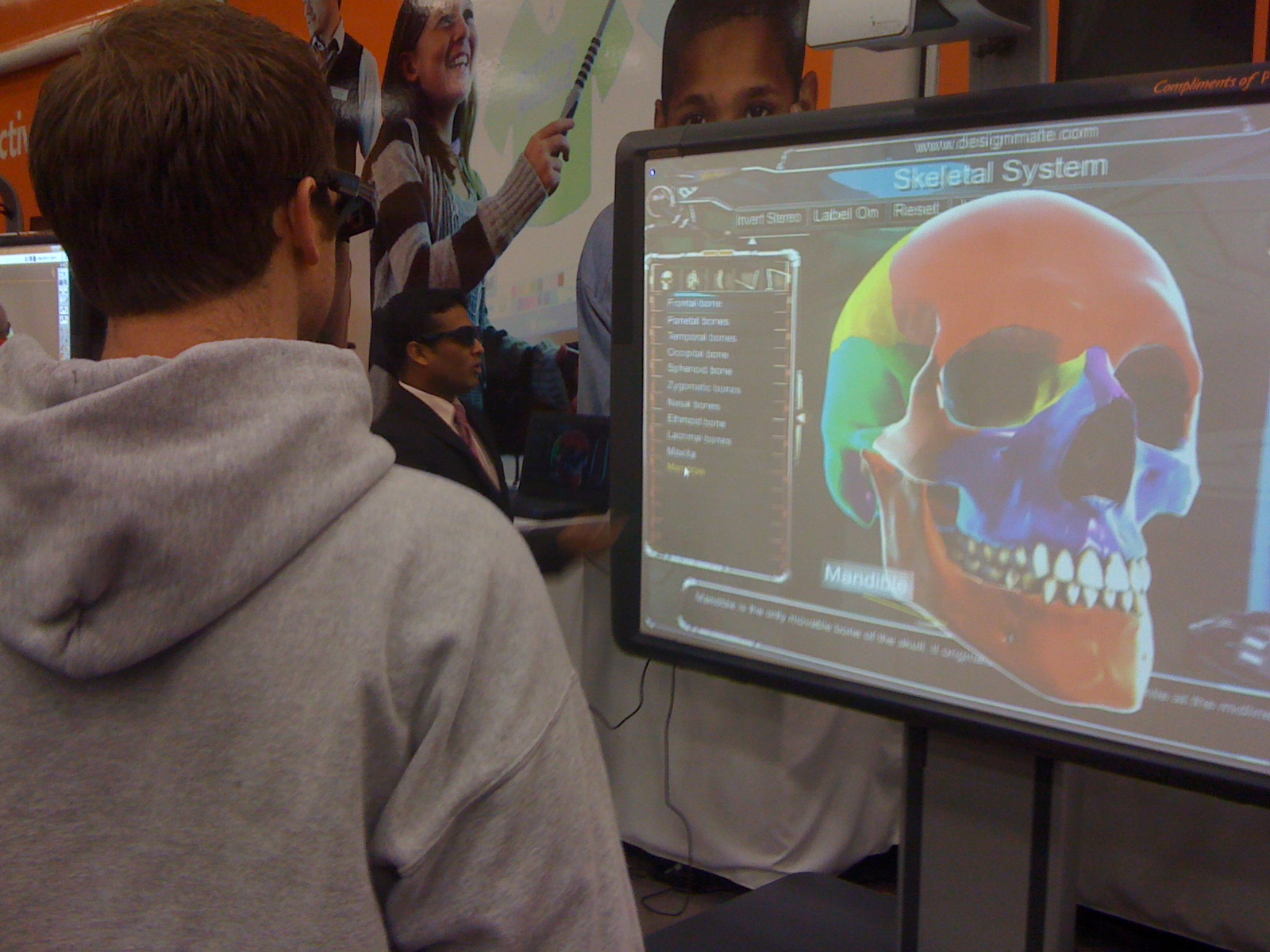
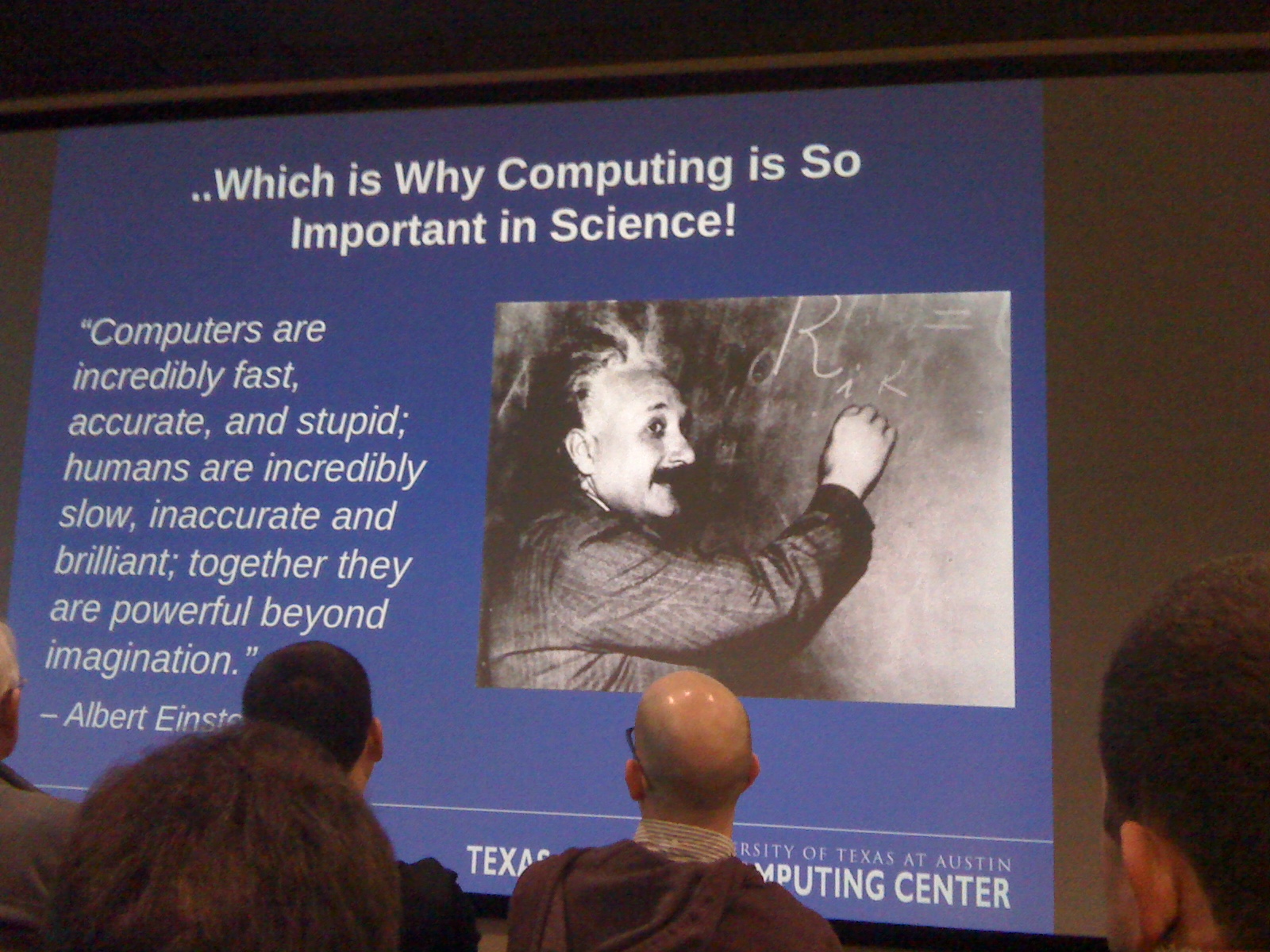
From the floor of the Supercomputing Conference where teachers go to learn, and take courses

Immersion into Supercomputing

So my question is, how do we expect this to happen if the only outreach is to the teachers who are being wonderfully made a part of outreach who have PHD’s? There are ways to infuse interest, information and create the steps to the fourth “r” but for many students who are taught by teachers with little or no science training. Remember, with NCLB( No Child Left Behind) science was really neglected. Within the supercomputing community, some of us have started to push the envelope. Here is a paper that we wrote to open the challenge to other teachers. Computational Thinking, Computational Science and High Performance Computing in K-12 Education: White Paper on 21st Century Education

We are a small group seeking change and inclusion. Do you have to be a PhD to understand the new literacy? I don’t think so. If that is the passport to computational learning there are groups with so little membership that they will never catch up. Look at this data.


www.nsf.gov

This report continues a series of Congressionally-mandated biennial reports, providing data on the participation of women, minorities, and persons with disabilities in science and engineering education and employment.

SOME CORPORATE VISIONS OF WHAT HAS TO HAPPEN

The Power of US is an ambitious, nationwide initiative that aims to transform K-12 education, and provide a customized learning experience for every child in America. This is a call for a major effort, similar to a ‘NASA moon shot’, with every student, teacher, school, and community involved in lift-off!  Our founder, Jack Taub had an interest in infusing the curriculum into schools K-12 so that computational science would be a natural part of the teaching learning process.

Academics seem to push away the classroom teachers, and there will be more PhD’s ,but who of them will serve the minority , urban, distant and poor communities, the ones who need resources the most?

There have been countless commission and organizational reports validating the WSJ CEO Council’s conclusion and describing the extent and impact of the lagging quality of America’s K-12 public education system.  The following are excerpts from a few current ones.

  • In April of 2009 McKinsey & Company took a close look at the impact of the education deficit between the U. S. and leading foreign countries.  They concluded:  “If the United States had in recent years closed the gap between its educational achievement levels and those of better-performing nations such as Finland and Korea, GDP in 2008 could have been $1.3 trillion to $2.3 trillion higher. This represents 9 to 16 percent of GDP.  … Put differently, the persistence of these educational achievement gaps imposes on the United States the economic equivalent of a permanent national recession. The recurring annual economic cost of the international achievement gap is substantially larger than the deep recession the United States is currently experiencing. (Based on GDP decline in the fourth quarter of 2008 of minus 6.3 percent.)” [1]
  • The Partnership for 21st Century Skills (P21) recognized and addressed another major issue.  Without belittling the need for students to have a solid understanding of the content represented by the academic standards, P21 advocates the inclusion of another essential body of knowledge and/or skills as illustrated in the following quote from their website: to help the U.S. education system keep up by fusing the traditional 3 Rs with the essential 4 Cs (critical thinking and problem solving, communication and collaboration, and creativity and innovation).” (http://www.21stcenturyskills.org/)  The problem is, in many of today’s classrooms students are passive, dependent listeners, not active, engaged learners.  As a result, they do not have an opportunity to learn or use critical 21st century skills.
  • America’s leaders frequently bemoan the dropout problem, and rightly so.  However, we also have a diploma problem – people who graduate from high school without actually receiving an education.  To quote a recent study called “Diploma to Nowhere: A hoax is being played on America. The public believes that a high school diploma shows that a student is ready for college-level academics. Parents believe it too. So do students. But when high school graduates enroll in college as many as one million students fail placement exams every year. Well over one third of all college students need remedial courses in order to acquire basic academic skills.
  • This is a way of looking into the future. Future Work Skills. You will note the computational sciences here.
    http://cdn.theatlantic.com/static/front/docs/sponsored/phoenix/future_work_skills_2020.pdf

TEACHER SPECIALISTS Say…..

Linda Darling Hammond and Tom Carroll do understand the ebb and flow of teacher candidates and the fact that there should be support , infrastructure and community to make significant changes. If you are really interested in change view this video by Linda Darling Hammond.

Is there a level of understanding in the academic higher ideational scaffolding about how to broaden engagement and make this new literacy available to all  teachers by inclusion? Surely we are not going to go back to the old model of teaching just the eleventh gaders and above who have managed to enter a career path that has been inclusive of computational thinking. The problem there is that there are teachers who have not been exposed to the computational resources to use to develop the skills. Ok let’s tell the truth.Math is not the strongest academic area for most teachers. So how can we make this tremendous change. There are groups working to make this change. But we need the teachers in the classroom to be educated. There are few PhD’s in the minority communities and even those are not in the areas where we need them to teach to create the kind of change that is needed.

If you read how people get hired in the essay /interview from Linda Darling Hammond, minority students will hardly get a chance to be taught by someone who is skilled in the computational sciences, or math, or science. We have to change that.

Pat Phillips has a wonderful powerpoint that shares the ideas.

FROM THOSE ACTUALLY INVOLVED IN TEACHING?

Diane Baxter and     Mano Talaiver who work with K-12 teachers

These two women know to link with the teachers in the classroom and to provide outreach to the teachers , to the learning community and link to the universities. Mano is at Longwood University in Virginia , and Diane Baxter is at the San Diego Supercomputing Center.They have been funded to create change and to help teachers make the neccesary  transistions.’

Here is a reason for the immediacy of the change to curriculum.This is long.

As a minority , as a woman we are always running to catch up. Technology is ever evolving,

Vint Cerf says, this in a wonderful essay.

“What about the claim that Internet access is or should be a civil right? The same reasoning above can be applied here — Internet access is always just a tool for obtaining something else more important — though the argument that it is a civil right is, I concede, a stronger one than that it is a human right. Civil rights, after all, are different from human rights because they are conferred upon us by law, not intrinsic to us as human beings.”he says.

“While the United States has never decreed that everyone has a “right” to a telephone, we have come close to this with the notion of “universal service” — the idea that telephone service (and electricity, and now broadband Internet) must be available even in the most remote regions of the country. When we accept this idea, we are edging into the idea of Internet access as a civil right, because ensuring access is a policy made by the government.”

“Yet all these philosophical arguments overlook a more fundamental issue: the responsibility of technology creators themselves to support human and civil rights. The Internet has introduced an enormously accessible and egalitarian platform for creating, sharing and obtaining information on a global scale. As a result, we have new ways to allow people to exercise their human and civil rights.”

In this context, engineers have not only a tremendous obligation to empower users, but also an obligation to ensure the safety of users online. That means, for example, protecting users from specific harms like viruses and worms that silently invade their computers. Technologists should work toward this end.”

The Answer Sheet

This was written by Cathy N. Davidson, a Duke University professor, self-described “technopragmatist,” and author of Now You See It:  How the Brain Science of Attention Will Transform the Way We Live, Work, and Learn. 

By Cathy N. Davidson

What basic skills do kids today need to thrive in the 21st century digital age? The 3 R’s of “reading, ‘riting, and ‘rithmetic” were deemed essentials of mandatory public schooling in the 19th century Industrial Age where mass printing and machine-made paper and ink made books available to just about everyone for the first time in history. A student today needs a fourth R:  Reading, ‘riting, ‘rithmetic  and ’rithms, as in algorithms, or basic computational skills.   By getting the youngest kids started on algorithmic or computational thinking, we give them the same tool of agency and being able to make (not just receive) digital content that the 3 R’s gave to Industrial Age learners.

Here’s a definition of algorithm adapted from the Wikipedia dictionary.   “Algorithm: A process or set of rules to be followed in calculations or other problem-solving operations, esp. by a computer.”  Algorithms are the basis for computational thinking, programming, writing code, and webcraft.   Just as the last century saw a major educational initiative aimed at basic literacy and numeracy for the masses, the 21st century should be pushing for basic computational literacy for everyone, starting with kids and, of course, with adult and lifelong learning possibilities for all of us.

Before mass printing, universal literacy and numeracy were not considered important because the division of those who ruled and those who were ruled was skewed radically, so a small aristocracy controlled the majority of people.   With the rise of the middle class in industrialism came compulsory schooling and a push towards universal literacy.   Simple access to print doesn’t mean much unless you can read and write.  You can’t be middle class without some control over your own budgets, income, earnings, spending, and savings so elementary numeracy is crucial.

Algorithms are as basic to the way the 21st century digital age works as reading, writing, and arithmetic were to the late 18th century Industrial era. Here’s some of what the fourth “R” of “algorithms” adds to the standard syllabus of 21st century learning:

*Algorithms and algorithmic thinking give kids of the 21st century the ability to write software and change programs to suit themselves, their own creativity, and their desire to self-publish their own multimedia work.  Wonderful open source, nonprofit (free!) multimedia programs like Scratch , designed by the MIT Media Lab, inspire kids to “create and share your own interactive stories, games, music, and art.”  Or kids can take advantage of the free online web remixing programHackasaurus , created by the nonprofit Mozilla Corporation that develops the Firefox browser.

*Learning basic algorithms allows them to create not just content but the actual structures of Webcraft that govern their lives today, including interaction with other kids learning the same skills they are.

*It allows for more diverse participation in the creation (not just the consumption) of the digital cultural, as well as the economic, educational, and business products of the 21st century.

*It helps to end the false “two cultures” binary of the arts, humanities and social sciences on the one side, and technology and science on the other.   Algorithmic thinking is scientific but also operational and instrumental — it does stuff, makes stuff, allows for creativity, multimedia and narrative expression — all worked out within code that has been generated by these larger human and social and aesthetic priorities.

*By making computational literacy one of the basics, it could help redress the skewed gender balance of learning right now, with an increasingly high proportion of boys failing and then dropping out of the educational system, a disproportionate number of women going into teaching as a profession, and an abominably low percentage of women going into technology and multimedia careers.  Starting early might help level the playing field in several directions at once.

*If we don’t teach kids how to control this dynamic means of production, we will lose it.  Computational literacy should be a human right in the 21st century but, to access that right, kids need to learn its power, in the same way that the earlier literacies are also powerful if you master them.

*For those kids not destined to be programmers when they grow up, this Fourth R gives them access to computational thinking, it shows them what webcraft is and does, and it shows them how the World Wide Web was originally designed; that is, with algorithms that allow as many people to participate as possible, allowing as much access and as little regulation, hierarchy, and central control as possible.

*For the Fourth R to catch on, we’d also have to invest in teacher training. That might include scholarships for college students who wanted to go on to be teachers of basic computing skills.  Think about the range of societal impacts this would have.  It may be true that simple code writing today can be outsourced and off-shored — but teaching the building blocks of literacy for a digital age is an important skill and requires good teachers.

*Unlike math, which can often be difficult to teach because of its abstractness, teaching basic programming skills allows kids to actually do and make things on line, that can be shared within the various educational communities supported by programs like Scratch or Hackasaurus.  Grade school kids can very soon manipulate, create, and remix, in their very own and special way, with unique sounds and colors and animation and all the things that make learning fun and the Internet so vital.

Some have argued that the most important 3 R’s in education are really rigor, relevance, and relationships.  Adding “Algorithms” to reading, writing, and arithmetic also helps with that goal.  The rigor is not only inherent, but it is observable. You get your program right, and it works.  No end-of-grade testing required.  Algorithms only when you make them right, so you don’t need external measures.  Your progress is charted, tracked, and can be measured against that of others every time you solve a problem on line.

What could be more relevant to the always-on student of today than to learn how to make apps and programs and films and journalism and multimedia productions and art for the mobile devices that, we know, are now almost ubiquitous in the United States, if not by ownership then by availability in town libraries, schools, and elsewhere?

Finally, relationships: teaching algorithms is hands-on, even when it is done digitally.  You correct on a minute level, you learn, you go to the next level.  Someone guiding you can make all the difference.

If every child began to learn programming along with basic reading, writing, and arithmetic, the world of computer scientists and software entrepreneurs would be far more diverse — in gender, educational background, income level, race and ethnicity, and region.

How would our world change if we had something closer to universal computer literacy equal to the old forms of literacy and numeracy which were the object of 19th and 20th century public schooling?  What could our world look like if it were being designed by a more egalitarian, publicly educated cadre of citizens, whose literacies were a right not a privilege mastered in expensive higher education, at the end of a process that tends to weed out those of lower income?

The 4 R’s.   Reading, writing, arithmetic, algorithms.    Think about it!

-0-

Teacher Tales of Salary, Data / Cold Hard Facts/ Are Teachers Over or Under Paid? Read and Have Your Say!!

You probably know where I am going with this blog on teacher pay.Liz

In the private sector, people with SAT and GRE scores comparable to those of education majorsearn less than teachers do. Does that mean teachers are overpaid? Or that public schools should pay more to attract top applicants who tend to go into higher-paying professions?


Outside groups enriched my teaching and my resources

Prodessional development is key!

READ THE DISCUSSION »

If you saw this New York TImes piece, you probably had to reflect a bit on how teachers get compensation.

WASHINGTON — During her first six years of teaching in this city’s struggling schools, Tiffany Johnson got a series of small raises that brought her annual salary to $63,000, from about $50,000. This year, her seventh, Ms. Johnson earns $87,000.

I taught for 30 years and my compensation was so small, I won’t post it. But I will say that my rewards were from outside the system and I am highly qualifed. The first thing I learned in working the country, was NOT to talk about teacher salaries. No matter how great an idea I was pushing, I learned that this is hot button stuff.

First the article then some information.

In Washington, Large Rewards in Teacher Pay

By SAM DILLON

In a new system to retain young talent, about 476 teachers received sizable bonuses this year, with 235 of them getting unusually large pay raises. Interesting article.

.

You will note that this blogger wrote this piece back in the fall to give a perspective on teaching and salaries.

By Andrew Otis, The Writer’s Network

https://www.facebook.com/note.php?note_id=204480739622960

Pay for teachers in the United States varies widely. The median or mean teacher salary in the U.S. varies per whichever source you decide to use. The two most reputable sources for teacher salary estimates are the US Census and the American Federation of Teachers, a US teachers union that represents most of the educators in America.

Charter vs. Public

 Charter school teachers generally have lower starting salaries than do public school teachers on average. According to the American Federation of Teachers, the average starting salary of charter school teachers in 2006 and 2007 was lower than public school teachers. Starting charter school teachers earned an average of $34,817 for their beginning salaries. In comparison, average starting salaries for public school teachers was $41,106 during this same period.

Census.gov Estimates

According to Census.gov, the US census website, the average pay for classroom teachers in 2009 was $52,900. The PDF for this data was created in 2011.

Teacher pay has increased dramatically over time. Census.gov has evaluated teacher pay and found that it has increased on average from $23,587 in 1985, $37,264 in 1995, $45,884 in 2005 and $52,900 in 2009. So, not accounting for inflation, classroom teacher pay has almost doubled in 25 years. Meanwhile, salaries for principals and administrators have almost tripled in some cases. Superintendents who made on average $56,954 in 1985 now make $155,634 on average as of 2009.

American Federation of Teachers

The American Federation of Teachers, a teachers union that represents many teachers throughout the US, posted its own teacher salary estimates in 2007. The American Federation of Teachers estimates that after “15 years of relative stagnation” in teacher pay, teacher salaries have been on the rise during the first half of the last decade. The mean teacher salary, according to the American Federation of Teachers during 2006 to 2007 was $51,009. Salaries have generally remained frozen during the current financial recession.

High Paying State and Low Paying States

Teacher pay, as mentioned earlier, varies a lot depending on which state you teach in. California ranks number 1 in teacher pay with an average pay of $63,640. South Dakota ranks number 50 in average teacher pay with an abysmal $35,378.

High School vs Middle School vs. Elementary School Pay

The data on average teacher salary comparisons between high school teachers, middle school teachers and elementary school teachers is spotty at best. One website, payscale.com, estimates that high school teachers have the highest salaries of the three on average, followed by middle school teachers and finally elementary school teachers. According to them, high school teachers are paid an average $43,386, middle school teachers $41,762 and elementary school teachers $40,060. These data are significantly lower than those reported by the American Federation of Teachers or the US census, so take the results with a grain of salt. The most important pattern to understand here is that high school teachers have the highest salaries on average, followed by middle school teachers and finally elementary school teachers. However, the pay differences are not terribly significant on the whole.

Another report on teacher salary with recognition of variables around pay by region. here

The profession is notorious for losing thousands of its brightest young teachers within a few years, which many experts attribute to low starting salaries and a traditional step-raise structure that rewards years of service and academic degrees rather than success in the classroom. They don’t talk about the politics of place, the ideational scaffolding within a system, and the fact that teachers who move to another state may find that they are not eligible to teach in another state. So they go.

Another discussion will take you to the point where you are told that anyone can teach and that retirees from other walks of life are better teachers.

Tom Carroll at the Wireless Workshop talked about how there are many artisanal teachers , when what we need is a process to create, support and inform teachers to be the best they can be. Here is some of his groups work.
Who Will Teach? Experience Matters (January 2010): Full Report
Between 2004 and 2008, 300,000 veteran teachers left the workforce for retirement. Baby Boom teachers who made lifelong commitments to education are retiring, and in many cases are taking their hard-earned wisdom with them. Why can’t we just recruit our way out of this challenge? Because the rate at which new teachers leave has been increasing steadily over the last 15 years.
For other “Who Will Teach?” Resources click here.

The Next Generation of Learning Teams (October 2009):
Phi Delta Kappan cover story by Tom Carroll.

Learning Teams: Creating What’s Next (April 2009): Full Report
Snapshot of State-by-State Demographics of the Teaching Workforce: Report Appendix
According to new NCTAF research, and a national survey of teachers and principals, the nation stands to lose half of its teachers to retirement over the next decade. The report finds that over 50 percent of the nation’s principals and teachers are Baby Boomers. To avoid a potential school staffing crisis, NCTAF recommends the concept of Cross-Generational Learning Teams, in which experienced veterans could stay in teaching longer by working with new teachers, providing mentoring, coaching and instructional assistance that will help to improve student performance and reduce attrition rates for new teachers.

Interesting Infographic on what the public thinks.

And what do you think?

Women in the World… it is not a Flat World for Women /Different in the US, Unbearable Trafficking Internationally

A colleague sent me this story. Sad to say, since I read the international news and am connected with some people in developing countries, It was not new to me. Actually if you pay attention to www.ncwit.org, we have a way to go in the US.

First , the data from the US

Introduction of technology to new users

HANDS ON tECHNOLOGY

How aware are we of the socio cultural kinds of things we support in other cultures, or not? My mother was Native American , my father Black, which makes me Black in America or did before Obama.

In America we talk about opportunities for women and ways to point them to opportunities.

NCWIT Talking Points
While working around the world, I found that being a single , American female was not  necessarily a good
talking point. I was often asked, ” Do you have disease?” and questiones about why I was not married at the time.
I was teaching STEM initiatives in Jordan when the men entering said. ” Where is the teacher, this is a woman?!!”
Meanwhile if we add minority status to the mix. we get this data.

“Money won’t create success, the freedom to make it will,” explained the South African freedom fighter Nelson Mandela.  Success is a difficult thing to measure.  How do you determine success when your neighborhood is flooded or teachers at your child’s school are being laid off?  Is the freedom to succeed something that most Americans feel in their daily lives?

Although Nelson Mandela highlights how the powers of money are limited, he also suggests that people struggle to be successful when they do not have access to work and economic opportunity.  In the United States, the disparity of wealth among the people is a grim reality.  It is particularly glaring when you look at the median income for people grouped by race and sex.

Women of every race made less than men.  Those who usually worked full time had median earnings of $683 per week, or 82.4 percent of the $829 median for men.  The female-to-male earnings ratio varied by race and ethnicity. White women earned 81.7 percent of their male counterparts, compared with black (95.0 percent), Asian (80.4 percent), and Hispanic women (90.4 percent).  Although the gap between black men and women’s salaries is not as gaping as within other workers of other races, this figure may say more about the staggering degree of discrimination against black men than lack of sexism against black women.

The Department of Commerce gives us this information on women in America.

International Status of Women

But in my travels, I found women to be set aside in technology, or at least minor players in the technology world. I had been appointed by the President and worked internatinally, but who knew that women were looked at askance in other cultures.

“[Opium] is the only means of survival for thousands of women-headed households.”

I will talk about Afghanistan because most of the stories I am getting are from there.I have worked in Africa with the boy soldiers and the girls who were forced to be with them and the soldiers.They told us about the boys, but one had to pry to find out about the girls.OPIUM BRIDES?

                         In the country’s poppy-growing provinces, farmers are being forced to sell their daughters to pay loans.

Khalida’s father says she’s 9—or maybe 10. As much as Sayed Shah loves his 10 children, the functionally illiterate Afghan farmer can’t keep track of all their birth dates. Khalida huddles at his side, trying to hide beneath her chador and headscarf. They both know the family can’t keep her much longer. Khalida’s father has spent much of his life raising opium, as men like him have been doing for decades in the stony hillsides of eastern Afghanistan and on the dusty southern plains. It’s the only reliable cash crop most of those farmers ever had. Even so, Shah and his family barely got by: traffickers may prosper, but poor farmers like him only subsist. Now he’s losing far more than money. “I never imagined I’d have to pay for growing opium by giving up my daughter,” says Shah.

The family’s heartbreak began when Shah borrowed $2,000 from a local trafficker, promising to repay the loan with 24 kilos of opium at harvest time. Late last spring, just before harvest, a government crop-eradication team appeared at the family’s little plot of land in Laghman province and destroyed Shah’s entire two and a half acres of poppies. Unable to meet his debt, Shah fled with his family to Jalalabad, the capital of neighboring Nangarhar province. The trafficker found them anyway and demanded his opium. So Shah took his case before a tribal council in Laghman and begged for leniency. Instead, the elders unanimously ruled that Shah would have to reimburse the trafficker by giving Khalida to him in marriage. Now the family can only wait for the 45-year-old drugrunner to come back for his prize. Khalida wanted to be a teacher someday, but that has become impossible. “It’s my fate,” the child says.

Afghans disparagingly call them “loan brides”—daughters given in marriage by fathers who have no other way out of debt. The practice began with the dowry a bridegroom’s family traditionally pays to the bride’s father in tribal Pashtun society. These days the amount ranges from $3,000 or so in poorer places like Laghman and Nangarhar to $8,000 or more in Helmand, Afghanistan’s No. 1 opium-growing province. For a desperate farmer, that bride price can be salvation—but at a cruel cost. Among the Pashtun, debt marriage puts a lasting stain on the honor of the bride and her family. It brings shame on the country, too. President Hamid Karzai recently told the nation: “I call on the people [not to] give their daughters for money; they shouldn’t give them to old men, and they shouldn’t give them in forced marriages.”

http://www.pbs.org/wgbh/pages/frontline/opium-brides/

December 20, 2011, 12:08 pm ET

In Opium Brides, airing Tuesday, January 3, 2012, at 10 p.m. ET on PBS (check local listings), award-winning Afghan journalist Najibullah Quraishi takes viewers deep into the remote Afghan countryside to reveal the deadly bargain local farm families have been forced to make with drug smugglers in order to survive.

“Other News” is a personal initiative seeking to provide information that should be in the media but is not, because of commercial criteria. It welcomes contributions from everybody. Work areas include information on global issues, north-south relations, governance of globalization. Roberto Savio  //Reproduction in whole or in part without permission is prohibited, article sent for information purposes.//

AFGHANISTAN: Husband, 60, Wife, 8

By Rebecca Murray 

A colleague sent me this story. Sad to say, since I read the international news and am connected with some people in developing countries, It was not new to me.   

KABUL, Dec 29, 2011 (IPS) – Activists voice concern that Afghan women’s rights continue to be marginalised, and nowhere is gender inequality more starkly illustrated than in the country’s flawed justice system.

Yasmin’s case is one. Although the legal age for female marriage is 16 years, she was only eight when her family, in a remote area of Nangarhar province, arranged her marriage to a 60-year old man. After four unhappy years, Yasmin fled with a man she was in love with from her village.

When the couple was arrested for running away and marrying again, she was pregnant. Having her baby in prison, Yasmin has since been released. She has moved to a Kabul shelter, fearful that her family and first husband, now 70, will kill her to protect their honour.

“The first step we are planning for her is to get a divorce – she is 18 and has that right,” says Huma Safi, programme manager for Women for Afghan Women, an organisation that provides female shelters, legal and family counseling. “The second step is to arrange a proper marriage with the second husband who she loves. This marriage will decrease her husband’s sentence also. Then she will go and live with him.”

When the second Bonn Conference on Afghanistan convened on Dec. 5, Afghan women fought for a voice at the table, exactly one decade after the international community initially gathered in the German city to plan Afghanistan’s institutional road map with an emphasis on civil rights.

The priorities of Bonn II, within the context of a 2014 deadline for the withdrawal of international coalition forces, is the security transition, peace talks with the Taliban and future regional relationships.

The World Bank has warned of Afghanistan’s dependency on international aid – more than 90 percent of its 17.1 billion dollar national budget – and Bonn II is a marker for cuts in donor cash. Afghan women advocates worry their projects will be some of those hard hit.

Selay Gaffar from the Afghan Women’s Network (AWN), a national coalition of women’s organisations, had just three minutes at the conference to urge continued support of women’s rights. Bonn II’s concluding statement briefly linked gender equality to the Afghan constitution in governance and with peace negotiations.

Female activist have made an impact raising awareness of gender rights, and improving access to education and healthcare, mostly in urban areas. Women’s shelters have also been established, including for those released from prisons and now stigmatised from returning home, but the women in them say they don’t feel safe or have freedom of movement.

Despite these advances, a Thompson-Reuters poll released in June 2011 ranked Afghanistan as the world’s most dangerous country for women due to violence, poverty and lack of healthcare.

“From 2001 to about 2003 there was a lot of attention on women’s rights, and then it decreased,” says Huma Safi. “Our main concern is that we don’t want to go back to the situation we had 15 years ago. Not only during the Taliban, but also before the Taliban.

“During the Mujahedeen’s civil war a lot of women were raped,” she explains. “People then were so tired from war and we were forgotten by the international community.”

On the eve of Bonn II, President Hamid Karzai pardoned Gulnaz, a 21-year-old rape victim sentenced by an Afghan court for adultery, who bore a child in prison from the rape.

But the presidential pardon in the high-profile case of was an anomaly; the majority of the roughly 700 women in Afghanistan’s variously overcrowded and squalid prisons are convicted for crimes of adultery or “zina” (sex outside marriage), usually their punishment for running away from forced marriage or chronic abuse. Many have their children jailed with them.

“There are two main types of cases, with plenty of variation, you hear over and over again,” explains Heather Barr, a researcher with Human Rights Watch. “One is usually young girls about to be forced into a marriage against their will who run away to avoid it. Sometimes on their own, or sometimes with a man who helps them, but not who they are romantically involved with.

“Another category are women who have married someone almost always against their will, and there is abuse at home,” she says. “Usually physical abuse, sometimes just cruelty, and they run away. These often turn into zina cases because there might be a man accompanying them.”

Barr says that while all the women she interviewed had defence attorneys, the quality of representation appeared poor, and the trials lack investigation and proof. “Sometimes a man manages to bribe his way out, but the woman does not,” she adds.

“Zina is in the penal code, but running away is not. When I talked with judges or lawyers about this, they say that by running away the woman are at risk for zina.”

A large part of the population still relies on traditional mechanisms within communities to resolve disputes outside of the formal court system, Human Rights Watch says.

In 2009 President Karzai signed the Shia Family Law, which included provisions for 14-year-old girls to marry, and for married men to forcibly have sex with their wives. After an outcry by civil society and the international community, the Shia legislation has been amended.

The same year, the Afghan government enacted the Elimination of Violence Against Women (EVAW) law which criminalised acts like early or forced marriage and rape.

A United Nations analysis of its implementation last month says, “Judicial officials in many parts of the country have begun to use the law – but its use represents a very small percentage of how the government addresses cases of violence against women.”

Female victims like Zuhra continue to get blamed. Living in Kabul, she was 12 years old when she was married to an older man who already had three wives. He forced her into a daily living of prostitution until their house was raided. After her arrest and two-year prison sentence, she is now 17 and living in a shelter.

“We got her a divorce, but now she wants to marry again. We are trying to make her understand she has time, there is no rush,” says Huma Safi. “I cannot blame her when you are out of prison, the only option they are thinking is if you have a husband you are protected.”

*Names of women have been changed to protect their identities. (END)

________________________________________________________________
This and all “other news” issues can be found at http://www.other-net.info/index.php <http://r20.rs6.net/tn.jsp?llr=rbut8ocab&et=1109020189395&s=9434&e=001LxAjy_-nZYL71ejSiKCFUzViUmb-rL1cej5BZpd2PyQ1uFjwavdmvwZWPcpT1cLJjZt4UUkUQTa33iyjAJp5OdP6EHJNyrvDXwV2l-NvgyGK56KiQBctMdZghy9v8i3v>

Digital Equity as the New Civil Rights Issue to Facilitate Empowerment and Broaden Engagement

THE PAST

Washington was the birthplace of one of Martin Luther King’s most impressive gatherings.I was not fearless about civil right then. I was a new teacher and it was one of the first days of school, and though the bus drivers in the system were allowed to go to the mall, I was not . My sisters in high school, went and I even saw them on television later. During the March on Washington , we who lived in the suburbs housed and fed people from around the nation. There was not room for everyone at the mall in the tent cities. People arranged transportation to the places where other people slept and were fed. That was the history of my generation. People wept at the power of the gathering. There were many neighborhood hands contributing to the comfort of those who gathered.

Here is a monument to that day on the mall. When I pass by it there are so many people milling around and thinking about the things he said. Here is the link for the website of the memorial

If you stand under the momument this is what you will see

I like this quote
“In a sense we’ve come to our nation’s capital to cash a check. When the architects of our republic wrote the magnificent words of the Constitution and the Declaration of Independence, they were signing a promissory note to which every American was to fall heir. This note was a promise that all men – yes, black men as well as white men – would be guaranteed the unalienable rights of life, liberty and the pursuit of happiness… America has given the Negro people a bad check, a check which has come back marked ‘insufficient funds.'”

– “I Have a Dream”, August 28, 1963

It was a hot summer day!  People from all over came to see one man make one simple speech. The people only knew that it was about equal rights. They had no idea that this speech would change the the world that we know.. The people never knew that the outcome of this speech, that they were about to hear, would end up so famous. Martin Luther King’s speech began with a simple statement which had every audience member attention “I am happy to join with you today in what will go down in the history as the greatest demonstration for freedom in the history of the world.

I had seen Dr. Martin Luther King on my campus in school. I was not a stranger to the civil rights issues.Some of us did not do the lunch stands, we did the libraries and the schools and the water fountains and the amusement parks Washington, was mild compared to places down south, even rural Virginia. We did the things that were a part of a vast system of segregation.. toilets, drinking water,trying on clothes in the store, and being able to purchase food and eat it in the place. This was a hard one, because we in the culture were usually good cooks. So eating out at the time was not a big thing,

Here in Washington, there was a lot to protest about. I had a friend who helped to integrate the Georgetown dining places, and Glen Echo. The press was not so complimentary, or steeped in understanding. You can find the stories of Glen Echo on line, but not the stories of the integration of dining places in Georgetown. There was a time when going to Georgetown for a meal was a problem. There was a trial based on refusal to serve, at Nathan’s which is no longer in business. Dr. Michael Proctor went to trial over the fact that he was refused service at Nathan’s,  The trial was not successful. But various people kept trying to change things. It took a toll on the activists. It was a concern for their parents and friends. My aunt lifted me out of a demonstration saying that I could change the world with my teaching. Who knew how hard that would be?

Pony Rides, and Amusement Parks, and Places to Eat.. oh my!!

Glen Echo? But not just Glen Echo. Washington was a divided city, divided into black and white and Diplomat. This is history for those of you who do not know the past.


Glen Echo amusement park opened in 1898 and operated for 70 years.

The privately owned park was for whites only and thrived during the World War II era.

After pressure from the community, Glen Echo Park opened the venue to all races in 1961.

The park closed in 1968 because of continued racial tension, declining attendance and financial issues. It reopened as an arts park operated by the National Park Service in 1971.

Since 2002, the park has been managed by the county’s Glen Echo Park Partnership for Arts and Culture Inc., a nonprofit that manages the facilities and programs.

Places to eat, amusement parks, bathrooms( yeah they were separate in some places and certainly not equal, I could make a big list but you get the drift, Not mentioning hairdressing salons, the way we were treated in upscale department stores, or the movie Digital divide we sat in the balcony if allowed Did I mention the trains? We took boxes of food on the train because we were not allowed service down south.   Did I mention schools? That subject is coming up.
Glen Echo amusement park opened in 1898 and operated for 70 years.

The privately owned park was for whites only and thrived during the World War II era.

After pressure from the community, Glen Echo Park opened the venue to all races in 1961.

The park closed in 1968 because of continued racial tension, declining attendance and financial issues. It reopened as an arts park operated by the National Park Service in 1971.

Since 2002, the park has been managed by the county’s Glen Echo Park Partnership for Arts and Culture Inc., a nonprofit that manages the facilities and programs.

I loved being able to take my brother and his little friends there . They rode the various rides , ate the things from the vendors and loved the roller coaster. They rode that clanky roller coaster over and over again,

NOTE( If you wanted to go to an amusement park you went up North. My uncle had a place in Martha’s Vineyard.We as kids could not understand how there were different rules for different parts of the US. Most of the time we obeyed the rules, but my grandmother had a hard time with us on the bus because we sat up front. She eventually stopped riding the bus with us and we were taken everywhere by car in Portsmouth , Va.

Change

You can integrate a park or a movie theater, or even a swimming pool and the rewards, the experience is instant. But schools? We are still trying to change the face of education in the nation.

There is a recent article on the trials of those trying to keep up with technology. But we know in reality that broadband is not everywhere and that rural and distance and urban or poor have much less in the way of technology.  There are some interesting reasons that people don’t have technology. Some of the reasons are economic, some are a lack of education as to how to use the technology, and some people fear the Internet-based on stories they have been told.

Martin Luther King?

Martin Luther King on Technology
“When we look at modern man, we have to face the fact that modern man suffers from a kind of poverty of the spirit, which stands in glaring contrast with a scientific and technological abundance. We’ve learned to fly the air as birds, we’ve learned to swim the seas as fish, yet we haven’t learned to walk the Earth as brothers and sisters.” This clip comes from the documentary “Berkeley in the Sixties” I have no more info about this speech. If you do, please post it.
MLK technology martin luther king speech topangacreek

I know that Martin Luther King would think of some way to create an interface for technology for those who are slow to come to it.

I know he would recognize the fact that there are schoolteachers, and educators who do not have access, or training.

What’s the Big Deal about MIT and their new program?

A friend of mine wanted to know what was the big deal about MIT giving online learning and then being able to be certified for it.MIT today announced the launch of an online learning initiative internally called “MITx.” MITx will offer a portfolio of MIT courses through an online interactive learning platform that will:

  • organize and present course material to enable students to learn at their own pace
  • feature interactivity, online laboratories and student-to-student communication
  • allow for the individual assessment of any student’s work and allow students who demonstrate their mastery of subjects to earn a certificate of completion awarded by MITx
  • operate on an open-source, scalable software infrastructure in order to make it continuously improving and readily available to other educational institutions.

Personally, I had to remake my education as it was based on inferior schooling.The college that I initially went to had to redo the high school education of most of the students who attended it. Our college was not at the level of the white colleges. I thank National Geographic, and NSTA, and NCTM, and NCSS for the knowledge and information that I was able to obtain to better my teaching, but today I would be thanking  MIT for making information and access possible for learning. I patched together NASA, National Geographic, NSTA, and NCSS , with the wealth of information they could give. But all of us were  not able to do that. Some people were busy raising families.

Why the big fuss about outreach from MIT?  There is this informal and static one and then there is what is new.

A funder of mine, who is now deceased understood the problems. He used to say well it was ok when the school systems for poor people were inferior . Now we have a problem, and it affects all children. He wanted to be able to give an IEP , an individual plan for educational progress to all children. The project was started, but political winds blow helter and skelter and he was not able to get the approval he needed.. You understand as you watch the congress posture and castle because of the coming election.

I am grateful to  MIT for  unlocking minds and  empowering students and educators everywhere..

DIVERSITY and BROADENING ENGAGEMENT IS FOR ALL CITIZENS

So far we as a nation invest more in incarceration than in education. See here

Jack Taub cared about children and was worried about digital equity and social justice. He was a funder of mine.

“It’s a systemic problem… in America now they’re talking about reform, but you can’t reform this problem – you need to transform. We need a new system utilizing current facilities and retraining existing teachers with the support of the teacher’s unions.”

The problem, as he describes it, is delivering this whilst the system continues to operate:

“Now, how do you start a new system with 54 million kids showing up every day… you’ve got to do this while the system is going. It’s analogous to rebuilding an airplane while it’s in flight and full of passengers. And during the flight you also have to retrain the pilots (teachers)”

But he is in no doubt that anything less is unacceptable:

“In America, based on the reading skills of a child in 4th grade we determine how many prison cells we’re going to need. It’s very bleak – think of the child when they first showed up there. It’s particularly tragic when you consider that every child shows up for kindergarten with unlimited curiosity and a genetic need to learn. It’s tragic, but that’s what kept me going…”

As I drive over the 14th Street Bridge and glance to my right now ,  I see a constant crowd of people at the Martin Luther King Memorial. Lots of people, the memorial is distant from public transportation but still they come and gaze and think and wonder. Has the change been enough?

Change has come. Some change has come. The President said:

“When thinking about the work we must do – rebuilding an economy that can compete on a global stage, fixing our schools so that every child gets a world-class education, making sure that our health care system is affordable and accessible to all – let us not be trapped by what is, we’ve got to keep pushing for what ought to be,” he said.

Referring to protests against the wealthy and the corporate culture that have spread from New York around the country and overseas, Mr Obama said: “Dr. King would want us to challenge the excesses of Wall Street without demonising those who work there.”

The long awaited dedication of the US national memorial to slain civil rights icon Martin Luther King had been rescheduled from the 48th anniversary date of King's "I Have A Dream" speech due to Hurricane Irene (REUTERS)

The 30ft high pink granite monument to King is the first dedicated to a black American, and the first to a non-president or non-war hero on the National Mall, the capital’s hallowed central park.

The Digital Divide” Broadening Engagement” Should Include Computer Science Education

In your learning community, it is a part of the curriculum?

What do you know about computer science education? I have been involved in trying to bring it to K-12 for many years. I believe that the attention to this cause has mushroomed but not to the point where we as parents, as educators, as a community understand the importance of this subject.

I have been lucky enough to be involved in education for computer science at the supercomputing conference. Here is what I wrote in the Educational Technology Journal.

Supercomputing, The Singularity, and 21st Century Teachers

What is computer science education?

Overhauling Computer Science Education

It depends on who is discussing it. I think that this is a great way to share ways to think about making transformational change in education.

December 15th, 2011

Hello there Facebook friend! If you like this article, please help spread the word bysharing this post with your friends. Sylvia asks and so here it is. But wait. There is more.

We know that the children using devices will learn and think in different ways.

“Students from elementary school through college are learning on laptops and have access to smartphone apps for virtually everything imaginable, but they are not learning the basic computer-related technology that makes all those gadgets work. Some organizations are partnering with universities to change that.”

THE Journal has run an important article about the efforts to overhaul Computer Science education in the U.S. (Overhauling Computer Science Education – Nov/Dec 2011.)

It’s long been a mystery to me that computer science isn’t being taught in U.S. schools. No, not computer literacy, which is also important, but often stops at the “how to use application x, y, or z” level. Why are we not teaching students how to program, master, and manage the most powerful aspects of the most important invention of the 20th and 21st century?

I believe there are two reasons, both based in fear.

1. Fear that adding a new “science” will take time away from “real” math and science. In my opinion, the US K-12 math and science curriculum has been frozen in time. It’s not relevant or real anymore, and needs a vast overhaul. But there are lots of forces at work to keep the status quo definitions of what kids are taught. And I do mean to draw a distinction between what students are taught and what they learn. For too many young people, what they learn is that math is boring, difficult, and not relevant, and science is about memorizing arcane terms. This is just a shame and waste.

2. Fear that computer science is too hard to teach in K-12. People worry that teachers are already stressed and stretched, that there aren’t enough computer science teachers, and that computer science is just something best left to colleges. That’s just a cop out. There are lots of teachers who learn to teach all kinds of difficult subjects – no one is born ready to teach chemistry or how to play the oboe, but people learn to do it all the time. Plus, there are computer languages and development tools for all ages, and lots of support on the web for people to try them out.

Please read this article – it covers a wide range of options and ideas for adding this very important subject to the lives of young people who deserve a relevant, modern education! Overhauling Computer Science Education

Sylvia

I would like to add my  2 cents worth.. We as teachers need, and some of us have had excellent support but we have often had to go to the professional development on our own. Since we as teachers do not make the decisions about curriculum, I believe that school boards, and community need to learn why we must broaden engagement.

SHODOR.org and their programs.

There are excellent resources available . Dr Robert Panoff has dedicated more than a decade in sharing resources. Shodor is a national resource for computational science education.

Our mission: to improve math and science education through the effective use of modeling and simulation technologies — “computational science.”

Shodor, a national resource for computational science education, is located in Durham, N.C., and serves students and educators nationwide. Our online education tools such as Interactivate and the Computational Science Education Reference Desk (CSERD), a Pathway Portal of the National Science Digital Library (NSDL), help transform learning through computational thinking.

In addition to developing and deploying interactive models, simulations, and educational tools, Shodor serves students and educators directly through workshops and other hands-on experiences. Shodor offers innovative workshops helping faculty and teachers incorporate computational science into their own curricula or programs. This work is done primarily through the National Computational Science Institute (NCSI) in partnership with , NCSA, and other NSF-funded initiatives.

A mentor works with students in the Shodor Scholars Program

For students from middle school through undergraduate levels of education, Shodor offers workshops, apprenticeships, internships and off-site programs that explore new approaches to math and science education through computational science.

Time and time again, Shodor has been recognized as a national leader and a premier resource in the effective use of computers to improve both math and science education.

She and the Sea: and Ocean Literacy?Coastal School for Girls?

ocean_literacy_framework_130

The ocean is the defining feature of our planet. Ocean Literacy means understanding the ocean’s influence on you and your influence on the ocean. There are 7 principles of Ocean Literacy — ideas scientists and educators agree everyone should understand about the ocean.

First let’s talk about the ocean.

The ocean is the defining feature of our planet. Ocean Literacy means understanding the ocean’s influence on you and your influence on the ocean. There are 7 principles of Ocean Literacy — ideas scientists and educators agree everyone should understand about the ocean.

Here is a set of ideas about ocean literacy

  1. Ocean life ranges in size from the smallest virus to the largest animal that has lived on Earth, the blue whale.
  2. Most life in the ocean exists as microbes. Microbes are the most important primary producers in the ocean. Not only are they the most abundant life form in the ocean, they have extremely fast growth rates and life cycles.
  3. Some major groups are found exclusively in the ocean. The diversity of major groups of organisms is much greater in the ocean than on land.
  4. Ocean biology provides many unique examples of life cycles, adaptations and important relationships among organisms (such as symbiosis, predator-prey dynamics and energy transfer) that do not occur on land.
  5. The ocean is three-dimensional, offering vast living space and diverse habitats from the surface through the water column to the seafloor. Most of the living space on Earth is in the ocean.
  6. Ocean habitats are defined by environmental factors. Due to interactions of abiotic factors such as salinity, temperature, oxygen, pH, light, nutrients, pressure, substrate and circulation, ocean life is not evenly distributed temporally or spatially, i.e., it is “patchy”. Some regions of the ocean support more diverse and abundant life than anywhere on Earth, while much of the ocean is considered a desert.
  7. There are deep ocean ecosystems that are independent of energy from sunlight and photosynthetic organisms. Hydrothermal vents, submarine hot springs, and methane cold seeps rely only on chemical energy and chemosynthetic organisms to support life.
  8. Tides, waves and predation cause vertical zonation patterns along the shore, influencing the distribution and diversity of organisms.
  9. Estuaries provide important and productive nursery areas for many marine and aquatic species.

In my life I have met Dr . Valerie Chase , Dr. Valerie Chase is an educator with MAMEA. Her work is based out of the National Aquarium in Baltimore. You can take a virtual tour here.

Sylvia Earle and other women who  go down to the sea inspire us. They have been sharing their work with students nationally. Here is a look at Sylvia Earle at work.

There are other photos of Sylvia Earl  at work here.

What makes women study the sea? Art, music, poetry, and sea and she stories,and maybe the coastal school for girls. Their mission is to provides high school sophomores with an opportunity to excel in science and technology in a community defined by academic, experiential and inspirational learning. CSG students engage in scientific inquiry, leadership development, critical thinking and stewardship while developing their educational and career aspirations. CSG strives to create a diverse ethnic, geographical and socioeconomic community for students and staff who celebrate success. What a wonderful opportunity for girls.

But did you know about it? Do you know about Citizen Science? If we involve girls in experiences they will relate and know if they are interested in any of the subjects that are a part of ociean study.

What is an oceanographer? If girls do not have exposure to ocean science they will not choose it as a career track.

An oceanographer can be a biologist, chemist, physicist, geologist, engineer, mathematician, computer scientist, meteorologist, or you! As a relatively new frontier, oceanography is a wonderfully challenging and exciting field of study providing many career opportunities. It’s an important field of study because oceans encompass 70% of the earth’s surface, and they also have an important role in understanding global weather patterns.

Chemical, geological, and physical oceanographers investigate the physical aspects of the ocean, such as salinity, currents, and the ocean floor. Biological oceanographers study marine plants and animals and their processes within the context of their ocean environments. Ocean engineers provide the technology and instrumentation that allows oceanographers to explore questions and solve problems in a variety of ways.

Where can girls learn about oceanography? Ocean Literacy? How can they learn about possible STEM careers?
Earthwatch.org

Student Fellowships

Through the generosity of individual donors and foundations committed to global sustainability and learning, Earthwatch is able to provide sophomores and juniors with fellowship opportunities.

Earthwatch student fellows get to join one of Earthwatch’s expeditions around the world to work with top scientists and other students in the field, fully funded by various funders. On an expedition, students learn how to do field research and help find answers to the most challenging environmental issues of our time — all while making a difference for endangered animals and their habitats. Students use some of the latest technology (like GPS and radio-transmitters for tracking animals), learn about cutting edge research areas (like climate change), and work in places most people never get to see (like an Icelandic glacier or a Costa Rican volcano).

Students don’t need to have done anything like this before, and don’t need to have taken any particular science classes to go. All they need is curiosity, an ability to work hard as part of a team, a thirst for adventure, and a desire to make a difference.

Aquarium Outreach
 Some children have access to after school programs from aquariums.  Some children get to go to Summer camps. But at the high school level, what is there?There is Earthwatch. There is the Sant Hall of Science. Find your Blue in the Sant Hall of Science.

Coastal Studies for Girls is the country’s only residential science and leadership semester school for 10th grade girls. CSG is dedicated to girls who have a love for learning and discovery, an adventurous spirit, and a desire to challenge themselves


Coastal Studies for Girls is the country’s first residential science and leadership semester school for 10th grade girls.  We are the only single-gender residential semester school and the only semester school that focuses on science and leadership.  That intersection of science and leadership opportunities for girls is particularly valuable to our students and to society.  The mission of Coastal Studies for Girls (CSG) is to inspire, train, and empower girls to be scientists, environmental stewards, and leaders.

WCSH video

CSG girls featured in Portland, Maine television program

Why science and leadership?
Building on research in girls’ development, gender issues education, and best practices in pedagogy, CSG has been carefully designed to promote girls’ aspirations in the sciences and leadership.  On a societal level, we aim to help close the gender gap in science and to feed the “pipeline” that leads to qualified scientists in the workforce.  On an individual level, we aim to raise career aspirations for girls to pursue STEM (science, technology, engineering and math) fields and make it more likely that young women can achieve economic self-sufficiency in the future.  Yet regardless of career choices, the confidence and the ability to transfer their learnings in leadership is what makes the science powerful – or possible. There is also a strong emphasis on how girls view themselves, how they interact with others, and how they care for and steward the world. It is the intersection of all of these things that creates the magic here.

Why only girls?

Research has demonstrated the effects of societal beliefs and the learning environment on girls’ achievements and their interest in science and math and CSG provides an option that reverses negative trends.  Girls need supportive, stimulating programs and women role models that foster inspiration, self-confidence, concrete skills, as well as a strong understanding of science and the range of careers that involve science.  Our campus on a 626 acre salt water farm is a safe and supportive  place to explore the complexities of teenage life and to grow intellectually, to find their voices, and develop self-confidence.

What is the program?
The primary CSG program is either a fall or spring semester, (16 weeks) translating into 448+ academic hours of study and residential time.  The curriculum centers on three strands:  (1) science—classes on coastal marine ecology with significant field work and a major independent research project] (2) leadership—adventure-based, experiential learning opportunities to promote personal growth and engage students in physical activity; and (3) core academics—history, English, math, and languages.  During a typical week, a girl may have core classes in the mornings, and focused science and leadership classes in the afternoons.    On Fridays and weekends, students have academic field trips or enjoy the outdoors through kayaking, camping, snow shoeing, rock climbing, and other activities that teach leadership skills.  Students are exposed to a multitude of women scientists and leaders through our visiting guest and  lecture series.

Why sophomore year?
This is a pivotal time as girls are mature enough for a residential program, yet we hope to influence them early enough in their high school experience to impact decisions they make in their junior year about college and study options.  They return back to their home communities with enhanced leadership skills to make positive contributions.

Who attends?
CSG students attend the 16 week term during either the fall or spring of their 10th grade year.   Our first three terms have drawn students from 14 states, from rural Maine islands to the urban centers of New York City, Boston and Los Angeles, from the mountains of Vermont and North Carolina, to the heartland of Minnesota and the southern region of Tennessee. Whether they come from public, independent and home schooled environments, they are united in their love of learning and desire for challenge. We strive for a community that is ethnically, geographically, and socio-economically diverse; our first three terms represent have represented over 30% students of color.   Over 90% of our applicants have requested financial assistance and we have supported a significant number of applicants.


From the River to the Sea- and Ocean Literacy


The Chesapeake Bay

cbToday, the Chesapeake yields more fish and shellfish than any other estuary in the country, close to 45,000 tons annually.  But due to increasing acidity in some parts of the bay, the shells of young oysters are growing as thick as in the past, making them easy prey for crabs.

According to a study conducted at the University of Maryland Center for Environmental Science  , acidity is increasing in some parts of the Chesapeake Bay faster than it is occurring in the open ocean.  The study should be of interest to citizen scientists.

When I was a small child, long ago, the sea was where the beach was. I had no conceptual framework of the idea of the ocean.

The science that I was taught was not the kind of science I learned about in deep kinds of learning. I went to a Catholic school and we did not have much science. I was an adult before I understood much about the Chesapeake Bay. Because of fear, and segregation we rarely visited any but the “Black” beaches.  They were not the best. So when I was a new teacher and learned a lot about water, and specifically the Chesapeake Bay; I was fascinated to learn the history of the Chesapeake Bay. The book by Michener helped to frame my ideas of the region.

My family has native American roots, so we were interested in the history of the people native to the region.

HISTORY

Back in the day, Blacks and Native Americans lived in Freetowns. ( where they were allowed to live.) That history and that of the people who helped slaves and Native Americans was interesting as well.

The storyline, like much of Michener’s work, depicts a number of characters over a long time period. Each chapter begins with a voyage which provides the foundation for the chapter plot. It starts in 1583 with American Indian tribes warring, moves through English settlers throughout the 17th century, slavery and tobacco growing, pirate attacks, the American Revolution and the Civil WarEmancipation and attempted assimilation, to the final major event being the Watergate scandal. The last voyage, a funeral, is in 1978.

First I studied at the National Aquarium in Baltimore with Dr. Valerie Chase, as we created the “Living in Water” curriculum.

IntroductionProcess-Orientated Science in the ClassroomThe Hands-on Approach: What Research SaysScience process skills used in theis curriculumTeaching hands-on science

http://www.forsea.org/LIWTOC.HTML

I had a lot to learn. Before working with Dr. Chase, my science learning about the Bay was reading science. What a wonderful experience I had learning ecosystems, and adaptations and all about The first several days were headache days, because I had never heard of most of what she was talking about and I had a lot of vocabulary, ideas, and information to review.

This is their mission.
Through transforming experiences, the National Aquarium Institute inspires people to enjoy, respect, and protect the aquatic world.

But hard science became fun science. I loved the work at the Aquarium and we were in the field, and behind the scenes at the Aquarium. I treasured the learning experience and became a better teacher.

Here is the home page of the Aquarium , http://www.aqua.org/http://www.aqua.org/

You can take a virtual tour here

http://www.aqua.org/virtual-tour-baltimore/

This is important because there is a cost associated with the visit and there were parents who did not want to pay it. So the kids and I applied for grants that would make this tour a part of our learning.

Ever hear of Anoxia Mae?You do know what Anoxia is , don’t you?

Here is a history tour of Solomon’s Island

https://www.facebook.com/media/set/?set=a.470228176326.256778.593996326&type=1&l=9909fdada8

This is a tour of Wye Mills

https://www.facebook.com/media/set/?set=a.10150350735691327.396859.593996326&type=1&l=0c6755aaf9

This is an awesome place on the Rhode River.

The Learning Lab at SERC.

https://www.facebook.com/media/set/?set=a.115870491326.129996.593996326&type=1&l=48b6eab680

SERC Canoe Trip

https://www.facebook.com/media/set/?set=a.115866001326.129992.593996326&type=1

http://www.aqua.org/

Never mind that my principal was not into hands on science. I did it. It was wonderful. Parents loved the idea that we were being active scientists.

But now there are even better ways to study the Bay.

This from the National Geographic

http://www.fieldscope.org/

More?

http://www.nationalgeographic.com/field/projects/cbfieldscope.html

Sea Rise and the Chesapeake Bay

http://education.nationalgeographic.com/education/news/sea-rise-and-storms-chesapeake-bay/?ar_a=4&ar_r=3


Chesapeake Bay

The Chesapeake Bay FieldScope Project is a “citizen science” initiative in which students investigate water quality issues on local and regional scales and collaborate with students across the Bay to analyze data and take action. Chesapeake Bay FieldScope is a project of National Geographic’s Education Programs in collaboration with the Chesapeake Bay Foundation and the NOAA Chesapeake Bay Office.

For more on the Chesapeake Bay FieldScope project, visit the National Geographic site here.

Chesapeake Bay FieldScope consists of four project-based learning modules that leverage the FieldScope tool:

  • Connecting to the Watershed with Maps
  • Field Investigation & Data Collection
  • Data Sharing and Analysis
  • Taking Action

I was one in a workshop at the University of Illinois when this project was shared as well as ESRI information.

I believe in STEAM, but it is a part of the way in which I teach.  I think Eat a Crab Lab is both science , and a culinary tour.

I know the songs of the Chesapeake Bay and we as teachers read the saga of the bay by Skipjacks and in children’s literature.

I went to the National Geographic for a Summer Workshop. I was lucky enough to be one of two people selected to participate  from the state of Virginia.

I had so much to learn. People talk about STEAM. Well I suppose if you have never been taught well, you have to insert the arts into your work.

I was taught to include a cross section of subjects into my work and we actually wrote lesson plans and tested them in front of an audience of our geographic peers. Years later I am still trying to repay that wonderful summer by teaching as best as I can and sharing the knowledge. I learned the history of, saw a wonderful film produced by the National Geographic and we actually traveled to several places on the Chesapeake Bay. With the National Geographic you take a look at many ways of thinking about a subject.

Maybe the reason most people have to think of STEAM is because they are not rooted in geography. A geo-literate population can make far-reaching decisions about their health, their environment, and their community.

Geography is the study of natural and human constructed phenomena from a spatial perspective. Geography has two main sub disciplines:

  • Human geography includes such subjects as demography, human settlements, transportation, recreation and tourism, resources, religion, social traditions, human migration, agriculture, urban systems, and economic activities
  • Physical geography  is concerned with the study of the Earth’s atmosphere, biosphere, hydrosphere, and lithosphere from theoretical and applied viewpoints.

Sometimes the disciplines of human and physical geography combine knowledge to create a more holistic synthesis.

Dr. Danny Edelson shared his ideas in this essay.

By Daniel C. Edelson, PhD

Tuesday, March 1, 2011

Whether they realize it or not, every member of our modern society makes far-reaching decisions every day. A far-reaching decision is one that has impacts far beyond the time and place where the decision is being made. For example, when commuters choose between driving or taking public transportation, when corporate boards consider whether they should shift manufacturing from one country to another, and when troops in the field translate orders into actions, they are all making far-reaching decisions.

While the impacts of any particular far-reaching decision may be small, the cumulative impact of the decisions made by millions of people is enormous. The National Geographic Society is working to prepare our young people for the far-reaching decisions they will face throughout their lives. To be prepared for these decisions, they must be able to recognize the far-reaching implications of the decisions they make, and they must be able to take those impacts into account when making decisions. This requires that they have three forms of understanding:

  • How our world works. Modern science characterizes our world as a set of interconnected physical, biological, and social systems. These systems create, move, and transform resources. For example, in ecosystems, nutrients are created, transformed, and transported through food chains. Similarly, in economic systems, people transform natural resources into objects with economic value, which can be transported, used, traded, and sold. Every human decision is affected by these systems and has effects on them.
  • How our world is connected. Today more than ever, every place in our world is connected to every other place. To understand the far-reaching implications of decisions, one must understand how human and natural systems connect places to each other. For example, in the 1980s, scientists discovered that the prevailing winds that speed flights from Chicago to Boston were also carrying power plant emissions from the Midwest that were causing acid rain in New England.
  • How to make well-reasoned decisions. Good decision-making involves systematic analysis of outcomes based on priorities. For example, in deciding where to build a road, a planner will establish priorities for cost, capacity, and impact on communities and the natural environment. He will then predict the outcomes of different options based on those criteria, and will weigh the tradeoffs between these options based on values associated with the different criteria.

Geo-literacy

We call the combination of skills and understanding necessary to make far-reaching decisions geo-literacy. The three components of geo-literacy are understanding human and natural systems, geographic reasoning, and systematic decision-making.

  • Understanding human and natural systems: A geo-literate individual is able to reason about the creation, movement, and transformation of materials in human and natural systems.
  • Geographic reasoning: A geo-literate individual is able to reason about the characteristics of a location and its connections to other locations.
  • Systematic decision-making: A geo-literate individual is able to articulate decision-making criteria, project outcomes of alternatives, and evaluate those outcomes in terms of the established criteria.

To be geo-literate is to be able to combine these three abilities to make decisions in real-world contexts. Systems understanding and geographic reasoning enable a geo-literate individual to analyze the options in a decision. Systematic decision-making enables a geo-literate individual to weigh those options carefully.

But back to the Chesapeake Bay

Estuary? Do you know what it is? Most don’t. I read an essay about a

skip

Estuaries are bodies of water formed where freshwater from rivers or streams connect with salt ocean water. The mixed water is called brackish, and the salinity may fluctuate dramatically for example depending on freshwater input from rains and waves and tides influences from the ocean. Estuary areas include river mouths, bays, lagoons and salt marshes Source http://www.untamedscience.com/biology/world-biomes/estuaries-biome

Chesapeake Bay, Maryland, boundary map. (Source:NOAA)

The Chesapeake Bay is the largest estuary in the United States and is roughly divided between the states of Maryland and Virginia. In the Maryland portion there are some 6,945 miles of shoreline, encompassing a wide variety of habitats fromsalt marshes to riverine systems to tidal, freshwater marshes.

The multi-component Chesapeake Bay National Estuarine Research Reserve in Maryland reflects this diversity of habitatgeographypopulation and culture. Each component is unique, but the goals of research, monitoring, education and stewardship remain consistent throughout. Components (sites) are located at Otter Point Creek in Harford County, Jug Bay in Anne Arundel and Prince Georges Counties and Monie Bay in Somerset County.

A component is a part of the whole. In the Maryland Reserve there are three “components” which are listed above. Each component represents a different habitat found within the Maryland portion of the Chesapeake Bay.

The Maryland Reserve is one of 27 within the National Estuarine Research Reserve System (NERRS), forming a partnership between coastal states and the National Oceanic and Atmospheric Administration to protect valuable estuarine habitats.

A cooperative management approach is used involving the Maryland Department of Natural Resources and the National Oceanic and Atmospheric Administration, which promotes long-term research, education and stewardship.

Here is an exciting project for teachers to use. http://education.nationalgeographic.com/education/program/chesapeake-water-quality/

The Chesapeake Bay is the largest estuary in the United States and is home to unique biodiversity. The Bay plays an important role in local commerce, history, and is a critical environmental resource.

The Chesapeake Bay Water Quality Project is a project-based, citizen science educational initiative that engages students in 21st century investigations of watershed health using real-time geospatial technology. The project provides students with a dynamic experience that combines classroom learning with outdoor field experiences and technology-supported inquiry. Students useFieldscope, a web-based interactive mapping tool, to share and analyze data they collect on the health of the Chesapeake Bay watershed. Through this project, students will gain a better understanding of water quality issues and the interconnectedness between humans and their environment. Students are encouraged to embark upon their own projects to put their learning into action through watershed clean-up activities, participation in Bay restoration projects, and the like..

How we know that online technology works is that I can offer this to you and Google Maps, and ESRI resources to share observing the ocean.
Hopefully this will lead to Ocean Literacy.

The ocean is the defining feature of our planet. Ocean Literacy means understanding the ocean’s influence on you and your influence on the ocean. There are 7 principles of Ocean Literacy — ideas scientists and educators agree everyone should understand about the ocean. Join the Network to build a more ocean literate society!

Explore the Site

ocean_literacy_framework_130

Broadening Engagement, Educating for the Future , What Revolution?

"Future of Education - Trends"
According to Connected Principals
Let’s take a ‘T.R.I.P. into the Future’ looking at some changes that are shifting learning in a way not possible just a few years ago. Here are 4 trends that education is moving towards: Greater Transparency, greaterResponsibility, greater Individualization and greater Permanence.
Gil Scott Heron was wrong. The revolutions were televised.  Steve Jobs probably did not mean to start a revolution, but he did. I was one of the people who bought into his revolution and pushed for the use of technology in the schools. I was unstoppable. I could see the measure of difference in the students when we introduced technology by hook or crook.
Granted there were teachers who use movies and cut the movie on and off to explain things. Granted there were people who never adjusted to television in a classroom, not interactive enough they said. Granted there were , and are people who do not understand the reach of technology. That would not be me.
In the places of urban need technology came in , in musical ways. We were always taught to sign and dance. I refused.
I found it demeaning. Well, most black millionaires are in the music business. It is not that I can’t or could not sing, I felt that people had only represented one of the few talents of the race. So I read, studied and learned. Gil Scott Heron talked to the underclass. But his message resounded and they embraced it.
Those were interesting statements to those of us who did sit ins and demonstrations. What did he mean?What revolution will not be televised? But maybe he was speaking of those who are not a part of  a certain part of America.
Now I think I know. When I see the 99 Percent people in the streets, I see that he was talking to that other America and it is not just black. Who knew that America would diversify in the way that it has? It was a world of black and white. Now
I don’t even see color . Everyone is on television, as integral parts of the media business in most places. Regional tends to be less colorful. But there many be a reason for that.
 Since  Gil Scott Heron’s  time in the spotlight, we have seen a revolution that was indeed televised but fueled by social media titled the” Arab Spring”.  Etched in my mind is the camel rider with a long weapon going after a protesting citizen. Etched in my mind are the protestations of women who were gang raped by soldiers. Children soldiers, but most of this is not reported in the “news”. Etched in my heart was the fear of the people who dared to protest. I have lived in the Middle East and worked in the Med.The most surprising thing is that it is not really the way it is reported. I went to Egypt because I wanted to see the museum in Cairo. I wanted to go to Alexandria and I did. But don’t trust travel writers to share a place with you. The National Geographic does a good take on countries.  What really is going on in countries is often told by bloggers.
WHO DARES TO PROTEST?
Protesting is not an easy thing anywhere in the world , nor was it here. Movies about our Civil war, and our Civil rights protests are all over screens in the digital media. We are celebrating the 50th anniversary of the sit-ins.  Few talk about the separate but not equal schools. The change in those was very slow if change was made at all. Urban schools are probably worst because they lack well-trained teachers, and programs, and projects that are transitional for 21st century skills.More extraordinary is that the teachers who have stood in those places of need were targeted.
Who forgot to give them professional development, and to equip them with the tools to teach for the 21st Century? We know. We all know.
It was sad to see people targeting teachers who stood in those places and tried to teach no matter the conditions without very much support. I suppose people thought teachers could overcome, hunger, bad parenting, fear in the community, bullying, disrespect and bad economics.Sometimes we can.But it is not a given. Inspiration requires its own fuel.
I would like to say that I was one of those teachers who stood in harms ways, but I escaped to the suburbs.  So those who were the sheep were stuck with ignomy. They followed the dictates of the school system. I understand. It  probably seemed like a good idea at the time.
INTERNATIONAL Cultures have a different perspective… we must respect that too
But in the med, gender was a problem.” Why are you not married ?”, I was asked. There were societies that drew out single women as if we were diseased. At the time I was quite successful, flying all over the world, at home driving a Corvette my first experience with fiber optics, and working with a council after appointment by the President. Well, pardon me, but until I was able to display my knowledge, I was looked at as it I had a disease in Jordan and Egypt.. It was a total shock to me. When you read about other countries the PISA scores, you do not think about
the fact that there are women who never go to school.That women are sold as child brides. PISA does not report that information.
I have worked in India, and in Egypt where sometimes girls in the country were needed on the farm. I have traveled in China, where there were ” Black” children. The children did not exist according to the government, because they had no papers. We toured educational facilities and were often talking to people on the streets in China. Did you know that there are 57 groups of minorities in China? I went to 28 cities in China and did extensive reading and visiting. Most of the history of China is not told. I could share gender stories that would make you cry if you have feelings. Will technology help the child brides? The girls who never get to go to school in the world? In some countries perhaps, but technology is a long way in coming to many countries. Pisa scores don’t tell everything.
How Can You Complain about Technology on Technology if You Do Not Have Connectivity?
In my life, I go from Supercomputing, the best of everything in a conference, to podunk  places where dial up is even slow. On television, the people who sell and share, and create programs, seem not to have a clue that we are all not wired,the telcos protest that we all can be. I suspect that that means they think everyone in rural distant and difficult areas can afford satellite.  Not so. Not so.
It is if there are two Americans, beyond those who volunteer to fight, and those who are preyed upon by wall street, or who have a less than facilitative education or who unfortunately are located geographically as if they were living back in the day before technology made its mark. The people who need to complain to polls, and previews, and pollster are not
on line, or if on line are barely able to register their voices.
Why should people participate if they don’t get the importance of being left behind.. again.
How do people understand the importance of it all without being in the game?
In the US , in the world as we go to a flat world, there is a protest that cannot be made.
The digital divide still exists. There is a digital divide, an information divide, a social divide, and all sorts of gating factors. Did I forget to mention the owning of the technology necessary to tweet, Facebook, save music or do rudimentary Email? Did I forget to mention the support , the technical support that is SO important. I think I did.
Some think the mobile divide will solve the problem and it will if , if people invest in the mobile devices that they will need to be a part of the connected world. It works well in developing nations. Let’s hope that the mobile devices will help to equalize the world.
Two Americas
 We are still separated by class, race, the economy of our neighborhoods and states and the quality of our teaching force. While some are truly learning to be a force in the digital media, some are in love with the latest applications and do not see the whole picture. If the latest 2.o gadget is your celebration of technology, think again.
There is a technology revolution going on in Supercomputing. We all use Supercomputing in various ways. To help schools the Education Program is designed to introduce HPC and Computational and Data Enabled Science and Engineering (CDESE) techniques, technologies and resources to undergraduate faculty and high school teachers.
The sad thing about knowing the information is that there are still silos , and K-12 is not really in an awareness mode
in that there are few teacher trainings in this field. I think administrators and principals have their eyes closed to
HPC and the workforce initiatives  that the learning of the computational sciences will bring.
The  Supercomputing program assists educators in integrating HPC and CDESE into their classrooms. During SC11, the Education Program  hosted a four-day intensive program, focused hands-on tutorials and birds-of-a-feather gatherings, as well as formal and informal opportunities to interact with other conference attendees and exhibitors.
The Supercomputing Conference also involves in communities Broader Engagement.

Broader Engagement Program

Goals of the Program

The goal of the Broader Engagement (BE) Program is to increase the participation of individuals who have been traditionally underrepresented in high performance computing (HPC), including African-Americans, Hispanics, Native Americans, Alaska Natives, Native Hawaiians, Pacific Islanders and other underrepresented groups around the world, including women and people with disabilities. The program offers special activities to engage and support a diverse community of experts, newcomers and learners in the conference and in HPC.

The BE program has several educational, networking and informational sessions which all SC11 attendees are welcome to attend. SC11 participants can add BE to their registration to also participate in BE social events.

Indeed there are places in which the Internet is still verboten, and a sign against the use of cell phones is posted on the door of the schools. Not like the cheery idea that students can bring their own technology. ( If they can afford it).
Here is what my husband Victor Sutton wrote:
“We we doing outreach to schools and communities.
It is pitch dark, and you can see all the stars. With my wife Bonnie, I am driving south on VA 40 from our overnight stay in Stony Creek, VA to get to Sussex Central High School.
Our task for the evening is to brief a small number of students and parents about the opportunities for students who follow studies in science, technology, engineering and math (STEM)
“Do you know where you are going?”, asks Bonnie. “Yes,” I reply. VA 40 will take us to the school. And so it does, after what seems like a lifetime.
Our colleague Anita Harris teaches at Sussex Central High, and is there to help round-up students and parents for our presentation. We meet up with our friend Manorama Talaiver, who is working in 35 school districts in South side Virginia to get technology into classrooms.
The sign on the main entrance of the school says ‘No cell phones’. That’s not because students could use them to chat, or to network. There are only enough towers in this part of Virginia to provide one reliable signal, from Verizon. And most students can’t afford to subscribe to phone service.They use their phones, if they have them, to play games.
Even if a Sussex Central High School teacher wanted to use computers in the classroom, they would face several obstacles. There is no broadband, no connectivity.( there is a  connection in the auditorium , way up high almost out of reach).
And moreover, just to make sure that students cannot access smut, most useful sites are banned.
While we wait for our audience to turn up, I try to access my Hotmail e-mail.
Hotmail is blocked.
Now, meanwhile the U. S. Department of Education is busy, through its Race to the Top scheme, funding initiatives in eleven states and the District of Columbia on a competitive basis. As if all schools did not need better online access
When we come to wind the meeting up, a black picture turns even blacker. Sussex County, in South side Virginia, we learn, is a county 45 miles long.
One half of the county has access to a public library (which closes at 5 p.m.).
The other half of the county has no public library.
So here are U.S. high school students, not so far from Richmond, with no public library, and no computer access.
Welcome to America in the 21st Century. And how, you wonder, are the students of Sussex Central High to acquire any 21st Century skills?” The brilliant people probably don’t have to think about the underclass?
There is Change
I think that Mano Talaiver is changing things with her computer grants from NSF and teacher workshops and parent workshops. Longwood does special seminars to unite people in the learning communities to think about ways to effect change.
Mano is creating possibilities with a College, Longwood,  supporting her efforts to transform the rural areas where tobacco used to be the cash crop. It is also the area of Brown vs the Board of Education , the schools were closed for about 20 years in some of the areas to blacks. There were private academies for the white population, supported by taxpayer funding.
My friend uses technology to weave these counties together and to create a force of learning using everything she can to effect change. Already , she has been to a country in Africa with a grant to link that country to the college in Virginia. This is October. She has already taught overseas and is now encouraging students in Virginia .
 After you drop down past Richmond, connectivity is an issue. Better not be using the iPhone for your GPS because, you will need a paper map. Interestingly enough all of the prisons, which are a part of the economy of this poor rural area are wired to the max.
Here in the US there is a protest going on about the lack of broadband Sadly some people don’t know enough to protest. The people who provide broadband tell is that we are wired everywhere and just in case you cannot get wired there is broadband from Hughes Net. We all know that there is a problem especially in the west. The National Broadband Map is a solution in a way. The National Technology Planpoints the way and gives a voice to everyone who needs to know where we are heading. Karen Cator goes one better with wonderful presentations and Powerpoint presentations that one can download to get the ideas and understanding of where we are going with the technology. Kudos to her. No kudos to the telephone companies that have strangled and put broadband in a choke hold.

Maximum Advertised Speed Available This map displays broadband availability by maximum advertised speed tier. The default view shows advertised download …

www.broadbandmap.gov/technology
But it is is a self reporting solution. The Telcos have not been all that accurate in their reporting. If you travel often to rural and distant places in America you will know that.
Peruse the Benton Foundation reports and you will understand that reporting a lot better.
Rural, Distant , West and Probably Forgotten
I left a Supercomputing Conference in Portland and went just outside of Olympia , Washington to work with Native Americas.
The native  fishermen had GPS, but the schools did not. More than that I stayed with one of my best friends in a lovely suburban home on a lake just outside of Olympia next . She only had dial-up. She is not poor, not black, and not living in an economically deprived area. She is not black either. Well to do.
She goes once a week to Olympia to download any messages that are not facile to dial-up. I was so frustrated when I stayed there for a week. I went from visualizations and modeling to AOL  dial-up. I had to go to town to do my work.
 What Can a Citizen Do?
Go proactive for the love of learning and the school community!
The Cloud is coming to  every place soon…
Here is a report on the Map to Nowhere. It could be funny , if you were not one of the people without the connectivity.
You could organize a roundtable of businesses , educator and parents and post questions.
Do this.
One can self report on the Technology map or/and  one can go proactive. M-Lab is interactive. You could share this with the local school board, the press, and parents. They might help put your place on the map.M-Lab is international as well.  They want to know about broadband for everyone.
Measurement Lab is an open platform for researchers to deploy Internet measurement tools. By enhancing Internet transparency, M-Lab helps sustain a healthy, …
Organize a meeting to share and to show the possibilities of the use of broadband in the community, in the schools, in health care  The Technology Plan from the US Dept of Education is very helpful with that effort and there is a downloadable presentation.
The broadband Map will make some people wake up and smell the lack of credible wiring access in their community.
. However, the stars seem to be finally aligning around the need for fundamental reform. Rural  , distant and urban may get some help. You know it as E rate.
THANKS  to the Supercomputing Conference, and their outreach for giving teachers who participate the possibility of making change and creating workforce readiness. We will create our own personal revolutions in the places where we work.

SETDA Leadership Summit- Leveraging Technology for Learning

Yesterday was the leadership summit of SETDA. It was a great event. For the first thing, it was located at the Gaylord National Resort and Convention Center, in National Harbor, MD. That made it easy to get to, and there was no hassle in parking. No rush hour traffic. Nice. The National Harbor is an inviting place to hold a conference and it is beautiful. It is near Washington , DC.

We signed in and got our resources. I had new sources of information that are also on line, If you go to SETDA.org you can access all of the publications and tools. Lots of information there. You can access the reports and research here. Doug Levin is the executive director of the group. What a wonderful day he crafted for us.

Arnie Duncan

Then there was the event itself. It was titled, ” Leveraging Technology for Learning” and it started with Lee Rainie from the Pew Charitable Trust, who shared ideas in the initial keynote. We got a review of the state of broadband, some ideas of where our students are in the use of technology and some Pew data on the use of mobility. You have probably already seen the Pew Reports. We enjoyed the mash up of data regarding their most recent findings.

Digital Learning Now,  is a report you will want to have.

Many  groups contributed to the report and you can access their information at the bottom of the document..Online access to the document and information about the ten elements of digital learning are on line at www,digitallearningnow.com. You want more than the PDF because the roadmap to reform that we talked about all day, is here.

Thomas G. Carroll, President, National Commission on Teaching and America’s Future was his usual perfect self in presentation. He talked about how we as artisans, in teaching needed to move on and collectivize . Karen Cator lead a very lively discussion on transforming teaching and learning and Tom was the star of that panel..
What you missed  by not being at the leadership conference was being with the movers and shakers in education from various areas and groups and geographical regions. NCTET, vendors, CSSO and the alphabet of educational group leadership was in full force. It was exciting,. We questioned, not much debating, but the discussions were lively.

Maine Shares its Excellence Technology Initiatives

SETDA members work nationally and collaboratively with a wide range of state and local colleagues and in public-private partnerships to address two core education leadership questions: (1) How can states deploy technology in meaningful, sustainable and scalable ways to help educators, schools and districts meet longstanding goals for education, especially those goals that have been most challenging for public education to meet?; and (2), what must the education system do to remain responsive to evolving expectations for what students should know and be able to do and for what students, educators, parents and the public expect of schools vis-à-vis technology?

Bob Gabrys was there from NASA, Stan Silverman from NYIT, Idit Caperton, Globaloria, Mike Haney, NSF, a bunch of Einstein Fellows, the most interesting characters and principal people from many leading educational organizations. Just walking around was a great networking event. A colleague reminded me that it was 25 years since I had been trained in geography by the National Geographic Society. that was Charlie Fitzpatrick  from ESRI. . So you can see that there wasconversation about all kinds of things going on. The state groups shared too.

A highlight of the conference is always the information shared with students, teachers and individual from a state. This year’s group was from Maine. You had to be there to understand the importance of their ability to use technology. It would be hard to explain as well as they did ,how technology influenced their lives.
Most of us know the effects of the One to One Computer Initiative in Maine. Jeff Mao gave us a perspective and shared the long range effects of the program. We heard from a high school, and students involved in technology. This part of the conference helps to frame the importance of the uses of technology.  We also talked about the initiation of the project in Maine way back when Angus KIng  started the idea and created the possibility for it to happen.

California shared Brokers of Expertise..

There was a plenary panel on the visions of the future of education. I know a little about analytics, but not enough to communicate what they were taking about. It was after lunch and maybe I was not paying attention as well as I should have. But I do know the Gates Foundation ideas, and have some ideas of what Gov. Wise , Jeb Bush and others are doing . I attend their workshops too.

Share.  Find.  Use. Amplify

The Learning Registry

Excitement was in the room. You have to go look at this project to see why.
Your investment of time will be well worth it. Explanations are at
info@learningregistry.org.

It won’t be as nice as the presentation by Steve Midgely, but it will work for your understanding.

The cheering began. The groups that participated in the project the Learning Registry shared their ideational scaffolding and the idea of the mission.
With Common Core, it is easy to create innovations for Learning through Sharing.
We had Arnie Duncen, sharing his ideas, with total enthusiasm and interest.

Aneesh Copra guiding us through the thinking that created the project, and others shared the way in which they all worked together.  The military sharing with education and thinking of ways to help us access the resources that are available for us. Awesome.

The star of the show, Steve Midgely, demonstrated the project for us. We were enthused. We were excited.

It was a long day, with benefits. It was worth the investment of time, talent and
technology to learn with and from our educational leaders.

Bonnie Bracey Sutton