The Smithsonian, the Nation’s Attic , A Favorite Learning Place of Mine

 I must confess that I have been learning at the Smithsonian museums forever.
My mother went to the Baptist Church which started at 10 A.M. p on Sunday, and I was getting on the bus at that time to get to Washington DC, to be at the Smithsonian when it opened on Sunday. There are many Smithsonian Museums  so I would do the dance of which one before I departed from Alexandria , Virginia , and run happily to the museum of my choice. Mind you there is one Smithsonian museum I have never been to, but it is in New York. I intend to go there to it some day. I have former students working in the Cooper-Hewitt Museum NYC and of the museums in New York, I have never visited the American Indian Museum Heye Center (NYC)
I live within walking distance of the Mall , and so I rarely need to think about parking , weather
exceptions for that statement.
Learning Abour the world at the Smithsonian Summer  Camp

Smithsonian Summer camp

I used to have a funder who like me LOVED museums. But Jack Taub was in New York with a lot of different museums. Before he passed, we often shared the wonder of what museums can do as teaching institutions. I also had a friend John Scully who was at that time in charge of Apple and we thought a lot about museums as schools. What a wonderful thing that is. Often there are many people who never get to go to museums, or who get involved in the learning that is sustained , cultivated and nurtured by groups within the museum.
I attended the Summer Folklife Fesitval and found a way to infuse myself into a group going to India, on a Fulbright. Who knew a museum was a place to further learning and that it might be possible for me to go to India. I did and we visited about 26 cities officially, we also took a side trip to Nepal.
We were a group of teachers learning about the country of India. What a wonderful experience and extension of the exhibit that was about India on the mall. I think it was what made me geographically
interested in the rest of the world and it gave me a new perspective on cultures. We visited schools, and communities in many cities in India. We also absorbed the culture. In the mornings we read the newspapers and learned what was important in the news in India. We studied religions, yoga, the food and drink, and clothing. We learned history of India that is not a part of regular school teaching.
The Tiger of Mysore? The British influence on India. We visited museums and archeological places.
it was the experience of a lifetime for me. It is a huge country and transportation then was sometimes a bit difficult. Technology was not so widespread then. India
Our task was to collect information about the games and education in India. We visited many cities in various parts of India. I cannot tell you which was the most interesting part of India, and I cannot share my photos because I have not converted them into modern images. I was carrying a Nikon with eight lenses. I loved getting up in the morning early to go take photos before our classes, lectures and excursions. A group of us had guidebooks, and resource and we studied each city in depth before we arrived there. India is bigger than the imagination from the caves, to the architecture to the intricate weavings and the many religions.  I found the markets intriguing , and the things to buy amazing, arts and crafts, so intricate and beautiful.
The Smithsonian Taught me about Seeds of Change, two old worlds coming together.
Another stunning example of how the Smithsonian educates is the work that was done around the Columbus Quincentennary.

October 26, 1991 – May 23, 1993

Museum: Natural History Museum, Studying Seeds of Change

Examined the exchange of plants and seeds between the Old and New Worlds following Columbus’s discovery of America in 1492. Themes include the introduction of horses, sugar, and disease to the New World and the introduction of potatoes and corn to the Old World. Introductory film, on first floor, What a joy it was to be on a committee and work with Smithsonian researchers and to go to the Smithsonian for updates and involvement. Just the information about the origin of foods in the world  was quite interesting.  I even had a chance to teach and cook with kids in the museum as a teacher in the summer program and we actually had a garden, we were helped by gardeners , but we tended to the garden on the Smithsonian grounds raising traditional crops during that summer.

THere was history too, so exciting. There were real emeralds brought in and gold from the conquistadors, and the examination of the diseases that weakened the natives of America,

[Learning About Each Other]

Sharing Our Differences;
Learning From Each Other


From Two Worlds to One World

“In fourteen hundred ninety-two,
Columbus sailed the ocean blue…”

So what does that mean to people living in the world today? Why is Columbus an important person? Why do we celebrate something that happened over 500 years ago?

Here is a place that is of the Smithsonian, and is probably a surprise to most people the SERC Learning Lab. Parents and children happily studied on the dock, we were real scientists at work.

The Sant Hall of Science 

SERC  Smithsonian Research Center

The Smithsonian Information Center in the Castle is centrally located at 1000 Jefferson Dr., SW, Washington, D.C. Ten of the Smithsonian museums in Washington, D.C., span an area from 3rd to 14th Streets between Constitution Avenue and Independence Avenue, approximately 1 mile (1.6 km)
There are convenient places to rest, to picnic to , eat,  and to learn on the outside of the museums too. I was educated by Smithson’s legacy. My schools were not so good , but the museum staff people and their work gave me a world wide education.
There are busses to the far museums, but you have to metro to the Zoo.National Zoo
The National Zoo is at 3001 Connecticut Avenue, NW, Washington, D.C., approximately 30 minutes by car or public transportation from the National Mall. Public parking is available for a fee.
Zoo directions »Anacostia Community Museum
The Anacostia Community Museum is located in Fort Stanton Park at 1901 Fort Place, SE, Washington, D.C. Free public parking is available.
Anacostia Community Museum directions »Air and Space Museum Steven F. Udvar-Hazy Center
The Air and Space Museum Steven F. Udvar-Hazy Center is located at 14390 Air and Space Museum Parkway, Chantilly, Virginia, near the intersection of Rts. 50 and 28. Public parking is available for a fee.
Udvar-Hazy Center directions 
The mall is this wonderful green expanse of lawn that stretches from the Capitol to the Lincoln Memorial and I have footsteps all over that Mall. There are besides the museums, special events, and classes and outeach to teachers. So I was there a lot.  Sometimes I would go in and gaze at the tomb of the founder of the Smithsonian , James Smithson in the castle.
Here is the website to the Smithsonian. http://www.si.edu/ It has always been the A in STEM for me. So when people ask me what about the Arts in STEM I know that they have no idea of my background. The Smithsonian Museums are my learning landscape. I have taken countless children to the various exhibits, workshops and demonstrations at the museums.
My favorite thing to do in the summer used to be to take the workshops that are so powerful that they
give for teachers.My mother used to tease that she saw me standing in line in the snow for various exhibitions. Not true. Parent thought that I worked for the Smithsonian to get kids interested in traveling there. I did teach using the resources of the Smithsonian. Here is a link to the study of air and space by very small students who loved the whole experience.Air and Space

The Smithsonian seeks to bring content experts and educators together to help strengthen American education and enhance our nation’s ability to compete globally. The Smithsonian serves as a laboratory to create models and methods of innovative informal education and link them to the formal  education system.

Wireless.. Will it Help Us Solve the Digital Divide?

Wither Wireless… are you informed?

 
There is an underlying, fundamental reliance on the Internet, which continues to grow in the number of users, country penetration and both fixed and wireless broadband access.
Vinton Cerf


Quite a conference. It featured  some outstanding ways of communicating within a conference and there was a stellar array of presenters.  The United States has an opportunity to reform education in a way that will truly prepare our students to compete in the global economy. Mobile technology has a critical role to play in this effort by equipping students and teachers with 24/7 access to learning communities and information. We went to this conference to learn, to teach, to be informed and to network. The organizers did a wonderful job.


THere were three tiers of engagement, You can see this here.The conference was designed to break through existing barriers and coordinate across a diverse group of stakeholders including leaders in business, K-12, higher education and government. It is the first conference to focus on major issues in research, practice and policy that must be resolved to realize the full potential of mobile broadband for learning. For more information and to view the Program Guide, please visit the agenda page.  The conference even invited teachers and a student to present to be a part of the conference in outreach.


The videos here are available to show you the videos we were informed by.

http://www.youtube.com/watch?v=vBM7_zuSnPU&list=PL9F5548C8144B8…!


I particularly like this one;

http://www.youtube.com/watch?v=AxDHataguRE&feature=related

The one about students use smartphones in the classroom because Julius Genachowski, the FCC Chairman keeps telling us that we can solve the digital divide problem by use of mobile technology. He attended the conference and was interviewed as a part of the conference.

There were three tracks and you can see the richness of the conference here, Education was one track, Policy another and then there was the technology track. I especially liked the way that CoSn helped to inform the policy for this group.

http://wirelessedtech.com/wp-content/uploads/2011/03/EdTech2011_Pro…

There are some magic things about this conference. There is no cost. This is not a big box conference with bells and whistles and things you have to go to the exhibit hall to sign up for , or workshops you have to fight to get in. YOu sign up as a part of registration , but you can attend out of the track that you sign up for.

They also offer you the research that supports the conference , and people who are active in research as the participants. You may recognize some of the names, Tom Carroll, Chris Dede( who actually creates the conference) and Julie of Speak Up. Here is one of the Speak Up sets of research.


Speak Up

http://wirelessedtech.com/wp-content/uploads/Taking-It-Mobile-Repor…

2010 Wireless Research

Mobile Learning for the 21st Century: Insights from the 2010 Wireless EdTech Conference.http://wirelessedtech.com/resources/edtech-research-paper/

You have to enter your email to get this paper. The new paper from this conference will be on the site by January. and the good news is that you get updates and email regarding wireless , so you will be informed when the conference is next year. It’s a short conference, and they are planning some virtual involvement.


Highlights of the conference for me are always the presentations of Dr. Chris Dede.

This year the Digital Promise Initiative was introduced to use by Shirley Malcom and  James Shelton of the US Department of Education. That piece speaks for teachers.


I was amused by the Superintendent’s section. Most of them were doing a commercial about how great their school system is . I loved it that the Superintendent from Fairfax acknowledged the problems with No Child Left Behind as a fact. The others ,were a little vague about their wireless use except for the Superintendent from North Carolina.

She also was upfront about the problems of rural, diverse communities and she shared the way in which wireless was used in her system.  Well , next time we ask them to define how mobile devices are used in their system. How about that?

So here is a little about Digital Promise. 

For more information, go to: www.digitalpromise.org.

To realize the potential of learning technology, Digital Promise will work with leading educators, researchers, technology firms, and entrepreneurs on three key challenges:

  • Identifying breakthrough technologies. For years, researchers have been working on developing educational software that is as effective as a personal tutor.  Preliminary results from a DARPA/Navy “digital tutor” project suggest that we can reduce the time required to become an expert in IT from years to months.  Achieving similar results in subjects such as math would transform K-12 education.  Digital Promise will begin its work by partnering with technology firms and researchers to map the R&D landscape,identifying opportunities for breakthroughs in learning from the cradle through a career.
  • Learning faster what’s working and what’s not. Internet startups do rapid evaluations of their sites, running test after test to continually improve their services. When it comes to education, R&D cycles can take years, producing results that are out of date the minute they’re released.  Digital Promise will work with researchers and entrepreneurs to develop new approaches for rapidly evaluating new products.
  •  Transforming the market for learning technologies. With more than 14,000 school districts and outdated procurement systems, it’s difficult for entrepreneurs to break into the market and it’s also tough to prove that their products can deliver meaningful results.  Meanwhile, the amount we invest in R&D in K-12 education is estimated at just 0.2% of total spending on K-12 education, compared to 10-20% of revenues spent on R&D in many knowledge-intensive industries such as software development and biotech.   Digital Promise will work with school districts to create “smart demand” that drives private-sector investment in innovation.

Other Initiatives Being Announced with the Launch of Digital Promise

Creating a League of Innovative Schools:In partnership with Digital Promise, leading schools, school districts, and networks such as the District of Columbia Public Schools; Mooresville Graded School District, North Carolina; High Tech High in San Diego, California; York County School Division, Virginia; E.L. Haynes in Washington, DC; Malden High School, Malden, Massachusetts; and the New Tech High Network, are coming together to launch a League of Innovative Schools. The League will be a coalition of schools dedicated to innovation in learning technologies and significant improvements in educational outcomes. The League will explore key steps it can take to help the learning technology market, including:

  • Rapid testing of promising new technologies.Internet companies like Netflix and Amazon don’t make decisions on the basis of hunches.  They use rapid, low-cost experimentation to continually improve their products.  Similar opportunities exist for learning technologies. Schools with the flexibility to try new things and the data systems to capture the results offer opportunities for trials, both identifying what works and doing rapid prototyping to refine new tools. Working together, these schools can accelerate the pace of learning and innovation.
  • Creating a buyers’ consortium to demand better prices and higher quality.New Hampshire, Vermont, Rhode Island, and Maine formed a consortium called the New England Common Assessment Program to buy testing materials together, getting a higher quality product at a lower cost.  Members of the League can band together to improve their purchasing power for emerging solutions.
  • Encouraging entrepreneurs to develop game-changing innovations by promising to buy them.By using what’s called an “Advance Market Commitment,” five countries and the Gates Foundation agreed to purchase large quantities of a vaccine that hadn’t been developed yet – a vaccine to immunize kids in developing countries against diseases such as pneumonia and meningitis. The private sector responded, and today that vaccine is on the market and could help save the lives of 7 million children by 2030. Similarly, a consortium of schools and school districts could encourage entrepreneurs to develop new solutions that deliver dramatic improvements in student learning outcomes.

New Investments by NSF on Cyber-learning:  In support of the Administration’s initiative, the National Science Foundation will announce $15 million in new awards to support research that is developing next-generation learning environments.


Bonnie Bracey Sutton

“A Teacher’s Essential Guide to Engaging in STEM Learning: Practice-Proven Projects and Programs.”

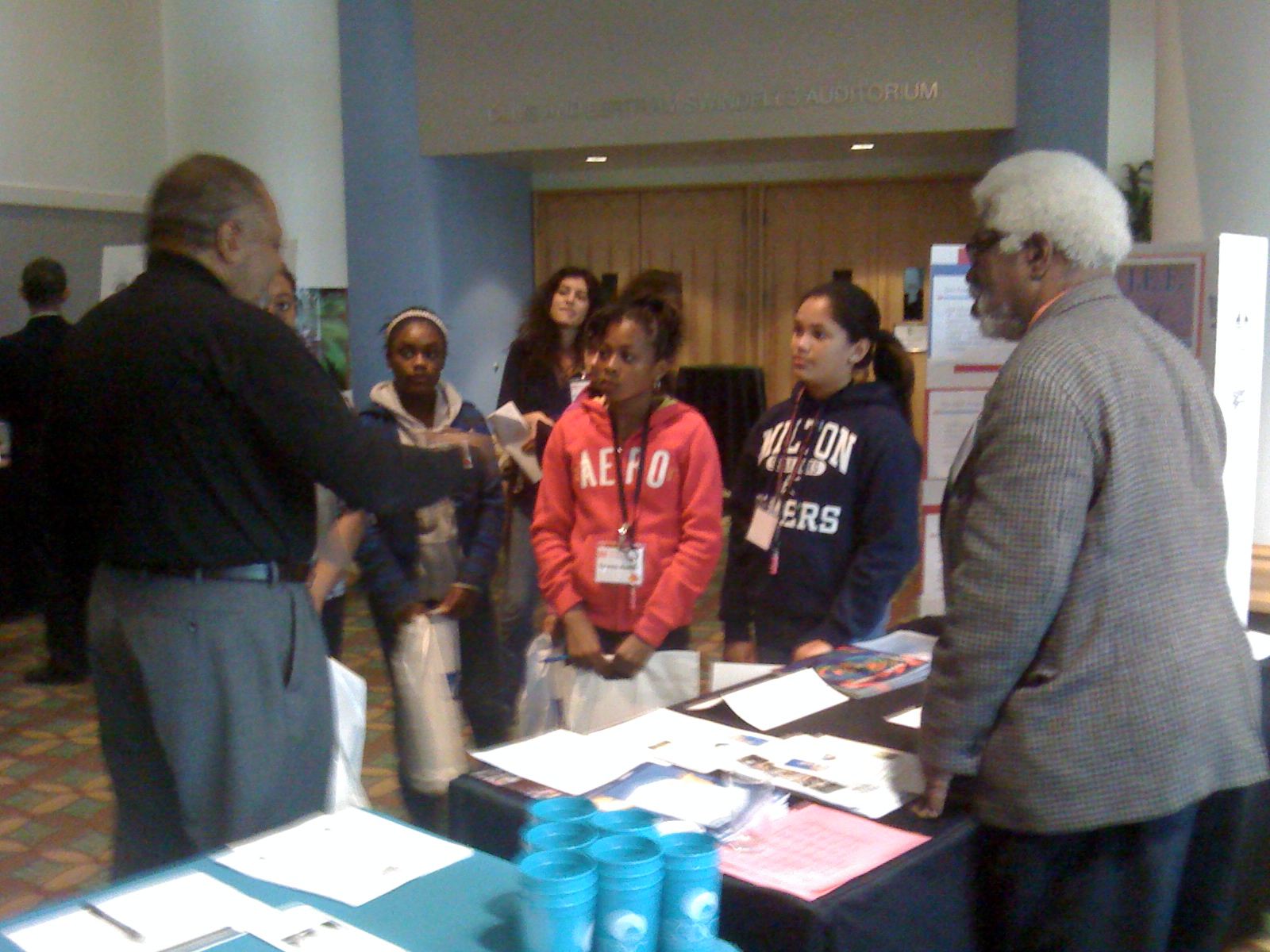
Community Outreach to Girls, at a Special Conference in Washington DC

In the nation's capitol, there was held a conference to share workforce ideas with girls

This is going to be an e-book. I am sharing the chapters as I develop them hoping for feedback and enrichment from interested others.

.Bonnie Bracey Sutton, Teacher Agent of Change

This is a difficult time for teachers , there is a ground swell for STEM , transformational teaching and new practices in all teaching involving media in the United States. There have been more than 22 major meetings to address the STEM problem the most important meeting being the:

The Convocation on Rising Above the Gathering Storm


National Academies Press, 2007  ( nothing much has happened in spite of this)

This  NASbook is on line free of charge for online use


In a world where advanced knowledge is widespread and low-cost labor is readily available, U.S. advantages in the marketplace and in science and technology have begun to erode. A comprehensive and coordinated federal effort is urgently needed to bolster U.S. competitiveness and pre-eminence in these areas. This congressionally requested report by a pre-eminent committee makes four recommendations along with 20 implementation actions that federal policy makers should take to create high-quality jobs and focus new science and technology efforts on meeting the nation’s needs, especially in the area of clean, affordable energy: 1) increase America’s talent pool by vastly improving K-12 mathematics and science education.

  1. )Sustain and strengthen the nation’s commitment to long-term basic research.3) Develop, recruit, and retain top students, scientists, and engineers from both the United States and abroad. 4) Ensure that the United States is the premier place in the world for innovation. Some actions will involve changing existing laws, while others will require financial support that would come from reallocating existing budgets or increasing them. Rising Above the Gathering Storm will be of great interest to federal and state government agencies, educators and schools, public decision makers, research sponsors, regulatory analysts, and scholars.

More »

Norman R. Augustine, Chair of the “Committee on Prospering the Global Economy of the 21st Century” that produced the influential 2005 National Academies report, Rising Above the Gathering Storm: Energizing and Employing America for a Brighter Economic Future, met with members of the NSB Commission on 21st Century Education in Science, Technology, Engineering and Mathematics during their first meeting, August 3 – 4, 2006.

http://www.pkal.org/documents/RAGSConvocation.cfm source

This is a difficult time for school systems, funds are limited, resources are stretched and professional development needs a recharge, a transformation.There is not a depth of knowledge about STEM at grass roots.

Online, teachers are still asking me what is STEM? The reason for transformational change has not gotten to the grass roots level. We know that everyone is not online. I also know that STEAM is the attempt to infuse the arts into STEM. I am a DaVinci teacher, always have and that is another chapter coming up. For those who cannot wait, go to the Exploratorium site. 

Most of the meetings did not involve teachers, but rather cast the blame on teachers. Many teachers are working in a culture of fear, intimidation and retaliation” and the gating caused by NCLB.

. This discussion will give credence to the search for change, provide referenced research and case studies of good practices, and new resources. It is a loving guide to what works. Teachers can help save our schools and help enrich the community by involving citizens in the transformational change.

Computers and “connected” mobile devices may be ubiquitous, but there are still many people who do not know how to turn on a laptop, create an email account or open Internet Explorer, says Stuart Freiman, director of the R.I. Economic Development Corporation’s Broadband Rhode Island project.

Some children own the tools to transform their thinking and learning.

The notion of the digital divide truly exists,” said Freiman, who estimates 30 to 35 percent of Americans do not use the Internet. “As we move into the 21st century, that’s going to be more and more important in every aspect of our lives: access to health care, the government and public-safety issues.” Teachers know what reseachers get paid big money to find out. Many learning communities are not connected .Sadly the groups that used to be teacher advocacy groups are turning commercial and becoming a part that widens the digital divide.

We have a lot of people who are NOT connected in communities. Here is a state model that was developed to help people in Iowa understand the problem.

 SHIFT HAPPENS – a media presentation A State Model

Here is an application of those ideas toward state policies.

Iowa, Did You Know?8/4/2011Once again XPLANE | Dachis Group has teamed up with Dr. Scott McLeod of Iowa State University to create a thought-provoking video. The brand-new “Iowa, Did You Know …http://www.youtube.com/watch?v=E1JyLYphevc

Research is a component of this work, citations, case studies urls, and references will be a part of the last chapter for reference, grant writing, ideas that teachers use to prepare presentations.

These teachers, and administrators can share with school boards, and invite the community to help them with STEM..The ideas are important because many teachers are without broadband and cannot search fully for the resources they need. The work that is being shared has been vetted by teacher national organizations or the National Academy of Sciences. Most of the many, many papers, books and research ideas are not about practice.

There is a lack of known resources or knowledgenetworks,for many US teachers based on budget difficulties , and there are teachers who have little or no professional development in how to effectively use new media. Much of the instruction for the use of new media is online and those who are uncomfortable, cannot rely on the sources to give them the help they need for academic reasons. The lack of online content access for low-income and underserved American’s is one of the digital divide’s frontiers. 

Prior Resource

The resources in this chapter are the kind of support, help and sharing that Marc Prensky talked about in his recent book. He did the hard work of helping teachers organize their practices to prepare for change..He created a wonderful road map to getting to the nuts and bolts of what kinds of essential changes, behavior modification and partnering that can happen to provide transformational learning.

http://www.scribd.com/doc/16594116/Marc-Prenskys-Essential-Skills-for-the-21st-Century. There are some initiatives widely scattered around the Internet.

There are about 19 documents on various subjects that are on line at the National Academy of Sciences

  •    
    STEM Education Innovation & America’s Economic Success

Depend on the awareness of the problem, change and creating connectedideas in learning communities

Important Ingredients to Come

  • Engaging and Broadening Engagement in STEM for Underserved and underexposed populations
  • Successful Models for Innovating Change in STEM Education
  • A First Look at the New Science Education Framework
  • A look at Common Core Standards and their significance
  • Educational Organizations and Connected Communities
  • Workforce Readiness,Career Pathways


Legislation Introduced to Fund Nontraditional STEM Programs

Congress is currently considering legislation that would provide funding for nontraditional programs in science, technology, engineering, and mathematics, or STEM. The Innovation Inspiration School Grant Program is intended to broaden student access and interest in STEM careers in order to grow the pipeline for a globally competitive workforce. We must demystify the STEM problem.

The initiative would provide competitive grants to districts and high schools, giving priority to rural, urban, and low-performing schools, or those that serve low income students. The Innovation Inspiration School grants would fund nontraditional STEM programs, like robotics, in high schools. Districts would be required to partner with the private sector for 50% matching funds and to recruit STEM mentors to serve as role models.

The bill, H.R. 2247, was recently introduced in the House by Rep. Tim Ryan (D-OH) and Rep. James Langevin (D-RI)For more than four years now the Elementary and Secondary Education Act, originally passed by the Johnson administration in 1965, has been overdue for congressional reauthorization. That’s due in no small part to provisions in the act’s latest incarnation, 2001’s much-maligned No Child Left Behind act.

No Child Left Behind is still with us.(since President Barack Obama’s announcement last month that he would begin allowing states to individually opt out of some of NCLB’s requirements, more than half of U.S. states have taken the offer, with 27 now either in the process or strongly pushing for such an opt out.)

It’s Everyone’s Job to be a “Job Creator”

I am tired of hearing about jobs programs and job creators. There is something in these terms that implies that there is a small, elite group of people who serve as the job creators, while everyone else prepares for and competes to work for these people and their jobs. In my opinion, that is a deeply flawed view of what makes the American economy great. America became great because everyone has the potential to be a job creator. What we are doing in our Tracy Learning Center (TLC) program is creating a new generation of job creators, not just workers. But frequently, when I tell people about what a great impact the TLC program is having on its students, people look at just their academic performance numbers to validate my claim. Our students do very well academically, but that is only a small part of the overall impact of the program.

To use an analogy; life is like building a house. TLC provides an education that prepares the person to be able to build the whole house, and even be the developer who builds the community. A traditional school focuses only on teaching students how to drive a nail. Clearly our students will be able to drive a nail, and remarkably, they will do it very well. So, if getting a job means being able to drive a nail, we’re good. But we’re much more than good.

Students in our program are taught how to get a job. But they are also taught how to start a company. The career program includes a unit where they work in small teams and have to take an idea and build a business around it. In other courses, TLC students work in small teams solving problems. Tis model of learning ensures that they master the traditional academic content, but it also does much more than that. As a result of their team problem-solving approach, the students learn a broad assortment of high performance skills such as teamwork, communications, problem-solving, researching, creativity, responsibility, reliability, innovation, planning, etc. Our program gives students the confidence and skills to create their own jobs, and potentially jobs for other as well. Every student coming out of school has to feel like he or she is a job creator, not just a worker. The TLC model does that very well.

On one of my trips to the school, I happened to be there on the same day that one of their graduates had chosen to return and thank the school for what it had done for him. He had transferred to the TLC as a high school student because he was having all kinds of problems in his old school – not just academically, but behaviorally and even problems with substance abuse (possibly including dealing drugs to other students). He had come back to the school that day to thank the teachers for not giving up on him and to tell the next generation of students to listen to the teachers because they care and they are right.

A couple of years earlier, he was coming to the end of his senior year and because he lacked the credits to earn a diploma was not going to graduate. As a result of the work with his teachers at the TLC, he realized how important getting the diploma was, so he asked for permission to spend another semester at the school to earn the diploma. Permission was granted, and he did earn it. He worked with the teachers and counselors, wrote letters, and got scholarships that allowed him to attend a local vocational school to learn the HVAC trades. He now has a job in the field, is seeking additional scholarships to further his education, and is already planning to start his own business. All of this success was directly related to the program and teachers at the TLC.

At the other end of the spectrum, I should also mention the story of the young female student who earned her associates degree at the local college while attending the TLC and then enrolled at UC Berkeley as a junior the fall following her high school graduation.

These are just two examples. If you take the time to sit down and talk with virtually any student at the school, you will hear some variation of these stories. The program reaches every student in some individual way. It gives them the knowledge and skills to be successful. But more importantly, it gives them the self-confidence to try.

All Things Considered , A Digital Promise for an Education Nation, Broadband Please!!

The White House and U.S. Secretary of Education Arne Duncan  launched “Digital Promise” this Friday at 10 a.m. “Digital Promise” is a new national center created by Congress to advance breakthrough technologies that can hopefully  transform teaching and learning. I will gently say that without broadband for all. The Promise is yet to come in a meaningful way. But it is a  great start. Here was a start that was initiated by the NEA. after the death of Christa McAuliffe, in 1992 where we discussed some of these ideas how wonderful to find that in the crucible of ideas that can cooked up that many of the ideas have come to fruition. I am excited that Shirley Malcom is a part of this initiative..

This initiative was also discussed around the table at the George Lucas Educational Foundation

Bonnie Bracey , Chris Dede, Seymour Papert at NEA , NFIE workshop for digital equity

The beginnings of ideas to vault the digital divide

At the end of NIAC the ideas were started , creating the possibility of this project. many long years later Founded after more than a decade of effort, including a 2004 report to Congress, Digital Promise has been endorsed by virtually every major national association of educators and educational institutions, libraries, and museums. The project that gave rise to Digital Promise was launched by the Carnegie, Century, Knight, MacArthur, and Open Society foundations, sustained by the Federation of American Scientists, and championed by a coalition of Republicans and Democrats, civic and business leaders, who came together on its behalf so that the dream of a greenhouse, a place to share ideas and promising practices finally is established, online, instead of in regional centers, and or demonstration projects that are geographically based.

GPS, GIS comes to urban students in a neighborhood setting

ESRI , and National Geographic provide resources for all.

This has been a work in progress.  For the Digital Promise Project, The George Lucas Educational Foundation has produced a short videoto share the potential of new technologies in learning for schools, universities, and the workplace. Digital Promise is a project advocating the establishment of a major federally funded educational trust fund to support the use of digital technologies, especially the Internet, to transform education, training, and lifelong learning.

Being involved in transformational education through NASA

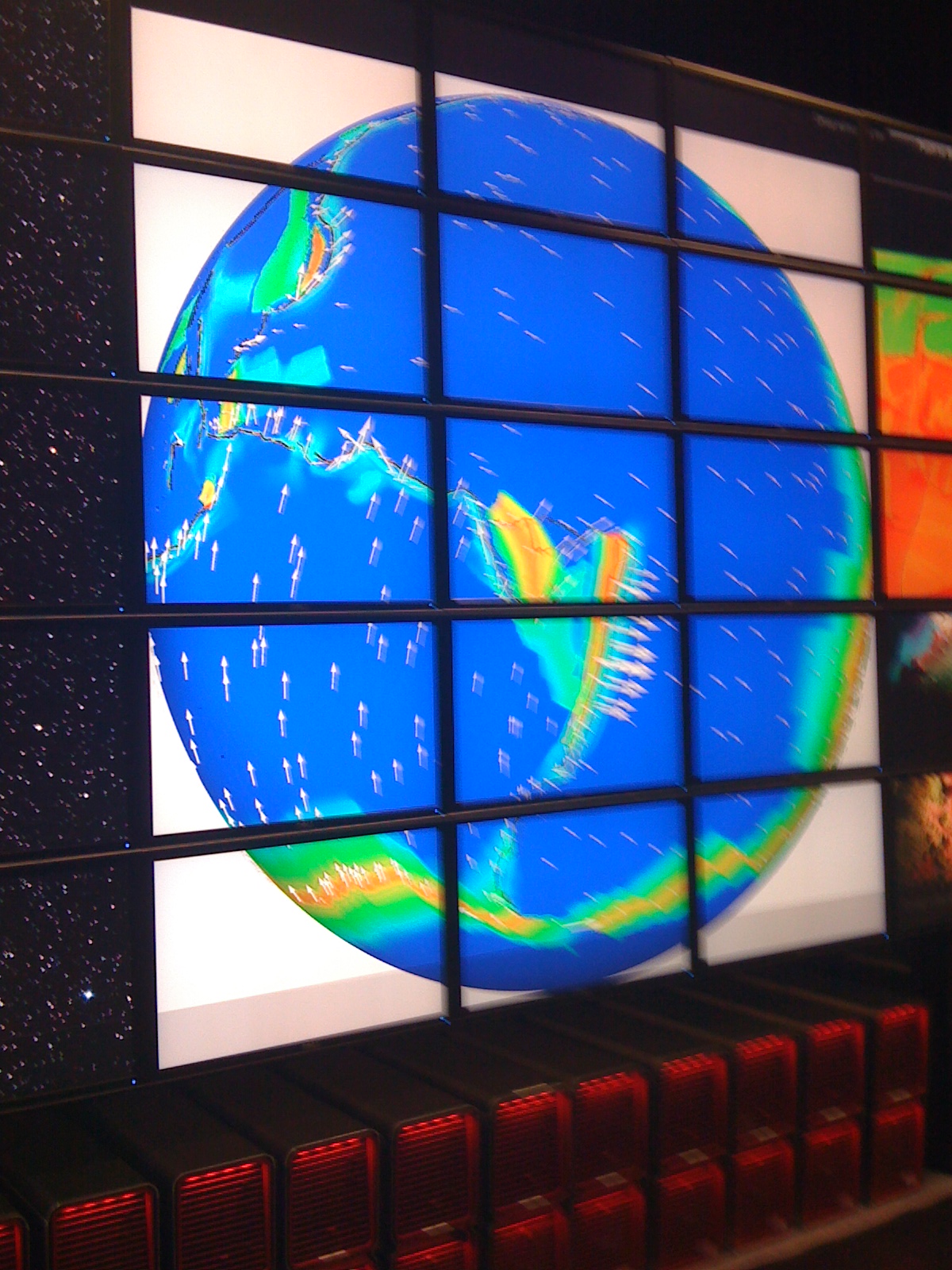
We never mentioned the word Supercomputing, we just did it.

The focus in education for the last couple of weeks has been all STEM and all about Digital Promises

 No Child Left Behind has Left the Building, Following the path of  Little Red Schoolhouse 

As No Child Left Behind is being escorted out of the building of the Dept of Education, Common  Core, new ways of assessment are being escorted in , and there is a sea change in that we can now acknowledge STEM/. The Brookings Institute held an exciting meeting,

 At the meeting, the Department of Commerce shared the last of the three reports
Education Supports Racial and Ethnic Equality in STEM. that report is one of three.

Experts in all fields discussed promising practices and then accepted querys and questions from the audience.

Science, mathematics, engineering, and technology (STEM) are said to be fundamental aspects of everyone’s lives as citizens, consumers, parents, and workers. Here is a infographic to help visualize the ideas.

Providing all students with access to high-quality education in STEM is important to their futures and that of the U.S. What can schools do to meet this goal for their students?

How about realizing the problem of Broadband for all.? We have a National Broadband Plan.You can learn more about it here.

There is more, but I am a teacher , semi technology literate. So look down the site and see things like windrider.  See other technology applications here. http://www.measurementlab.net/resources

You can see if your community is broadband ready  here.

If you are an activist and you want to check your connections and contribute to data, you may want to involve yourself in the M-Lab Project.  When you take a first look it looks like a site only for researchers.M-Lab.

It will be helpful to you if you use the site to test your Internet connection. Do it here. It is easy.

There are explanations, so you will know that your privacy is not compromised.

Here are the tests.

Network diagnostic tool

Test your connection speed and receive sophisticated diagnosis of problems limiting speed.

Glasnost test

Test whether certain applications or traffic are being blocked or throttled on your broadband connection.

Network path & application diagnostics

Diagnose common problems that impact last-mile broadband networks.

Bandwidth test

See how much bandwidth your connection provides

Traffic shaping test

Determine whether an ISP is performing traffic shaping.

Bismark Gateway

Apply to host a router device to test Internet connectivity over time.

Mobile traffic test

Detect whether your mobile broadband provider is performing application or service specific differentiation.


Fixing the STEM Problem by Asking the Right Questions-Don’t ask “Who, What, When, Where”; ask, “Why, and How?”

Fixing the STEM Problem by Asking the Right Questions 

Essay by

Allan C. Jones, President

Emaginos Inc.- Engaging Every Child Through Customized Education

Don’t ask “Who, What, When, Where”; ask, “Why, and How?”

Education in the No Child Left Behind era is all about answering “who, what, when and where” (4W) questions. But the questions that really matter are why and how. In a European history class, students are asked, “Who fought at the battle of Hastings?”, “What armies fought in the battle?”, “When was it fought?”, and “Where is Hastings?”. I can still remember that the English fought the Normans led by William the Conqueror in 1066. I don’t remember where Hastings is, if I ever did know it. What I don’t know is why it was fought and how it affected history. In considering what I know and don’t know, it seems like the stuff I know doesn’t matter and the stuff I don’t know does matter. In general, what matters is the stuff you learn by asking why and how.

The country’s leaders constantly complain about today’s students not learning enough about Science, Technology, Engineering and Math (STEM). STEM topics are boring if you focus on the 4W questions.  But if you focus on “why and how” they come to life. Eli Whitney invented the cotton gin in the southern US before the civil war. Boring! Why did he invent it? How did it work. How was it powered? Why was it important? What recent inventions have had a similar impact on a nation’s economy? The last is a “What” question, but not a recall question. These are the interesting questions about the cotton gin – and they lead to a rich discussion of STEM.

Let’s make the issue more contemporary.

We tell children to use soap when they wash their hands. When they ask why they need the soap, the typical response is that soap gets the hands cleaner. This is usually where inquiry stops and authority takes over – just do it! But any healthy, curious child is thinking, “How does soap work?” The answer is, “Soap makes water wetter.” What does that mean? Soap breaks down the surface tension bonds between the water molecules. So the next obvious question is, “Why does that matter?” Because it allows the water to penetrate the dirt better to float it away. It also emulsified the grease molecules; allowing them to detach from the object and rinse away. I like to give the students another use for this piece of knowledge so I tell them that the next time they find a tick and are trying to kill it, the easiest way is to drop the tick into a cup of tap water. Initially, the tick will appear to float. (The little suckers are really hard to kill.) But ticks are not buoyant. They are not floating. They are standing on the surface tension. Add a drop of dishwashing liquid to the water and the tick will sink like a stone and drown.

We were recently at yet another STEM meeting where the people were all excited about an excellent robotics activity that they were proposing to engage more girls and minorities in STEM. Robots are cool; and designing and playing with them can be engaging and instructional. But why go the expense of creating an artificial world for STEM learning? Students are surrounded by STEM every minute of their lives. Some questions they might enjoy answering could include:

  • How do they get stone-washed denim to look that way? Do they really stone-wash it?
  • Why do the tires on a mountain bike look so different from the tires on a racing bike? Do car and truck tires have the same or different tread designs? How do they decide what is the best tread design for different uses? How does changing the amount of air pressure affect the performance of the tires? When do you use low tire pressure and when do you use high pressure and why?
  • Why does it get easier or harder to pedal a 12-speed bike when you shift the gears? How does the Derailleur work? How is the Derailleur different from a manual transmission on a car? Why does a manual transmission need a clutch and an automatic transmission does not? How does the clutch work? Why does a clutch burn out?
  • How do iPods store all that music? What other options are available to store it? Why was the one they use chosen? What may be the next better storage mechanism?

If you want to tie it into history, ask how people 200, 400, 600, 800, and 1,000 years ago did what we do routinely today. What did tires and treads look like at those different time periods? How were vehicles propelled? How was music stored and enjoyed? How does communications technology affect social unrest? Which technologies that were originally invented for military uses have become everyday household products? Did you know that microwave ovens came from radar technologies developed for guiding missiles?

The list of fascinating STEM topics is endless. More importantly, they are an integral part of everybody’s world. All of the inventions and the underlying technologies were designed and built by engineers and technologists based on work by scientists and mathematicians. STEM is not some remote esoteric set of knowledge reserved for nerds. It’s a fascinating set of knowledge and skills that make up the world we live in. The 4W questions are only interesting if they are used in the context of why and how.

Dropout prevention is another big issue in education. Because understanding why and how something happened are much more interesting than the 4W questions, students get more engaged in their learning when seeking answers to why and how. We need to get away from the model where the teacher asks the 4W questions and students answer them. We need to pose problems that require the students to determine what the questions are that they need answered in order to solve the problem. If you put the students in small ability-level based groups and frame the questions as problems to be solved, every student is actively engaged in learning. This student-centered learning environment also allows the teachers to work individually with every student and customize the learning for each of them.

Going back to the battle of Hastings, knowing why and how it was fought and how the result of the battle impacted the subsequent history of England might be of use in looking at the US invasions of Afghanistan and Iraq. Can we learn any lessons from Viet Nam, Afghanistan, and Iraq that will enable us to make better decisions about the value of those strategies?

We need to change the questions we ask our students and the way we pose them, not only in class, but also on assessments. There is an old axiom that applies; “You get what you pay for.” Since educational institutions get ‘paid’ for good assessments, they will structure the teaching and learning activities to produce what is assessed. So we need to do less assessing of who, what, when, and where; and start doing a better job of assessing students’ mastery of why and how.

STEM , Education Supports Racial and Ethnic Equality in STEM

I attended a workshop at the Brookings Institute on this subject. The press reported it , but they did not give it much space or report some of the new ideas that are in place in thinking about STEM education. It is not just the US that has this problem. I know this from working in many countries as a part of WSIS, and the role of science in the information society.

While we have many kinds of new technologies that people take time to learn, the culture of learning in the US is not about STEM , so far. Robotics have made a leapfrog, but since most teachers in the lower grades are women, you cannot take that as a step to engineering for granted.

Here is the link to the report.  US Dept of Commerce   www.esa.doc.gov

There are actually three reports within the esa site. You can also read this blog.

http://www.esa.doc.gov/Blog/2011/09/13/education-promotes-racial-and-ethnic-equality-science-tech-engineering-and-math-jobs

Three important things to learn from the data.

K-12 all through K-12 we should be teaching and giving examples of STEM initiatives.

We used to say, or the people in charge used to only mostly targer students in the higher grades.

That does not work. Remarkably this is now being understood.

Teachers deserve respect for their jobs and interestingly enough in math there is a group that compensates math teachers  for being math teachers.

Math for America is the project he founded. I put the link here for those without broadband.

Math for America (MƒA) is a nonprofit organization with a mission to improve mathematics education in US public secondary schools by recruiting, training and retaining outstanding mathematics teachers. Founded in New York City in 2004, MƒA also has sites located inBerkeleyBostonLos AngelesSan DiegoUtah and Washington, DC. MƒA offers Fellowships for new and experienced teachers and school leaders, including: the MƒA Fellowship, which aims to increase the number of mathematically talented individuals entering the teaching profession; the MƒA Early Career Fellowship and the MƒA Master Teacher Fellowship, which support outstanding mathematics teachers already in the classroom; and the MƒA School Leader Fellowship, which is designed to support experienced mathematics teachers who have moved into administrative positions and oversee mathematics instruction in their schools.

Engineering

Dr. Charles M. Vest is the president of the National Academy of Engineering and president emeritus of the Massachusetts Institute of Technology. He shared this from the National Academy of Sciences.

 A report released in July  by the National Research Council presents a new framework for K-12 science education that identifies the key scientific ideas and practices all students should learn by the end of high school.  The framework will serve as the foundation for new K-12 science education standards, to replace those issued more than a decade ago.  The National Research Council is the operating arm of the National Academy of Sciences and National Academy of Engineering; all three are independent, nongovernmental organizations. The committee that wrote the report sees the need for significant improvements in how science is taught in the U.S.  The new framework is designed to help students gradually deepen their knowledge of core ideas in four disciplinary areas over multiple years of school, rather than acquire shallow knowledge of many topics.  And it strongly emphasizes the practices of science – helping students learn to plan and carry out investigations, for example, and to engage in argumentation from evidence. 


The overarching goal of the framework, the committee said, is to ensure that by the end of 12th grade, all students have some appreciation of the beauty and wonder of science, the capacity to discuss and think critically about science-related issues, and the skills to pursue careers in science or engineering if they want to do so — outcomes that existing educational approaches are ill-equipped to achieve.


“Currently, science education in the U.S. lacks a common vision of what students should know and be able to do by the end of high school, curricula too often emphasize breadth over depth, and students are rarely given the opportunity to experience how science is actually done,” said Helen Quinn, committee chair and professor emerita of physics at SLAC National Accelerator Laboratory in Stanford, Calif.  “The new framework is designed to address and overcome these weaknesses.  It builds on what is known to work best in science education, based on research and classroom experience both in the U.S.and around the world.  It provides a blueprint that will guide improvements in science education over many years.”


From NIST Tech Beat ( Last summer’s offer)

NIST Summer Institute for Middle School Science Teachers Accepting Applications

The National Institute of Standards and Technology (NIST) is soliciting nominations of middle school science teachers from eligible U.S. public school districts or accredited private educational institutions to participate in the NIST Summer Institute for Middle School Science Teachers. The NIST Summer Institute provides hands-on activities, lectures, tours and visits with scientists and engineers in NIST laboratories.

The Summer Institute will be held at the NIST campus in Gaithersburg, Md., from July 18 to 29, 2011.

The two-week workshop is designed to increase teachers’ understanding of the subjects they teach through exposure to the cutting-edge measurement science research pursued at NIST. The workshop provides teachers with instructional materials and ideas to use in their teaching, experience in how scientific research is carried out, and an opportunity to develop an ongoing network with the scientists and engineers at NIST. NIST provides a $2,000 stipend for teachers attending the workshop and travel and lodging funds for those traveling more than 50 miles to the workshop.

U.S. public school districts or accredited private educational institutions that offer science courses such as earth science, physical science, chemistry, physics and/or biologyat the middle school level (Grades 6-8) are eligible to nominate no more than one teacher per school for the program. Applications are due by 3 p.m. Eastern Time, on Thursday, March 24, 2011.

NIST also is soliciting nominations from school districts or educational institutions of middle school science teachers who have successfully completed the NIST Summer Institute to participate in the NIST Research Experience for Teachers (NIST RET) program. The NIST RET will allow the selected teachers to participate in scientific research with NIST scientists and engineers at the NIST campus in Gaithersburg, Md., that will encourage the teachers to inspire their students to pursue careers in fields of science, technology, engineering or mathematics.

So you can put that on your agenda to look at for the offerings next year.

If you are interested in the elementary level, or the new standards, look here.

A Framework for K-12 Science Education  for those without broadband http://www.nap.edu/catalog.php?record_id=13165

http://www.nap.edu/catalog.php?record_id=13165

Charles Giancarlo sahred with us the concern of meeting the needs of the businesses that do not have

the degrees and knowhow that is needed. He said that companies have to go abroad to find these workers. We had a long discussion on the lack of diversity and the rationale for companies to seek employees outside of the US and the problems that it causes and the  current problem is that the workers cannot stay and that others come, learn and then go home and earn, also taking their new ideas to their countries.

The H-1B is a non-immigrant visa in the United States under the Immigration and Nationality Act, section 101(a)(15)(H). It allows U.S. employers to temporarily employ foreign workers in specialty occupations. If a foreign worker in H-1B status quits or is dismissed from the sponsoring employer, the worker must either apply for and be granted a change of status to another non-immigrant status, find another employer (subject to application for adjustment of status and/or change of visa), or leave the United States.

The regulations define a “specialty occupation” as requiring theoretical and practical application of a body of highly specialized knowledge in a field of human endeavor[1]including but not limited to architectureengineeringmathematicsphysical sciencessocial sciencesbiotechnologymedicine and healtheducationlaw, accounting, business specialties, theology, and the arts, and requiring the attainment of a bachelor’s degree or its equivalent as a minimum[2] (with the exception of fashion models, who must be “of distinguished merit and ability”

Great teachers and great schools have the ability to transform the living standard of Americans.  Over the past century, investments in education have boosted the productivity and earnings of American workers, forged a path out of poverty for many families, and developed a productive and innovative workforce.  However, those gains have stagnated and even declined in recent years.  Despite one of the highest rates of per-pupil spending among industrialized countries, the United States ranks as mediocre on most measures of student achievement.

We spent more per person on incarceration than education per person.

Here is the Brookings Institute summary of the event.

The need for better science, technology, engineering, and math (STEM) teacher training and investment was emphasized today at a Brookings Institution forum on the topic. Dr. Rebecca Blank, the Acting Secretary of Commerce, presented several Commerce reports showing the importance of STEM education for job creation and economic development, and significant underrepresentation in the field for women, African-Americans, and Hispanics. Its report on “Women in STEM: A Gender Gap to Innovation” found that STEM workers were 76 percent male and only 24 percent female. A new report released today on “Education Supports Racial and Ethnic Equality in STEM” noted that 74 percent of STEM workers are male, compared to 6 percent who are Hispanic, 6 percent African-American, and 14 percent Asian-American. She noted the importance of the United States doing a better job attracting students into STEM fields and the need to reach out to under-represented communities. Since STEM workers earn a premium of 25 percent over other workers and have only a 5.5 percent unemployment rate, there are strong economic incentives to get more people into STEM fields.

Jim Simons, the founder of Math for America and board chairman of Renaissance Technologies, discussed his non-profit’s interest in improving teacher training in high school STEM courses. He said we need “knowledgeable and inspiring teachers” and that today we have a “shortage of such teachers”. The way to make STEM teaching more attractive so instructors do a better job introducing students to science and math is “higher pay and better working conditions”. Math for America proposes bonuses and stipends for high school STEM teachers and has provided funding for this across the country. The organization helps 350 math teachers in New York City and hopes to raise that figure to between 700 and 800 in the near future.

Charles Vest is president of the National Academy of Engineering and MIT president emeritus. He pointed out that South Korea graduates more engineers than the United States and the China graduates 10 times as many as America. In many Asian countries, 21 percent of college graduates are engineers, compared to 12 percent in Europe and 4.5 percent in the United States.

Charles Giancarlo is managing director and head of value creation for Silver Lake Partners. He noted that Cisco (where he used to serve as executive vice president) employs 24,000 engineers and Silver Lake Partner’s companies employ 87,000. Yet the United States graduates only 86,000 engineers, indicating a mismatch between supply and demand. He also explained that 35 percent of graduates are foreign born, yet we only provide 85,000 H-1b visas for scientists and engineers so many foreign students who would like to stay in the United States are forced to return to their home country. This robs the United States of valuable talent and sources of future innovation and job creation.

ADD YOUR VIEW

My view is at the top of the event and I believe that urban, rural, distant and gender .. we have a lot to do to change the face of education.

Bonnie Bracey Sutton

Two Americas, Two Ways of Thinking About Education?And Technology?

There was  a recent headline that concerns me.

Do ‘top’ college graduates really make better teachers?

Teachers have been a target this year and most of the time, after responding to few blogs, I gave up on trying to share the inequalities in teaching based on location,the population being served, the difference in economics, income , access and permission within the field. We should also cite access to supportive in technology use and tools. A lot of the people talking to teachers on the Internet , don’t even know that access is a problem in the US.

ACCESS IS A PROBLEM

This was shared by the Chairman of the FCC at a New Foundation Event in DC about broadband.

In the US  lots of people think everyone has access to Broadband. That is still a national goal. People however treat educators as if there is broadband everywhere. Note that I sometimes put the URL though we know how to make it clickable. In rural and distant areas people are still using dial up.

Julius Genachowski 

 BARRIERS TO USE

Affordability: 36 percent of non-adopters, or 28 million adults, said
they do not have home broadband because the monthly fee is too
expensive (15 percent), they cannot afford a computer, the installation
fee is too high (10 percent), or they do not want to enter into a
long-term service contract (9 percent). According to survey
respondents, their average monthly broadband bill is $41.

Digital Literacy: 22 percent of non-adopters, or 17 million adults,
indicated that they do not have home broadband because they lack the
digital skills (12 percent) or they are concerned about potential
hazards of online life, such as exposure to inappropriate content or
security of personal information (10 percent)

The blocking of school sites is a national problem for those who have access to broadband.

Relevance: 19 percent of non-adopters, or 15 million adults, said they
do not have broadband because they say that the Internet is a waste of
time, there is no online content of interest to them or, for dial-up
users, they are content with their current service.

Digital Hopefuls, all of the people who hope to be able to use technology in the future but who are not a part of the digital revolution. We cannot fail to reference Cyberbullying, perhaps in the cloak of Digital Citizenship. Schools are in fear about online safety.

Insulting Teachers it the new sport.  

Some of the insults I take personally. No one ever went into teaching for the money.

I have lots of awards, citations, workshops and have participated in  national initiatives. I went to Virginia State College, an HBCU. You may not be aware of MSO’s, Minority Serving Institutions. Those of us who are across the digital divide , and the education divide have had to work really, really hard to be a part of the conversation in education. My inspiration was my mother who felt marginalized by a rural education. She went to college and became a teacher.  She worked in the area of rural Virginia that closed down rather than accept the integration of schools. She felt that the ten and twenty year old books that she was given to teach with were not the best tools for learning. Of course there was no Internet.

My uncle taught at Lincoln University in Pennsylvania. Back then Einstein used to drive to the college to inspire the minority students to learn physics. The lack of lab resources was his concern. Einstein packed things in his car and made the trip to teach the students of Lincoln.

My digital divide now is tools. I do not have the most recent of all digital tools, but that makes me understand the people who don’t have but the Powerpoint reader, or who only have free software. Checked the price of a professional Microsoft suite lately?Price of the conferences , plus travel and hotel? Every teacher does not get to attend the big conferences. Economics is a big concern , and I imagine that the people who attend the best universities get the latest of tools of all kinds. There are people who help  teachers by sponsoring grants, like the people at EDC who set the vision of the possibilities, and Manorama Talaiver who works to create equity  from Longwood University in rural Virginia.

But, I digress, look  below and  read the whole article and then think of all the people who worked in MSO’s , minority serving institutions, each with a different set of missions. Is this another kind of prejudice? I think so. Maybe another divide. We often think of all the divides that separate us, the information divide, the technology divide, the resource divide, the support / technical divide. But now we are being told by some that top universities produce the best teachers. Think again.

PROFESSIONAL DEVELOPMENT IS A PROBLEM!!

Think of teachers as the help who often need support and don’t get it.
If a doctor, lawyer, or dentist had 40 people in his office at one time, all of whom had different needs, and some of whom didn’t want to be there and were causing trouble, and the doctor, lawyer, or dentist, without assistance, had to treat them all with professional excellence for nine months, then he might have some conception of the classroom teacher’s job.  ~Donald D. Quinn

What makes a great teacher? Here is one of mine. A relative of students I had in class who mentored me . The children told me he knew more physics than I, so I wrote to him, and he sent me videos, and eventually came to visit.  We worked together later for President Clinton.

One of my mentors, his young relatives were in my class .

Bill Nye the Science Guy

As a teacher in some instances, you are always learning; especially with transformation in the way of the use of technology.  Technology is a moving target.

Sources of Information and Training? Sometimes Great Universities!

At George Mason, when Chris Dede was there, he worked with the schools in the community to make a difference. It was not one way. We went to his classes to talk to preservice teachers as well.The students visited our classes and learned from us. He is at Harvard now, but he was user-friendly to the learning community in our area.

Many of us have learned a lot from the University of Illinois, because the National Center for Supercomputing is there. It has been invisible learning because the media hardly acknowledges Supercomputing. Weather models,  earthquake patterns, tsunami examples,  visualization and modeling, the features are used in the news, without mention. How wonderful it would be if the science was acknowledged. Norm Augustine tells the story of the Senator who said that we did not need NASA because his local weather station could provide the data we need to know about weather.  The stations don’t acknowledge often , the source of their super doppler information.

I never attended the University of Illinois but. The universities have outreach to America. Most of us are in learning mode from resources that are for teaching and learning. The problem has always been the lack of sustained professional development. Some people think that a 2 hour explanation of a topic is sustained professional development. There is so much support available from interested groups, But, you must have enough broadband to reach out and be touched. Also , I hate to say this, but a lot of in service within school systems is not so effective.  Here are some good resources that have teacher outreach and training in mind.

One example:   Bugscope  http://bugscope.beckman.uiuc.edu/

Another powerful examplehttp://mynasa.nasa.gov/portal/site/mynasa/index.jsp?bandwidth=high

National Geographic.   http://education.nationalgeographic.com/education/?ar_a=1&ar_r=1

Thinkfinity     http://www.thinkfinity.org/

River City   http://muve.gse.harvard.edu/rivercityproject/index.html

Fieldscope  http://www.fieldscope.org/scop

Scalable Game Design Alexander Repenning’s Project

http://scalablegamedesign.cs.colorado.edu/gamewiki/index.php/Scalable_Game_Design_wiki

Dr. Henry Neeman  and Scott Lathrop who chairs the Supercomputing Conference reach out to help create a Supercomputing program for educators during the Supercomputing Conference, and there is Broadening engagement as well. These are researchers who want to help transform teaching and learning.

There are teachers who do not know these sites or people as resources. I could share a thousand more. School systems often do not use these as resources. Why ever not? There is no excuse for teachers not knowing except that the riches of the Internet and professional development are limited in many school systems . Technology is one thing , content is another. Time is another. The benefit of social media is that we share. The benefit of social media are the tools we use to teach each other.

Some say that the vendors own education since NCLB. Testing is the focus and has been since its  inception.

         SOME PEOPLE ARE LOOKING AT THE TOOLS, NOT INFORMED PRACTICE

Sustained Support? Where Found? transformational Learning? Blooms Digital Taxonomy,  TPACK? Chris Dede takes us into the future here. http:/www.nebhe.org/info/pdf/reinventing/Chris_Dede_10-4-10.pdf

All of the technology gurus need to think about deep content.

What is TPACK?

Technological Pedagogical Content Knowledge (TPACK) attempts to identify the nature of knowledge required by teachers for technology integration in their teaching, while addressing the complex, multifaceted and situated nature of teacher knowledge. At the heart of the TPACK framework, is the complex interplay of three primary forms of knowledge: Content (CK), Pedagogy (PK), and Technology (TK). See Figure above. As must be clear, the TPACK framework builds on Shulman’s idea of Pedagogical Content Knowledge. How many teachers know about it?

Here is the Tpack Image. IMAGE Lots to learn here.

There is an organization that supports teacher knowledge. It is SITE.org. AACE

Some of my teachers are from colleges and universities all over the US. We learn in our SIG’s and groups. It is not just about a conference. It is about collaboration, creation of new ideas and community.

Those groups that partner with educators to make a difference provide the best support. Unfortunately supervisors in schools want their signature on the professional development being offered, or do not know of the efforts of the National Geographic, NSTA, NCTM, Supercomputing, CSTA and other enabling groups. 

Why does professional development need help? Teaching and learning has undergone transformational change. It is not your grandmother’s school, or my mother’s idea of school.

Many of us attended , lots of courses from NASA, most from the University of Oklahoma.. Marc Prensky talks about how we in education learn from linking with other groups, associations and those interested in the subjects we are teaching. School systems do not always have the link or knowledge and that is why we have the National School Boards Association, and ASCD, and the various other organizations that break down the areas of isolation in education. But who can afford to attend all of the conferences? Those of us across the digital divide appreciate the online resources.

A stunning example of help is at the Shodor.org site. Computational thinking and learning. In particular, see, Interactivate.

There are people like Idit Caperton working from the various universities to help rural and poor teachers using the teacher network in a project entitled Globaloria. , or Chris Dede who works widely, sharing their messages in conferences , convenings and meetings. Probably most teachers don’t get to attend the meetings, because of costs, but we do have Facebook, G+ and organizations which are where we  , the regular people interested in education work to learn as education changes and transforms.

My concern about it is that there are excellent teachers who did not go to the best colleges  or universities.  More that many teachers did not get the best of professional development. Whose fault is that? 

We know that lots of people have a skill in teaching that is intuitive. There are lots of very smart people who cannot teach. They have the information, but they don’t know how to share, or even worse, don’t know how to frame their knowledge into ideational scaffolding for learning.  Do read the whole article. Lots of support to my concerns are here. I like to say that there are smart people who cannot teach their way out of a wet paper bag. But that would be rude as it is only a small set of people . We probably don’t know of the people who cannot teach. There is little feedback from those who are taught.

Do ‘top’ college graduates really make better teachers?

This was written by Matthew Di Carlo, senior fellow at the non-profit Albert Shanker Institute, located in Washington, D.C. This postoriginally appeared on the institute’s blog.

By Matthew Di Carlo

One of the few issues that all sides in the education debate agree upon is the desirability of attracting “better people” into the teaching profession. While this certainly includes the possibility of using policy to lure career-switchers, most of the focus is on attracting “top” candidates right out of college or graduate school.

The common metric that is used to identify these “top” candidates is their pre-service (especially college) characteristics and performance. Most commonly, people call for the need to attract teachers from the “top third” of graduating classes, an outcome that is frequently cited as being the case in high-performing nations such as Finland. Now, it bears noting that “attracting better people,” like “improving teacher quality,” is a policy goal, not a concrete policy proposal — it tells us what we want, not how to get it. And how to make teaching more enticing for “top” candidates is still very much an open question (as is the equally important question of how to improve the performance of existing teachers).

More segregation, dividing of the nation and educational misleading.

I adore some of the people in great institutions who have shared, resources, materials , workshops and initiatives. The problem is that education is ever-changing and subject to so many influences from people who do not  know schools or what happens in them.
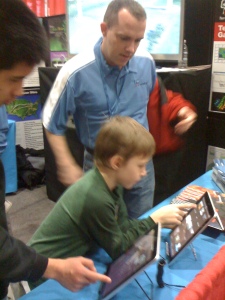
Working with the Teragrid on the National Mall

Outreach to the public .

MAIN IDEA

 Now comes the idea that only people who attend the better schools have the skills to teach?? Being a good teacher is a gift. Content can be given to Preservice students, but that does not alway translate into a better student  or an outstanding teacher.  There are a lot of very smart people who cannot teach because they don’t understand students, their culture, or how students get motivated to learn.
Teaching is a combination of many elements. The school you go to does not make you a good teacher. It gives you contacts, networks and resources , hopefully. In a classroom , you are on your own. The variables in a school setting are so many even the best teacher may have to adjust, recover, revise and rework , ideas in education.

It is class, race, competency, language skills, the interest of the parents, the local resources, the spending within the community , the level of technology infusion, integration and teacher education and the support within the learning community. Few people talk about the real problems in education.

The application of people skills is as necessary as is content, and the skill of multitasking, and of being able to give and take and to integrate practice , performance and pedagogy  into a school day..

Schools are a community in the  learning landscape. Here is the good news. Networking allows me to share the reality of schools and actually some of the mystery of why teachers just either quit, or conform. Dr. Chris Dede, when at George Mason University, did outreach to the communities and that was how lots of us got training in technology. He invited us in, but he also came to our classes. The university partnered in a project with local school systems. Dr. Dede was always ahead of his time most of the school systems did not follow-up on his model.

 There comes a point in time when you have to decide , who is teaching this class, and what is it that I want to do, as often , the political winds shift in strange directions. Sometimes I am in rooms of PhD students who really get it.Sometimes, I know that they are PhD students, and that may mean that they cannot see all the way down to the classroom. If they ever had experiences in the classroom, they did not include newer ways of working, except what they studied.

I insisted on teaching science and problem solving math and thinking about computational sciences. I was right, but what a price I paid. I don’t regret it, but then to see the people who accepted it be thrown out of teaching and learning because they are considered not teaching STEM. It is unbelievable. I did not bow to testing as the reason for teaching. I did the tests and my students did well, but we had SO much testing.

Many of the people pushing NCLB have since changed their minds and are  now eloquent in their new  disbelief of the policy they gave to the nation. Thank goodness.

A generation of students and teachers have been lost by this time.

We who teach, know that the administrators set the tone of learning in a building, that the School Boards help to create the learning landscape and oversee curriculum  in a school system, that there are also the State mandates, and the effects of the Department of Education as there are fundings and programs that overlay everything we do. I have been through the various fashions or modes  in education, theme based, support of Gifted and Talented, Cooperative Teaching, Team Teaching, and I have worked in specialized schools.I have worked in a charter school, and tried to help with a DC Charter School with was an absolute failure. As you work through education you cannot have an opinion or you may find yourself without a job, support or funding. It does not matter if you are right. You have to be politically correct and sometimes that is.. well think, of the politics in a local school. It is often why teachers leave.

Who is the principal , who are the teachers that are liked in the community, who are the hard-working teachers who create miracles, and what is the sense of the school in working together?

There is a project that holds forth much hope if the project is ever funded, beyond the Tracy Learning Center. It is a model that has been in the works for a long time. It is the idea of a person called Jack Taub, who died this year the founder of the Source, which became America Online.. We who know of his dream keep the idea going forth. You can read about it at Emaginos.com.

The Tracy Learning Center is a charter school located in TracyCaliforniaUSA. Serving students in grades K12, it was founded in 2001 and had an enrollment of 125 students.[1] Charter status was awarded in June 2002.[2] It was decided, in June 2003, to relocate the Tracy Learning Center to the Clover Middle School site and to expand it to become a K–12 charter school.[3] Expansion of the school was completed in 2007, with the addition of the senior class, that took numbers up to 850.[1]

Tracy Learning Center

For the 2011-12 school year, the Tracy Learning Center has a population of over 1100 students K-12. It continues to be one of the highest ranked schools in San Joaquin County.It is a charter school, but we intend for it to go public. Teachers are in charge of the school.

WHY IS TEACHING SCIENCE A PROBLEM?

What happened to Science? Remember that tracking I told you about? People want to find the eleventh graders. Well to be a child in the upper grades interested in science on has to start somewhere. K-12 distribution of science is necessary . 

Sadly, in most of the schools in the nation, science is not a welcome subject. I put it in my curriculum using NASA, National Geographic Society Initiatives such as Kidsnetwork, NOAA weather and sea initiatives, and various NSTA resources.

When I was working in Arlington, there was the pressure of the parents to do new and exciting things in the use of technology. I learned a lot from parents, from one parent who taught me photography, from another who helped me learn to garden. Another teacher I will never forget was a Japanese teacher who came to teach the class and I about Japan, she had artifacts, taught us calligraphy, and all the time was working a meal. I was stunned. She was from the Smithsonian. Hmnn.. another way to involve and invite students. Never learned it in formal education.I incorporated cultural elements into my teaching practice because of her.

Dr. Embry was a forensic biologist who worked to reconstruct dinosaurs. How cool was it that we were able to learn from him at the Smithsonian. He offered, I accepted. Foot in the classroom and then we went to the Smithsonian to watch him work!!

Segregation by race is a national problem!

.When teaching students who were not gifted and talented science , geography, history were not allowed for the students on certain tracks.

Here is a study done by the Jack Kent Cooke Foundation.The report, Achievement Trap: How America Is Failing Millions of High-Achieving Students From Lower-Income Families, written by the Jack Kent Cooke Foundation and Civic Enterprises with original research by Westat, focuses on the educational experiences of high-achieving lower-income students from 1st grade through graduate school. A goal of the report was to examine the numbers of students considered low-income high achievers and to understand how these students were being educated. Using three federal longitudinal studies [Early Childhood Longitudinal Study-Kindergarten Cohort (ECLS-K), The National Education Longitudinal Study (NELS), and The Baccalaureate and Beyond Longitudinal Study (B&B)], students were categorized as high-achievers and further divided into either a higher-income or lower-income group. At this forum, presenters discussed results from the report, comparing the persistence rates, defined as students’ ability to remain in the top quartile of achievers, and improvement rates, defined as students’ ability to move from the bottom three quartiles  to the top quartile of achievers, both from higher- and lower-income families.  The report details the tracking, the dumbing down and the loss of those students who could make a difference in education.

And teachers? Do you see many of us minorities at the conferences presenting? We are “Ralph Ellison” invisible. We are not invited to the table. Broadening Engagement starts to solve the problem. If we are there it is often because we are passionate enough about education to invest in conferences where we are NOT invited. ASCD conferences are more diverse. I also like the resources, that try to combine the two America visions. Here is a book, 

Two offerings from ASCD

THE SIGHTS AND SOUNDS OF EQUITABLE PRACTICES DVD

TEACHING WITH POVERTY IN MIND: WHAT BEING POOR DOES TO KIDS’ BRAINS AND WHAT SCHOOLS CAN DO ABOUT IT

The Need To Transform K-12 Education

As President Obama recently told Congress and the American people,

“In a global economy where the most valuable skill you can sell is your knowledge, a good education is no longer just a pathway to opportunity — it is a prerequisite. Today, three-quarters of the fastest-growing occupations require more than a high school diploma. And yet, just over half of our citizens have that level of education. We have one of the highest high school dropout rates of any industrialized nation. And half of the students who begin college never finish. This is a prescription for economic decline, because we know the countries that out-teach us today will out-compete us tomorrow.”

 I learned that with technology I could reach students with technology who had been restricted to only reading , and math. Tracking is a problem that has been a part of American schools. It was one way to solve the problem of integration. Two schools in one, one for the kids who “could” and one for the people found to be lacking . Tracking is still a big problem. 

 I  also learned the politics of place and power in schools. The NEA rescued me, my union protected me from terrible on the job problems.  I am grateful for their involvement. Teachers don’t usually tell the bad stories. We just move, leave teaching or try to find another school.

Who has the tools? Are they affordable?  I had the science tools. I was a demonstration teacher for AAAS and my principal had my kits and resources thrown out of the window. This was Marge Tracy at Ashlawn. Fortunately , the custodian retrieved most of my things and put them in his truck. We secretly smuggled the things to places in the school where they could be kept and not disposed of. I had microscopes , hands on resources. Her thing was reading out of the book. She considered hands on a ridiculous waste of time. Since I was working with the George Lucas Educational Foundation , I was hearing, listening and learning from the best people in the country. But that nor the fact that I worked for the NIIAC worked to make principals accept science, math, and problem solving computational thinking. 

Finally, I left the school. The principal set the tone and I knew that she was going to transfer me. Being a principal gives you the power to cast out the teachers you do not like or respect. There are others who can tell even worse stories. It is a humiliating thing. It is the reason lots of people leave teaching.

RESEARCH STORY

The Achievement Trap, Jack Kent Cooke Foundation

The report, Achievement Trap: How America Is Failing Millions of High-Achieving Students From Lower-Income Families, written by the Jack Kent Cooke Foundation and Civic Enterprises with original research by Westat, focuses on the educational experiences of high-achieving lower-income students from 1st grade through graduate school. A goal of the report was to examine the numbers of students considered low-income high achievers and to understand how these students were being educated. Using three federal longitudinal studies [Early Childhood Longitudinal Study-Kindergarten Cohort (ECLS-K), The National Education Longitudinal Study (NELS), and The Baccalaureate and Beyond Longitudinal Study (B&B)], students were categorized as high-achievers and further divided into either a higher-income or lower-income group. At this forum, presenters discussed results from the report, comparing the persistence rates, defined as students’ ability to remain in the top quartile of achievers, and improvement rates, defined as students’ ability to move from the bottom three quartiles  to the top quartile of achievers, both from higher- and lower-income families.  The report details the tracking, thedumbing down and the loss of those students who could make a difference in education.And teachers? 

Sadly, from the time they enter grade school through their postsecondary education, these students lose more educational ground and excel less frequently than their higher-income peers. Despite this tremendous loss in achievement, these remarkable young people are hidden from public view and absent from public policy debates. Instead of being recognized for their excellence and encouraged to strengthen their achievement, high achieving lower-income students enter what we call the “achievement trap”—educators, policymakers, and the public assume they can fend for themselves when the facts show otherwise.

http://www.jackkentcookefoundation.o…ent%20Trap.pdf

OThis is a student who was at a special project, School Expo and she was able to use technology she had never seen.
Using any means possible to explore technology


Who is connected to be involved? Who has the funding to join the organizations that are pioneering the work?  

 Bonnie Bracey Sutton

Mobile Devices, and Learning, a Cure for the Digital Divide?

I was first intrigued with mobile learning on a flight to Aukland, New Zealand. The small child across the aisle from me, clutched his device for every waking hour of the flight. I could not see what was on the device, I know it was an Apple IPhone. I was too polite to ask what it was that he was using on the phone… In countless planes, trains and even in an automobile, the problem of boredom seemed to be reduced. The mobile device seems to have solved those types of problems. To think of the power of Mobile look at this infographic . It is a good digital display of what is happening.

Some information on the trends  about mobile devices. And here is an infographic on the state of digital education. You won’t believe your eyes.

The Horizon Report and other futuring reports include the use of mobile devices.

It won't replace you, it will enhance the learning environment!

Mobile Devices

At a visit to the National Geographic I had to pay attention to the device that was questioning me about my geographic knowledge. The device was counting answers and giving instantaneous feedback.

But are what mobile devices are  allowed in schools? Are the powerful intersections of visualization, powerful content and models being kept away from the classroom? STEM resources are mostly available in imagery, visualization , modeling and embedded assessment, online.

In her Mindshift Blog, Tina Barsegihan states:

One of the most exciting things about living in the digital age is witnessing huge cultural changes occur in real time.

We’re at just that point now with mobile learning. Whether it’s on an e-reader, a tablet, or a cell phone, there’s great excitement — though not a lot of research yet — around the potential of how these devices can strengthen learning.

“There are frontiers that we’re just beginning to learn how to reach.”

“What if your mobile device had a sixth sense?” asked Harvard professor Chris Dede, who’s researching the diverse dimensions of mobile learning, at the recent ISTE conference.

When most of us consider education, we think of learning happening in isolated places — schools. But mobile devices are upending that assumption. With innovations like augmented reality, different kinds of information and experiences can be superimposed onto the real world, complementing and adding another dimension to “formal” learning institutions.

Pilot programs are springing up all over the country (more on those soon), as educators and researchers determine what kind of learning can happen best with mobile devices.

“We know from generations of work that devices are catalysts,” Dede said. “The device never produces learning, but when coupled with changes in content, new forms of assessment, linking people together, that’s what enables learning.”

Chis Dede talks about mobile learning : ” Learning a variety of content and skills anytime, anyplace wit a small device light enough to be carried in one hand.” Chis Dede, Timothy E. Wirth Professor in Learning Technologies, Harvard University

Jason Ohler.” Virtual learning and the availability of digital content have changed to offer more methods of student engagement, increased customization of learning objects, open resources, and personalized education..

Imaging the Universe, You can't do that with a book

Learning using visual Imagery

Digital citizenship is impossible until we help students live one life instead two. Right now they live two—a digitally unplugged life at school and digitally deluged life outside school. Having them bring their devices to school is a great first step in creating a reality-based environment for the discussion of digital citizenship. But what do we do about those students who have nothing to bring?posted by Jason Ohler
May 19, 2011

” Learning in the 21st Century, Taking it Mobile“ was a conference I attended about a year ago.. We know that the policy, process and technology infrastructures that are adopted over the next few years will shape education for decades. We also know that the lack of broadband is a problem in many places in the US. We have been talking about 21stCentury adaptations and transformation for many years. It is still a goal. . Many think the devices will change the learning landscape and equalize access.

DIGITAL DIVIDE

There is a dark side of the digital divide without broadband. Everyone assumes that people can access high powered sites. The FCC is busy working to create broadband for all but the realization of this will probably be a long time in coming. The sad part of this is the lack of classroom access in some parts of the US. We are told the new E-rate will help to solve this, but it is a BIG problem. Sometimes the people who need access most are out of sight , out of mind.

We had a big discussion on the District of Columbia schools and what the teachers were or were not accomplishing, but no one questioned their lack of technology support in training, in devices, and in content integration. Quietly, the discussions are going on in various school systems, but there is no conclusion as to what really works. 

Teaching online , anywhere anytime, Henry Neeman does outreach to all from Oklahoma

Reaching out to involve students and faculty in Supercomputing

As mobile devices become ubiquitous, students are using then to facilitate learning and enhance productivity in and out of school.  There are roadblocks, but the most difficult to solve is the disconnect of access. After that, there is the concerns about cyberbullying and creating a platform of use that is reflective of the purposes of the task in education.

At the conference we mulled over these questions and they stay with me still.

The Digital Divide is always a question.

What do mobile wireless devices contribute as a platform for bringing education innovation and best practices to scale?

What do mobile wireless devices contribute as an enabler of innovative powerful methods for teaching and learning?

How can we complement the current educational infrastructure( computers, wires) with the emerging wireless mobiles, cloud based infrastructure? What are key challenges in financing, implementation and policy?

How can we plan to accommodate the rapid evolution of mobile devices?

How would you answer these questions?

Moblie Device at Blue Waters Kiosk at NSF Expo ExhibitMobile Devices capture the attention of students. who have never seen or used these devices before. This is outreach for the Teragrid.

Research, 2010 and Our Future, Students Speak Up about Their Vision for 21st Century Learninghttp://www.tomorrow.org/

Edutopia 

The Internet is an astonishing source of educational resources: Lesson plans, classroom-product reviews, and even psychological support for those dark days when your students (or your coworkers) are straining your mental balance are only a Google search away. The trick, however, is getting that pipeline of online information flowing throughout your school, including directly into classroom PCs. Computers are often centralized in a media center, building codes can be prohibitive for setting up a broadband feed, and most schools are short-changed when it comes necessary tech support.

Here is a recipe for wireless access for those on the digital dirt road or for the understanding of those who did not get to attend the conference from the George Lucas Educational Foundation that is a how to.. The project is entitled the Digital Generation.

Welcome to the Digital Generation

http://www.edutopia.org/digital-generation-project-overview-video


What Devices?

There are a lot of devices that can be included in this discussion. The ones I know are,mobile and associated technologies, smart phones, IPod, IPhones, Netbooks, digital clickers, chargers and battery packs ,mobile interactive whiteboards.


Wireless to the Rescue

http://www.edutopia.org/tech-teacher-wireless-rescue


Taking it Mobile

Access to smartphones has more than tripled among high school students since 2006, according to a survey report from Project Tomorrow®, a national education nonprofit organization, and Blackboard Inc.

The report ,Learning in the 21st Century: Taking it Mobile!shows that students now view the inability to use their own devices in school, such as cell phones, smart phones, MP3 players, laptops or net books, as the primary barrier to a successful digital education. The various reports can be found here.

Can we Change the Digital Divide with Mobile Devices?

The FCC Chairman indicated in his discussions early in the year that Digital Tools may be the solution to the digital divide

Mobile Divide…. What Can we Learn about Making a Difference with Mobile Technology?

Philosophy of the Mobile Divide In the US

Mobile Digital Divide– According to a new study on U.S. consumers and mobile from the Pew Research Center, an unprecedented 60% of adults in the U.S. access go online wirelessly, whether by laptop or cell phone. Two factors are driving this trend, and shaking up any preconceived notions about America’s digital divide.

Finding #1:“Cell phone ownership is higher among African-Americans and Latinos than among whites (87% vs. 80%) and minority cell phone owners take advantage of a much greater range of their phones’ features compared with white mobile phone users. In total, 64% of African-Americans access the internet from a laptop or mobile phone, a seven-point increase from the 57% who did so at a similar point in 2009.”

Finding #2: “Young adults (those ages 18-29) are also avid users of mobile data applications, but older adults are gaining fast. Compared with 2009, cell phone owners ages 30-49 are significantly more likely to use their mobile device to send text messages, access the internet, take pictures, record videos, use email or instant messaging, and play music.”

What’s driving more Blacks and Hispanics, and older adults, to mobile?

According to Pew spokesman Aaron W. Smith, increased mobile web usage is driven by two key factors: age and economics. A younger demo with an annual income of $30,000 or less a year has jumped in usage, and African-Americans and Hispanics are younger and have less money than the general white population.

Mobile is thus bridging the digital gap between the traditional distinction of haves and have-nots, and while it’s a positive trend, it’s still a gap between those with cellphone-only access and those with computers as well.

About 18% of African-Americans use a cellphone as their sole device for Internet access compared to about 10% of whites. That said, laptop ownership has risen from 34% in 2009 to a current 51% among African-Americans.

Overall, 59% of Americans now access the Internet through mobile devices as opposed to 51% a year ago. So mobile may prove to be the ultimate equalizer, at least on the digital playing field.

Other interesting facts from the study reveal that Americans are using their mobile devices to (as ranked by Pew’s latest stats vs. April 2009)

The most interesting discussions are about the way in which wireless can be deployed. Bring your own wireless, netbooks using the cloud, and a variety of ways to solve the digital divide were proposed.

This from Mindshift

Bring-your-own-device classrooms. Since most kids these days already have access to a mobile device, schools are seizing the opportunity to turn these gadgets from distractions into learning tools by incorporating these devices into classroom lessons and projects. From mobile phones to laptop computers, teachers and students are increasingly bringing technology to the classroom, and in many school districts, it’s being put to good use.Numerous studies have highlighted the benefits of one-to-one computing programs in raising test scores and increasing college attendance, but with many districts strapped for cash and unable to provide devices for each student, this isn’t always a possibility. The solution may be found in asking students to bring their own devices to class, cutting back on the number of mobile devices the school needs to provide while still enhancing the learning experience.

What have mobile devices go to do with STEM and changing education in America?

Eliot Soloway ”

Are cellphones and other mobile devices powerful learning tools or intolerable classroom distractions?

For Elliot Soloway, the answer is a no-brainer. Cellphones, hand-held gaming gadgets, and netbooks—all relatively cheap, seemingly ever-present mobile devices used (and often abused) by today’s teenagers—can engage middle and high school students in learning inside and outside of school, he and other advocates of mobile learning say.”

STEM Applications you can’t replicate by talking or lecturing.

Windows to the Universe  ,Windows to the Universe explores the Earth, planets of our solar system, and the universe. It includes images, animations, and data sets, and information about books .

The Exploratorium,The Exploratorium isn’t just a museum; it’s an ongoing exploration of science, art, and human perception—a vast collection of online interactives, web features, activitiesprograms, and events that feed your curiosity.

Project Lead the Way

The PLTW Innovation Zone (aka the classroom) is an engaging and thought-provoking place, where students develop critical thinking skills through hands-on project-based learning, preparing them to take on real-world challenges. Students will have the opportunity to create, design and build things like robots and cars, applying what they are learning in math and science to the world’s grand challenges.

The PLTW program is designed to serve middle school and high school students of diverse backgrounds from those already interested in STEM-related fields to those who are more inspired by the application of STEM than they are by traditional math and science courses.

Whyville ,
What does it take to build a sustainable, green energy community? 8th Graders are showing us how using WhyPower, an interactive learning game within the largest interactive learning world, WhyVille. Here is an interactive game. http://www.poweracrosstexas.org/projects/whypower-interactive-game

Energy Game:  WHYPOWER

Whyville is a thriving community with its own economy, newspaper, government and much more.  It now has its own power grid!  As part of the WhyCareers program, we are “electrifying” Whyville with a power grid that uses traditional and renewable energy sources.  Students will manage the power grid to select the right mix of coal, natural gas, nuclear, hydroelectric, solar and wind energy. They will build homes in Whyville!  They will observe and measure power use in Whyville, and form good energy behaviors and habits. Finally, they will explore the math, science and career topics related to energy.  Just like in real life, success in Whyville is not pre-programmed!  Students skill, initiative, creativity and teamwork determines the rewards they receive and the “virtual money” they earn in WhyPower.
Whyville. Run a city using energy reources.

National Geographic FieldScope is a web-based mapping, analysis, and collaboration tool designed to support geographic investigations and engage students as citizen scientists investigating real-world issues – both in the classroom and in outdoor education settings. FieldScope enhances student scientific investigations by providing rich geographic context – through maps, mapping activities, and a rich community where student fieldwork and data is integrated with that of peers and professionals, adding analysis opportunities and meaning to student investigations.

NG FieldScope

  • uses cutting-edge technology to make interactive mapping and geospatial data analysis tools accessible to students via the web in an intuitive package that is free and does not require software installation.
  • enables students and classrooms to upload their own field data – including quantitative measurements, field notes, and media, such as photos – and to see it in relation to data from peers and professional scientists.
  • fosters collaborative sharing and analysis of data among the FieldScope community and beyond.

National Geographic is partnering with groups – across a range of scientific disciplines – that are interested in exploring how FieldScope can better support student geographic learning and outdoor investigations.

FieldScope Projects

Chesapeake Bay

http://www.serc.si.edu/education/resources/bluecrab/index.aspxThe Chesapeake Bay FieldScope Project is a “citizen science” initiative in which students investigate water quality issues on local and regional scales and collaborate with students across the Bay to analyze data and take action. Chesapeake Bay FieldScope is a project of National Geographic’s Education Programs in collaboration with theChesapeake Bay Foundation and the NOAA Chesapeake Bay Office.

Online Labs

http://sharingtree.wordpress.com/2011/08/21/onlinelabs-in-virtual-laboratory-simulations-for-science-education/

Resource from the Federal Trade Commission

Admongo.gov kids learn critical thinking skills and apply them to understanding advertising.

It is an on line game.

Digital Citizenship

Living Life Online   there is a book available from the FTC that accompanies this project as a digital citizenship iniative. Bulk orders are available at bulkorder.ftc.gov

Julia Barnathan (standing), curriculum developer for Northwestern’s Office of STEM Education Partnerships, assists a student with a lesson in radiation that uses iLabs to access a geiger counter at the University of Queensland, Australia.
CREDIT: Amanda Morris, Office for Research, Northwestern University

Passport to the World, Geography! Are you Up to Date?

On the Great Wall

No one has ever described the Great Wall in the media to my satisfaction

There are children who do not know the intersection of geography, history, story and maps.

Actually there are lots of people reporting the news to us from various media platforms who have little in the way of geography education or real knowledge. It is a national shane.

There is a tool that we can all use at http://www.mywonderfulworld.org.

There are resources for teachers that are incredibly wonderful at the National Geographic Society.

There are also alliances, that you can join in your state. The alliancesare here.. More resources are here. Resources

The Alliances

Geography Education Alliances connect K-12 teachers with university faculty, offering professional development opportunities and promoting improvements in geographic education at state and local levels.( http://education.nationalgeographic.com/education/program/geography-alliances/) The alliances breakj the silos of education , you have the professors, researchers, professional photographers, teachers , all working for change in a state. The resources and the opportunities are many.. My principal joined the alliance and went to some conferences with me.  I love going to Geographic conferences. They are an experience to learn a LOT from.!!! Geography is an adventure.

Vendor solutions for Geography? Well there is a lot that is free on the National Geographic Education site.

Classroom materials have been developed by geographers and geographic educators to teach the field as a discipline rather than through fact and recall. I was lucky enough to be a geographic educator a teacher, before technology called me to national service with the White House for a long term initiative. NIIAC.

Cast the students as researchers who use geography to solve real world problems. Each activity:introduces a skill for analyzing data geographically provides information about a specific place employs a specific kind of map (isoline, choropleth, profile, etc., illustrates a useful explanatory theory of modern geography. What is geography? See this cartoon for a visual definition

The 21st Century Partnership has added geography to their skills bank.

Here is a philosophical discussion about geography. Title:

Reconceptualizing Geography as Democratic Global Citizenship Education

Find the reference here in a PDF

(Bednarz, 2002)

Teaching geography in this manner is far better than didactic traditions if one values critical thinking and the development of transferable student insight about spatiality. Yet this still falls short of what we have described as democratic citizenship education.

As a teacher, I was lucky enough to be involved in a National Summer Workshop from the National Geographic Society. I was teaching in Virginia and there was a great Alliance that I was able to learn from and work with. My mentor was killed in the (/11 crash at the Pentagon. They were taking students to a meeting in California. The Virginia Geographic Alliance was a rich resource for me and other teachers.

History can be boring, but not if you use the resources available to make it real. GIS, GPS, Stories and pictures , the Internet and You Tube, enhance a lot of what you THINK you know.

In reality do you know place geography? Interactive Maps?

What is Geography?

Children, parents and the media audience see the world without really knowing much about the cuture of the groups that we talk about. A real friend of mine has NO understanding of the cultures that are in the Middle East. He told me that “we” liberated Arab women? I was too challenged to peacefully explain that he did not know the culture to reply. I think that also such misconceptions are best solved by the person with the misunderstanding. But what would lead him to such a misunderstanding. What does he read? What did he learn? What is his guide to the world? Perhaps some one of the many media minute mavens. Those reading the scripts on TV. often have no geographical idea of where the place is that they are talking about.

Maps. Maps. Maps. are here.

I like the articles that talk about geography education. Many school systems do not use geography as a subject of interest, because it is not tested. It may be offered after the fact. That is because of the politics of education, and the lack of knowledge of those with the power to make a difference in real world education.

My husband and I have traveled to many places in the world. Vic has lived in Africa, and started his career teaching English as a foreign language in Africa. His parents were missionaries to China,

I have lived in Greece. I thought I knew Greek History and the literature. I thought I did. I only touched the surface of the information available at the time. I loved living in Athens, and studying various elements of the Greek History. I particularly loved the  studying in the museum in Thessalonki, Greece.

All Roads Lead to Rome

I started my world ttravels late, on a Fulbright to India . Travel experiences, seeing your own country from afar are also quite an education. You can believe we have some very interesting discussions in our household about various elements of culture in the places we have lived and worked.

Earthwatch was a project related to something I was doing in the geographic. It was my first scientific study sponsored , to learn archaeology , of the Beaker people. But what little real history of the area of the Med did I have. Not much. That experience was eye opening to me.

But the definition geo-literacy probably is best for us in a media centric world. You will love the visualization of the topic on the page. You might also like the longer definition and explanations by Dr. Danny Edelson Photo: Daniel Edelson.

A geo-literate population can make far-reaching decisions about their health, their environment, and their community.

http://education.nationalgeographic.com/education/geoliteracy/?ar_a=1&ar_r=1

National Geographic Society Education Network www.ngsednet.org 

For updates and newletters, sign up here.

This is a beta site

http://education.nationalgeographic.com/education/programs/?ar_a=1&ar_r=1

Do you know Science on a Sphere. It is a transformative use of media to teach. It is awesome.

I was working with NTIA, NOAA, when I was pulled away from Geography as my main sphere of Interest.
NOAA is a federal agency focused on the condition of the oceans and the atmosphere. It plays several distinct roles within the Department of Commerce with a broad mission. Some of NOAA’s more widely-known divisions include the National Weather Service, The National Hurricane Center, and the National Marine Fisheries Service.

Science On a Sphere (SOS)® is a room sized, global display system that uses computers and video projectors to display planetary data onto a six foot diameter sphere, analogous to a giant animated globe. Researchers at NOAA developed Science On a Sphere® as an educational tool to help illustrate Earth System science to people of all ages. Animated images of atmospheric storms, climate change, and ocean temperature can be shown on the sphere, which is used to explain what are sometimes complex environmental processes, in a way that is simultaneously intuitive and captivating.

Science On a Sphere® extends NOAA’s educational program goals, which are designed to increase public understanding of the environment. Using NOAA’s collective experience and knowledge of the Earth’s land, oceans, and atmosphere, NOAA uses Science On a Sphere® as an instrument to enhance informal educational programs in science centers, universities, and museums across the country. Science On a Sphere® is available to any institution and is currently in operation at a number of facilities in the US.

See if you can get a kid to move, when there is this exhibit to learn from. It is mostly in museums or may be coming to a conference near you.

FInally, the 21st Century Partnership now shares the ideas of geography, and they have involved schools in the blueprint. Here is their set of resources.

   Games in Education , yes, yes and yes,

Featured Games

  • Photo: A screen from the games Lost Chronicles-Fall of Caesar, showing Brutus walking through an ornate hall

    Lost Chronicles: Fall of Caesar

    Reveal the conspiracy behind Caesar’s murder in this hidden object investigation. Meet historical figures, including Marc Antony, and learn of their role in the conspiracy.  Explore historically-detailed locations in Rome and Greece, searching for clues, as you follow the path of Marcus Brutus after he murdered Caesar.  Play various mini-games, puzzles, and more, and access informative articles courtesy of National Geographic in this compelling game.


  • salem-game.jpg

    Lost Chronicles of Salem

    Help a mother and daughter who have been accused of witchcraft escape superstitious mobs in this captivating hidden object thriller. Explore 1692 Salem in richly detailed screens, and play mini-games like word jumbles, puzzles, and more.


  • Photo:  A photo montage of migrating animals--zebras, crabs, butterflies

    Great Migrations

    Based on the breathtaking National Geographic Channel miniseries Great Migrations, this game challenges you to protect and guide your animals on their dangerous migration journeys. Select a leader, collect your herd, evade predators, and heal all wounds!


  • Photo: Logo of the game Build It Green--Back to the Beach

    Build It Green: Back to the Beach

    You love this tropical island, and now it is up to you to protect it and everything around it. Build it green

    I cannot share everything that is of the National Geographic. Go to the home page, sign up, sign in and get working.

    Bonnie Bracey Sutton

    Victor Sutton

    PowerofUs