Every Kid in a Park? Who Goes to the National Parks? Start at a Park Near You!!

IMG_6964

Did you know that you own millions of acres of national parks, historic structures, cultural artifacts, ancient forests, snow-capped mountains, and clear blue lakes? Our public lands and waters belong to all Americans and are waiting for you to explore them!

  • outdoor-lab_720x480

To help engage and create our next generation of park visitors, supporters and advocates, we are kicking off the Every Kid in a Park initiative. The immediate goal is to provide an opportunity for each and every 4th grade student across the country to experience their public lands and waters in person throughout the 2015-2016 school year.

Soon, you will have access to your own Every Kid in a Park pass. This pass will give you free access to national parks, national forests, national wildlife refuges, and more!

The Every Kid in a Park pass will be available for the 2015-2016 school year.

Every Kid in a Park joins the Foundation’s Open Outdoors for Kids program in helping children learn history, culture, and science while exploring the great outdoors. The initiative is an administration-wide effort among the National Park Service, Forest Service, Department of Education, Army Corps of Engineers, Bureau of Land Management, Fish and Wildlife Service, Bureau of Reclamation, and National Oceanic and Atmospheric Administration.

IMG_6854

The place above is the Arlington County Outdoor Lab where I learned from Phoebe Hall Knipling how to teach outdoors. First she invited me out there and she kept teaching me trails, ecology , plants and animals of the place , until I was a skilled teacher.

The Phoebe Hall Knipling Outdoor Lab now is a 225-acre facility that provides science and outdoor education to the students of Arlington County Public Schools.

%255BUNSET%255D-6In this natural classroom, urban youth — often for the first time — can run in a meadow, climb a mountain, hike beside a stream, or fish in a pond. Four classes per week visit the Outdoor Lab, one of which has an overnight, and there are three week-long summer camps. Each year, the Outdoor Lab provides hands-on outdoor and environmental education to more than 9,000 students, from elementary grades through high school.

I was lucky to work there in the summers too.

Phoebe had us learning birding, weeds and wildflowers, and ecology.IMG_7779

Dr. Phoebe Hall Knipling was a remarkable woman by anyone’s standards. Born in North Carolina, she developed a love and appreciation of nature in early life. By the time she had enrolled in public school at the age of 9, entered college at 15, and earned a Ph.D. at 23, her love of nature and passion for science were melded. She was first a teacher and later the first female Science Supervisor in the state of Virginia. She spent much of her time traveling over the state, taking high school science students on advanced summer field study programs.Phoebe knew, well before the rest of the country, that environmental, outdoor education was absolutely essential to the development of young people — people who would be making the decisions of the future. She knew that hands-on experiences were worth a thousand pages of textbook. As Arlington became increasingly more developed and less natural, and as the security and dependability of faraway study sites became less certain, Phoebe dreamed of one facility — secure and natural, close to Arlington — where our children would engage in outdoor studies.
  • openhouse_20131103_04
  • The non-profit Arlington Outdoor Education Association (AOEA) was founded in 1967, which later purchased a 210 acre tract on a small mountain in Fauquier County. The land was purchased for $90,000 from a Mrs. Striker, who sold it for $100,000 less than other offers, with the stipulation that her land be preserved and protected. The Mr. Preston Carruthers also loaned the AOEA $51,000 to help make the initial purchase. Today, the AOEA is responsible for maintaining the Outdoor Lab facilities, and provides camperships to needy students to allow participation by those who otherwise could not afford the fees. Costs associated with educational programs at the Lab are funded by Arlington County Public Schools.
     AOEA salamander mascotThere are groups that will help you learn and hone your skills. I worked with the Fish and Wildlife Service and we were able to visit Blackwater on a special trip. The personnel of the Fish and Wildlife Service involved us in the Duck Stamp Program as well.IMG_0493
    • Raptor Cams

      Bald eagle - Woody Dawson.Check out the raptor cams at Blackwater National Wildlife Refuge. Visitors can view the osprey nest and bald eagle nest either online or from the refuge visitor center. Learn more on the raptor cams page.

      Raptor Cams Page

    I loved teaching students in the out of doors. It was a bonding time. Some parents and I made i t a gourmet eating time. Julie Mangis would help me whip up a menu and the kids loved what we cooked.

    When technology came we created Outdoor News from the lab. We published our adventures, finds and activities.

    We learned to read a stream in quadrant study. We learned to read the trails. We spent time in a stream, and we hiked Biscuit Mountain.

    Each park or place has a history. At the Outdoor Lab we learned the history of the Civil War, explored the many springs, and hiked the trails we did story telling, and looked for patterns in nature. Stream study was one of the most exciting nature study programs.

    We wrote our adventures to the computer and edited the adventures of the day to share with parents.

    Julie Mangis and other parents helped create wonderful menus for our culinary experiences. while there and of course we ate S’mores. But we also used a big telescope to look at the night sky.

    • hot-dogs_720x480

    I like the fact that parents and community are involved because it can become a matter of habit.

    Is it the Internet of Things or the Internet “that thing” I need to learn to use?

    BonniecopyThere are many discussions about the use of the Internet. Some say that “we have too much technology? I wonder who the “we ” are, who the people are that they are talking about.

    Some of us have many devices, and there are some people who have one or none or limited access to a device. Technology is a moving target, there is always another thing to learn. There may be another device to think about  and another way to use it.

    Here’s the problem. Some people think if you own the tool you have mastered using the Internet, but there are people who are one mouse click away from a problem.

    There are those who learn to use the tools in a different way. There are are people who use the Internet in very limited ways.There are people who are a minute from malware and without a solution if it happens. In schools we have , in some places an IT person. In businesses there is usually an IT person, but in the community at large, how do the problems get solved. What problems can one expect? When people say we have too much technology what in fact , do they mean?

    This article from the New York Times is often quoted. http://www.nytimes.com/2015/01/30/opinion/can-students-have-too-much-tech.html . I believe the writer bashes the use of technology in some cases. A writer for the BBC had a different perspective. That perspective was linked to the electrification and modification of every thing. http://www.theguardian.com/lifeandstyle/2014/apr/10/modern-life-electricity-technology. To the students and communities without access, without the tools, and without the professionals who help us to learn meaningful use of technology , the articles do not mention the stultifying effect of not having technology as a tool.

    The President of the United States just created a program to provide access to low income communities as a model for use. This Washington Post article outlines the effort. President Obama announced a pilot program to bring broadband to low-income households in public housing on Wednesday, attempting to close a gap that leaves many without high-speed Internet. The plan, called ConnectHome, will launch in 27 cities nationwide and is expected to reach 275,000 public-housing households, including 200,000 children. The program will also come to the Choctaw Nation in Oklahoma, where Obama spoke to share the program.

    “The internet is not a luxury, it’s a necessity,” Obama said, noting that the people who “could benefit the most from the latest technology are the least likely to have it.” The plan is part of a broader White House strategy to upgrade the nation’s technology infrastructure much like it would roads or bridges, and bring high-speed Internet to every corner of the country. The administration has pledged to bring high-speed broadband and wireless Internet to 99 percent of the nation’s schools by 2017.

    The Internet of Things? Here is a good article. And here is a definition.The Internet of Things (IoT, sometimes Internet of Everything) is the network of physical objects or “things” embedded with electronics, software, sensors, and connectivity to enable objects to exchange data with the manufacturer, operator and/or other connected devices based on the infrastructure of International … Internet of Things – Wikipedia, the free encyclopedia

    BYOD is not as flexible as every way we connect and all phones are not created equally. I like to think of the seven “e’s” when we talk about the Internet. We will talk about the Internet of things later. The seven E’s are Expectation, Enticement, Engagement, Explanation, Exploration, Extension, and Evidence. I learned the Internet from Dr. Chris Dede,( the above picture) we took a class and he involved us in the use of the Internet. We had some expectations of what we could do, and the enticement was the free class and the opportunity to be an Edtech leader in the schools in the region I was teaching in.

    Learning something new, or attempting to understand something familiar in greater depth, is not a linear process. In trying to make sense of things we used both our prior experience and the first-hand knowledge gained from new explorations. It is up to the teacher to facilitate the constructivistic learning process. The structure of the learning environment gave us opportunities and events that encourage and support the building of understanding.

    And that was what he did. He created an opportunity for us to learn in a great environment. Does too much technology include the use of “Science on a Sphere?”, Ocean Imaging? Medical 3 D Printing? Google Glass? GIS? We could add a lot of things to this list. But you get the drift. There is the use of big data and the learning of robotics. Where does learning stop? Where does it begin? orienteering Social media is sometimes an application that people start to use to become familiar with technology. That would include, I think some preparation for the use of digital citizenship and an understanding of a digital footprint.

    This is a good beginning video to think about cyberbullying  http://stopcyberbullying.org Sharing what a digital footprint is also comes to mind.

    1. one’s unique set of digital activities, actions, and communications that leave a data trace on the Internet or on a computer or other digital device and can identify the particular user or device: Our online browsing habits are part of our passive digital footprint, created without our consent or knowledge, but our active digital footprint, especially on social media, can more easily be managed. source  http://dictionary.reference.com/browse/digital+footprint

    IMG_0879

    Yes ,There is Still a Digital Divide! The President Announces ConnectHome, He Gets it!!

    The White House recognizes and reacts to the problem.

    Here is their press release.logo

    FACT SHEET: ConnectHome: Coming Together to Ensure Digital Opportunity for All Americans

    Today, the President will travel to Durant, Oklahoma, to announce ConnectHome, a new initiative with communities, the private sector, and federal government to expand high speed broadband to more families across the country. The pilot program is launching in twenty-seven cities and one tribal nation and will initially reach over 275,000 low-income households – and nearly 200,000 children – with the support they need to access the Internet at home. Internet Service Providers, non-profits and the private sector will offer broadband access, technical training, digital literacy programs, and devices for residents in assisted housing units.

    ConnectHome is the next step in the President’s continued efforts to expand high speed broadband to all Americans and builds on his ConnectED initiative that is on track to connect 99 percent of K-12 students to high-speed Internet in their classrooms and libraries over the next five years.  ConnectHome will help ensure that these students still have access to high-speed Internet once they are home.

    Since the President took office, the private and public sectors have invested over $260 billion into new broadband infrastructure, and three in four Americans now use broadband at home. Thanks to smart spectrum policies and world-leading technology, fast 4G wireless broadband is now available to over 98 percent of Americans — up from zero percent since 2009.

    An illustration picture shows a projection of binary code on a man holding a laptop computer, in an office in Warsaw June 24, 2013. REUTERS/Kacper Pempel

    An illustration picture shows a projection of binary code on a man holding a laptop computer, in an office in Warsaw June 24, 2013. REUTERS/Kacper Pempel

    Despite this progress, a new analysis released today by the President’s Council of Economic Advisers (CEA)  illustrates that some Americans are still unable to benefit from high-speed broadband, especially America’s lower-income children.  In fact, while nearly two-thirds of households in the lowest-income quintile own a computer, less than half have a home internet subscription. While many middle-class U.S. students go home to Internet access, allowing them to do research, write papers, and communicate digitally with their teachers and other students, too many lower-income children go unplugged every afternoon when school ends. This “homework gap” runs the risk of widening the achievement gap, denying hardworking students the benefit of a technology-enriched education.

    10848034_302487179951705_8732971542963350763_n

    President Obama is announcing ConnectHome to help close this gap and provide more Americans digital opportunity.

    Specifically, ConnectHome is:

    Building regional partnerships:  The Department of Housing and Urban Development (HUD), is collaborating with EveryoneOn and US Ignite who worked with private- and public-sector leaders to build local partnerships and gather commitments that will increase access to the Internet for low-income Americans.  These partnerships will bring broadband, technical assistance, and digital literacy training to students living in public and assisted housing across America. Mayors from Boston to Durham, and from Washington, DC to Seattle, have committed to reallocate local funds, leverage local programming, and use regulatory tools to support this initiative and the expansion of broadband access in low-income communities.

    • Twenty-eight communities strong: The President and HUD Secretary Julián Castro announced today that HUD has selected the following twenty-seven cities and one tribal nation to participate in ConnectHome:

    Albany, GA; Atlanta, GA; Baltimore, MD; Baton Rouge, LA; Boston, MA; Camden, NJ; Choctaw Nation, OK; Cleveland, OH; Denver, CO; Durham, NC; Fresno, CA; Kansas City, MO; Little Rock, AR; Los Angeles, CA; Macon, GA; Memphis, TN; Meriden, CT; Nashville, TN; New Orleans, LA; New York, NY; Newark, NJ; Philadelphia, PA; Rockford, IL; San Antonio, TX; Seattle, WA; Springfield, MA; Tampa, FL; and Washington, DC.

    HUD selected these communities through a competitive process that took into account local commitment to expanding broadband opportunities; presence of place-based programs; and other factors to ensure all are well-positioned to deliver on ConnectHome.

    • Helping deliver affordable connectivity: Eight nationwide Internet Service Providers have announced they are partnering with mayors, public housing authorities, non-profit groups, and for-profit entities to bridge the gap in digital access for students living in assisted housing units.  For example:
      • In Google Fiber markets (including the ConnectHome cities of Atlanta, Durham, Kansas City, and Nashville), Google Fiber will offer $0 monthly home Internet service to residents in select public housing authority properties and will partner with community organizations on computer labs and digital literacy programming to bridge the digital divide, especially for families with K-12 students.
      • In select communities of Choctaw Tribal Nation, Cherokee Communications, Pine Telephone, Suddenlink Communications, and Vyve Broadband will work together to ensure that over 425 of Choctaw’s public housing residents have access to low-cost, high-speed internet.
      • In Seattle, and across its coverage footprint, CenturyLink will make broadband service available to HUD households, via its Internet Basics program, for $9.95 per month for the first year and $14.95 per month for the next four years.
      • In Macon, Meriden, Baton Rouge, and New Orleans, Cox Communications will offer home Internet service for $9.95 per month to eligible K-12 families residing in public housing authorities.As part of its existing ConnectED commitment, Sprint will work with HUD and the ConnectHome program to make its free wireless broadband Internet access service program available to eligible K-12 students living in public housing. This builds upon the free mobile broadband service previously committed to low-income students by AT&T and Verizon, for ConnectED.
    • Making internet access more valuable: Skills training is essential to effectively taking advantage of all the Internet offers.  HUD is collaborating with non-profits and the private sector to offer new technical training and digital literacy programs for residents in assisted housing units.
      • Best Buy will offer HUD residents in select ConnectHome demonstration project cities, including Choctaw Tribal Nation, the computer training and technical support needed to maximize the academic and economic impact of broadband access. Best Buy will also offer afterschool technical training, for free, to students participating in ConnectHome at Best Buy Teen Centers in Atlanta, Los Angeles, New York City, San Antonio, and Washington, DC.
      • The James M. Cox Foundation, a Cox Communications-affiliated Foundation, will make 1,500 discounted tablets, pre-loaded with educational software, available for $30 to students and their families participating in ConnectHome, in Macon.
      • GitHub will provide $250,000 to support devices and digital literacy training to HUD residents in ConnectHome cities.
      • College Board, in partnership with Khan Academy, will offer students and families in HUD housing in all ConnectHome communities free, online SAT practice resources, and contribute $200,000 over three years to fund digital literacy and personalized college readiness and planning training in Cleveland, Los Angeles, New York, San Antonio, Washington, DC and the Choctaw Nation of Oklahoma.
      • 80/20 Foundation will provide $100,000 to fund digital literacy training in San Antonio.
      • Age of Learning, Inc. will make its ABCmouse.com online early learning curriculum available, for free, to families living in HUD housing in ConnectHome communities.
      • The Public Broadcasting Service (PBS) will produce and distribute new educational, children’s, and digital literacy content via participating local PBS stations tailored for ConnectHome participants.
      • The American Library Association will lead a collaboration with local libraries in all the ConnectHome communities to deliver tailored, on-site digital literacy programming and resources to public housing residents.
      • Boys & Girls Clubs of America will provide digital literacy training for HUD residents in ConnectHome communities that have a Boys & Girls Club, including in Durant, OK, part of Choctaw Tribal Nation.
      • Southeastern Oklahoma State University and the Durant Independent School District will provide digital literacy courses, for free, to HUD residents in Choctaw Tribal Nation.
    • Ensuring HUD assisted housing integrates broadband: The Department of Housing and Urban Development is also taking major steps to provide communities across the nation tools to improve digital opportunity for its residents. Today, Secretary Castro announced that HUD will:
    • Begin rulemaking that requires HUD-funded new residential construction and substantial rehabilitation projects to support broadband internet connectivity.
    • Provide communities with the flexibility to spend portions of their Choice Neighborhood Implementation Grants on local broadband initiatives and associated connectivity enhancements, including approximately $150 million dedicated to the current competition.
      • Begin rulemaking to include broadband planning as a component of the Consolidated Planning process, which serves as a framework for a community-wide dialogue to identify housing and municipal development priorities.
      • Supply guidance and share best practices with HUD-funded grantees on how to more effectively utilize HUD funding to support broadband connectivity.
      • Integrate digital literacy programming and access to technology into related initiatives.
    • Supporting Promise Zones: ConnectHome is launching in Choctaw Nation of Oklahoma, and includes Camden, Los Angeles, Philadelphia, and San Antonio – all of which were designated Promise Zones, where the Administration works in partnership with local leaders in high-poverty communities to achieve their educational and economic goals.  President Obama has also called on Congress to cut taxes on hiring and investment in Promise Zones to attract businesses and create jobs.

    Here is an awesome infographic

    .https://www.whitehouse.gov/share/heres-what-digital-divide-looks-united-states

    10422205_10153643669617802_5859067502412981041_n

    Sow- Eat -Grow, Read-Kids -Cooking , Gardening, and Deeply Rooted Learning

    This is the result from our learning about herbs. Mr. DeBaggio started a business. We always got free plants at the beginning of spring for our class. He started us on a wonderful learning journey.

    But I am starting at the end of the story. Let me tell it in sequence.

    First, this quote”

    Content
    Most people know me because of my interest in science, math , technology and engineering. But lots of people love me for my cooking. Well cooking is an accidental science. But most don’t think of it in that way. My dad ate a lot of my experiments he used to say. But I learned and became an accomplished cook. I never thought that cooking would intersect with teaching.
     Mr. DeBaggio was a parent in my school. He came in one day when I was teaching about plants and offered to teach the class how to grow herbs on the windowsill.
    We were studying Medieval England and so I thought ok, “Parsley, Sage, Rosemary and Thyme”. He grew a lot more. It was nice to not have to pay extravagant prices for the herbs. He also published a newsletter that told us all about the use of herbs, now and then.
    He became a frequent visitor to the classroom.He told us that we would better understand Medieval Times if we studied the culture of the times to that of Shakespeare’s time. So we took on the challenge.
     He produced a catalog of herbs. He told us that they were used , not just for eating, but for other purposes, medicinal, household uses, and for fragrance, oh yes and for remembering.
     His catalog shares the use , and care of plants.
    You can get the new version of the catalog here.
    Download the catalog
    Spring 2015
    (1.4 Mb)
    This is a tribute to him. He developed that hobby into a business.
    Sadly, he got ill..
    His son Francesco ,shared this.
    My father finally succumbed to the ravages of Alzheimer’s Disease on Monday, February 21, 2011. He had been living in a nursing home for the last two-and-a-half years. He developed an infection that caused him to have difficulty swallowing and breathing. Within 5 days, he quickly deteriorated, and died as peacefully as possible.
     IMG_6580
    10400217_54751536326_7590_n

    **A passage in “Losing My Mind” noted the supposed healing powers of rosemary bushes and the melancholy Mr. DeBaggio felt as he watched the herb grow in the greenhouse – “splashy blue and subtle white” – on the day he received his diagnosis.

    Noah Adams and, more recently, Melissa Block of NPR’s All Things Considered followed the progression of his disease in several installments over the last few years.
    Washington Post Obituary Listen to the NPR interviews with Tom DeBaggio and his wife, Joyce, chronicling their experience with this devastating disease.
    A Parent Helps Shape the Learning Journey“How He Helped Us Focus and Learn”

    The classroom was before incessant testing.

    We had time to learn calligraphy, both basic and Illuminated, to learn to play chess, and to interact with the Folger Shakespeare Library.We made flutes and then bought flutes to learn to play.We read David McCauley books on “Castles” and then we tried to build our own castles.We read so many books.

    We looked at movies and videos and engineered our own “castles”.That was great fun.

    Castle by David McCauley,It’s a great book. It was inspiration.So we read Cathedral too. Now there are vidoes now. https://www.youtube.com/watch?v=JGbPShUpjpg

    The thing about the book. The illustrations and word play. We read the books over and over again.

    OLYMPUS DIGITAL CAMERA

    OLYMPUS DIGITAL CAMERA

    We studied the use of herbs as medicine , food in the early times.

    We had a book, “Shake Hands with Shakespeare”. It was a student edition of some of Shakespeare’s Plays.But I was side tracked as the students found editions of the play’s in their home libraries and they preferred those editions. Soon they were comparing editions. This came in as a great help when we had to produce our own version of a Shakespeare play.

    10400217_54751511326_3680_n

    The Folger invites teachers and their students from across the DC Metro area to perform their 25-minute interpretations of Shakespeare’s plays. The students help edit, direct, and craft a piece, then perform in front of an audience of their peers in a day-long festival that celebrates Shakespeare’s language, his plays, and the students’ achievements mastering his work.

    * surely it increased vocabulary

    From the Herbal Gardens to Medieval Music we went…

    We learned to play the flute at lunch break. A local school group came and sang madrigals to us. Then a high school group made us Medieval costumes.

    In the science part of the lesson we were also hatching chickens, and one duck. Our eggs were successful , and the duck, hatched too . He was a black duck. He swam in circles in a bowl while in school. Sometimes he followed us around the room.( We called him Shakespeare) . When he got big, we gave him to a family to be a pet.

    The National Geographic had a map that we used to explore trips to get ready for the big event.We wanted to know what England was like. We were after all, going to the Folger Shakespeare Library to a replica theater.

    Children’s Festival
    Every spring, hundreds of students in grades 3–6 perform Shakespeare for one another on the stage and in our Great Hall at a festival. The Emily Jordan Folger Children’s Shakespeare Festival, which is open to schools in the DC, Virginia, and Maryland metropolitan area, features audience participation, great performances, wild applause from parents and fans, guests visiting from the 17th century, and a memento to take home.

     NEWBUS
      We were a class that took all of this to heart.
    The next year we:
    Raised chickens and a duck
    Learned chess and did living chess in the school yard
    Made bread dough dragons with almond toenails
    Made Illuminated Initials in Gold for our Desks ( art teacher)
    Learned to make herbal wreaths and tea
    Took more flute lessons
    Learned to mordant wool, ( get dye colors as they did back then)
    We took rudimentary fencing lessons
    We had a feast using authentic recipes. BEST? Sorrel soup, and Turkey haunches)
    Learned to use an abacus
    Listened to a town crier
    Made a replica of the First Shakespeare library
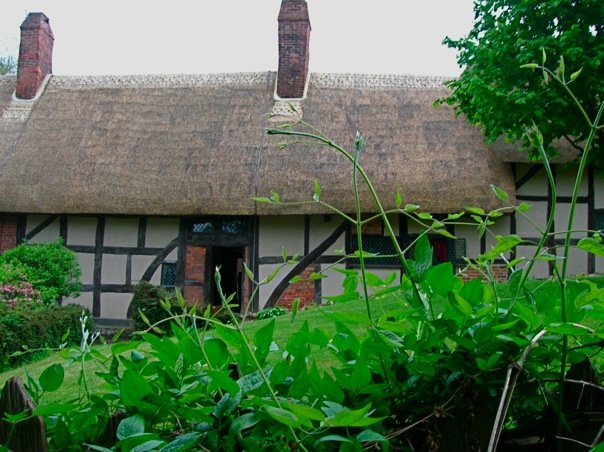
    Grew flowers as Anne Hathaway did
    Borrowed an 8o pound beaded dress for our “faux” queen for our own festival
    Learned the language of flowers in the old times
    Understood who could wear what colors in olden times and why
    Made a stained glass project.
    Most of all, we learned more Shakespeare plays.
     2010-childrens-festival-wed-040
    And
    The meaning of parsley, sage, rosemary and thyme, Scarboroh Fair
    The herbs parsley, sage, rosemary and thyme, recurring in the second line of each stanza, make up for a key motive in the song. Although meaningless to most people today, these herbs spoke to the imagination of medieval people as much as red roses do to us today. Without any connotation necessary, they symbolize virtues the singer wishes his true love and himself to have, in order to make it possible for her to come back again.

    Why go to a Conference? Should you go? I went to ISTE, take a look!! Just a bit of the experience here.

    186097-geo-globe-wall-marquee-rwd.jpg.rendition.intel.web.720.405A Conference?

    is usually defined as a large official meeting, usually lasting for a few days, at which people with the same work or interests come together to discuss their views and to share their knowledge.
    The space is used for exhibitions, workshops, demonstrations, playgrounds, and social events.
    in a conference room/centre/hall or building. These days, a conference sometimes has a virtual component and a social media component to link the people with interests in the topics.The ISTE conference also had a couple of sassy electronic aids that replaced usual booklets of information, but the traditional book and map were also available as well as human helpers with “Ask Me” sign.

    IMG_9761

    IMG_9772Coding

    June 28 through July 1
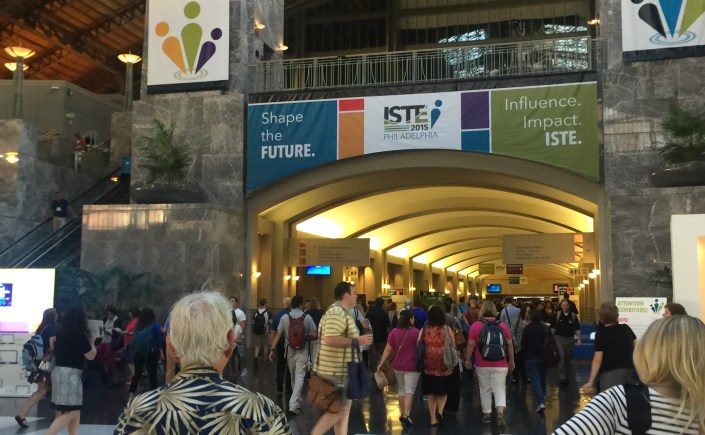
    ISTE 2015
    Pennsylvania Convention Center

    ISTE promised “Groundbreaking ideas to be shared, new learning technologies being unveiled and seeds are planted that will impact education for years to come. ”

    Who attended 2015 ISTE? Unofficial reports of those in physical attendance , 21,000.

    A most important part of this conference is the keynote. The keynotes bring a lot of the conference attendees together for important messaging. The keynotes are framed in ideational scaffolding that help to frame new ideas and share philosophy.

    Soledad O’Brian started us off.Even though you can find her keynote , and parts of it online, the excitement of being in the crowd, with the music, and the roar of the crowd,finding or making friends in the audience is a rush. She was electric!! She spoke to digital equity and social justice with outstanding examples to share. This is a snippet. It was a thoughtful delivery and sharing of ideas. http://www.educationdive.com/news/monday-at-iste-2015-googles-cardboard-what-works-in-11-and-fed-talks/401486/ Soledad O’Brien is an award-winning journalist, documentarian, news anchor, producer and television personality. In June 2013, she launched Starfish Media Group (SMG), a multiplatform media production and distribution company dedicated to uncovering and producing stories that delve into the often-divisive issues of race, class, wealth, poverty and opportunity through personal stories.

    Jack Gallagher,  his keynote, “Insight into Autism: A Father’s Perspective,” shared a moving portrayal of a parent struggling to understand a child who he comes to realize is truly amazing. Drawn from his personal experience and training as an educator, his story illustrates that sometimes when pushed to the limit, we learn new lessons and discover new ways of approaching complex situations. His inspiring story underscored how parents and educators, when working in unison, can build understanding, perspective and celebration. I cried.. not for him, but for students that have been in my life, in my class, in my heart. Teachers that I knew in the crowd afterwards, shared stories and ideas and shared tissues.

    Josh Stumpenhorst, the 2011-12 Illinois Teacher of the Year and an ISTE Emerging Leader, was electric in his keynote.A junior high history and English teacher, Stumpenhorst is an influential blogger whose innovative ideas have challenged the status quo and produced outstanding student outcomes. Stumpenhorst discusses his often unorthodox educational philosophies, such as his belief that homework and grades actually harm student learning and his emphasis on building relationships with students based on trust and respect rather than fear and punishment. He resonated with the crowd because he is one of us . A teacher. Yeah!!

    I am sure that to newbies, in a way , the conference was overwhelming, there was something for everyone, more than enough for the innovators, and visionaries, and a wash of playgrounds, an expo hall and meetings of birds-of-a-feather. So attendees got a voice even if they were not presenting at the conference. In a year when teachers have been cast as the “enemy” in many ways, we felt as if he was our cheerleader. Well leader and we loved him.

    THE EXPO HALL

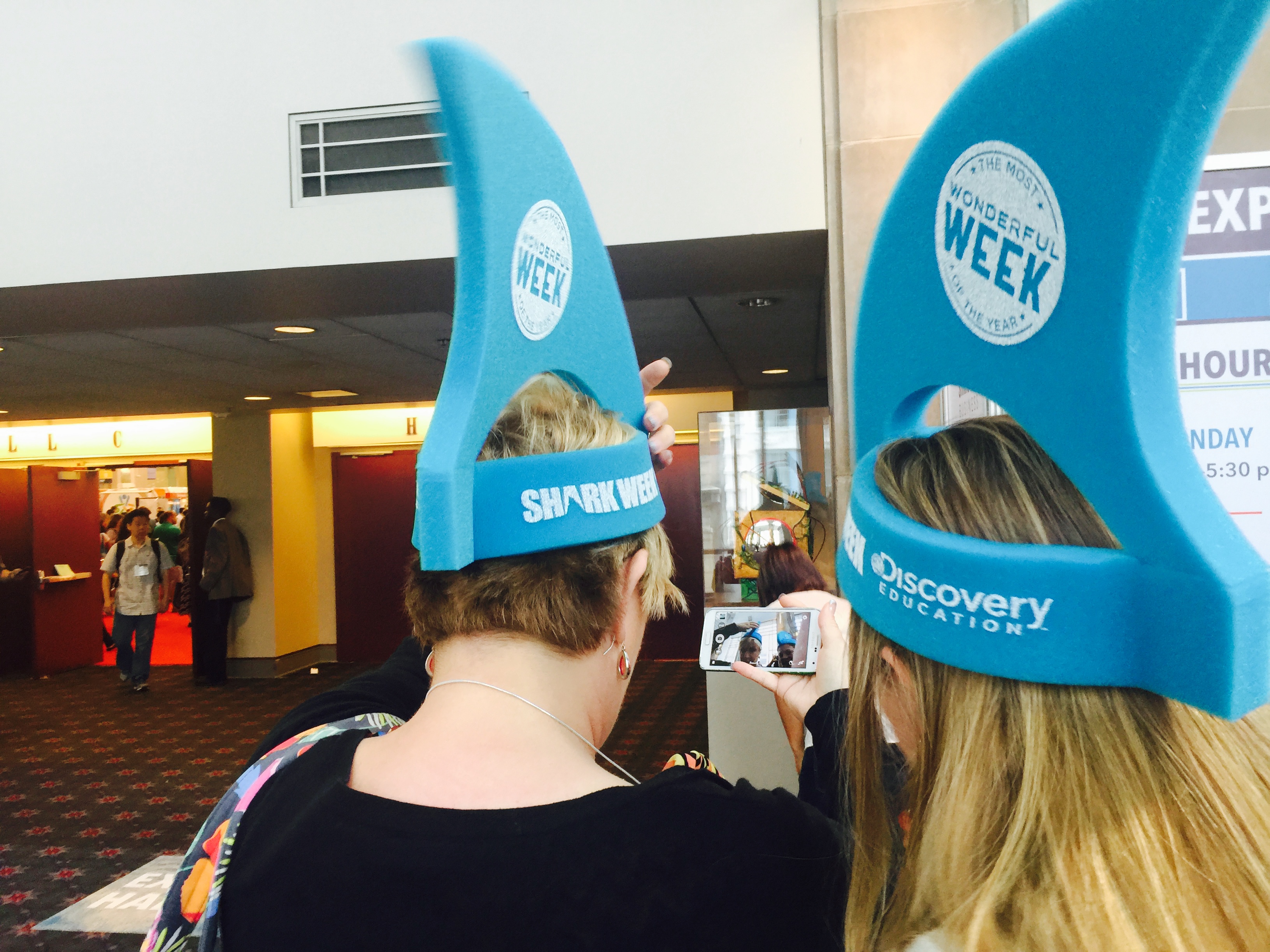
    I never found a shark hat. but there were some great surprises on the expo hall. Breakfast. Seriously. I could pay attention and not be distracted by the Reading Market. I found lots of technology that I had read about, and some that I have not experienced.

    I never had funding to do First Robotics. I am a member of CSTA so at the conference I did meet with some “experts” in this field, and work on the playground. I also found some affordable robotics.I have a personal network of IT friends , some from around the world , some from my state, and some who are leaders of national prominence. The conference had so much to offer that I did not play until it was almost over. Yes, I went to the Reading Market, to the Science Museum to a luncheon and to the Barnes Museum. I also found a free bookstore, and met informally with PLN leaders.

    I don’t know how the virtual experience can match actually being at the conference. so I suggest you save your money and your points, and look forward to Denver next year.

    IMG_0879IMG_9792

    The ISTE Conference is quite the Learning Experience!!

    186097-geo-globe-wall-marquee-rwd.jpg.rendition.intel.web.720.405IMG_0879

    The International Society for Technology in Education (ISTE®) is the premier nonprofit organization serving educators and education leaders committed to empowering connected learners in a connected world.ISTE serves more than 100,000 education stakeholders throughout the world.

    You can come as a student, a teacher, a community organization, an administrator, or a IT person.

    There are many ways to participate in the conference. The first time is like trying to catch a moving train if you don’t plan. Beginners, newbies, international participants and groups bringing knowledge. It is all good. Long ago when the Internet was planned for schools we hoped to Kickstart education through the use of technology. That is what ISTE does. There are bookstores, playgrounds, bloggers cafe, presentations, collaborations, you name it.

    What I most prize about the conference is the personal networking . Because I have been working in IT so long I recognize people as they recognize me, and oh the conversations we have.

    imagesIMG_9718IMG_0897

    Why I attend? Collaboration, Communication and to Learn Creative Ways to Use Technology in Education

    I would never miss an ISTE meeting. Fortunately I have attended every one that was available to me. The first time I went, I was all business , in high heels and a suit. I was so excited to meet and greet teachers from all over the US. I also met teachers from around the world. ISTE enabled me to do WSIS ( the world summit on the information society ) in both Switzerland and in Tunisia. I met the colleagues who invited me to speak , at an ISTE conference. The networking is powerful.

    A lot of what goes on, is invisible to participants, there are dinners, special groupings, strategic meetings and personal learning network gatherings. Gatherings at dining places, runs, and tours happen.

    We would be as many people in a hotel room as legal, because we never were in the room anyway and we ate lightly , some of us bringing peanut butter and crackers and soft drinks. One DC delegation drove to the New Orleans Conference. People think of creative ways to get to ISTE.

    IMG_0844IMG_9792IMG_0909

    Back in the day, I had only 4 computers in my class and that was an extraordinary amount as many teachers were learning to teach using a book that gave examples of the use of one computer in a classroom. I never fell for that example.I gave up my fancy car to buy my own computers as the schools were slow in adopting technology back then.

    NASA, National Geographic and other services such as NSTA had some free software. Oh, and Fablevision allowed me to pay for my software a little at a time. Fable vision had different approaches to education. http://www.fablevision.com/

    I was influenced by MECC . MECC developed hundreds of microcomputer educational programs,[1] many converted from the time-sharing original;[6] by 1979 some MECC programs for the Apple II could be downloaded from the timesharing system.[2][11] MECC distributed The Oregon Trail and others in its library to Minnesota schools for free, and charged others $10 to $20 for diskettes, each containing several programs.[6] By July 1981 it had 29 software packages available. Projector slides, student worksheets, and other resources for teachers accompanied the software.[15]

    Other teachers and I learned to program ( you call it coding) and we started to integrate the use of technology into the classroom. Arlington County invested in MECC and so I had copies of the soft to use in my classroom. It was exciting!!

    At the first ISTE conferences , I used to sit and get in the exhibit hall and punch all of the tickets to get free things .Later in my ISTE life, I did workshops for NASA, and the National Geographic Kidsnetwork and  Earthwatch sharing demonstrations. It was hard work but worth it.

    IMG_9506

    Learning is always a big part of the conference , whether it be by workshop, pre-workshop or sessions. Now there are playgrounds, IGNITE sessions, and posters.Sometimes you get to preview products with conference vendors.

    We think about social justice and digital equity. A powerful keynote brought us to the vision.In the Soledad O’Brian keynote, this year, she talked about digital equity and social justice but more than that, she demonstrated with clips, the power of technology in many wonderful ways. Here is the keynote. http://www.edtechmagazine.com/k12/article/2015/06/iste-2015-technology-key-expanding-students-dreams-says-soledad-o-brien

    Technology is a tool , she said, a means to an end and not – an end itself.

    She shared several clips and examples of excellence in the use of technology but we were all captivated by the use of Google Cardboard, https://www.google.com/get/cardboard/get-cardboard/ You can make your own if you need to ( the viewer).

    The keynote this morning was ” Insight into Autism: A Father’s Perspective” by Jack Gallagher. It was a moving declaration of love to his son Liam , and a lesson to most of us about believing in a student,  a portrayal of the difficulties of a parent trying to understand and help a child, his son Liam.

    I cried. I hate it when the speaker can go right to my heart and make me blink tears before I know they are coming. That was what he did. It was an amazing keynote. I met some teachers I know in the audience and we hugged and cried again. Teaching is a passion , learning and helping students is what we do.

    Bonnie Bracey Sutton

    Virtual Field Trips and Global Collaborations in Education , Always Awesome!!

    orienteering

    Last night, I was glancing at the news. The news was that education is finally doing virtual field trips. Say W H A T?

    I thought , where has that reporter been and why did that reporter miss the many ways in the history of the use of technology that educators have used the technology in collaborative ways?There are new ESRI projects that are GIS centered. I am loving this new iteration of technology use. See here. http://www.esri.com/connected/explore-materials/#connect-ed-top

    GIS? http://www.esri.com/what-is-gis/howgisworks

    The Power of Mapping
    A geographic information system (GIS) lets us visualize, question, analyze, and interpret data to understand relationships, patterns, and trends. But I digress..remind me to tell you about story mapping.

    HISTORY

    I had a Lumaphone. I , as a teacher paid the phone bill and we connected in black and white…around the world. It was similar to the connection shown on the virtual field trip showcased on television, and it was project focused. It was cool beans at the time. We were pioneers in the use of it. People were impressed. We are talking 1993.
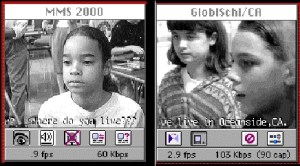
    CUcollaboration

    Think Lumaphone, think CUSEEME. When we first initiated these projects, we got a lot of push back. The Washington Post humiliated those of us who tried CUSEEME.

    CU-SeeMe was originally written by Tim Dorcey of the Information Technology department at Cornell University.[1] It was first developed for the Macintosh in 1992 and later for the Windows platform in 1994. Originally it was video-only with audio added in 1994 for the Macintosh and 1995 for Windows. CU-SeeMe’s audio came from Maven, an audio-only client developed at the University of Illinois at Urbana-Champaign.

    CU-SeeMe was introduced to the public on April 26, 1993 as part of an NSF funded education project called the Global Schoolhouse.

    GLOBAL SCHOOLNET

    “It is Not About the Technology” tells about the Global SchoolNet’s Global SchoolHouse Project using the first multi-point Internet-based video conferencing to connect schools in the United States and with schools worldwide. By sending video and audio signals over the Internet using CU-SeeMe software, students were able to see and hear each other while they worked on collaborative assignments. As part of the program they interacted with special guests, such as Vice President Al Gore, the anthropologist Jane Goodall, Senator Dianne Feinstein and surgeon general C. Everett Koop.

    The Global Schoolhouse project was centered around children, the faces of which you’ll see throughout this book. Larry Duffy of the Jet Propulsion Laboratory – was a very early user of CU-SeeMe. One day he popped into the CU-SeeMe reflector the GSH school-children were using. The kids explained what GSH was, how Larry could optimize his setup, and in general charmed him. Larry, the rocket scientist taught by high-school kids, is turn became a CU-SeeMe booster, setting up a reflector dedicated for the GSH, and having many interactions with the kids, and some notables as well. Steven Adams, also of JPL, became a “scientist-on-tap” for the GSH kids four hours a week.

    Global Schoolnet has morphed into several other projects.IMG_0091

    Global Schoolnet took me to Russia on behalf of the Eurasia Foundation. Talk about open doors to discovery!!Global SchoolNet’s mission is to support 21st century, brain-friendly learning, and improve academic performance through content-driven collaboration.  it engages educators and students in brain-friendly e-learning projects worldwide to develop science, math, literacy and communication skills, foster teamwork, civic responsibility and collaboration, encourage workforce preparedness and create multi-cultural understanding.1836866_10152188341376327_1972478766_o-2

    1958412_754223047924177_1538133515_n

    http://www.sattlers.org/mickey/CU-SeeMe/internetTVwithCUSeeMe/chapter08/culture.html

    In 1994 WXYC used CU-SeeMe to simulcast its signal to the net and so became the world’s first internetradio.

    On Thanksgiving morning in 1995, World News Now was the first television program to be broadcast live on the Internet, using a CU-SeeMe interface. Victor Dorff, a producer of WNN at the time, arranged to have the show simulcast on the Internet daily for a six-month trial period. CU-SeeMe was also used in a taped interview segment in which anchor Kevin Newman and Global Schoolhouse director and founder Dr. Yvonne Marie Andres discussed the future of computers in communication.

    There were other projects:

    Integrated Curriculum Projects
    ” Under the Microscope “television productions, Challenger Center .

    NATIONAL GEOGRAPHIC KIDSNETWORK

    I believe the Kidsnetwork projects were the most awesome as they were ecology and environmentally based.
    “Solar Energy” Kidsnetwork, “What is in Our Water “Kidsnetwork, ” Hello” Kidsnetwork. ” What are we eating?” Kidsnetwork.” Acid Rain.” Kidsnetwork. “Trash”, 1988-through 1995.. Student work featured in various magazines, such as Scientific American, and Apple Magazine.
    “Moonbase America”, ” Touching the Future”, ” Marsville”. “Mars City Alpha ” These were all national programs. We presented our models to the IEEE group and shared experiences with Moonbase America on a national teleconference.

    As Young Astronaut Chapter Leader our teams had commendation from President Bush in 1992. Some of us participated in Challenger Center Faculty meetings in Arizona, Hawaii, Seattle. Challenger Learning Centers gave students the chance to become astronauts and engineers and solve real-world problems as they shared the thrill of discovery on missions through the Solar System.

    Using space simulation and role-playing strategies, students bring their classroom studies to life and cultivate the skills needed for future success. Learning Centers reached into communities around the globe, engaging more than 400,000 middle school-age students and 40,000 educators each year.

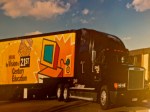
    CyberED , the truck, taking technology to the streets.

    Enterprise and Empowerment Zones.. We taught the community and its families.

    WHITE HOUSE TECHNOLOGY INITIATIVE

    WHITE HOUSE TECHNOLOGY INITIATIVE

    The spread of technology and communication projects was greatly assisted by Vice President Gore, who saw an opportunity for technology to be disseminated into schools. The picture above is from the tour of  a CyberEd Bus that toured the US sharing technology initiatives in empowerment and zones. We had a presentation station that linked directly with a NASA center and we and the audience communicated the use of technology at NASA.

    NASA

    Many of us , digital pioneers worked hard and long to put collaborative technology to use. I think the first collaborative field trips I did were with NASA. I did not know that we were using Supercomputing but we did to speak to astronauts and to other centers. It was an absolute delight to be involved.Once, my class and I visited the White House ( as Young Astronauts) and we spoke to an astronaut in space  . President George Bush and 8 astronauts were our collaborators. The children were understanding about the little lapse in time..we were experienced collaborators. The kids were excited about the hats the astronauts gave them and getting their autographs.

    NASA also allowed us to collaborate with Rovers. NASA still have rover collaborations and contests. The most recent might be here. http://www.nasa.gov/beta/centers/marshall/news/news/releases/2015/15-056.html

    I don’t have a picture of the students that I taught working with Astronauts and with Russian Cosmonauts but it happened. We virtually communicated with rovers in Canada. The students loved their involvement , learning and the collaboration. We had also done Marsvile. What a hoot!!

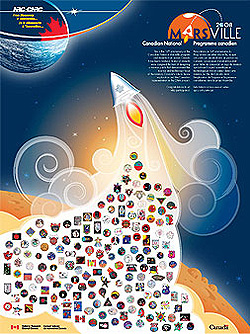
    The Canadian National Marsville Program (CNM) is a unique program derived from the Challenger Learning Center’s Marsville program. The goal of CNM is to simulate habitation of the “Red Planet.” Students prepare for their adventure by studying space exploration and the planet Mars and then apply their knowledge as they create mission patches, design and build models of human life-support systems, construct Martian habitats and share their findings with other students from across Canada.

    Each year the students’ mission patches are mounted on a special poster that is available to all participants.

    Participating students work in teams. The primary task of each team is to design and build a model of one of nine different life-support systems. Life-support systems include; air, communications, energy, food, health and recreation, temperature, transportation, waste and water. Life-support systems are chosen by the teacher and students, and can be based on curriculum requirements.

    Marsville Activities Still Going Strong in Canada

    intro1poster

    Marsville Rover
    Over a three month period, starting on January 28 and running to late April, student teams work cooperatively to clarify the requirements for their life-support systems, brainstorm solutions and construct working models. Students are able to share their results and challenge teams across Canada using Team Blogs.

    Early education pioneers did Rover challenges with classes, some International, and some collaborations within the Challenger Centers. I was a Challenger Fellow and we explored the new technologies in the centers and at the schools.National Challenger STEM Innovation Center
    Challenger Center pioneered STEM education more than 27 years ago and continue to be a leader in STEM today.

    In writing this article I simply was responding to the concerns that other educators had about the time line of virtual field trips and global collaborations. I have not included all of the groups that I know.  jzanetis@cilc.org reminded me of the 27 year history of her group.

    Earth watch also had virtual and real field trips. Participants shared from the field to other schools. I hope that others will add to this list. Thank you.
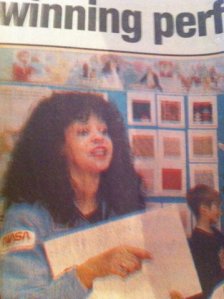
    The girls in my classroom worked as hard as the boys did and we learned together,

    Teacher training allows dissemination of ideas to girls and boys.

    How Long Does it Take to SuperCharge Education?

    Superhero kid. Girl power concept

    I was lucky enough to work with businessmen, inventors and politicians on framing the use of the Internet in our country. It became very clear to me that businesses work differently than we do in education. We framed a document called Kickstart with ideas to frame educational change in America and in the world. I guess in a business, if you frame a perspective you can make it come true. Some ideas are now being represented as new. Well ,STEM started out as SMET, and programming has a new name. Lots of old ideas, same reason for wanting to make change

    Coding

    It amused me to find out that businessmen thought if you defined the problem, as in “The Gathering Storm” that we in education would fix the problem. I offer to you the newest report,
    http://www3.weforum.org/docs/WEFUSA_NewVisionforEducation_Report2015.pdf

    So many great ideas here, Who will read the report? Who will make changes based on its information.

    DO PEOPLE READ THE REPORTS?

    I think about these reports and the change they thought would happen. http://sites.nationalacademies.org/pga/PGA_084632. There are educational communities still resisting change. It is not about the money or being able to get professional development for the initiative.

    Some say that testing has sucked the wind out of innovation.

    orienteering

    A Retrospective on Twenty Years of Education Technology Policy

    Twenty years ago,A Nation at Risk(1983) recommended “computer science” as one of the
    five “new basics” to be included in high school graduation requirements. Since then, American
    schools have made dramatic improvements in their technological capacity, driven largely by public
    and private investments over the past ten years of more than $40 billion dollars in infrastructure,
    professional development and technical support (Dickard, 2003). K-12 educators have also made
    great strides in their readiness and ability to use technology to redefine the boundaries of the school
    building and the school day, to improve the quality and accessibility of the administrative data that
    informs their work, and most importantly, to foster the learning of core content and the development
    of students’ skills as communicators, researchers,and critical consumers of an ever-expanding world
    of information. However, policymakers, practitioners and the public all recognize that much remains
    to be done in each of these areas. https://www2.ed.gov/rschstat/eval/tech/20years.pdf

    The thing we called programming is now called coding, we can talk about computational thinking and cyber-education.

    I was the K-12 teacher on the NIIAC. We started the conversations and still we wait for the changes…
    The intent of the NII was to integrate hardware, software, and skills to make it easy and affordable to connect people, through the use of communication and information technology, with each other and with a vast array of services and information resources. Issues that the Council was to address included:

    (1) the appropriate roles of the private and public sectors in developing the National Information Infrastructure;
    (2) a vision for the evolution of the National Information Infrastructure and its public and commercial applications;
    (3) the impact of current and proposed regulatory regimes on the evolution of the National Information Infrastructure;
    (4) national strategies for maximizing the benefits of the National Information Infrastructure, as measured by job creation, economic growth, increased proguctivity, and enhanced quality of life;
    (5) national strategies for developing and demonstrating applications in areas such as electronic commerce, agile manufacturing, life-long learning, health care, government, services, and civic networking;
    (6) national security, emergency preparedness, system security, and network protection implications;
    (7) national strategies for maximizing interconnection and interoperability of communications networks;
    (8) international issues associated with the National Information Infrastructure;
    (9) universal access; and
    (10) privacy, security, and copyright issues.

    We make fun sometimes of people who have a different perspective on what education is and how it should work.

    IMG_0078

    In reality we in education are in many separate groups as well, with a vision that is different depending on our focus. We are K-12, we are Higher Ed, we are Technology Ed, and we are School Boards and Administratively focuses.

    I am not mad with Bill Gates and others who have new ideas.

    Too Much Tech? Really ? Got Tech??? Sort Of…

    Girls learn ... we can do technology, science and math with good teachers.

    There was a New York Times article that spoke of too much tech in children’s life.

    It requires a careful reading. There are some very good points in the article but what is too much tech?
    What is not spoken of is too little training by teachers who use what technology is available for them to use in the schools.What is not shared is that the IT person sometimes becomes just another administrator instead of a helping hand. Another layer of administration in some schools.

    Many people have never achieve access, gotten adequate technology, and /or learned to integrate technology, never mind flipping the classroom.

    COMPUTATIONAL THINKING

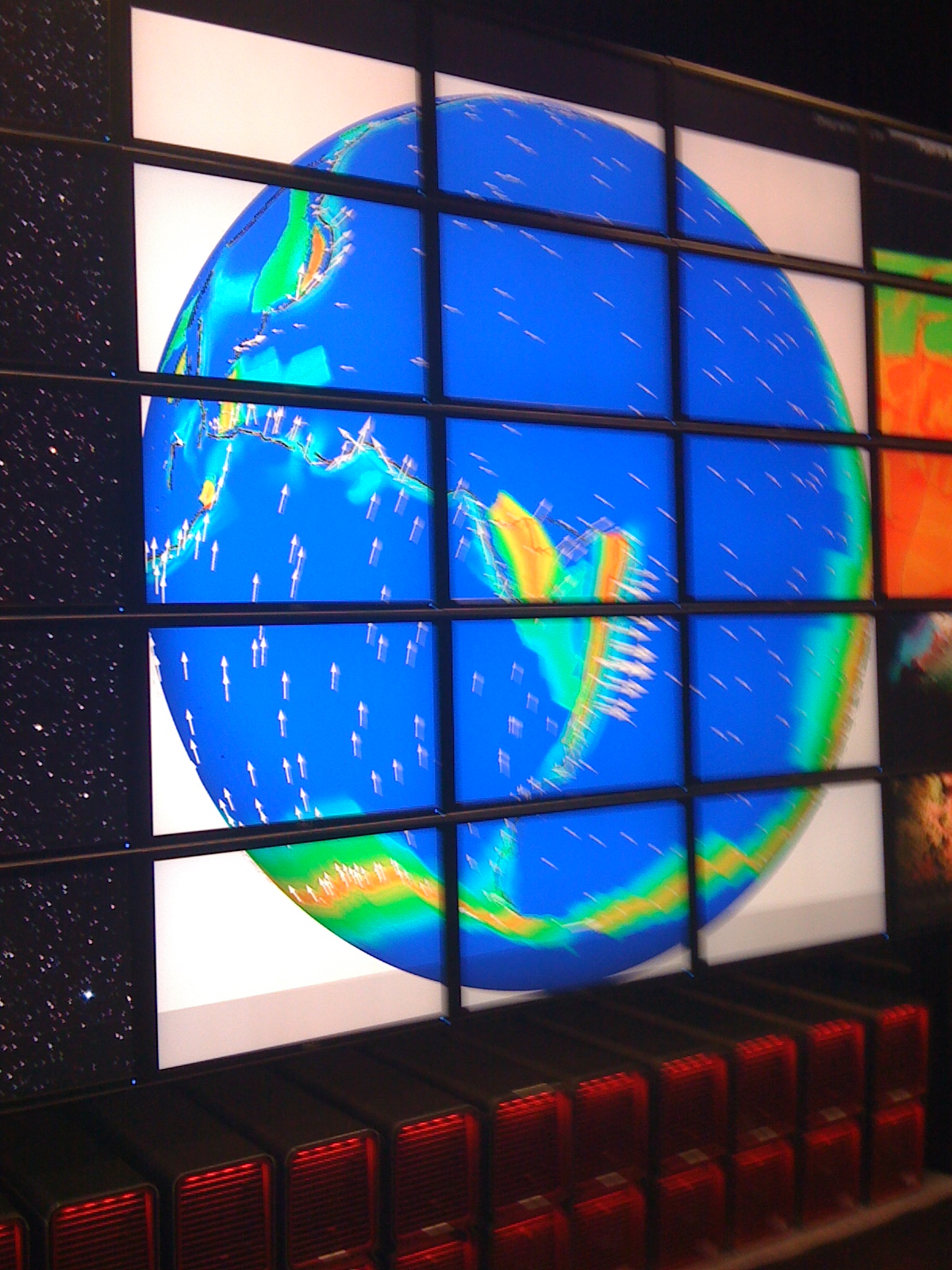
    This is from a supercomputing model at TACC

    If you think you can compete with visual media. think again

    GOT THIS TECH?

    008

    Many schools do not teach geography. The resources of National Geography are vast and that means content. It’s free.There are alliances, there are projects like BioBlitz, and interactive mapping.

    OK Glass!!

    OK Glass!!

    MapMaker Interactive

    http://mapmaker.education.nationalgeographic.com/?ar_a=1&b=1&ls=000000000000

    An interactive mapping experience with rich layers of information on the physical Earth, oceans, culture, and more.

    http://education.nationalgeographic.com/education/?ar_a=1

    GOT SCIENCE ON A SPHERE?

    https://upload.wikimedia.org/wikipedia/commons/c/cc/Esrl4_072009.jpg

    Have You Got This Tech? Cyberlearning?

    The NSF 2015 Teaching and Learning Video Showcase: Improving Science, Math, Engineering Computer Science, and Technology K-12 showcases cutting-edge NSF-funded work to improve teaching and learning, and will allow colleagues affiliated with MSPnet, CADRE, CIRCL, CAISE, STELAR, CS10Kcommunity, and ARC to view, discuss, and comment on each others’ work.

    It will also allow each project to disseminate their work to the public at large, helping NSF achieve its goal of broad dissemination of innovative work. All videos and discussions will be archived for future access.

    The 2015 Teacher and Learning Video Showcase is available from the
    http://resourcecenters2015.videohall.com

    112 (3-minute) videos from innovative project work conducted by researchers in multiple NSF programs.
    http://resourcecenters2015.videohall.com
    Over 260 presenters and co-presenters have submitted 112 videos

    Do You Know Supercomputing? Most teachers don’t..Some have resources that have been developed for their use in Cyberlearning and in various programs from the National Center for Supercomputing Applications.

    GOT SUPERCOMPUTING? Visualization and Modeling? Big Data?

    IMG_0078

    Some of us were lucky enough to be a part of the Christa McAuliffe Institute, i.e. there were two groups of us who worked together through the NEA. We seized the ideas of minority technology, and attempted to share what we knew about technology teacher to teacher and region to region. We were minority, male and mostly female and we did workshops and initiatives all over the USA.

    The five first chosen were called Christa McAuliffe Educators and we were trained, given professional development with the latest of tools and the best of professors over many months.( Chris Dede and Seymour Papert. and there were others).Yvonne Andres shared Fred Mail, and we also learned from NASA and the National Center for Supercomputing. It was radical at the time.
    We did some special programs with the NSF and learned about their outreach as well.

    Being involved in transformational education through NASA

    We never mentioned the word Supercomputing, we just did it.

    At the time there were many NASA programs . We had people who demonstrated astronomy from the Hubble Space Telescope and the Young Astronaut Program.

    http://www.nasa.gov/mission_pages/hubble/main/index.html

    Challenger Center for Space Science Education is a nonprofit educational organization with its headquarters in Washington, DC. It was founded in 1986 by the families of the astronauts who died in the Space Shuttle Challenger disaster on January 28, 1986.

    The organization offers dynamic, hands-on exploration and discovery opportunities to students around the world. These programs equip students with the knowledge, confidence, and skills that will help better our national social and economic well-being.http://www.challenger.org

    There was also Space Camp . If you look at the information in the link even back then there was awesome tech.

    Space Camp was the brainchild of rocket scientist, Dr. Wernher von Braun. Von Braun led propulsion activities that launched the Apollo-era U.S. manned space program and envisioned an aggressive schedule for America’s space-bound pioneers. Von Braun, then director of the NASA Marshall Space Flight Center, reasoned there should be an experience for young people who were excited about space. Under the guidance of Edward O. Buckbee, the first director of the U.S. Space & Rocket Center, Space Camp was born.

    Camps are available for fourth grade through high school-age students. Additional programs are offered for trainees who are blind or visually impaired, deaf or hard of hearing and those who have other special needs. Space Camp programs are also available for adults, educators, corporate groups and families. Family programs may include children as young as seven years old. I can’t really list all of the programs then or now. Space Centers helped us to find all of the projects that were available. Some teachers did Moonbase America, and others did project based NASA projects. We learned about raising food in space, basil, tomatoes, and thinking about ways to raise tilapia.

    Being a Science Teacher with Outside Resources.. Try these NASA resources !!
    We created an institute at Stanford where we invited teachers who applied to share their technology. We also presented our special projects. It was a sharing of the best of the best. We created more ways in which to do STEM which was called at the time SMET.

    That is one level of technology. Have you considered that there was a synergy of space and Star Wars? The movie propelled a lot to be interested in Science Fiction. The force of interest drove many students to robotics.

    Many Children Have Parents to Share New Ways of Learning with Them

    This is from Family Days at AAAS.

    George Lucas also pioneered Edutopia.Technology Integration examples were shared to help us all
    explore new tools and strategies for empowering students to fully participate in a connected, techology-rich society. But this is the problem. At the time we talked of the digital divide. That was before a lot of people had access, tools, training, and/or permission to use technology in schools.

    There was not BYOT Bring your own technology , and even with the tools we had there was a content divide. I know that in rural, distant , urban and some tribal areas we have a bigger divide.

    Some people are not at the level that we think. There is a lot of tech, but it is not in all schools.

    A Wonderful Day on the Chesapeake Bay -STEM Learning for Teachers

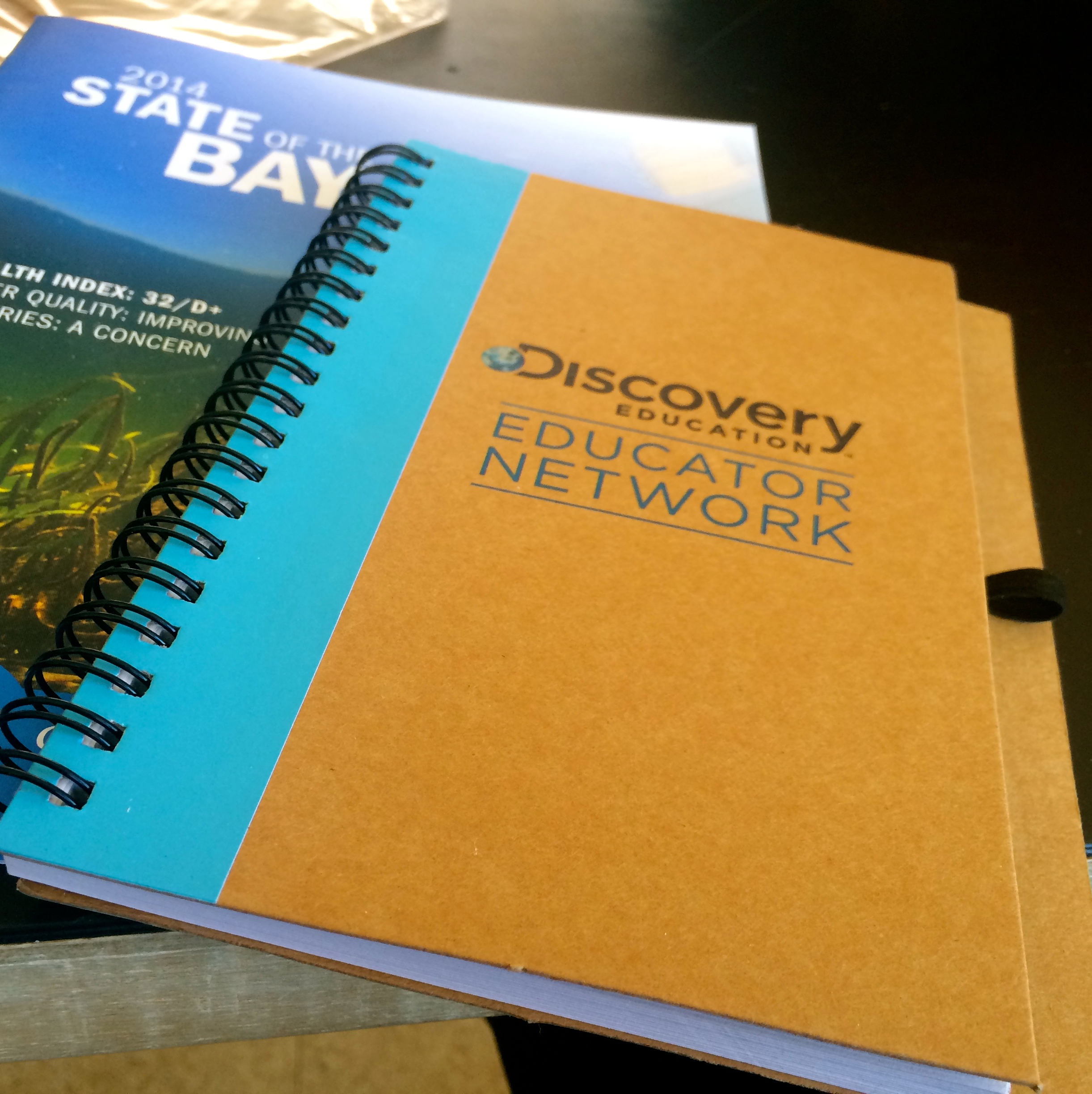
    On May 2, 2015 a group of teachers participated in a Discovery Educational Network workshop. Teachers learned onsite references to share with their classes from Discovery, and participated in the study of the use of the links.

    IMG_6835

    We learned the state of the Bay 2014. We were given resources for our classes. But the learning of the state of the bay helped us to learn why we needed to help children learn about the Chesapeake Bay.

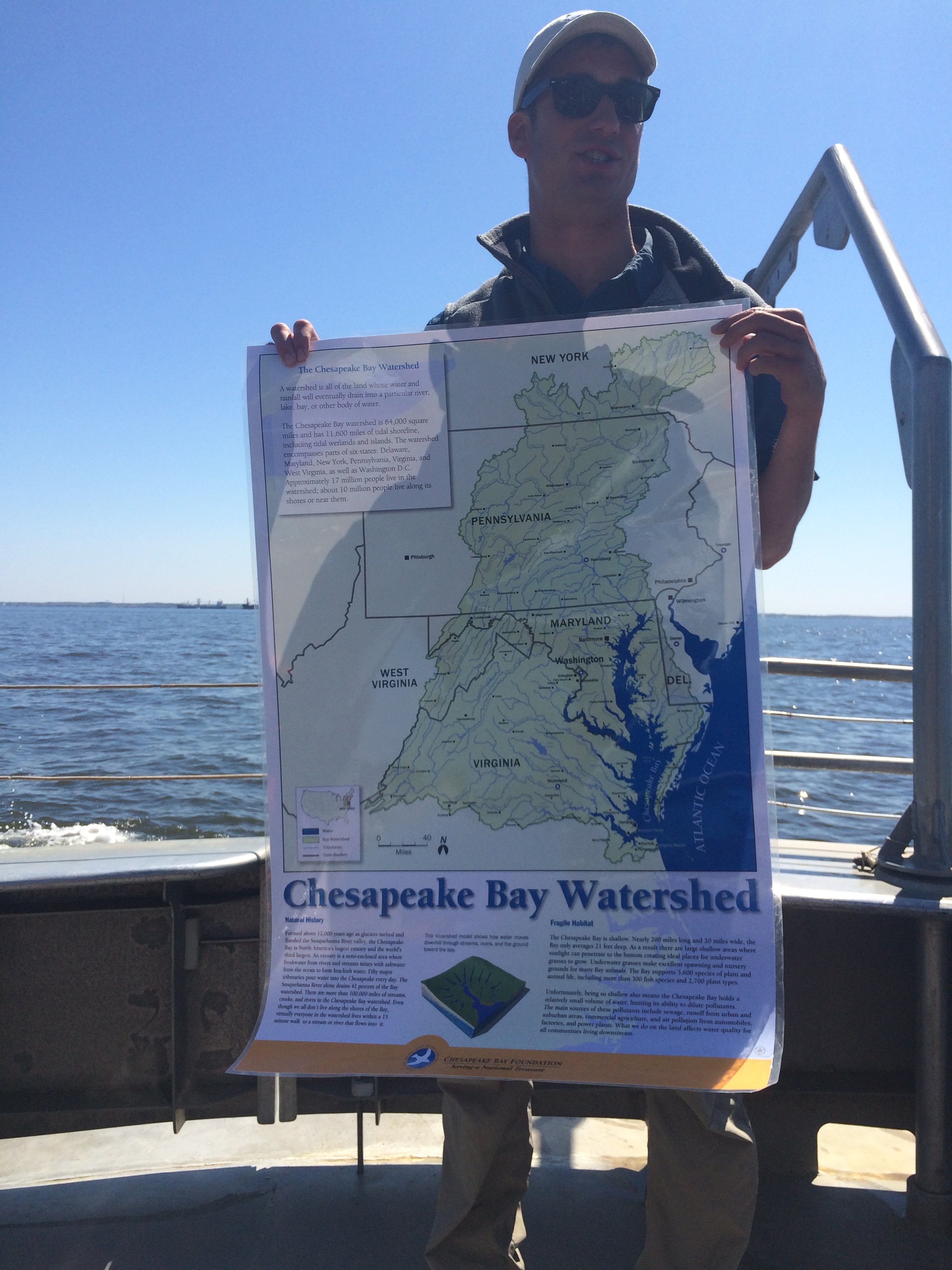
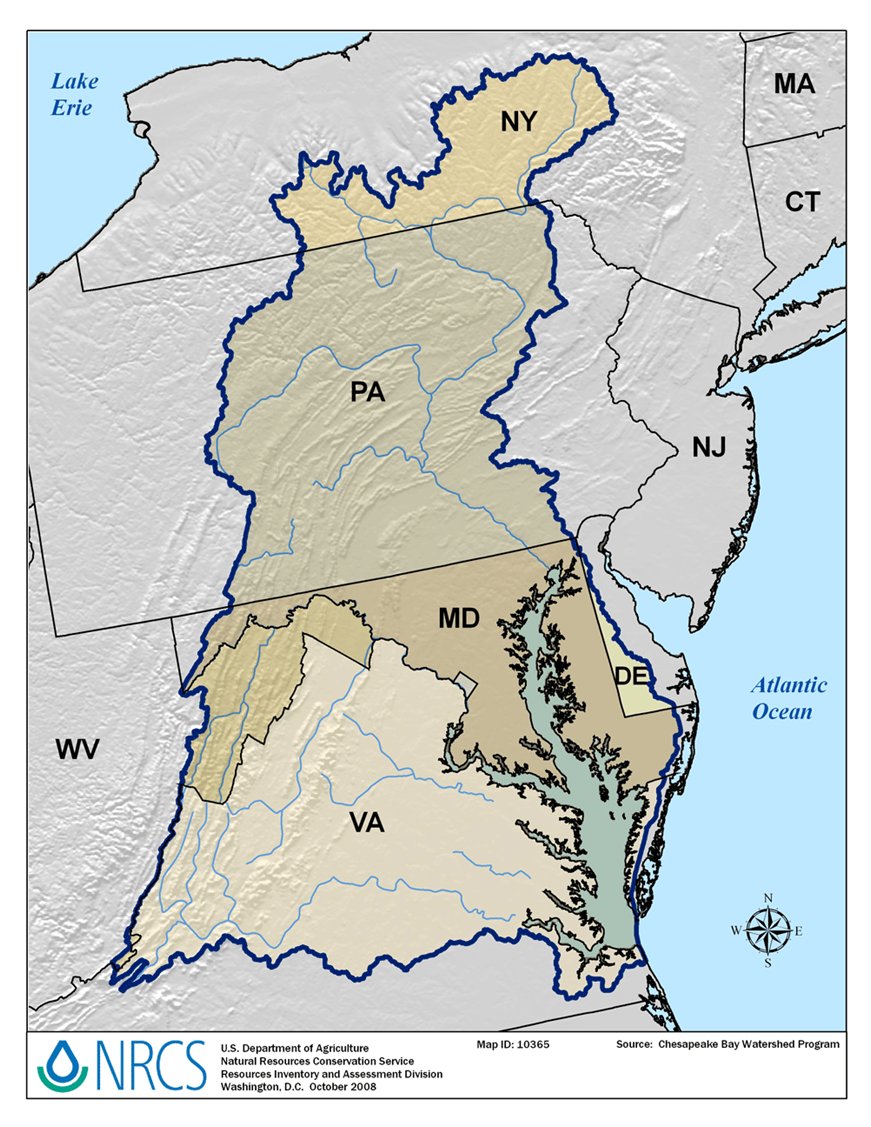
    The Chesapeake Bay (/ˈɛsəpk/ CHESS-ə-peek) is an estuary lying inland from the Atlantic Ocean, and surrounded by the North American mainland to the West, and the Delmarva Peninsula to the East. It is the largest such body in the US.[2] The northern bay is within Maryland, the southern portion within Virginia, and is a very important feature for the ecology and economy of those two states, as well as others. More than 150 major rivers and streams flow into the bay’s 64,299-square-mile (166,534 km2) drainage basin, which covers parts of six states (New York, Pennsylvania, Delaware, Maryland, Virginia and West Virginia) plus all of the District of Columbia.[2][3]

    The bay is approximately 200 miles (320 km) long from its northern headwaters in the Susquehanna River to its outlet in the Atlantic Ocean. It is 2.8 miles (4.5 km) wide at its narrowest (between Kent County’s Plum Point near Newtown and the Harford County shore near Romney Creek) and 30 miles (48 km) at its widest (just south of the mouth of the Potomac River). Total shoreline including tributaries is 11,684 miles (18,804 km), circumnavigating a surface area of 4,479 square miles (11,601 km2). Average depth is 21 feet (6.4 m), reaching a maximum of 174 feet (53 m).[4] The bay is spanned twice, in Maryland by the Chesapeake Bay Bridge from Sandy Point (near Annapolis) to Kent Island and in Virginia by the Chesapeake Bay Bridge-Tunnel connecting Virginia Beach to Cape Charles. Known for both its beauty and bounty, the bay is becoming “emptier”, with fewer crabs, oysters and watermen in recent years.[5] Recent restoration efforts begun in the 1990s have been ongoing and show potential for growth of the native oyster population.

    SOURCE http://en.wikipedia.org/wiki/Chesapeake_Bay

    The Chesapeake Bay Foundation’s 2014 State of the Bay report presents a mix of good and bad news. The Bay is improving. Slowly. But it is improving.

    The great news: Water quality indicator scores have improved significantly. What we can control—pollution entering our waterways—is moving in the right direction.

    The worrisome news: Blue crabs and striped bass are not doing well. These metrics indicate a system still dangerously out of balance.

    We continue to have polluted water, risks to human health, and lost jobs—at huge societal costs.

    The future is just around the corner; 2017—the year when 60 percent of programs to achieve the Chesapeake Clean Water Blueprint pollution reduction targets are to be in place—is in our sights.stelprdb1046486

    IMG_6613

    IMG_6966

    Graph showing improvements in water quality since 1983.

    Educate

    Students aboard the skipjack Stanley Norman. Photo by Loren Appel
    Students aboard CBF’s skipjack Stanley Norman. Photo by Loren Appel/CBF Staff.

    CBF Education - Learn OutsideFor 40 years, CBF’s award-winning environmental education program has been one of the cornerstones of our effort to reverse the Bay’s decline.
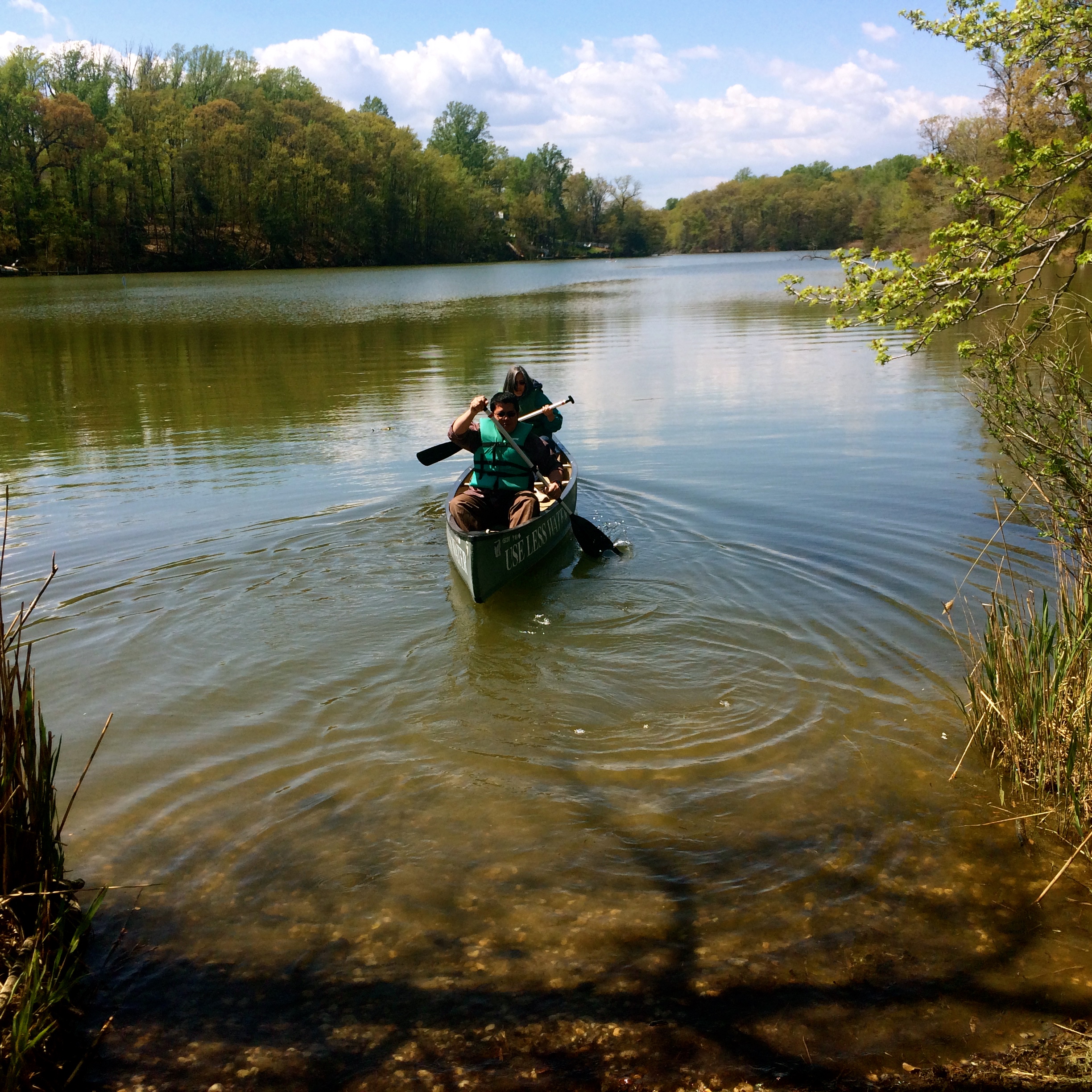
    Teachers needed to experience the Bay so that they could be environmental stewards and be able to share their knowledge.IMG_6985

    Teachers learned how to use Discovery Networks resources and the Chesapeake Bay Foundation experiences for students. We planned out lessons, we talked about resources and viewed ways of working and we shared experiences.

    The captain of the skipjack escorted us to the dock for our field lessons.

    IMG_6876

    Opportunities included exploration of local wetlands by canoe or a day aboard a historic, 100-year-old skipjack, our traditional watermen workboats, or modern research vessels. In the heart of the bay.

    stelprdb1046486IMG_6854

    IMG_6695

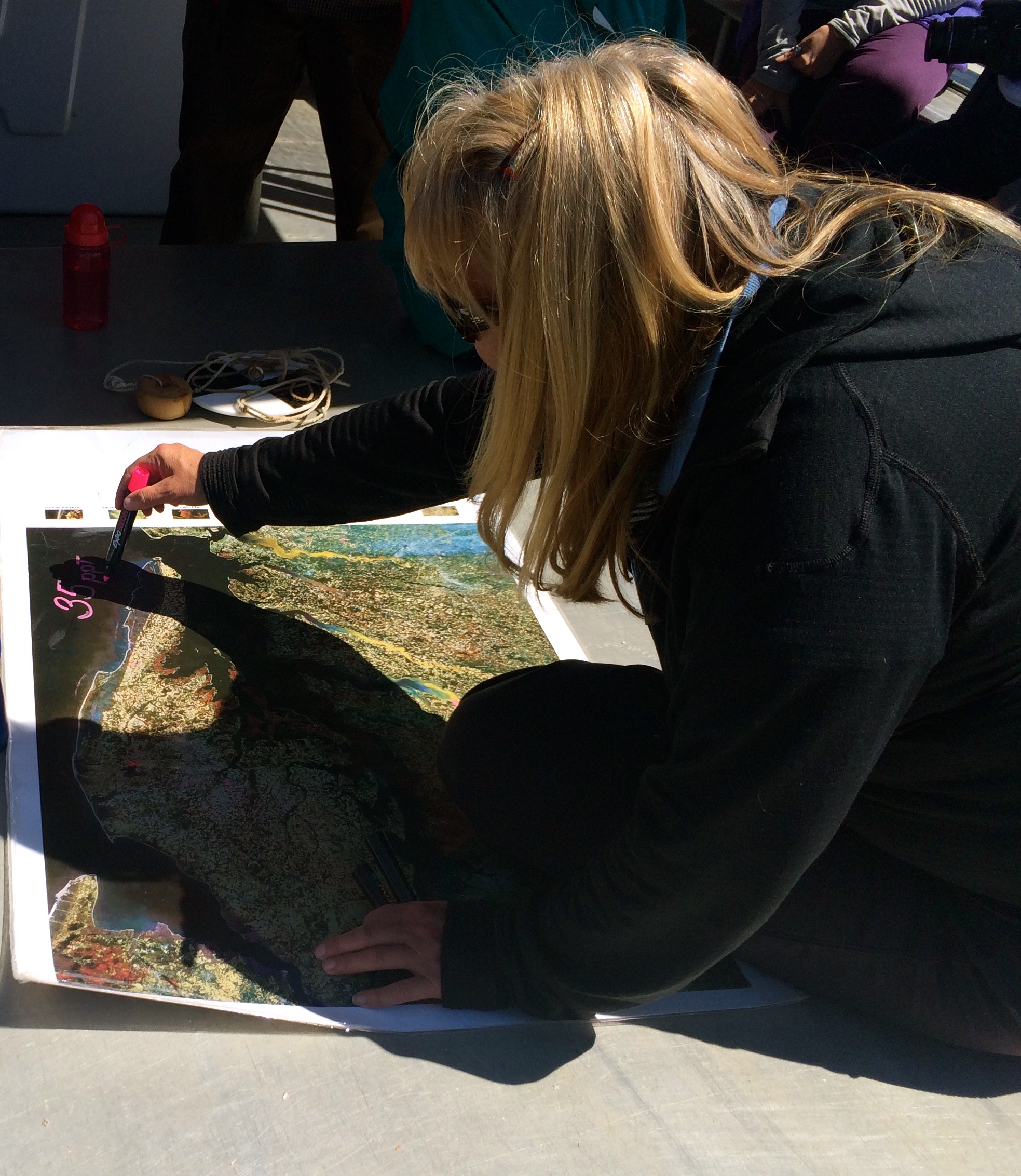
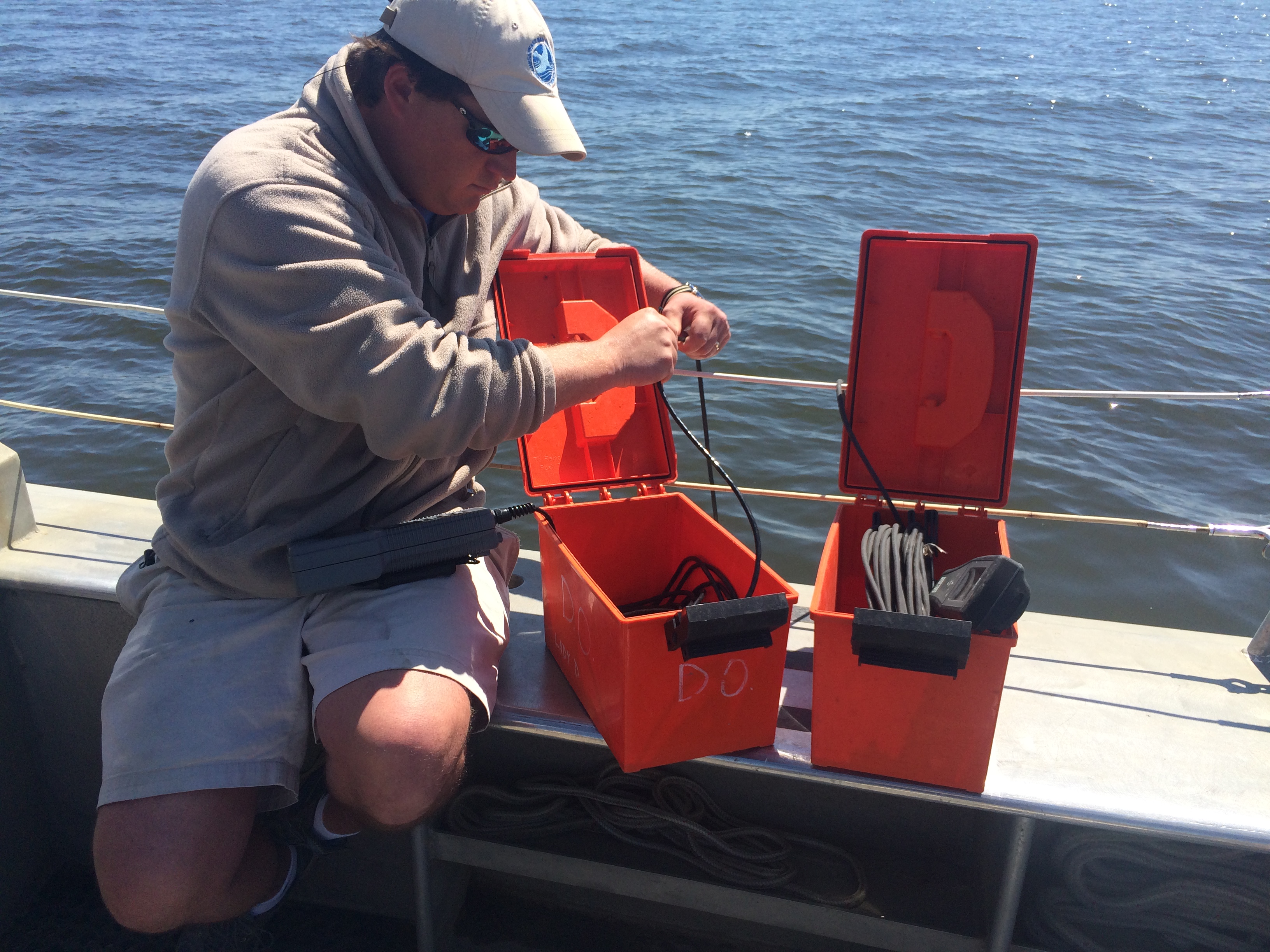
    We surveyed maps of the Chesapeake Bay, and then we used Secchi disks to check the clarity of the water, we tested the salinity of the water and dredged for oysters.

    As we traveled the bay, we learned so much.

    IMG_6873

    IMG_6867

    Students at a CBF field experienceField Experiences—We take students out on the Bay and its tributaries for hands-on investigation. (See a field experience in action.)

    Teachers learn about the Bay on a Chesapeake Classrooms outing.Teacher Professional Development—”Chesapeake Classrooms” focuses on methods to incorporate environmental education into the core subject areas of reading, math, science, and social studies.

    School principals planting grassesPrincipals Environmental Leadership Program —Activities, classroom curricula, and advanced water quality monitoring materials.

    Dumping oysters overboardStudent Leadership—Offering students opportunities to expand their knowledge of Bay issues, improve their planning skills, focus on team building, and learn how to lead others to take action to improve water quality in their local communities.

    Resources—Activities, classroom curricula, and advanced water quality monitoring materials.

    Meaningful Watershed Experiences

    All programs are designed to support state standards of education and are based from the official definition for a “meaningful watershed education experience” (PDF, 0.9 MB) as defined by the Chesapeake Bay Program. Programs are supported and created in collaboration with the National Oceanic and Atmospheric Association and the National Geographic Society.

    CBF’s environmental education opportunities link the natural environment and human culture of the Chesapeake. They enable students and teachers to conduct their own research through biological sampling, chemical analysis, and physical measurements. In addition to using critical thinking skills to evaluate the health of the ecological system, participants also gain a unique perspective in the relationship between water quality, fisheries, and economics. Our courses combine many academic disciplines, such as earth science, biology, history, art, English/writing, math, chemistry, civics, economics, government, and responsible citizenship. (See what students and teachers have to say.)

    Innovative teaching methods and a knowledgeable, enthusiastic staff have put CBF at the vanguard of the environmental education movement. The result is an exceptionally informed and inspired constituency that values the Bay and its watershed as a living, connected system. Read what people are saying out our education programs.