Education in America, It’s Complicated..

child Head

Today , I start to think about back home. I am in touch with family and friends, but I have made friends here and I feel that networking ideas have been started.

child
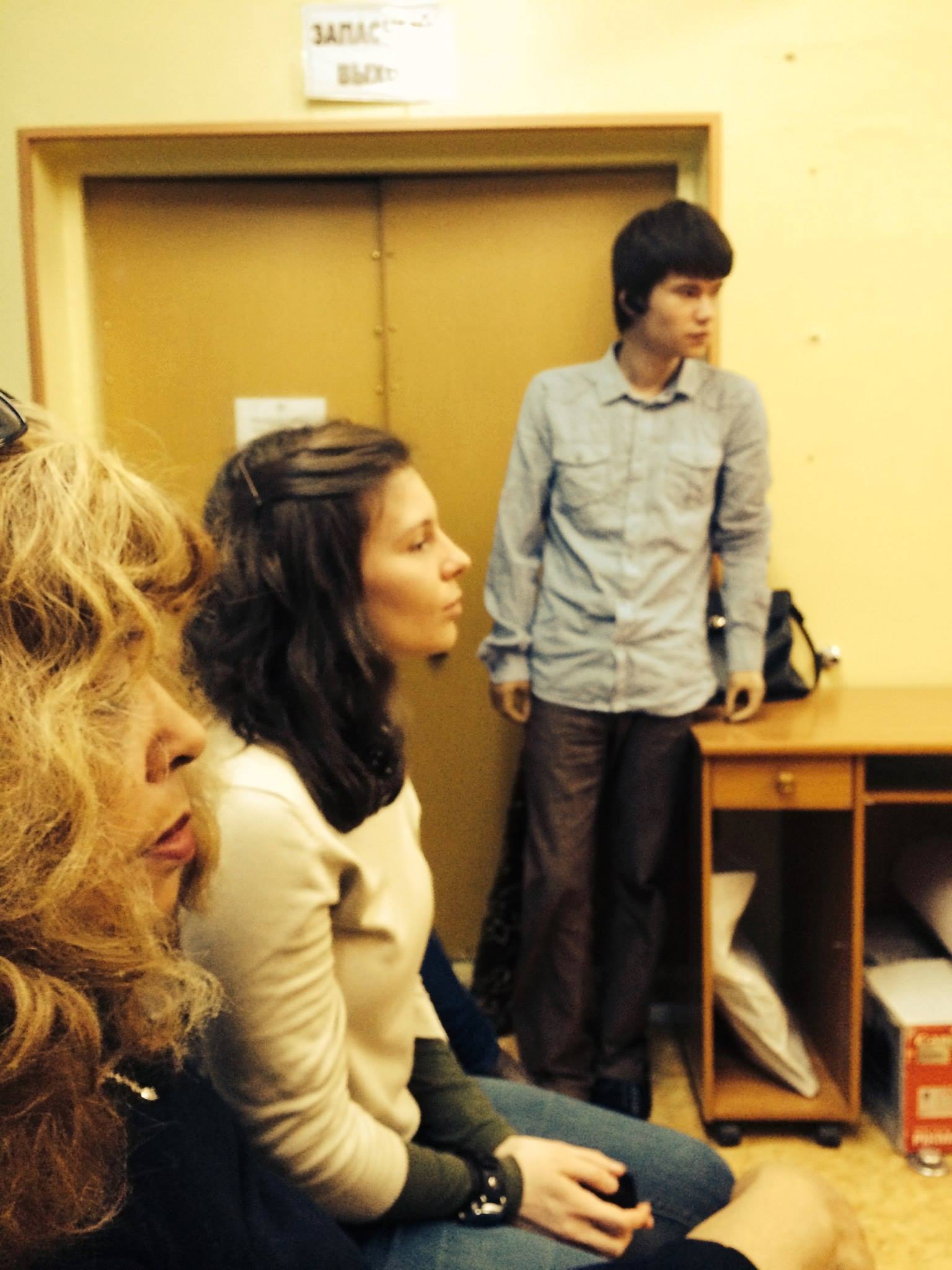
But there is one grief that I will have . It will be the end of my time with Sara Chao and Alexandra Kohut.

They are very unusually gifted and talented Fellows from the Amerasian Foundation. We have been linked in travel,study and work.

Fortunately they are not teachers who live inside the box , as most teachers in America do because it is the way of education . Read this and you will understand. They have lived in Russia, they are articulate in Russian , their words come trippingly off the tongue without hesitation or comparison in the brain. This time I let them do the talking and relied on them for language. Who ever thought that

I would meet such talented linguists who don’t even know that they are also cultural geographers. They are not teachers , can’t speak the jargon and don’t have a store of things that have passed over then like water in the way of educational initiatives.

This is the answer to it is complicated.

Time Magazine

Education as it should be – passion-based.

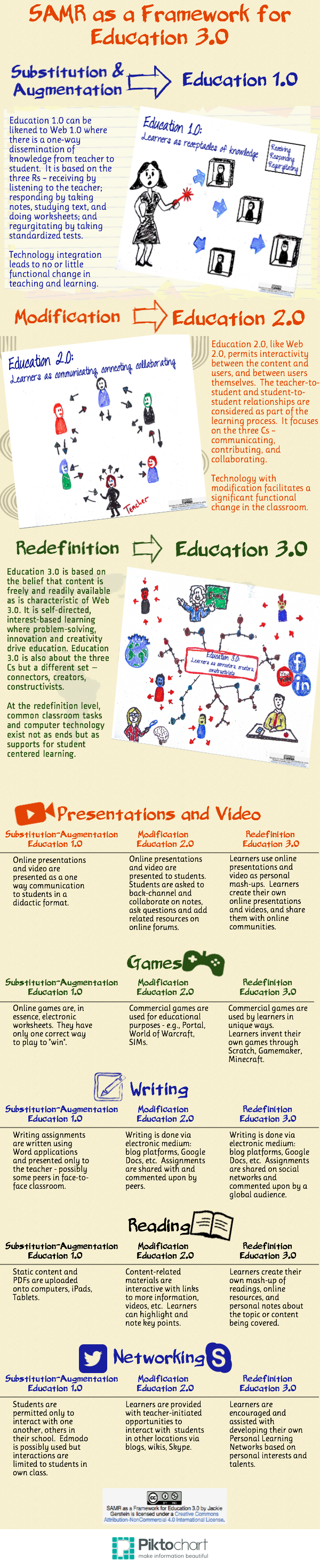
SAMR as a Framework for Moving Towards Education 3.0

Evolution, in its broadest sense, serves as a force to help humans move towards a better way of living given the current times or Zeitgeist. It follows, then, that the education field should evolve as new opportunities and forces emerge and present themselves. But in general, this is not the case.

From the Time Magazine article, How to Bring Our Schools Out of the 20th Century

There’s a dark little joke exchanged by educators with a dissident streak: Rip Van Winkle awakens in the 21st century after a hundred-year snooze and is, of course, utterly bewildered by what he sees. Men and women dash about, talking to small metal devices pinned to their ears. Young people sit at home on sofas, moving miniature athletes around on electronic screens. Older folk defy death and disability with metronomes in their chests and with hips made of metal and plastic. Airports, hospitals, shopping malls–every place Rip goes just baffles him. But when he finally walks into a schoolroom, the old man knows exactly where he is. “This is a school,” he declares. “We used to have these back in 1906. Only now the blackboards are white.”

The evolution of education can be explained from moving from Education 1.0 to Education 3.0. I have discussed Education 3.0 in several blog posts:

Schools are doing Education 1.0; talking about doing Education 2.0; when they should be planning Education 3.0

Education 3.0: Altering Round Peg in Round Hole Education

Education 3.0 and the Pedagogy (Andragogy, Heutagogy) of Mobile Learning

Briefly, Education 1.0, 2.0. and 3.0 is explained as:
Education 1.0 can be likened to Web 1.0 where there is a one-way dissemination of knowledge from teacher to student. It is a type of essentialist, behaviorist education based on the three Rs – receiving by listening to the teacher; responding by taking notes, studying text, and doing worksheets; and regurgitating by taking standardized tests which in reality is all students taking the same test. Learners are seen as receptacles of that knowledge and as receptacles, they have no unique characteristics. All are viewed as the same. It is a standardized/one-size-fits-all education.

Similar to Web 2.0, Education 2.0 includes more interaction between the teacher and student; student to student; and student to content/expert. Education 2.0, like Web 2.0, permits interactivity between the content and users, and between users themselves. Education 2.0 has progressive roots where the human element is important to learning. The teacher-to-student and student-to-student relationships are considered as part of the learning process. It focuses on the three Cs – communicating, contributing, and collaborating.

Education 3.0 is based on the belief that content is freely and readily available as is characteristic of Web 3.0. It is self-directed, interest-based learning where problem-solving, innovation and creativity drive education. Education 3.0 is also about the three Cs but a different set – connectors, creators, constructivists. These are qualitatively different than the three Cs of Education 2.0. Now they are nouns which translates into the art of being a self-directed learner rather than doing learning as facilitated by the educator. Education 3.0: Altering

Round Peg in Round Hole Education
Emerging technologies is, can be, should be a driving force of this evolution towards Education 3.0. Information access, communication methods, the ability for creative express is qualitatively different than any other time in history due to technological advances.

The SAMR model was developed by as a framework to integrate technology into the curriculum. I believe it can also serve as a model to establish and assess if and how technology is being used to reinforce an old, often archaic Education 1.0 or being used to promote and facilitate what many are calling 21st century skills, i.e., creativity, innovation, problem-solving, critical thinking; those skills characteristic of Education 3.0. Many look at SAMR as the stages of technology integration. I propose that it should be a model for educators to focus on Modification and Redefinition areas of technology integration. Why should educators spend their time recreating Education 1.0 using technology at the substitution and augmentation levels when there are tools, techniques, and opportunities to modify and redefine technology integration for a richer, more engaging Education 2.0 or 3.0?

SAMR-Education3
Share this:http://usergeneratededucation.files.wordpress.com/2014/02/samr-education31.png

Serving Disabled Communities, Local, National, and International

From Russian Programs and American Programs to International
des1
Desnitsa
an archaic Russian term for the right arm; often a general term for arms and hands. Used in the expression “the punishing hand (desnitsa) of justice”

The Lucas Foundation piece”
Disabled Bodies, Able Minds: Giving Voice, Movement, and Independence to the Physically Challenged
made me think hard.It is a great video.
des2

New Tools, New Opportunities
All over the country, what is known as assistive technology is opening the way for disabled students to do what their counterparts of years gone by could not even have imagined. “We all know how technology has improved in the last few years,” says Sheryl Burgstahler, director of DO-IT (Disabilities, Opportunities, Internetworking, and Technology), an advocacy program for disabled students at the University of Washington. “What most people don’t realize is that assistive technology has been progressing at the same rate.”

Susanna Sweeney-Martini, an outgoing, articulate University of Washington sophomore who wants to be a television news anchor, says she couldn’t function like she does today without assistive technology. “Without a computer, I couldn’t do my homework,” she says. “Without my [wheel]chair, I couldn’t get around. Without my cell phone, I couldn’t call for help.”

Assistive Technology

Lukas, a Spokane, Washington, high school junior can make his own music, thanks to a joystick-equipped euphonium that was custom designed for his special needs. Credit: Edutopia
No Limits
DO-IT, the federal Americans with Disabilities Act, and other widespread efforts and laws seem to have created a greater determination among students and parents to make sure disabled people are included in all activities. Kristy Bratcher, the mother of Lukas, a high school sophomore in Spokane, Washington, who has extremely limited use of his arms and legs as a result of a birth defect, didn’t hesitate to encourage him when Lukas expressed an interest in playing a musical instrument.

“I always kept trying to find things that Lukas could do with peers other than an athletic event,” says Bratcher. “Everything is sport, sports, sports.” So when he brought home a note seeking permission to play a band instrument, she signed it and said, “Lukas, just go and see what’s going to work.” The Mead High School student chose a euphonium, a tuba-like horn.

Lukas at first just blew into the euphonium without using the finger valves, but his system meant he could play only one note. Although he patiently waited until that note showed up in a musical score and seemed happy to do just that, his patience and upbeat attitude paid off. A school employee sought out a music-store owner named Robin Amend, who is also a musical-instrument inventor and repairman. Amend, whose grandfather had played a musical instrument despite having only one arm, designed a euphonium with a joystick that electronically instructs the valves of the euphonium to move. Later, an engineer worked with Amend to refine the joystick technology.

Lukas may have some mechanical help with his instrument, but music teacher Terry Lack says his personality is what has turned his desire to play an instrument and be part of the band into reality. “He always has a smile on his face and has a really positive attitude,” says Lack. “[That’s] the real key.”

Lukas’ mom says her son’s participation in the school band has given him a chance to stretch himself and see what he is capable of accomplishing. “I can’t predecide what’s going to work for him or not,” she says. “So many people say, ‘You can’t. You can’t.’ Why do we have to talk that way? Let’s just see what it is and what he has an interest in, and we’ll figure it out.”

Assistive Technology

Assistive technology enables University of Washington sophomore Susanna Sweeney-Martini to overcome her disabilities and participate fully in her college courses. Credit: DO-IT, University of Washington
No More Excuses
DO-IT’s Burgstahler has little patience for school officials who don’t think they have a responsibility to include those with disabilities in every school activity possible or who believe a full-time aide can substitute for technology that gives the students more independence. “If they have access to their own computers, they can take their own notes, they can take their own tests, they can write their own papers, they can use the Internet and do their own research,” she says.

And as to concerns about the high cost of assistive technology, Burgstahler points to the benefits, and she wonders how schools can justify not investing in tools for disabled students.

“Students can now use their brainpower instead of their physical capabilities to go to college and then on to careers so they can have the life all of us want to have,” she says. “They can have the American dream.”

1606301_10152232316426327_1621589694_o
Building a Dream

We met Natalia Bartkova , and Aleksey Trantserv and their spirit and passion and depth of interest were remarkable.Something to see is Aleksy with kids. They have a program where they teach games to children. Just board and social games so far. I thoroughly enjoyed working with them and analyzing the ways in which they worked. Kudos to them!!

As a part of our study for the US Russian SEE exchange we visited Desnitsa. This NGS has a mission to provide the integration of Samara region disabled people into society and to promote the ideas of independent living philosophy and social approach to disability on the bases of partnership and use of new technologies for work. This organization was founded in 1997.It is an umbrella program and we saw their outreach in the business incubator project for Samara.

Its main goals are the protection of rights and interests of disablied people;
Providing disabled people with equal opportunities in all spheres of social life; and integration of disabled people into society.
Here in Russia they have legal adviser’s help and psychologist’s help to disabled people and their families, information and consultation services
And they perform seminars to teach how to understand disability, and how to have people defend their rights, including rights on education and labor.

They give assistance for disabled people to help them get education and learn to choose a profession; they provide expert services for employers to make special workplaces adapted for disables peole ; expert services how to adapt the apartments for people with different disabilities; and produce films and public service advertising about disabilities.

International Program

http://wid.org/international

Georgian team learns to build wheelchairs. Photo by Beso Darchia

Ralf Hotchkiss from Whirlwind Wheelchair International training Georgian team. Photo by Beso Darchia

WID’s International Program builds leadership and capacity in disabled persons organizations (DPOs) in post conflict and developing countries to promote the full inclusion of people with disabilities into all aspects of society. WID provides training and technical assistance to DPOs to conduct effective disability advocacy, community barrier removal and public education campaigns; develop national policies; and create networks and national coalitions. During the last decade, WID has worked in Abkhazia, Armenia, Azerbaijan, Colombia, Georgia, Iraq, Morocco, Russia and Uzbekistan and has provided technical assistance to disability leaders in Bhutan, Ethiopia, Lebanon, Nepal and various other countries.

For more information on WID’s international training and technical assistance projects, contact Bruce Curtis, International Program Director.
Current Projects
Georgian Wheelchair Production Network
Funded by the U.S. Agency for International Development (USAID) and working in partnership with Whirlwind Wheelchair International (WWI), the Coalition for Independent Living in Georgia, along with their regional member organizations, the Association of Disabled Women and Mothers of Disabled Children in Zugdidi and the Association of Gori Disabled Club, and The Treatment and Educational Center of Child Neurology and Neurorehabilitation (CCNNR), WID is in the fourth year of a 5-year project in the Republic of Georgia to set up a sustainable wheelchair production and repair facility and a postural support seating and cushion service in Tbilisi; develop a mobility, self-care, and advocacy skills training system for men and women who use wheelchairs; and conduct advocacy, public education, and community accessibility barrier removal activities in Georgia. Most of the factory workers and advocacy team members are people with disabilities, and almost all are wheelchair users.
To date, the factory has produced and distributed more than 1500 low-cost, high-quality Whirlwind RoughRiderTM indoor-outdoor wheelchairs. Occupational therapists at the Children’s Center for Rehabilitation are being trained to prescribe postural seating and have fitted and provided supported seating for 125 children in wheelchairs so far.
Advocacy teams are conducting a wide range of activities including peer support, mobility and self-help skills workshops and camps for wheelchair users, and disability awareness and community access/barrier-removal trainings and roundtables to educate NGO staff, media professionals, teachers, government officials, lawyers, and architects about the need to improve community access. The 3 teams are also working to make key public buildings accessible by identifying and removing barriers, including building ramps and making bathrooms accessible. Sites include churches, sports facilities and recreation centers, schools, banks, museums, restaurants and shops.
A major goal of the project is to increase public awareness about the importance of an community accessibility and barrier-free environment, and the teams organize disability film exhibitions, media and poster competitions as well as produce public education videos, shown at film exhibitions and on Georgian national television, and public service announcements broadcast on local radio stations. The project has also hosted three national conferences on community accessibility for government officials and lawmakers, professionals, media, and persons with mobility impairments and their families to address issues, share lessons learned and to discuss strategies for implementation of legislation promoting a barrier free environment in Georgia. The most recent conference was attended by the new Prime Minister of Georgia, several other Ministers, the U.S. Ambassador to Georgia, and the USAID Mission Director.

Digital Equity and Social Justice, Digital Divide.. To Grow Our Future in Technology, Look to the Past

363_42724556326_8230_n copy
Larry Irving at the Commerce Department helped us get started with his leadership long ago. Today he shared this thought
“Minorities and women, in fact all Americans, who work in or benefit from the technological revolution of the past several decades owe a debt of gratitude to the late Congressman Mickey Leland and the late Secretary of Commerce Ron Brown. As we celebrate Black History Month it is appropriate that we remember their contributions to America’s technological past. They provide us guideposts for our future…”

Here is his article for Black History Month

To Grow Our Future in Technology, Look to the Past
Your Take: The next generation of black innovators needs to continue the work started by two pioneers who worked to ensure digital access for all.

BY: LARRY IRVING
Posted: Feb. 22 2014 1:00 AM

Here is his article for Black History Month
IMG_0003

To Grow Our Future in Technology, Look to the Past
Your Take: The next generation of black innovators needs to continue the work started by two pioneers who worked to ensure digital access for all.

BY: LARRY IRVING
Posted: Feb. 22 2014 1:00 AM

History doesn’t just happen. History starts with a vision.

In the early 1980s, Rep. George T. “Mickey” Leland, who was then chairman of the Congressional Black Caucus, envisioned a more inclusive telecommunications and media world.

A decade later, the late Secretary of Commerce Ron Brown recognized that the power of the Internet could unlock a brighter future for our children with better economic and educational opportunities.

Today, our leaders are writing history with critical decisions that will affect the future of the mobile revolution and the transition to all-Internet-based networks.
History doesn’t just happen. History starts with a vision.

In the early 1980s, Rep. George T. “Mickey” Leland, who was then chairman of the Congressional Black Caucus, envisioned a more inclusive telecommunications and media world.

A decade later, the late Secretary of Commerce Ron Brown recognized that the power of the Internet could unlock a brighter future for our children with better economic and educational opportunities.

Today, our leaders are writing history with critical decisions that will affect the future of the mobile revolution and the transition to all-Internet-based networks.

Mickey was weary of seeing stereotypical depictions of blacks and Hispanics in the media and was disappointed at the low rates of minority ownership and employment in the media and telecommunications industries. He understood that media ownership and employment would determine not just how white America saw black people but how black people saw themselves.

Equally important, he knew that electronic media and technology were going to be among the principal drivers of our economy and would present tremendous entrepreneurial opportunities for decades to come. And, being a great politician, he understood one other thing: He knew that times of great disruption bring great opportunity.

The media and telecommunications landscape was undergoing massive disruption in the 1980s. The historic AT&T was broken up into seven “Baby Bells.” New competitors such as MCI and Sprint were entering the telecommunications marketplace. Broadcasting was expanding from the three historic networks, and media-ownership opportunities were proliferating. And, perhaps most importantly, the cable-television industry was maturing and expanding.

Mickey was a strong supporter of innovation and technological advancement. But he made sure that every industry, even the most innovative industries, knew that his support for their efforts came with a condition: their support for increased opportunities for minorities and women.

Mickey fought for changes in the way minorities were portrayed by television broadcasters and movie producers; he drove the FCC to establish linkup and lifeline programs to increase telephone penetration rates in low-income communities; he fought for and won increased opportunities for ownership of radio and television stations by minorities; and, perhaps most importantly, he wrote legislation codifying increased employment and vendor opportunities for minorities in the cable-television industry. Those equal employment opportunity provisions became the model for other media industries, including the broadcasting industry.

Over the past 30 years, hundreds of thousands of minorities and women employees of media companies, in addition to thousands of cable vendors, benefited from Mickey’s hard work and vision. While the media and telecommunications industries are not as diverse as they could be, vast strides have been made as a result of Mickey’s vision and leadership.

Secretary Brown similarly understood the power of disruptive technology. He was a central figure in the Clinton administration’s policy formulations in the early days of the Internet, and he understood that the Internet was the transformative technology of its day. But he also understood that the Internet would only matter—would only be judged a clear success—if it benefited all Americans.

Shortly after Secretary Brown took office, a group of White House staffers presented him a list of proposed nominees for a Clinton administration private-sector advisory committee on the Internet. Secretary Brown looked at the list and noted that of the 25 suggested nominees, 22 were white males. He told the White House staff to take the list back and return with a more inclusive and diverse slate of nominees. One of the White House staff said, “But this list has been vetted and cleared by the White House,” to which Brown said, “Yes, and now it’s been vetted and rejected by the secretary of commerce who has to chair and manage that advisory committee.” The list was resubmitted with more diversity and a much-improved ratio of women and minorities on the committee.

The inclusion of women and minorities wasn’t just window dressing. Secretary Brown knew that we were at another technological inflection point. When he took office, fewer than 2 million people worldwide were on the Internet. The secretary knew that the Internet would grow and become ever more important. By ensuring diversity on the advisory committee, he made certain that as this high-powered group of individuals made policy suggestions to the president, they were looking at how this important new technology would affect and benefit all Americans and all American communities.

Secretary Brown was a firm supporter of the e-rate proposal that provided low-cost Internet connectivity to schools and libraries across America. He worked to develop policies and establish grant programs designed to connect schools, libraries, hospitals and rural health clinics. It’s a straight line from Secretary Brown’s commitment to connecting schools to the Internet two decades ago to the ConnectEd program the Obama administration supports today. Secretary Brown understood that, particularly in the early days of the Internet, millions of Americans would have their first experience with the Web in public institutions, and he fought to ensure those institutions had the resources they needed to serve their public.

Perhaps most importantly, he understood that there was a “digital divide,” and that it was the role of government to assist industry in bridging that divide. The digital divide would have been deeper and more pervasive but for Secretary Brown.

It is his signature on the front page of the first report defining the digital divide and stating that we, as a nation, have an obligation to ensure that all Americans have access to essential technological tools. He knew that with government and industry working together and with the formulation of smart policies, we could drive Internet connectivity rates higher. In slightly more than two decades, we have gone from 2 million people with access to the Internet to almost 3 billion people having access worldwide. Much of that growth is the result of the vision and the work of Ron Brown.

Today we are at another technological inflection point, another time of great disruption. The mobile revolution and the so-called “IP transition” promise to be even more disruptive than the cable revolution and the Internet revolution. And they promise to provide great opportunity for the smart and the agile. Women and men of vision must step forward to embrace these twin revolutions and work to ensure that these new technological tools are used to improve education, increase access to health care and fitness tools and provide for greater productivity and economic opportunity for our community.

Rep. Leland and Secretary Brown understood the power of technology to transform our image of ourselves, to enhance economic and educational opportunities and to ensure the future of our children. As we enter this next new phase of technological development, it is our obligation to further their twin visions.

The best way to celebrate Black History Month is to create some history of our own. Fast-tracking the move to modern, high-speed broadband networks, while ensuring that core consumer values are protected, will lay the foundation for even greater progress with education, health care, entrepreneurship, energy and the environment. We must understand and embrace new technologies and the opportunities they provide us. That’s what Mickey and Ron would have done.

Larry Irving, founding co-chairman of the Internet Innovation Alliance, served for almost seven years as assistant secretary of commerce for communications and information and administrator of the National Telecommunications and Information Administration (NTIA). He is widely credited with coining the term “the digital divide” and sparking global interest in the issue.

The original article available at http://www.theroot.com/articles/culture/2014/02/blacks_in_technology_two_pioneers_who_inspired_the_next_generation_of_innovators.2.html

Pictures from Work in the field, CyberEd , and Teragrid ( my personal photos)Being a Science Teacher with Outside Resources.. Try these NASA resources !!

Digital Citizenship – Putting the pieces all together to understand what to do!!

Man without identity programing in technology enviroment with cyOffering a Course, a Family Initiative,Global Resources, a Teacher Tool Kit
and Peer Gathered Resources.

Choose your tools for Digital Citizenship Understanding!

This all started 20 years ago with a Clinton Initiative, for the NIIAC.
Imagine you had a device that combined a telephone, a TV, a camcorder and a personal computer. No matter where you went or what time it was, your child could see you and talk to you, you could watch a replay of your team’s last game, you could browse the latest additions to the library, or you could find the best prices in town on groceries, furniture, clothes — whatever you needed.”
The above paragraph was the opening paragraph of the Agenda for Action — 20 years ago.
Today we are still trying to tame technology with resources, peer knowledge and collaboration.

1.COURSE

Course name: Digital Citizenship MOOC for Educators, Spring 2014
Course site: jasonohler.com/dcm2014
Cost: MOOC option is free

mooc
Web definitions
A massive open online course is an online course aimed at unlimited participation and open access via the web. …
http://en.wikipedia.org/wiki/MOOC

Teacher/contact: jasonohler@gmail.com
What is the course about?
This is a course about digital citizenship, a relatively new area of inquiry that has emerged because of our desire to help students manage their digital lifestyles safely and responsibly, without losing their sense of inspiration and opportunity.


How is it offered?

This course is offered in three ways: as a graduate course, a professional development course, and as a MOOC, in that anyone can use the materials and join in all of the conversations that are part of the class. There are no grades awarded for the MOOC class, and there are no costs associated with it except for materials that MOOC participants elect to purchase. MOOC participants do not have to register for the class. However, doing so allows them to stay in touch more easily with others in the course and to receive mailings about the course and associated activities.

Why digital citizenship?

The web is so pervasive and invisible, and provides access to so many different kinds of experiences, that we have developed a keen and sometimes urgent interest in understanding how best to help our children and ourselves navigate this new world.
In the K12 educational arena, this interest has been given the name “digital citizenship,” a reference to our belief that the Internet offers a kind of community experience. Digital citizenship seeks to answer the question, “What does it mean to be a model citizen in this new kind of community?” Ultimately, it also addresses another essential question: “How can we maintain a sense of humanity as we learn to co-exist with the immensely powerful machines and networks of our own creation?”

What is addressed?

In practical terms, the course looks at policies, curriculum, tools and perspectives that address digital citizenship issues within the K-12 educational arena. It also addresses some of the hot button issues of the day, such as cyberbullying, media literacy, and how to make ethical decisions associated with online activities. It features some of the experts in the field, including Mike Ribble (Digital Citizenship in the Schools), Nancy Willard (CyberSavvy), Frank Gallagher (Cable in the Classroom).

Who is this course for?

The primary audience for this course is K12 education community members, including teachers, students, administrators, school board members. But this course is also for parents, community members, anyone from government or business- in short, anyone interested in the larger issues involved in living, learning, working and having fun in the digital age, particularly as those issues impact our children.

Other Resources:
Bullying and Technology: What does it mean for parents?

For Parents and Community
http://evanston.suntimes.com/people/voices/cyb_erbully-EVA-01092014:article

FOSI.org

Family Online Safety Contract
Check out our Resources tab featuring helpful tips for parents and kids during back-to-school season, and download a copy of our the safety contract.
This video might be helpful as well. http://www.youtube.com/watch?v=hSQ6GcskLNg
FOSI GRID ( International)http://www.fosigrid.org
FOSI’s Global Resource and Information Directory (GRID) is designed to create a single, factual and up-to-date source for all those dedicated to making the Internet a safer and better place. As a family online safety portal, it aggregates information from a comprehensive range of trusted sources and combined with expert oversight, provides a unique and exciting new collaborative platform.

GRID monitors, tracks and provides commentary on the efforts of countries around the world to make the Internet safer for their citizens. By placing them in their correct cultural context, the educational, legislative and regulatory approach of many countries is seen properly for the first time. GRID is already attracting praise:
“FOSI’s GRID is a remarkable and ground breaking achievement! Nothing can prepare you for the depth, quality and scale of the family online safety content that GRID delivers. It will provide a vital and important new collaborative tool for industry, government and online safety professionals throughout the world.”
Professor Tanya Byron – Leading child psychologist and author of the Children in a Digital World Report, an influential review commissioned by the UK Government.
Using the very latest technology, GRID’s interactive maps, timelines and easy to use features bring clarity and new insights. Comprehensive directories that scope the work of industry and define the challenges, as well as GRID’s expert-moderated updates and quarterly reviews, create a unique ‘one stop shop.’

Who is Parry Aftab.. one of those of us who started out with the Clinton Initiative NIIAC> She is a real Internet lawyer.http://insurancenewsnet.com/oarticle/2013/12/19/cyberlaw-expert-parry-aftab-talks-cyberbullying-and-online-student-safety-at-the-a-439412.html#.UsgF2_2c8dt

Wired Safety Video on Cyber-bullying. It’s the Best!!
http://stopcyberbullying.org

1412565_10152013778786327_1555285607_o

Teacher Tool Kit from Wired Safety

Your personalized resource. You can fill out information at the link above to get it.

Stop Cyber Bullying Toolkit is now available! http://stopcyberbullying.org/index2.php
Authored by Dr. Parry Aftab and created by WiredSafety.org,Who is Parry Aftab?
She is a real Cyberlawyer.
the toolkit provides all of the information a school or community organization needs; it also provides young people with a mission.
Through the StopCyberbullying Pledge, they can take a stand against cyberbullying. By taking the pledge they promise to be part
of the solution, not part of the problem. The entire StopCyberbullying program is designed to motivate schools, students,
and their parents to do something, not just stand there while others are hurt. It gives them the tools and information
that they need to create their own grassroots campaign and address cyberbullying and hate online wherever they find it.

Peer Gathered Resources from Scoop.it

child

http://www.scoop.it/t/digital-citizenship-goals-in-education

Vic and Bonnie Sutton
Scoop.it? http://www.scoop.it/

Gamification you ask? Glad you asked. Alex Wonder!!
!Alex Wonder Kid Cyberdetective is a new game introduced by WiredSafety.org designed to help children safely navigate the Internet. Children follow the adventures of Alex Wonder as he helps children learn to identify the warning signs of cyberbullying and learn how to responsibly use the Internet.

“…The game teaches kids how to spot, avoid and address cyberbullying. So, they have to qualify as kid cyber detectives who help Alex, who works out of the janitor’s closet at the middle school, learn how to help other kids being cyber bullied,” explained Parry Aftab, Executive Director, WiredSafety, to CNN in an interview. Download the new free Alex Wonder Kid Cyberdetective Agency Game to help stop cyberbullying
**Requires Adobe Air to Install
bottom of page here ,http://stopcyberbullying.org/index2.html

Coding

Originally Published for CUE Magazine.

google10

Superhero kid. Girl power conceptCoding…
Posted by Bonnie Bracey Sutton

CODING

coding
ˈkōdiNG/
noun
the process of assigning a code to something for the purposes of classification or identification.
You may know coding as programming.

Coding is the act of writing a program in a programming language. So when people say you will need to know coding, they are saying you need to know two things. You need to know the language and you need to know how to use the language. It is easier to show an example of coding than to explain it. http://code.org/learn/codehs

You’ve seen the craze for learning code. But what exactly is coding?

Coding is what makes it possible for us to create computer software, apps and websites.

Your browser, your OS, the apps on your phone, Facebook, and this website – they’re all made with code.

Here’s a simple example of code, written in the Python programming language:

print ‘Hello, world!’
Many code tutorials use that command as their very first example, because it’s one of the simplest examples of code you can have – it ‘prints’ (displays) the text ‘Hello, world!’ onto the screen.

CODE.ORG has a video that explains coding, shares the vision of a lot of people interested in getting coding into education and. more. Here is one of their three videos on coding.

What Most Schools Don’t Teach

Bill Gates Chairman, Microsoft
“Learning to write programs stretches your mind, and helps you think better, creates a way of thinking about things that I think is helpful in all domains.“code 5
The group CSTA has many resources to help explain, engage you and immerse in the study of code.

CODING AS A METAPHOR FOR COMPUTATIONAL THINKING CSTA

The Computer Science Teachers Association is a membership organization that supports and promotes the teaching of computer science and other computing disciplines. CSTA provides opportunities for K–12 teachers and students to better understand the computing disciplines and to more successfully prepare themselves to teach and learn.

Click to access Astrachan.pdf

There is outreach to teachers in this program for professional development.code 3
What is CS4HS?
google7
CS4HS (Computer Science for High School) is an initiative sponsored by Google to promote Computer Science and Computational Thinking in high school and middle school curriculum. With a gift from Google’s Education Group, universities develop 2-3 day workshops for local high school and middle school CS teachers. These workshops incorporate informational talks by industry leaders, and discussions on new and emerging CS curricula at the high school and middle school level. On the CSTA site, you’ll find information on how to apply for a CS4HS grant, information for workshop attendees and partners, and other helpful resources. CS4HS funding is currently offered in the US, Canada, Europe, Middle East, Africa, China, New Zealand, and Australia.You could also learn a lot by attending a CSTA Conference which features workshops, mentors, and applications.

Here is an example of a CS4HS workshop that I attended. CS4HS is one of many resources to help teachers learn to code.
google4
UMBC Google CS4HS Teacher Development Workshop 2013

http://maple.cs.umbc.edu/cs4hs/schedule/

The presentations are here for your use, or perusal.

There is a big push to teach coding to students of all ages. code six

Teachers learning about the importance of coding at a CS4HS teacher’s workshop.

Coding for Kids is easier to reference and to find on the web.

Code.org offers tutorials below.

CodeHS Online curriculum designed specifically for highschool classrooms.

Codecademy After SchoolA complete online afterschool program for a coding club.

Tynker Teach programming in elementary or middle school in a fun way.

Scratch is a great program to use to teach young students. Try it!!

Google Glass…Cracking up Ideas!! Breaking into Possibilities!!!

glass

glass2Here is what I wrote when I was wishing and hoping to get Google Glass. I wanted it.. dreamed about it.
Fretted about it. Wrote about it.

glass

So what is Google Glass and how can I tell you about it if I don’t have it? 

Oh I have lots of reference points, I have been following the use of Google Glass since it was announced. One use that immediately got my attention was in a STEM related trip to CERN. ( I have been there, and the Google related lesson were accurate.

This really got my attention because I have wanted to go back to CERN to learn what it looks like now, vs. the time frame in which I saw it.

Here is the link.<a href="http://blog.ted.com/2013/05/06/a-virtual-field-trip-to-cern-via-google-glass/“>

Then, I got a break. I was able to purchase Google Glass. It came just before the Christmas Holiday. I did not tell anyone. I was so excited. I also got the shades. Being a fashionista, I wanted the dark glasses. Sunglasses are a part of my visual signature.
I don’t always wear sunglasses but I thought the GLASS looked really hot with the shades. Now I have them.

I am going to play around with Google Glass.
These are other people’s ideas.

glass4
Since I am on vacation I will probably make a map of touring Jamaica.. and of the resort I am in. I can cruise the beach and take pictures without being observed.

But I have to study first. child Head Ideas are popping.

Merry Christmas!!!! Thank you Santa…

Changing the Learning Landscape..University, Community College and High School Teachers Tackle Computer Science

google4

Changing the Learning Landscape..University, Community College and High School Teachers Tackle Computer Science
Posted by Bonnie Bracey Sutton
Report by

A version of this was first published in the SITE.org blog.

Vic Sutton
Bonnie Sutton

UMBC Google CS4HS Teacher Development Workshop 2013

“I have been going to computer science conferences for 28 years and this is the best one I have ever been to.”
– Arlington County Tech Ed Supervisor

August 4-7, 2013
CSTA has sponsored an initiative to transform education. *The Computer Science Teachers Association is a membership organization that supports and promotes the teaching of computer science and other computing disciplines. CSTA provides opportunities for K–12 teachers and students to better understand the computing disciplines and to more successfully prepare themselves to teach and learn.
There is a series of workshops that are called.CS4HS. I have attended one CSTA workshop before. It was excellent, so I wondered if the excellence has continued. It has.

What is CS4HS?

CS4HS was started as a joint effort between Carnegie Mellon University, UCLA, and University of Washington to help introduce high school and middle school CS teachers to new and exciting technologies. CS4HS bring these teachers together for a summer workshop with the goals of invigorating them about computer science and computational thinking, and to provide them with tools and networking opportunities to help them in the classrooms. Google provides funding to universities develop the workshop and is committed to having our local employees participate in workshop sessions.

google10

First, we attended the CSTA National Conference, Then we attended a local workshop.The national perspective gave us insight and networks.

google11

An Important National Outreach Initiative

Two Workshops ( National CSTA Conference)

Computational Thinking: from Game Design to STEM in one week
Presented by Dr. Alexander Repenning

Computational Thinking: from Game Design to STEM in one week
Presented by Dr. Alexander Repenning

Participants will be immersed in the Scalable Game Design (SGD) initiative that is developed at the University of Colorado, and funded by NSF. The SGD strategy is based on a path that introduces students to computational thinking through game design and then advances to the creation of STEM simulations. Through our approach of exposure, motivation, pedagogy, and education, the SGD approach has been successful at broadening participation in STEM across ethnic and gender barriers. Participants will learn about our approach, the latest research results and how to scaffold game design into a classroom with unique tools for “pre-bugging” and automatic evaluation. Hands-on activities include designing and creating 2D and 3D arcade games in both the AgentSheets and AgentCubes programming environments. Workshop materials will include a complete introductory curriculum, and links to additional curriculum and information. No prior programming experience is required!

Download presentation as PDF

Here is the Local Workshop

Why so Few?  Broadening Participation of Women and Minorities
Dr. Jan Plane
[Presentation]

CS Education at the National and State Level
AP CS Principles Pat Yongpradit
CS Principles and CS Pedagogy at CS4HS 8.5.13

This is a presentation not just about CS Principles, but about inquiry, equity, and pedagogy in the CS classroom. Teachers learned about all of this by doing two famous activities from the Exploring Computer Science curriculum.AP CS Principles
Pat Yongpradit
[Presentation and Materials]

AP Computer Science Principles is a proposed AP course, currently in pilot phase, that seeks to broaden participation in computer science.

The course is focused on building computational thinking practices and is guided by seven Big Ideas: Creativity, Abstraction, Data, Algorithms, Programming, Internet, and Impact. Visit CSprinciples.org for more details.

What we took:
Hands-On with Cryptology
Getting Started in Teaching Computer Science
Increasing Student Enthusiasm with LiveCode
Introduction to AppInventor
Arduino Programming
Computing for Good
Coaching the Design Process
Best Practices for Starting After-School Programs
Why so Few? Broadening Participation of Women and Minorities
A Smorgasbord of Tools for CS Education
Dinner with Industry
CS at the College Level
CSEdWeek

http://maple.cs.umbc.edu/cs4hs/schedule/ ( you will want this link to download the presentations from the list above..
You may also want this link if you are thinking about going to the workshop next year
This year’s ‘Computer Science for High School’ workshop, held on 4-7 August at the University of Maryland Baltimore Campus, brought together nearly 40 computer science teachers. Most were from Maryland schools, though there were also participants from DC, Pennsylvania, West Virginia,Texas and Virginia.

The three-day workshop covered everything from computer science principles to practical applications such as MIT’s App Inventor and Arduino’s Amici. Dianne O’Grady Cunniff facilitated a session covering on-line resources for educators, and Dr. Jan Plane led a session on broadening participation of women and minorities in computer science.This is an acute problem: according to the annual CRA Taulbee Survey, in 2011 (latest year for which data are available) only 11.7% of computer science graduates were women, with a similar number for computer engineering.

White students made up two-thirds of the graduates in computer science and over half of those in computer engineering, with minorities tailing way behind. African American students, for example, made up only 3.6% of graduates in computer science, and 5.9% in computer engineering.

This, when the U.S. expects a huge growth in well-paying, computer-based jobs over the next few years.google7

The courses are not there.

CS at the College Level
Dr. Marie desJardins and Dr. Jan Plane
[Presentation] [ABET Presentation]

In this panel, faculty members from the University of Maryland – College Park and UMBC provided  information about computing majors in college and “best practices” for preparing students to succeed in these majors. Dr. Michael Milligan from ABET discussed  what teachers and parents should know about accreditation.

Solutions, however, are not so obvious. Perhaps this year’s Computer Science Education week, to be held on 8-14 December 2013, will provide an opportunity to start redressing the balance. To start with , we can explore computational thinking.

Curated Articles on Computational Thinking here:

http://www.scoop.it/t/computational-thinking-in-k-12

IDEAS TO THINK ABOUT
http://blog.acm.org/archives/csta/2013/08/coming_soon_to.html
Advocacy, Equity & Social Justice, UncategorizedComputational Sciences, computational thinking, CS4, CS4HS, CSTA, teacher development

google3

Changing the Equation by an Uncommon Gift- A Surface Tablet

ISTEI am at the ISTE conference in San Antonio.

I enjoyed the SIG work, I participated in sharing my concerns with the board, I attended some workshops,  did the conference floor, but also I witnessed some empowerment that was caused by the gift of a computer to 10,000 ISTE participants.

Microsoft gave away 10.000 Surface tablets to ISTE participants who signed up to get them. I have of course been reading various articles on the use of mobile technologies for groups who need help.  To understand the need? Read “ Falling Behind: A Technology Crisis Facing Minority Students.”

The access problem is something the White House is dealing with. You can read about it here.

surface instruction

Tablets have been disruptive. Pew tells us here about the statistics , this is a summary of the full report.

For the first time, a third (34%) of American adults ages 18 and older own a tablet computer like an iPad, Samsung Galaxy Tab, Google Nexus, or Kindle Fire—almost twice as many as the 18% who owned a tablet a year ago.

Demographic groups most likely to own tablets include:

  • Those living in households earning at least $75,000 per year (56%), compared with lower income brackets
  • Adults ages 35-44 (49%), compared with younger and older adults
  • College graduates (49%), compared with adults with lower levels of education

“One of the things that is especially interesting about tablet adoption compared to some of the patterns of other devices we’ve studied is how these technologies’ growth has played out between different age groups,” Research Analyst Kathryn Zickuhr said. “With smartphones, for instance, we’ve seen a very strong correlation with age where most younger adults own smartphones, regardless of income level. But when it comes to tablets, adults in their thirties and forties are now significantly more likely than any other age group to own this device.”

ABOUT THE SURVEY

The findings in this report are based on data from telephone interviews conducted by Princeton Survey Research Associates International from April 17 to May 19, 2013, among a sample of 2,252 adults ages 18 and older.  Telephone interviews were conducted in English and Spanish by landline and cell phone. For results based on the total sample, one can say with 95% confidence that the error attributable to sampling is plus or minus 2.3 percentage points.  More information is available in the Methods section at the end of this report.

surface

Of all of the years I have been working in technology, I have not witnessed such a sharing. Everyone says that all of the students are digital natives.. but there are many students who do not have the tools. the teachers who know it , or the broadband access to be able to share the new technology and ideas. Thank you to those who still remember that teachers are an important part of the equation.

Yes, there Still is a Digital Divide, and a Broadband Problem , There Should Be a National Consideration of Digital Equity

Future Learning

Wireless shows the way to the future ways of learning
if we can conquer the digital divide.

Bonnie Bracey-Sutton

I was the only K-12 teacher on the National Information Infrastructure Advisory Council. I have been waiting years for transformational change to happen.We still have need, lack of access, and a broadband problem.

Let’s start with this set of charts.  Source (http://mashable.com/2013/06/14/digital-divide-problem/)

I have been researching and working with these issue for a long time.

Take a look at this info-graphic. (http://mashable.com/2012/02/05/digital-divide-infographic/)

Early exposure and interest

Early exposure and interest are key!

Recently people talked to me and said, you know, people are tired of hearing about the digital divide, and broadband access, it is boring.Why don’t you do something that is more interesting!( It was depressing to hear) But recently the White House, and other reports confirm the concerns that I had about the  two Americas we have in technology. Most people with the technology went their merry way , not remembering that many had neither the tools, technology or knowledge to make the change we want for 21st century learning. see this report from NTIA.

RESEARCH PROOF

Here’s a bit of disappointing but not-so-surprising news: according to a new report from the nonprofit think tank Center for American Progress (CAP), U.S. schools aren’t doing enough to enable technology in the classroom to live up to its potential.

Oh really? Oh really…

Not only are students across the country frequently using technology for basic skills (for example, middle school students are mostly using computers for drills and practice exercises, not data analysis or other activities that really take advantage of computing power and sophisticated software), schools aren’t looking at the returns on their technology-related investments. The CAP also found that students from high-poverty areas were less likely to get access to rigorous science and technology learning opportunities.

“In this analysis, it quickly became clear to us that many schools and districts have not taken full advantage of the ways that technology can be used to dramatically improve education-delivery systems,” the report said.

The White House

The White House’s new broadband report is embedded below. What can be done to bridge the digital divide? Share your thoughts in the comments.

White House Broadband Report

( This is a document that can be downloaded )

This isn’t about faster Internet or fewer dropped calls. It’s about connecting every part of America tothe digital age. It’s about a rural community in Iowa or Alabama where farmers and small business owners will be able to sell their products all over the world. It’s about a firefighter who can download the design of a burning building onto a handheld device; a student who can take classes with a digital textbook; or a patient who can have face-to-face video chats with her doctor.”
– President Obama

 ” Committing to high-speed connectivity for all our students in five years will unleash the potential of the education technology market, where a lack of infrastructure has held back innovation.”

In June , the White House announced an initiative  to expand high-speed broadband Internet access to virtually every school in the country. The program is expected to cost several billion dollars; according to a senior administration official. The White House argues that the expanded Internet access will provide teachers with more tools; make learning more engaging and better prepare students for 21st century jobs. The plan does not require congressional approval. Instead; an existing program that subsidizes Internet access in schools and libraries. E-Rate is funded through fees on monthly telephone bills. The White House officials said officials expect the president’s plan would add no more than 40 cents to every phone bill per month for the next few years. The proposal would be a one-time investment with the goal of providing schools with Internet connections of one gigabit per second—about 100 times faster than the average home broadband connection. The White House expects 99 percent of students to have access to at least a 100-megabit-per-second connection within five years. The administration notes that many schools currently rely on a single slow connection for hundreds of students and teachers. The officials argue that next-generation Internet speeds will allow students to download up-to-date learning materials.

The announcement was a relief to me , it signified that official Washington understood that the new initiatives based on technology, digital textbooks and common core , and other STEM initiatives are not possible without new infrastructure.

Richard Bennett in a recent article states that

“The major causes for low subscribership, as extensive survey research shows, are low interest in the Internet and minimal digital literacy. And too many American households lack the money or interest to buy a computer. As a result, more Americans subscribe to cable TV and cellphones than to Internet service. Our broadband subscription rate is 70 percent, but could easily surpass 90 percent if computer ownership and digital literacy were widespread.”

Indeed, the most critical issue facing American broadband has nothing to do with the quality of our networks; it is our relatively low rates of subscribership.

What ever the reason. There is digital inequality in the US. Mr. Bennet may not work or travel in rural and distant areas. I assume that he has no real experience with the schools in these areas.

White House Initiative

http://www.whitehouse.gov/blog/2013/06/06/bringing-america-s-students-digital-ageImage“In this analysis, it quickly became clear to us that many schools and districts have not taken full advantage of the ways that technology can be used to dramatically improve education-delivery systems,” the report said.

What ever the reason. There is digital inequality in the US. Mr. Bennet may not work or travel in rural and distant areas. I assume that he has no real experience with the schools in these areas. There are some efforts kind of complicated to get people comfortable with being on line.

Google also sees the problem and this is one of their solutions.

Most of you might have heard of Google's new global Internet access 
experiment - Project Loon. 

See http://www.pcmag.com/article2/0,2817,2420540,00.asp 

Check out the beautifully done motion graphics video at 

http://www.youtube.com/watch?v=m96tYpEk1Ao

Read More about the Digital Divide and STEM here.
http://www.scoop.it/t/broadband-and-connectivity-in-america

Is America Really a Digitally Literate Nation? Do People Really Understand Inequity?Social Justice?

530786_458585780849208_709306110_n

Recently a lot of articles and workshops have come to us about the digital divide and that it still exists. It is a relief that people are coming back to the realization that we have an uneven learning landscape. Here is a whole article. The following is an excerpt. This is a lot of information, but it is very important to understand the challenges in education.
“For children in the U.S., their homes, their communities, and their schools both represent and perpetuate inequity. In fact, the inequity of childhood is increasing, not shrinking.”

At the Broadband Summit hosted by the FCC and NTIA, I heard  stories of people who are new to technology and how difficult it is for some populations to embrace technology. Many people are still waiting to embrace the mouse. Of course now we can leapfrog to a tablet. But understanding is the key to embracing technology in meaningful ways. Outstanding were the NTIA projects that support the uses of technology in community ways.

Sadly, many communities are still not well-connected.

563689_297167427070212_770290619_n

SHARING THE VISION

In February, there was an uncommon event. It was the 2013 Broadband Summit ( Broadband Adoption and Usage- What Have We Learned?)NTIA and the FCC shared the day in sharing knowledge.

The FCC is a leader in encouraging the safe use of electronic media by children.Educators are held to the idea of digital textbooks while many do not have connectivity in their schools. Students do not have the skills for workforce readiness. Many teachers don/t have the skills they need to be effective in the use of technology. Some of these ideas are shared in Digital Nation from Edutopia.

https://www.youtube.com/watch?feature=player_embedded&v=nKIu9yen5nc

From televisions to laptops to cell phones, electronic media have become some children’s almost constant companions. The commission provides parents with a variety of resources to improve children’s safety in today’s complex media landscape, including:

At the SITE Conference in New Orleans… we will share the results of our work and research so that you don’t have to guess about resources . We have a Facebook Grant. The work will be published in the society’s journals.Here is a little information to frame the research that has been conducted.What is SITE?

We are the Society for Information Technology & Teacher Education, and it is our mission to promote research, scholarship, collaboration, exchange and support.

SITE Conference 2013 – Teaching in Exponential Times!

Sheraton San Diego

The 24th Annual International SITE Conference will be held March 25 – 29, 2013 in New Orleans, LA, USA

DIGITAL CITIZENSHIP?

Definitions of Digital Citizenship In Our Facebook Grant Work

“Digital citizenship” is an umbrella term that covers a whole host of important issues. Broadly, it’s the guidelines for responsible, appropriate behavior when one is using technology. But specifically, it can cover anything from “netiquette” to cyber-bullying; technology access and the digital divide; online safety and privacy; copyright, plagiarism, and digital law, and more. In fact, some programs that teach digital citizenship have outlined no less than nine elements that intersect to inform a well-equipped digital citizen. It’s an overwhelming array of skills to be taught and topics to explore.The source of the nine elements is ISTE.org.

But while there is much talk about the importance of teaching digital citizenship in this information society, not many are sure what that really looks like. What tools are out there for teaching it? And how in the world can teachers make time in an already overcrowded curriculum?What  about those who do not have broadband access? Or limited bandwidth?

Digital Passport?

WHO USES TECHNOLOGY?Back Camera
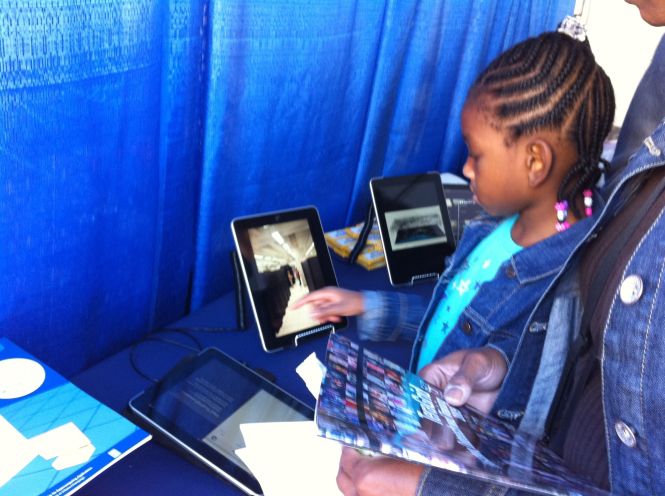
There are lots of users of technology. My concern is that there are people who do not use, know about or are interested in the use of technology , nor do they know how they benefit from the ways in which technology is used at the highest levels in Supercomputing. They innocently use GPS, weather resources from Supercomputing, watch on television the news from around the world, get climate updates, and earthquake and seismic information without thinking of the source. They get visualization and modeling examples daily, and do not think at all of computational thinking , problem solving and the math that is required to be able to participate in computing.Many people use the cloud without knowledge of what it is. A good reference or starting point is at Shodor.org.

There is a higher form of computing that facilitates a lot of tasks for us and few people seem to be aware of it.

You will hear people say, I don’t need technology. Sure. Invisible uses are everywhere.

It is called Supercomputing.

GOT BROADBAND?

This morning several  articles caught my eye. But more than the articles is the interesting interaction on-line and the discussions about have and have-nots. Friends of mine,  a professor, a code writer and a mathematician had a late night discussion following my posting this video by Jeannette Wing.

Dr. Jeannette Wing was the Assistant Director for Computer and Information Science and Engineering (CISE) Directorate at the National Science Foundation.Social Media helps us to communicate, though we may not always agree, at least there is the opportunity to exchange ideas and to think deeply with reflection. Dr. Wing has moved into the private sector. Microsoft announced that it has hired Dr. Jeannette Wing as Vice President of its Research division. Microsoft Research is an expansive group of technologists, scientists, and dreamers that build technology that may, or perhaps more often may not make it to market.

GOT PEDAGOGICAL KNOWLEDGE?

Such interesting conversations I have on Facebook. This is what I am talking about as a model for use of technology. It is not happening in most inner city and rural and distant schools. People have the tools but not the pedagogical knowledge of integration . ( TPACK)

TPACK Image (rights free)

The TPACK Model
The TPACK Model was created in response to the need to provide a framework around the important pieces of innovating learning with a focus on Technology, Pedagogy, and Content Knowledge.  The overlap of these three components is where the 21st Century classroom is most powerful.

Here is general information on TPACK

Got Computational Thinking?

Computational thinking will be a fundamental skill used by everyone in the world. To reading, writing, and arithmetic, lets add computational thinking to every child’s analytical ability. Computational thinking is an approach to solving problems, building systems, and understanding human behavior that draws on the power and limits of computing. While computational thinking has already begun to influence many disciplines, from the sciences to the humanities, the best is yet to come.Looking to the future, we can anticipate even more profound impact of computational thinking on science, technology, and society: on the ways new discoveries will be made, innovation will occur, and cultures will evolve.

It is this that we learn with. So we had a person who writes code, a scientist and me, a teacher.. in a late night discussion with a professor about the video.This is one of the things about social media. It cuts the silos. Ground truths in social media.

I

In this interview from the Education Technology & Change blog, Henry Neeman from the University of Oklahoma describes the increasing accessibility of HPC.

“You may not see the supercomputers, but every single day supercomputing is making our lives better. Everything from the cars we drive to the weather forecast on TV to the movies we watch to the detergent bottles in our laundry rooms are made, or made better, by supercomputing. Today, there are a number of ways for citizens to access supercomputing. Often, these are known as “science gateways,” and they provide a simple interface to a complicated back end. An example is nanoHUB, which K-12 and postsecondary students can use to do nanotechnology simulations. In fact, the nanoHUB website has curricula and teaching materials that any teacher can put to work in their classroom.”

Early exposure and interest

early exposure and interest through outreach

This article caught my eye because it says the things that I have been blogging about, talking about and sharing for some time.

The article is entitled “By the Numbers: Teachers, Tech, and the Digital Divide” it extracts information from the latest Pew Report which is here. The new Pew Research survey of more than 2,400 middle school and high school teachers released today shows that, while teachers believe technology has helped with their teaching, it’s also brought new challenges — including the possibility of creating a bigger rift between low-income and high-income students.

858711_10151522638751327_826085403_o

Reading first.. . and there is free technology of excellence….Many of us know the challenges first hand . Many of us work at different levels of understanding of the difficulty. Often people dismiss what we who are on the ground , in the classrooms and in the places of need as if what we are saying is untrue. We have children who cannot read. Technology can help solve that problem. Early learning is important. Books and technology work too.

We know that people use the tools of technology, but that expense is a problem. We know that the cell phone has brought many people to a mobile use of technology and that “bring your own device” has become the salvation for some schools.Mobile use was shared in the Wireless Technology conference.

                         Wireless EdTech Beyond Being There – The Mobile Future of Learning ( in case you missed it)

There are a few other pieces of research that affect those of us of diversity in very important ways. We have always known that the digital divide is a problem based on access to broadband, hardware and access to teachers who may not have achieved the transformational skills to use technology in meaningful ways.

Some examples of ways in which people are trying to help are:


By Sean Cavanagh in Education Week

“Can online graphic novels help teenagers cope with difficult social situations?

Are 3-D technologies a tool for helping English-learners acquire language skills outside traditional educational settings? And what about the potential for mobile apps that let students manipulate on-screen images with their fingers to help them learn fractions?”

“A federal program, still in its infancy, is supporting research that seeks to answer those and other questions by wedding partners that often operate in isolation—educational technology and scientific research on learning—with the goal of transforming teaching and learning in schools.”

The federal government has been funding projects focused on technology and education for decades, and it has backed research on cognition in many forms. But the relatively new program, called Cyberlearning: Transforming Education , is the National Science Foundation ’s attempt to create a space within the agency devoted to supporting research on advanced learning technologies.

Some of the beginning steps of the program were shared in a conference .

NSF Funds Research to Identify What Works

Jeremy Rochelle of SRI

http://www.youtube.com/watch?v=fHmR0G_NmsE

The conference, which was hosted at the National Geographic, involved SRI ,  and NSF

you can find the portal here.They invite you to help write pages for the cyber-learning topic areas listed below. Their aim is to develop definitions that are strong enough to show the direction of the field but open enough to allow for innovation (see Defining Cyber-learning, below). If you have expertise in any of these areas and would like to be involved in editing these pages, please email cyberlearning-info@sri.com to request a wiki account.

Here are the topics:

The Technology Enhanced Learning (TEL) project is also defining key TEL topics

This is the portal for this important work.( http://cyberlearning.sri.com/w/index.php/Cyberlearning:Community_portal)
There are many teachers, educators, administrators who are still learning to understand these topics and so even with help from various groups trying to make a difference, the leap of faith is a broad one. Edutopia has a program that starts to share why we must go digital.
There are still people who resist personal and educational use of technology for various reasons. Many teachers have the tools,but not the know how or support or the ideational  scaffolding that is needed to be technology fluent. The Pew Report outlined many of the things that I would say, but also lets us know that it is not just
those of us who talk about the digital divide and social justice who are complaining about lack of broadband, access, tools and support for learning the technology.
Edutopia has videos, blogs, and all manner of resources to share with educators on how to use and integrate technology into good practice.
There is no cost for exploring good practices in education at the site.