What Happened to Sharing Technology for All Across the Digital Divide?

This is an update. We are still trying to solve the digital, the economic, the educational and the technical divide.

Here is the group I am working with now. Digital Equity

If you have never heard of the homework gap , look at this video.

A must read if you are a minority in education is to read

The Missing Voices in EdTech: Bringing Diversity Into EdTech 


The real question is who is gating the inclusion of diverse educational leaders in technology?And why?

Martin Luther King Jr.
“But today our very survival depends on our ability to stay awake, to adjust to new ideas, to remain vigilant and to face the challenge of change. The large house in which we live demands that we transform this world-wide neighborhood into a world – wide brotherhood. Together we must learn to live as brothers or together we will be forced to perish as fools.

We must work passionately and indefatigably to bridge the gulf between our scientific progress and our moral progress. One of the great problems of mankind is that we suffer from a poverty of the spirit which stands in glaring contrast to our scientific and technological abundance. The richer we have become materially, the poorer we have become morally and spiritually.”

Martin Luther King Jr.

Man without identity programing in technology enviroment with cy

This is an important book. It may be that the struggle of those of us who are minorities and leaders in education has gone on without the knowledge of the general public. We are missing by design. On his resignation from the Dept. of Education, Dr. Richard Culatta shot a parting shot sharing his concern about digital equity. Some of what he said

“Yes, students can learn without them. Yes, it’s possible to do great teaching without a digital device. Yes, going overboard with computers is a real and pressing problem. But kids who are forced to make do with decade-old computers and slow Internet networks aren’t growing up in an environment that will spark an interest in computers. That matters.”

                                              Illustrating Now . and Then
Sadly, many children are left outside of the loop of Ed Tech. Many have never purposefully
used technology. Rural, urban, tribal, distant and poor groups including many types of minorities are not being included in the use of technology. Many of us who are minorities have tried to intervene to educate teachers and to involve communities.
There are advisory boards, and influencers, and politicians who can make things happen.
What would happen if we focused on content in education? Just a thought.

PIONEERING DIVERSITY

Early in the Ed Tech world, Dr. Frank Withrow and Jennelle Leonard helped teachers to explore the uses of technology. He spoke of inclusion for all.
Dr. Withrow was the Executive Director of Presidents Johnson and Nixon’s Presidential National Committee for the Handicapped and was the Chief Technologist for the US Department of Education for a number of years.

Frank Withrow asked ,”How can we change the educational system? What is the Challenge and Charge?

1. Enlist media as an agent of change.
2. Develop town meetings across the nation that explore and foster better learning environments.
3. Recruit corporate support for this campaign.
4. Create a public relations campaign for better learning environments
5. Develop a consortium of national associations
6. Establish in USED an Assistant Secretary for Reform in the Digital Age
The USA should lead the world in education. The greatest resource for peace in the world is an educated population.  In 1990 161 nations at Jomtiem, Thailand agreed to at least six years of education for all children around the world.
Why not make this a reality? ”

Education for All
”    We fall short of our mission if we fail to include all children in our universal learning systems. The United States of America pioneered the concept of universal education for all children.  In the late 1800s and early 1900s we opened a new high school almost every day across this nation.  Horace Mann established that public schools benefit all people within a society; therefore all people should share in the costs of public education.  Not only has the USA created a great K-12 education system we developed under the federal land grant college program a network of outstanding higher education opportunities for all that can qualify.  Too often we separate K-12 from higher education but in reality the system is one from preschool to graduate school. ”

“The struggle for universal education has not been easy. Each generation has had to fight for the right to enter the schoolhouse door.  For years many children of color were provided separate and unequal educations.  It was not until 1954 that the Supreme Court in its most important decision unanimously struck down segregated schools. Unfortunately, there are those who still fight this decision and send their children to charter, church and/or private schools.”

       We do not like to admit our racial biases but they remain. Dr. Frank Withrow

Here is a way to get there for teachers.

Tpack-contexts

Jennelle Leonard. Pioneer

Jenelle Leonard served nearly a year and a half (1997-1998) as an Expert Consultant at the U. S. Department of Education in the Office of Educational Technology. She consulted and advised on issues related to the development and implementation of technology initiatives and national goals, such as professional development, telecommunications technologies, curriculum integration, and instructional applications. She participated in developing long-range, short-term plans, and strategies for implementing Department programs and initiatives including the evaluation of the effect and impact of the use technology in instruction.

Jenelle Leonard has held supervisory and technology related positions in Prince William County Public Schools, Manassas, VA, at BDM Education Technologies Group, a K-12 systems integrator and consulting company, Center for Instructional Technology and Training in the District of Columbia Public Schools and at the Texas Education Agency (TEA). The TEA position provided her the opportunity to work with over a thousand school districts to implement the state’s Technology Initiatives as mandated by the Texas Legislature.

Jenelle Leonard has over twenty-five years of experience as an educator. She has been a public school teacher and administrator, technology implementation and training consultant, college professor, and a regional and state education department administrator.

Her background also includes designing and developing graduate-level instructional technology courses, technology and software procurement and installation oversight in over 400 hundred schools, and software development. Additionally, she has served on numerous technology advisory boards, and served as a contributing editor for an educational technology magazine. Her most important digital inclusion work in my eyes was this.


Jenelle Leonard served at the U.S. Department of Education as Leader of the Technology Innovation Challenge Grant Program (TICG). In addition to managing the TICG Program, which included developing national guideline materials and policies, reviewing and issuing grants, program monitoring, and program evaluation, she served as an agency expert and authoritative consultant, and provided leadership and guidance within Department of Education as well as to State, and local organizations, institutions, and agencies.

She was in a position to understand the challenge of providing for all.All together

“There can be no gainsaying of the fact that a great revolution is taking place in the world today . . . that is, a technological revolution, with the impact of automation and cybernation . . . . Now, whenever anything new comes into history it brings with it new challenges and new opportunities. . . . [T]he geographical oneness of this age has come into being to a large extent through modern man’s scientific ingenuity. Modern man through his scientific genius has been able to dwarf distance and place time in chains. . . . Through our scientific and technological genius, we have made of this world a neighborhood and yet we have not had the ethical commitment to make of it a brotherhood. But somehow, and in some way, we have got to do this.”

That was Rev. Martin Luther King, March 31, 1968.

There has been great political change. The revolution in education for all is still to come.


digital age


Larry Irving  when at NTIA,helped us to understand this problem with the initiation of the idea of the E-rate.

That helps to provide the technology architecture and learning landscape that is needed.

He further said,” Our efforts are needed in at least three areas: what I call “access,” “aptitude,” and “attitude.” It’s a triple-A plan, and we need to begin work in each of these areas immediately if our students are going to win straight As in technological literacy.


StarStuff, StarWars, StarPupils

A friend recently posted a picture of her boy, reading. He was invited by the movie “Star Wars” to read. I loved it seeing that science fiction, the story, has become of interest to students. The Challenger Center , NASA and The Planetary Society have resources to share.

I would start using the Star Wars coding. This is the link, with choices of language and maybe later a bunch of video films. It is fun to build your own game.

The Challenger Center is located in various geographical areas. The curriculum is awesome. I like to teach the curriculum pieces that feature Mars. The movie, The Martian is of interest too, to build on interest. In case you have not seen it , this is a quick synopsis.

When astronauts blast off from the planet Mars, they leave behind Mark Watney (Matt Damon), presumed dead after a fierce storm. With only a meager amount of supplies, the stranded visitor must utilize his wits and spirit to find a way to survive on the hostile planet. Meanwhile, back on Earth, members of NASA and a team of international scientists work tirelessly to bring him home, while his crew mates hatch their own plan for a daring rescue mission. It’s a story.

Build your own Moon

An online game that allows players to build their own moon and sculpt its features has won big praise in science art competition.

The game, called “Selene: A Lunar Construction GaME,” measures how and when players learn as they discover more about how the Earth’s moon formed and, by extension, the solar system. It received an honorable mention in the 2012 International Science & Engineering Visualization Challenge, the journal Science announced today (Jan. 31).

As players experiment with the game, they learn more about one of the easiest heavenly bodies they can study, Selene developers said.

Here is the game.

http://selene.cet.edu/default.aspx?page=Selene

Group Activities?

As the students explores there are these other sets of information. The Mars Survival Kit 

The kit is for lower grades, …and then there is Marsville . This was so fascinating , a principal who was not in love with hands on science, .. could not resist and joined us in exploring building Marsville. What is Marsville?

Marsville (Grades 5-6) challenges students to create a colony of habitats as they prepare for a simulated mission to Mars.  Academic content including mathematics, science, engineering, communication and the arts is incorporated into a series of individual and group activities as students work through a series of tasks to solve specific biological and social problems in order to design life support systems.

marsville_pic_11

A Marsville Village.

This is project based learning. You can add it as a special activity to your curriculum.I like the innovation , the problem solving and the building of habitats. I taught it as a Gifted and Talented unit, but the students decided to share it with the neighborhood. It is a fun  learning activity.315827867_432c1f761b_o

During Marsville Link-Up Day, problem-solving and critical thinking skills are emphasized during the final culminating activity where students physically create their Marsville Habitat.  The crews convene at “Mars” (hosting NJ colleges and/or schools) wearing their uniforms and packing lunches according to specific guidelines.  Teams work within their habitat to cooperatively erect their “bubble” which is made of construction plastic and duct tape and inflated by the air pressure from a floor fan.  Team members share their life systems with other team members within their habitat along with solutions to a crisis to their colony and then, complete a Celestial Questial traveling to other habitats to learn how those life systems operate.  Finally, the teams end the day completing their mission logs and receiving “Astronaut-Candidate” certificates of recognition for their efforts.

If this seems too daunting to you , and you just want to please and have an individual student learn. You can have a student construct a moon habitat.

If you never studied space science education, you can start with students here.

IMG_9506


Mars City Alpha is a upper grade event that is great to do, if you have a class to do it with.


Ways to Integrate The Topic Of Mars In Your Classroom ( from NASA)

Use a Mars Mission as a Current Event
Typically, the information sources for current events are printed materials, television, radio, and the Web. Occasionally, teachers are able to schedule presentations by people familiar with or involved in an event, and sometimes students can conduct interviews with such people. Formats to share information include bulletin boards, oral reports, student reports, and current event notebooks. Each of these methods involves students in different ways and at different levels of intensity. Below are several ways the Pathfinder mission could be used in a current events context:

  • The mission’s data and images will be used for decades by scientists researching Mars. Check newspapers and magazines for articles on the science resulting from their work.
  • There is an enormous amount of information about the mission the Pathfinder Web site, everything from the people involved to the current weather conditions on Mars to the latest results based on Pathfinder data and images to the latest images themselves. The Web site will also link you to other sites related to the mission.
  • Shows about Mars air on television or radio, and NASA’s cable and satellite channel, NASA Select, has frequent updates about its various missions. Students can take notes on a show and prepare a report based on the information presented.
  • A bulletin board is a convenient way to organize and prominently display information. You might organize a bulletin board by topics such as:
Mars Pathfinder
Life on Mars
Robotics
Mars Global Surveyor
Water on Mars
Questions About Mars
Other Space Missions
Human Missions to Mars
Future Missions to Mars


SOURCE: http://mars.nasa.gov/education/modules/webpages/integrationideas.htm


I have done all of these things.So can you!!

I was a Challenger Center Teacher.

My last visit was to the Manea Kea Visitor Center.

186097-geo-globe-wall-marquee-rwd.jpg.rendition.intel.web.720.405


Invisible Students


Students at SITE

This article made me think of all of the people in education who have muted voices or no voices at all. It is probably because they don’t have technology, training, money, or time to make the difference that students need. They also can’t answer the experts , or share their sorrows in education. I think of them often. When I propose a workshop or a symposium, people start to tell me about the latest , hottest trend in education. Invisible students and teachers have no power. Even visible bad assed teachers can be shut out of the conversation and shut up.

Why are teachers cloaked in invisibility? Perhaps because we only ask the professors about research and not the working teachers. There are teachers and students in the world, in the US who are still not connected, and the way to get connected in their communities is difficult to find. We talk about the Internet of Things, and they have hardly the understanding of the uses of technology that are beneficial to them. I was told that sponsors don’t really care about digital equity, I don’t believe that.

I think it is difficult to walk in the shoes of those who work in rural, distant, urban, multilingual , and minority areas, but the work is necessary to lift all boats.

Teachers?

The public perception of the job is one thing. Being a good teacher is hard work.

The recent onslaught of attacks on teachers makes some of us like turtles. We withdraw and do our magic in the classroom as we can with what we have. The attacks make us insecure, and gives us feelings of unworthiness, sadness. Joy in the eyes of a child helps to take away the pain, or the discovery that some foundation, some credible agency understands how you feel makes for a quiet smile.

I like it that Richard Cullatta resigned and was not shy in his parting shots. The article is one that most people will never see or understand. But we in tribal. rural, distant, urban, and poor, the communities of those without the access, resources, savvy grant writers, technology trained teachers, and community support know exactly what he is talking about.

In his final public remarks as director of the Office of Educational Technology for the U.S. Department of Education, Richard Cullatta had a few requests.

Please don’t scan in the same old worksheets.

Please don’t record boring lectures and put them online.

Please don’t forget the needs of low-income and minority students, many of whom don’t have easy access to digital devices, speedy Internet service and advanced classes in computer science.

*I would add please don’t forget that there are many students with reading difficulty  who think problem solving is a pain.

Culatta delivered his plea last week at National Education Week, an annual conference that was held this year at New York University’s Steinhardt School of Culture, Education, and Human Development. The outgoing federal leader spoke on a panel about teaching coding in schools, and he used most of his time in the spotlight to talk about equality. We must ensure that the rapid march of innovation does not leave certain groups of people behind, Culatta said.

He said    ‘Women and minorities are underrepresented in computer science courses in high school and college. For instance, girls make up 56 percent of all test-takers in Advanced Placement courses, but just 18 percent of students taking computer science tests, Culatta said. It doesn’t get much better in college, where women make up about 57 percent of all undergraduates, but just 14 percent of them major in computer science. ‘

“And the inequality is even more stunning for people of color. In 12 states, zero students of color took the computer science Advanced Placement exam, Culatta said. And a mere 10 percent of people majoring in computer science are black.

“That’s an incredible problem that we need to solve,” Culatta said.

There are a lot of us who are not computer science teachers. But we have had support from the Supercomputing Conference which had an education section and we learned what we could in that precious space. For a while we also learned in the conference and at Shodor.org.  Then I had a remarkable experience in the Atlas Institute , learning with Dr. Alex Repenning. We were learning scalable game design. He knows how to teach teachers who are NOT computer science teachers.  ”

Sadly in the infrastructure of boards, and meetings , and groups who decide what goes on in education and who present in education we are an invisible force if present at all in the education  groups.

ADVOCACY


IMG_0078I learned as many others did at NASA, with the National Geographic Education Institute and alliances, with Earthwatch and the Jason Project. We teachers got to meet  Bob Ballard, Bill Nye, and a number of astronauts and scientists .


I had the power of the George Lucas Educational Foundation. When people were talking about Star Wars , they did not know that Edutopia is and has been a force in education for all.

We teachers also had the power of the NEA and its advocacies for diversity. McAuliffe, selected from more than 11,000 applicants to participate in NASA’s The Teacher in Space Project, had made plans to provide lessons from the shuttle on the benefits of space travel. Christa McAuliffe was a gifted social science teacher who was dedicated to her students and to the teaching profession.

10941023_799368376766144_6756698411103265282_n

Many of the projects in coding are absolutely wonderful. I loved weaving the Star Wars coding with reading of the books, and sharing science fiction, and NASA photographs and  art and the movies in a mashup that few children could not be attracted to.

I am pretty savvy, so I did not even break a sweat. I walked into a lab and sat down with children I had never seen. We had a great time coding. We did not limit our time to an hour. We did various things in about 4 hours, and the kids wanted to stay longer.

*I am not in a classroom because I am a very experienced in technology and was asked to leave or give up technology during NCLB. So I left and became a consultant.


And then there is Cyberlearning.   But, but.. without regular access how do we develop the skills, and deep learning. How sad it must be to understand the Internet of  Things and to not have a learning landscape that is even good access.

surface teacher


Some of the teachers need their job so badly that they just go with the flow no matter how terrible it is. It is taken for granted that the experts in the silos of higher ed know the answers. Well, some of those experts are very isolated from the people who really teach.


How Do We Improve the State of Teacher Diversity and Assist with Professional Development?

I am from a generation that was taught with 20 year old books and schools in a sad state of being. We could read, and write and do math but the subjects were limited and access to the best of teachers was not usual. Of course there was no technology, and sadly there was no science. Often science gets shoved to the back of the curriculum map for minority students and teachers.

HELP?

National Geographic Education , NASA , NOAA and NSF projects have shaped my knowledge. There is a gold mine of resources at Concord.org

IMG_8168

Most minority teachers do not have access to exemplary professional development even when it is for free because they don’t know about it or they cannot access and learn using technology. There is always the George Lucas Educational Foundation site, Edutopia.  It’s free. There are online assists, but a lot of the webinars are focused beyond beginners. Autodesk University has a series of webinars, as does ISTE, for teachers to learn how to use the technology. Autodesk Design Academy (http://academy.autodesk.com).

ISTE has a series of PLN’s which help teachers to explore, be involved, learn to innovate, and have mentors for learning.

The White House has initiatives too, http://www.esri.com/connected

IMG_0091

HISTORY

It is true that before my time Einstein visited Lincoln University to teach physic but few people know of that mentoring. I know it because my uncle taught at the University in Pennsylvania that he visited , there is a photo on line of Einstein in the classrooms there.

     Internet of Things? Or just plain access and contact?

Today we are talking about technology. Who has it? You really don’t think everyone even in the US has access ? Broadband? Tools and well trained teachers? If you think that you must be dreaming and you may not know how to measure broadband speed.

Professional development is an interesting puzzle. There is a mindset for involving the use of technology. It is called TPACK. You use it for ideational scaffolding and inclusion.http://tpack.org

Here’s the problem. Many teachers in rural , distant, urban, and difficult schools do not have access to technology in meaningful ways and do not have a mentor or technical help that is available to them . So there is fear. There is not a lot of time within the schedule and even though we know that digital pedagogy is important.

Some people cling to the tests as the anchor for finding out what our students know. Sadly in the places where the technology is limited there is a problem that few speak about and that is that the technology that is available is needed to give the tests, so teachers have to release the technology for testing. Certainly most of them will not complain.

Punya Mishra​ has a solution for the professional development. He got funding to link a University to teachers working in schools of need and they work through the summer to be involved, learn, create, innovate and share their learning as they earn a Master’s degree. Publications and lessons are shared. It is one of several ideas to change the skills of teachers working in places of need.

BPDA and LISTA too champion students and teachers. These organization help. They have chapters and mentors who make a difference. I mentioned NSF. There are projects that help to integrate new practices and ideas called CyberLearning.

They ask these questions.

  • How can cyberlearning help empower the next generation of diverse learners?
  • How can we create innovative technologies that draw upon sound theories of learning through productive collaborations among researchers, designers, learners, and formal and informal educators?
  • How can we foster an inclusive design community that balances real world problems and settings with promising cyberlearning approaches?
  • How can we integrate contributions from multiple research projects for broader impact (e.g., combining our theories or combining our tools into a common infrastructure)?
  • Approximately 150 leading researchers along with students, educators, designers, industry experts, and other stakeholders will work together for two days at Cyberlearning 2016 to accelerate the community’s collective work and impact. Here is the call for participation.

IMG_0909

The State of Teacher Diversity in American Education
Albert Shanker Institute
http://www.shankerinstitute.org/resource/state-teacher-diversity-executive-summary
Teacher Diversity in the U.S. is an area of concern. The teacher work force has gotten less ethnically and racially diverse and more female, a development which has had an adverse effect on students, particularly on males of color. It is an impediment to the broader goals of equity and social harmony. ASI is working to better understand teacher labor market trends and identify promising interventions aimed at increased teacher diversity in K-12 education.

This report shows that nationally, progress toward greater diversity is being made, but it is quite modest compared to the need for more minority teachers. In the nine cities studied—Boston, Chicago, Cleveland, Los Angeles, New Orleans, New York City, Philadelphia, San Francisco and Washington, D.C.—the picture is much more bleak, and there are only a few pockets of progress, surrounded by serious setbacks.
You can download the report at the link above.

There is a report that many are looking at the OECD report? what say you about that? http://www.keepeek.com/Digital-Asset-Management/oecd/education/students-computers-and-learning_9789264239555-en#page8

Researchers remind us of this work

Ed Tech researchers would remind them about the field of Media effect research and the classic articles from Kozma and Clark.

I Can’t Breathe… I Can’t Code…and other Significant Modifers.. I Can’t Learn ??(What’s Going On?)

People around the world understand the simple sentence, ” I Can’t Breathe”. For most people no definition is required  to understand the significance of the quote. It has almost universal support in advocacy.

We know I can Code because of an intense media blitz and dedication to the skill.

What would happen if we targeted the other needed skills in the same way? Just saying…

 Maybe the easiest way is to share a powerful photo like this to get the message across.
But there are other messages that contribute to the problem.
One of them would be..
858711_10151522638751327_826085403_o
I  Can’t Read.
Superhero kid. Girl power concept
I CAN”T READ!!
Those of us who have worked with struggling readers know the frustration and angst of their chore.
There is technology that can solve the reading problem. but teachers are limited to the vendor of choice of a school system or school, or of what they know about. Choice is not often given, but a vendored solution is. Skilled teachers can use technology to entice, entrance, involve and snare a reader who is struggling.. if they have time and permission to discover joy. Sesame Street gets it so right.
Often the solutions for struggling readers are more boring work that seems to never end. Students are taken out of class for skill and drill. Gamification helps. I know , I have used it. Here’s the thing about a game. It is ok to fail. It is ok to do it over. It is ok to race against your last score. There are solutions that modify the lack of reading fluency and these solutions provide entry into reading.
Award reading puts interest, ideas and skills into a package of individualization. There are other vendors that do the same. I am not sure why success is a problem. It make be the noise in the vendor space or the confusion in the learning landscape about what to do.
There are solutions. I post about Award reading because it works for me.
Man without identity programing in technology enviroment with cy
Older Struggling Readers ( a real problem)

If children receive instruction in phonological and alphabetic skills and learn to apply that knowledge to decoding words, they are very likely to succeed at reading. Once children fall behind, they seldom catch up, a reason that such states as California, Virginia, and Texas promote early intervention to prevent reading problems. Reading level in 1st grade, moreover, is an astonishingly good predictor of reading achievement into high school (Catts et al., 1999; Cunningham and Stanovich, 1997; Shaywitz et al, 1999; Fletcher et al. 1994). Reading failure begins early, takes root quickly, and affects students for life.

Improvements in reading education in the lower elementary grades, however, are coming too slowly to affect the huge numbers of students beyond third grade who have been the victims of misguided reading instruction and scarce resources. Many people know that about 42 percent of 4th graders score below basic in overall reading skill on the National Assessment of Educational Progress (NAEP). In Washington, D.C., where I am currently studying reading intervention, the proportion of students beyond 3rd grade who cannot read well enough to participate in grade-level work is between 60 and 70 percent, depending on the grade and year of assessment. Too few children can compete in higher education and about half fail to complete high school. In this community, the rate of adult illiteracy — reading below 4th grade level — is 37%, the highest in the nation. Nationally, 25% of all adults are functionally illiterate. 

I Can’t Connect
 child
Boost in Erate Program .. so needed.
 Students at KIPP Austin Obras in Austin, Texas, use their English Language Arts program. Students spend time on the computers working on different standards according to individual need.
What is the state of broadband in the US? 

http://www.pewinternet.org/fact-sheets/broadband-technology-fact-sheet/

In a recent survey we found that 15% of American adults do not use the internet. Those least likely to use the internet:

  • Senior citizens
  • Adults with less than a high school education
  • Those living in households earning less than $30,000 per year

Among adults who do not use the internet, almost half have told us that the main reason they don’t go online is because they don’t think the internet is relevant to them.

Those who are connected seem not to know that there are pockets of people who cannot connect or who do so only in school. Technology delivery to some  school is suspect. More than that the brosdbsnd footprint on a community is a problem in many cases. Too expense, too limited and unavailable in public spaces where children can easily go.
We suggested from the NIIAC, years ago, the school, the cultural centers, the community centers and other structures for access. In some cases this works. There are remote places all over the US
in spite of BYOD and mobile devices. I was there when the idea of E-rate was initiated but others claim the idea. That’s good. That means it is important.
Did I mention that the tool use, and ownership is a problem in urban, rural, distant and remote locations? In some cases ownership is limited to old technology, in some cases there is help but the people who need the tools don’t know how to connect to the resource.
wifi
I have been teaching STEM.. the use of science, technology , engineering and math since I started teaching years ago. At one time it was called SMET by NASA. At another time it was revised and brought out as something new. When a Nation at Risk came forward, some steps were taken to provide national policy but, foremost was the idea of testing, not the idea of creating resources, and teachers who were skilled in technology. the technology wagon was about tools and the investment in teacher proficiency was limited by the imagination of Sesame Street, the George Lucas Educational Foundation, The National Geographic… you can see where this is going. Well, school systems like to provide their own professional development, using vendors or their own personnel. So we got a new layer of administrators. The IT person became important even if connectivity was all they knew. Sigh. Education became a business , and conferences, webinars and meetings were
everywhere. Teachers were running to catch up with the latest pedagogy and technology use. Some of the efforts worked. NASA and NOAA and ESRI and the National Geographic and other groups
provided leadership.
397085_457522240950367_458342711_n
Conferences grew into a huge synergy of tools, transition, workshops and speakers. We are still in that space, but with new additions. National ways of working, Common Core, New Science Standards… we have leapfrogged ” No Child Left Behind ” it is there and it is not there. Common Core is there and it is not there. It depends on your state and your state of mind and your ability to test using technology..
Remember the places that don’t have the technology? If there is limited technology well, the technology is used to test and children may lose access during the pretesting and testing times.
I CAN’T DO STEM !! Why Not?
My dad was an industrial arts teacher. There were also agronomy and career focused schools. There still are some of these places where one can go to learn things like plumbing, carpentry, industrial engineering, animal husbandry, but I fear many of these subjects have been thrown away to the dream of technology as a silver bullet. One of the problems with STEM is that a lot of people seriously , who teach do not have a STEM background, or one that is up to date.
008
I think the people who are connected do not remember that there are people struggling to learn the ways of technology with teachers and people who have limited knowledge. I am not even talking about coding. That’s next. I love the after school programs and CIRCL expanding technology and the games that make learning so different, but who knows these programs and even more interesting who has the skills to write the grants and  put good practices in the learning landscape of their own geographical space. There are gatekeepers, administrators who have choices to make and they don’t make informed choices. I finished a wonderful workshop on GIS and I am not new to GIS, but sharing what I learned seems impossible. I have been put into place by testing, or pushed aside by people who don’t know ESRI Connects and who have their own agenda ( being in power).
To attend, learn and have the skills to share is one thing. To be given permission to teach, to mentor is another thing.
Here is where the organizations come in to make a roadmap. But everyone is not on their radar. There are costs involved . So ESRI gave state licenses and mentors to help. Sadly , there are people who are unconscious to the facilitation of knowledge that ESRI has given in a national push.
This is my favorite picture, but it does not show community projects. The power of GIS is all over our
neighborhoods in meaningful ways.
Powerful , powerful community resource management. Some communities of color are suspect. That’s because they don’t know the job power, the career power of GIS. Understanding innovation should not take so long.

Don’t ignore this powerful message and initiative!

.http://connected.esri.com/

OPEN DOORS TO CAREERS 

We will discuss coding in the next post. There are so many wonderful messages online this week, check them out.

orienteering

Cyberlearning Research Summit – Futuring in the World of Education

10448466_10152452475976327_1349130828318772782_o


To continue to lead in an increasingly crowded space of contributors from other agencies, corporations, and interest groups the community NSF funding fosters felt the need to share the “transformative potential” called for in cyberlearning.

Instructive is the Blog from SRI
SRI Blog
The photos in the original blog are at the site.
http://www.circleducators.org/about.html

National Cyberlearning Summit Features Major Advances in Learning with Technology
By Jeremy Roschelle at 12:57 PM PDT, Wed Jun 18, 2014

On June 9 and 10, 2014, more than 100 investigators, innovators, researchers, and educators convened for a summit at the University of Wisconsin, Madison to identify and communicate major advances in learning with technology. Participants presented findings from diverse projects, yet a common message emerged from the summit: the importance of highlighting new images of what learning looks like.

SRI Blog
The photos in the original blog are at the site.
http://www.circleducators.org/about.html

IMG_5352

National Cyberlearning Summit Features Major Advances in Learning with Technology
By Jeremy Roschelle at 12:57 PM PDT, Wed Jun 18, 2014

On June 9 and 10, 2014, more than 100 investigators, innovators, researchers, and educators convened for a summit at the University of Wisconsin, Madison to identify and communicate major advances in learning with technology. Participants presented findings from diverse projects, yet a common message emerged from the summit: the importance of highlighting new images of what learning looks like.

The images of learning shared at the summit centered on students’ engagement in meaningful inquiry and knowledge creation, while using new tools that enable students to more intuitively and deeply express what they know and can do. The images also emphasized collaboration and conversation with both peers and mentors, and that student inquiry and learning is accelerated and sustained when students participate in supportive learning communities. While technology in learning is growing rapidly through the efforts of many communities, the cyberlearning research community demonstrated unique accomplishments in achieving this new image of learning in several ways:

Through design-based research
By incorporating modern learning theory
By collecting rigorous data to inform improvement
By building partnerships for impact

Further, the cyberlearning community showed unusual strength in approaches to learning that spanned and connected classroom-based, home-based, and community-based learning environments.

Opening presentations featured compelling images of how technology can support students’ engagement in inquiry and knowledge creation. For example, Dr. Ingmar Riedel-Kruse (Stanford University) showed how an undergraduate biology course could engage students in meaningful inquiry despite students’ lack of prior experience in setting up biology experiments.

Dr. Riedel-Kruse demonstrated a robotic apparatus for conducting controlled experiments with real organisms from an internet browser.

This apparatus allowed undergraduates to design their own experiments to explore patterns of growth and to collect data and images from the experiments on their laptops over the internet, from any place and at any time of day. This enabled students’ inquiry process to grow from curiosity about visual patterns to running an extended series of experiments and collecting quantitative data, while supporting newcomers to biology who didn’t have the requisite skills to set up biological experiments and measurement apparatus.

Dr. Jim Slotta (University of Toronto) showed how conventional classrooms could become places where students do field work. Strategically placed monitors in a reconfigured classroom revealed an imaginary, simulated infestation of bugs crawling behind the walls and under the floorboards of the classroom, and students were thrust into the challenging of understanding the insects’ behavior by making observations, developing conjectures, and testing hypotheses.

In another example, the classroom became a rainforest in which a simulated natural disaster had taken place, and students had to make observations and collect data to uncover the cause.
IMG_0509

Dr. Slotta’s central advance was a technique for writing computer-controlled scripts that could immerse students in these experiences, and yet keep them moving towards key learning outcomes—thus relieving the teacher of the need to orchestrate the sequence of learning experiences in these complex, immersive simulations. This allowed the teacher to focus with the students on the content and process of learning science.

Another characteristic of the images of learning at the summit was how they involved new forms of student expression. In a simple, yet mind-blowing demonstration of augmented reality, Dr. Jodi Davenport (WestEd) showed how technology could enable playful, hands-on work to connect with conceptual scientific investigations. Dr. Davenport handed out Lego-like models of molecules that students could hold in their hands and manipulate into new shapes. A tablet computer with special image recognition software was able to recognize what the student was doing and instantly visualize hidden scientific phenomena and variables—heat, energy, chemical bonds, etc.—thus connecting students’ physical moves to scientific models.

In another example overlaying scientific ideas on a familiar substrate, Dr. Tapan Parikh (University of California, Berkeley) showed tools that allowed youth to represent data about their communities by overlaying photographs and symbolic representations on maps on their mobile devices (e.g. from Google Maps). Likewise, Dr. Deborah Fields (Utah State University) demonstrated crafts that incorporate technology. She shared student projects such as making bicycling clothing that could show turn signals and increase safety. Dr. Fields’ message was that expression of STEM knowledge and skill could be grounded in hands-on projects with fabric, wood, and other materials—and not just what students do on paper or on computers. These are but a few of the exciting demonstrations given at the summit.

Although some people foresee technology as taking over human teaching roles, such as tutoring students or making instructional decisions, several of the strongest technological advances at the summit emphasized how technology could augment and complement the roles of people. In one example, Dr. Carolyn Rosé (Carnegie Mellon University) examined how students collaborate in online learning environments via discussion boards. She showed an innovative technology that could analyze the discussion and intervene as an additional discussion partner. Scholars have found that deep learning is fostered by when teachers and students engage in “accountable talk”. Dr. Rosé’s computational agents could join a conversation to bolster the human participants’ engagement in the routines of accountable talk, such as prompting students to ask each other to explain (and not just assert) ideas.

Although some people foresee technology as taking over human teaching roles, such as tutoring students or making instructional decisions, several of the strongest technological advances at the summit emphasized how technology could augment and complement the roles of people. In one example, Dr. Carolyn Rosé (Carnegie Mellon University) examined how students collaborate in online learning environments via discussion boards. She showed an innovative technology that could analyze the discussion and intervene as an additional discussion partner. Scholars have found that deep learning is fostered by when teachers and students engage in “accountable talk”. Dr. Rosé’s computational agents could join a conversation to bolster the human participants’ engagement in the routines of accountable talk, such as prompting students to ask each other to explain (and not just assert) ideas.

In another example, Dr. Janice Gobert (Worcester Polytechnic Institute) showed how a simulated science lab could give students useful feedback not only on multiple choice questions about simple facts, but also about the process of carrying out a scientific inquiry—and this feedback could help students and teachers focus not only on right answers but more importantly on how scientists conduct valid investigation.

Dr. Janice Gobert (Worcester Polytechnic Institute) showed how a simulated science lab could give students useful feedback not only on multiple choice questions about simple facts, but also about the process of carrying out a scientific inquiry—and this feedback could help students and teachers focus not only on right answers but more importantly on how scientists conduct valid investigations.

In a third example, Dr. Sidney D’Mello demonstrated facial recognition technology that could detect when students were confused, frustrated, or bored—and the startling fact that the image recognition technology was more accurate in determining these emotions than typical teachers. Whereas the term “cyberlearning” might sound cold and robotic, Dr. D’Mello highlighted how cyberlearning is actually moving to richly engage with student emotions, and the relationships among emotion and reasoning—for example, that temporary state of confusion can be productive for students’ learning, but not if the confusion shifts into frustration and disengagement. Dr. D’Mello offered that the ability to recognize whether students were productively confused or unhappily frustrated by might help teachers and students better regulate learning experiences.

Participants at the summit also brought many examples of playful learning environments, such as games. However, when people think of video games they often imagine children engaged in solitary, isolated activity. In contrast, a particularly strong consonance among presentations at the summit was on the importance of collaboration and community for learning outcomes in playful environments.

For example, Dr. Nichole Pinkard (DePaul University) shared work from the Cities of Learning program, a summer program in Chicago (and soon, many other cities) that engages youth in a web of related neighborhood activities to increase their participation in STEM activities and build their personal identities as STEM learners. Dr. Pinkard explained how the thoughtful design of multiple opportunities for learning in neighborhoods and communities along with recruitment of different types of mentors and adult leaders led to positive experience for youth as they played games and engaged in playful activities. Here, STEM learning was situated not as a solitary game, but as a social gaming challenge in youths’ neighborhoods.

Dr. Leilah Lyons (University of Illinois, Chicago and New York Hall of Science) highlighted how well-designed tools can foster a particularly productive form of collaborative learning in which students have tools aggregate what they are learning, potentially on different aspects of a shared phenomena or problem.

Dr. Yasmin Kafai (University of Pennsylvania) emphatically demonstrated how programming (an activity which is strongly connected with images of solitary activity) engages learners more strongly when understood and contextualized as a community activity which involves more than writing code—how online youth communities where students tell stories, build games, and make animations can foster learning to code.

As the summit wrapped up, participants reflected on the challenge of achieving large-scale impacts from cyberlearning investigations. Some thought it could take 10 to 20 years until these new images of learning were widely deployed in society and a similar length of time for the necessary technologies to mature and become widespread. Others saw opportunities to deploy cyberlearning advances more immediately, potentially in the context of existing products or classroom practices. Some suggested open source as a means to make technical advances available more broadly, while others emphasized the participation of cyberlearning leaders in start-up companies or as consultants to established companies.

Importantly, representatives from both large and small commercial and nonprofit publishers attended the meeting. Michael Jay of Educational Systemics offered a key insight. Mr. Jay said the overriding challenge was overcoming cultural differences between research communities and practitioner communities, and between research communities and entrepreneurial communities—differences that make communicating about advances and working together difficult. There was broad agreement that it was important to keep exploring and understanding these differences, and to find practical, immediate steps that would enable the cyberlearning community to engage with like-minded, yet complementary partners to achieve greater impacts.

More information about the cyberlearning summit and other activities and accomplishments can be found at the http://circlcenter.org web site. Video recordings of many of the key talks are available at this site and on YouTube.
IMG_0511
The Cyberlearning Summit was hosted by the Center for Innovative Research in Cyberlearning (CIRCL), based at SRI International in collaboration with Educational Development Center (EDC) and NORC. Funding was provided by the National Science Foundation. Dr. Sherry Hsi (Lawrence Hall of Science) served as program chair, assisted by a diverse program committee, as well as a logistics team headed by Sarita Pillai at EDC.

This material is based upon work supported by the National Science Foundation under Grant Numbers IIS-1233722 and IIS-1441631. Any opinions, findings, and conclusions or recommendations expressed in this material are those of the author(s) and do not necessarily reflect the views of the National Science Foundation.

The US Russia Opening Doors Project

The US-Russia Opening Doors project is a project of the Eurasia Foundation. http://eurasia.org/


Opening Doors to Collaboration
(US-Russia)(English version)
1523887_10152192603016327_265439486_o
Bonnie and Vic Sutton have worked, learned and shared best practices in this program, with travel, study and outreach in Russia.We worked with Dr. Yvonne Andres. She says

“As educators, our ultimate goals are two: to open the door to a world of infinite possibility for our youth, and to help them learn how to learn — opening doors, lighting the way and connecting youth.”

Attached is a link to her educational outreach video. This video will be available in both English and Russian. And, there will also be downloadable teaching materials available in August.

We quite are thrilled to have been granted special permission from Pete Townshend (The Who) to use his song, “Let My Love Open the Door.”

Open your Doors to Collaboration
Watch the video – and join the project!

Dr. Yvonne Marie Andres

iPoPP.org – Globally Connecting Every Educator by 2020
Facebook.com/MyiPoPP
Twitter.com/MyiPoPP

SERC.. a wonderful Smithsonian Adventure STEM Science on the River

ontent

4894_115871911326_8275176_n

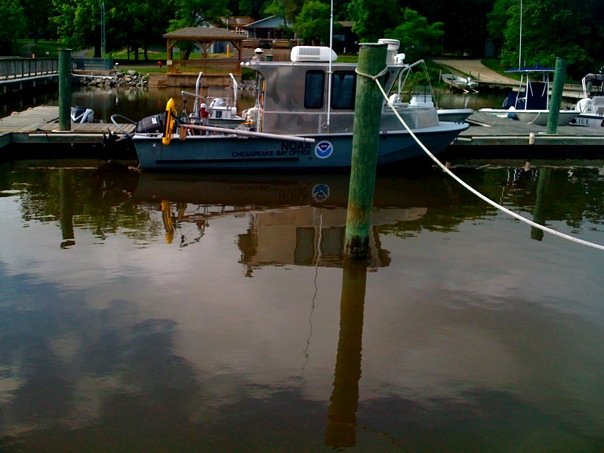
One of my favorite field trips, is not too far away from DC. It is environmental , historical, beautiful, and all STEM and STEAM. It links the students and parents to the Chesapeake Bay in wonderful and unforgettable ways. Parents want to go, and take workshops to qualify to go on the trip. What is great is that those parents also create the possibility for re-visits. It is just that great a place.

What

We begin the year planning to write grants to cover the cost for all students.
4894_115870601326_3361947_n
I like to do a covered dish orientation for parents and their families about the Chesapeake Bay. I ask them to bring in dishes from around the Chesapeake Bay and one copy of their recipe. We eat, we have fun singing and making up Chesapeake Bay Cinquains.
We create a year-long committee to plan the SERC trip/
We display books, posters and resources about the Chesapeake Bay and share the information about SERC. We share their Powerpoint.

I have an invited speaker from Fish and Wildlife, NSF , National Geographic , ESRI or Earthwatch.

The Smithsonian Environmental Research Center
(SERC) leads the Nation in research on linkages
of land and water ecosystems in the coastal zone and provides society with knowledge to meet critical environmental challenges
in the 21st century.

Where

Smithsonian Environmental Research Center

Why should you go?

This is a place that serves lots of learning communities.

There are programs for various age groups , internships, and serious scientific work going on.
19557_328666201326_3330411_n

GPS, GIS comes to urban students in a neighborhood setting

ESRI , and National Geographic provide resources for all.

This is one of the most interesting, fascinating place to take children to learn about the environment. There is a fully equipped lab with lessons and things for them to learn, and there are several hiking trails. The children love the learning activities especially the seining, which is one of several exercises that they learn about before they come.4894_115870586326_2833140_n

They go out on a pier with a leader and do several exercises, a turbidity study, a study of microscope things in the Rhode River, the study of winds and tides.. the seining activity.. and they carefully take notes on their findings.
I combine this work with the “Living in Water”curriculum from the National Aquarium in Baltimore.

http://www.amazon.com/Living-Water-Aquatic-Science-Curriculum/dp/0787243663
The geography of and interconnection of the places around the bay are highlighted in this interactive presentation.
http://www.nationalgeographic.com/chesapeake/interactive/index.html?s1=0|timePeriod=1|tourStop=0
We use a map and mark the various locations. We do some of the locations from time to time. We also have a table full of books on the Chesapeake Bay.
4894_115871906326_4955821_n
The center is a beautiful wild place away from the main road on the river.

Teachers and parents have to do a workshop which is shared here. http://estuarychesapeake.wordpress.com This is from the website( About Estuary) Chesapeake Estuary Chesapeake is SERC’s most popular education program and involves a series of five stations at SERC’s dock and the Java History Trail. The class is divided into 5 groups that each rotate through all stations.

The five stations of Estuary Chesapeake are: About Crabs, Water Testing, Oyster Bar Community, Investigating Plankton, and Going Fishing (seining). For parents and teachers there on the site a training presentation powerpoint.

Check out the Parent/Teacher Training Presentation — this powerpoint teaches you all you need to know about SERC, the Estuary Chesapeake program, and how to be a Station Leader.

Stations

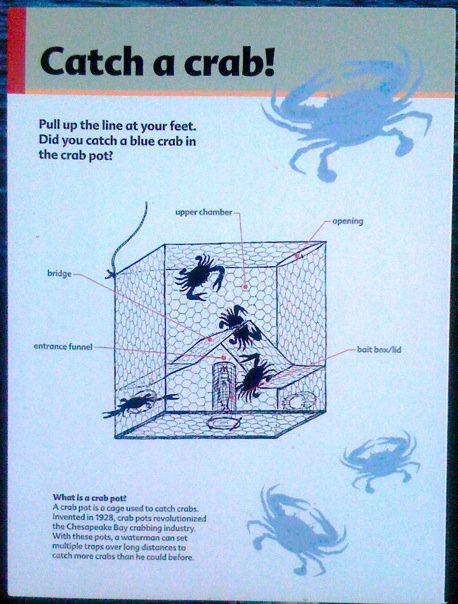
About Crabs Using hand lines and a hand trap, students catch their own crabs and study them to learn about their anatomy and behavior. Crab habitat is also discussed. Resources are shared so that leaders can have good information to share with students from the Estuary Chesapeake Manual about the crab station, and for Blue Crab talking points.
Here are most of the Blue Crab Talking Points

Station 1: About Crabs

Learn ways to catch crabs and study
their anatomy and behavior
.
Background
The blue crab is a well known inhabitant of the Chesapeake Bay. Crabs can tolerate water that ranges from very salty to nearly fresh and are well-suited to live in the ever-changing salinity of the estuary. Because they are abundant and also a popular food, they are an important commercial and recreational resource.
Most often crabs act as predators and eat live clams, fish, and other crabs.However, they also act as scavengers by eating dead organisms, which helps to clean up the Bay. They will eat bait such as raw chicken and can be caught with baited lines, collapsible traps,and commercial traps.The abundance of crabs varies seasonally.
In April they begin to enter rivers and creeks, and,throughout the summer, they increase in numbers at these locations. In the fall they go to warmer, deeper Bay waters, where they burrow into the sand.
4894_115871841326_1962450_n
Key Points to Emphasize
Parts of the crab include the shell, abdomen, mouth, eye stalk, claws, swim paddles, and walking legs.
Crabs are both predators and scavengers.Crabs swim, however they spend most of their time on the floor of the Bay.
A crab can be identified as female or male by the appearance of its abdomen. The shape
of a male’s abdomen resembles the shape of the Washington Monument. An immature
female’s abdomen is triangular shaped. Once matured,she carries her eggs in her abdomen and therefore a mature female has a wider abdomen. It has a shape similar to the shape of the Capitol Dome.

Water Quality
4894_115871066326_4245105_n
4894_115870521326_5024076_n
.

Water Testing Using a variety of tests, students will measure the water quality parameters salinity, pH, turbidity, and temperature, and discuss the results. The dock where we will do our water testing is right on the Rhode River in Edgewater, MD.

Oyster Bar Community Students learn about the habitat that oyster shells provide for small crabs, fish, and invertebrates. They also will learn about oysters’ ability to filter water. (Fun fact: Oysters can filter about 50 gallons of water a day!) Investigating Plankton After completing a plankton tow from the dock, students use microscopes to observe plant and animal plankton found in the Chesapeake Bay.

Seining (Going Fishing) Donning chest waders, students wade into the water to catch fish and other organisms with a seine net.Think high waders, a big sweep of a net, and walking in the river to collect what you can.. you gotta do this. It is awesome.The students then identify the animals they find. Physiological aspects of fish anatomy are also discussed. We put the things we find back into the water.

ImageImage

School to Prison Pipeline- the Achievement Gap

008At the SITE.org conference there was a presentation, a keynote referencing the trouble of boys, minority boys. People seem to have just discovered this problem. It may be because of the President’s initiative. I have known so many people who got lost in the system, I did not want to go and cry and think about them.I lived in Alexandria, Virginia when the city’s population was mostly black and white. People came to Alexandria from the deep south to go to school. Most everyone in my family has done some teaching. I dedicated my working life to making change, but not a lot of change has happened.

it is Spring on the Chesapeake. Gone are the days of using Oystering for a living, crabbing and a little truck gardening for a sustainable life. Today, one need to code, use computers, and have lots of other skills. But the industrial arts seem to have disappeared here and there.
IMG_0264

When I first started teaching in a school, a black school, there was a place right outside my window where day laborers huddled around a fire. Lots of the kids that were in that class had relatives who were out there. I didn’t have to say much about why it was important to learn. Those huddled around the fire, said it all.We never teased about it, but people’s relatives were there.
You just had to look.

SOCIAL JUSTICE AND DIGITAL EQUITY- SIG DE NOTES FOR NOVEMBER

My dad was a high school shop teacher. He was also a mentor for many troubled boys. I have seen them come and go. When he died so many came to say goodbye.. but all of them could not, as some of them did not escape the prison system.

Fortunately ,many did and talked about mentorship, how he counseled them and helped them. My mother fussed a lot about these boys, who ate, sometimes slept and who hung around our family. My dad paid them regular wages when they crawled under houses and wired people’s homes.This was good for them to learn to earn, manage and have a plan for getting to go to school, if that was what they wanted. Some of them used Industrial Arts to earn money to go to college. * I was married by one of his students, who paused in the ceremony to speak of my father. Lots of those types of opportunities have disappeared from career education.

When integration happened, my father got the dregs, the people no one wanted to teach. They used to always put them into shop. My father was a no nonsense kind of guy who was able to teach bricklaying, electrical shop and carpentry. He had a wry sense of humor that helped a lot too. I am not sure where he learned to be able to teach people with disabilities. He was excellent in that skill. There were students who did really well, but they had to go by the rules.

My father and a Jewish friend of his, re-habbed houses for people who escaped the Holocaust, and poor people who came up from southern states as well. During those days, the NAACP and Jewish leaders worked together because they understood the problems of exclusion.

The things that people said about the prison pipeline were nothing new. But I am glad they said them. Maybe people new to the problem will care. We still have discretional segregation and some of it is done so skillfully that many people are not aware of it.

Here is an excellent written presentation of the problem from Teaching Tolerance.

Publications
The School-to-Prison Pipeline

Blogs and Articles: Discipline and Behavior
Printer-friendly versionPrinter-friendly version
Number 43: Spring 2013

Illustration by Chris Buzelli
In Meridian, Miss., police routinely arrest and transport youths to a juvenile detention center for minor classroom misbehaviors. In Jefferson Parish, La., according to a U.S. Department of Justice complaint, school officials have given armed police “unfettered authority to stop, frisk, detain, question, search and arrest schoolchildren on and off school grounds.” In Birmingham, Ala., police officers are permanently stationed in nearly every high school.

In fact, hundreds of school districts across the country employ discipline policies that push students out of the classroom and into the criminal justice system at alarming rates—a phenomenon known as the school-to-prison pipeline.

Last month, Sen. Richard Durbin, D-Ill., held the first federal hearing on the school-to-prison pipeline—an important step toward ending policies that favor incarceration over education and disproportionately push minority students and students with disabilities out of schools and into jails.

In opening the hearing, Durbin told the subcommittee of the Senate Judiciary Committee, “For many young people, our schools are increasingly a gateway to the criminal justice system. This phenomenon is a consequence of a culture of zero tolerance that is widespread in our schools and is depriving many children of their fundamental right to an education.”

A wide array of organizations—including the Southern Poverty Law Center, the NAACP and Dignity in Schools—offered testimony during the hearing. They joined representatives from the Departments of Education and Justice to shine a national spotlight on a situation viewed far too often as a local responsibility.

“We have a national problem that deserves federal action,” Matthew Cregor, an attorney with the NAACP Legal Defense Fund, explained. “With suspension a top predictor of dropout, we must confront this practice if we are ever to end the ‘dropout crisis’ or the so-called achievement gap.” In the words of Vermont’s Sen. Patrick Leahy, “As a nation, we can do better.”

What is the School-to-Prison Pipeline?
Policies that encourage police presence at schools, harsh tactics including physical restraint, and automatic punishments that result in suspensions and out-of-class time are huge contributors to the pipeline, but the problem is more complex than that.

The school-to-prison pipeline starts (or is best avoided) in the classroom. When combined with zero-tolerance policies, a teacher’s decision to refer students for punishment can mean they are pushed out of the classroom—and much more likely to be introduced into the criminal justice system.

Who’s in the Pipeline?
Students from two groups—racial minorities and children with disabilities—are disproportionately represented in the school-to-prison pipeline. African-American students, for instance, are 3.5 times more likely than their white classmates to be suspended or expelled, according to a nationwide study by the U.S. Department of Education Office for Civil Rights. Black children constitute 18 percent of students, but they account for 46 percent of those suspended more than once.

For students with disabilities, the numbers are equally troubling. One report found that while 8.6 percent of public school children have been identified as having disabilities that affect their ability to learn, these students make up 32 percent of youth in juvenile detention centers.

The racial disparities are even starker for students with disabilities. About 1 in 4 black children with disabilities were suspended at least once, versus 1 in 11 white students, according to an analysis of the government report by Daniel J. Losen, director of the Center for Civil Rights Remedies of the Civil Rights Project at UCLA.

A landmark study published last year tracked nearly 1 million Texas students for at least six years. The study controlled for more than 80 variables, such as socioeconomic class, to see how they affected the likelihood of school discipline. The study found that African Americans were disproportionately punished compared with otherwise similar white and Latino students. Children with emotional disabilities also were disproportionately suspended and expelled.

In other studies, Losen found racial differences in suspension rates have widened since the early 1970s and that suspension is being used more frequently as a disciplinary tool. But he said his recent study and other research show that removing children from school does not improve their behavior. Instead, it greatly increases the likelihood that they’ll drop out and wind up behind bars.

Punishing Policies
The SPLC advocates for changes to end the school-to-prison pipeline and has filed lawsuits or civil rights complaints against districts with punitive discipline practices that are discriminatory in impact.

According to the U.S. Department of Justice, the number of school resource officers rose 38 percent between 1997 and 2007. Jerri Katzerman, SPLC deputy legal director, said this surge in police on campus has helped to criminalize many students and fill the pipeline.

One 2005 study found that children are far more likely to be arrested at school than they were a generation ago. The vast majority of these arrests are for nonviolent offenses. In most cases, the students are simply being disruptive. And a recent U.S. Department of Education study found that more than 70 percent of students arrested in school-related incidents or referred to law enforcement are black or Hispanic. Zero-tolerance policies, which set one-size-fits-all punishments for a variety of behaviors, have fed these trends.

Best Practices
Instead of pushing children out, Katzerman said, “Teachers need a lot more support and training for effective discipline, and schools need to use best practices for behavior modification to keep these kids in school where they belong.”

Keeping at-risk kids in class can be a tough order for educators under pressure to meet accountability measures, but classroom teachers are in a unique position to divert students from the school-to-prison pipeline.

Teachers know their students better than any resource officer or administrator—which puts them in a singularly empowered position to keep students in the classroom. It’s not easy, but when teachers take a more responsive and less punitive approach in the classroom, students are more likely to complete their education.

The information in “A Teacher’s Guide to Rerouting the Pipeline” highlights common scenarios that push young people into the school-to-prison pipeline and offers practical advice for how teachers can dismantle the school-to-prison pipeline.

>> Avoiding the Pipeline

How can school districts divert the school-to-prison pipeline?
1. Increase the use of positive behavior interventions and supports.
2. Compile annual reports on the total number of disciplinary actions that push students out of the classroom based on gender, race and ability.
3. Create agreements with police departments and court systems to limit arrests at school and the use of restraints, such as mace and handcuffs.
4. Provide simple explanations of infractions and prescribed responses in the student code of conduct to ensure fairness.
5. Create appropriate limits on the use of law enforcement in public schools.
6. Train teachers on the use of positive behavior supports for at-risk students.

What is the School-to-Prison Pipeline?
Policies that encourage police presence at schools, harsh tactics including physical restraint, and automatic punishments that result in suspensions and out-of-class time are huge contributors to the pipeline, but the problem is more complex than that.

The school-to-prison pipeline starts (or is best avoided) in the classroom. When combined with zero-tolerance policies, a teacher’s decision to refer students for punishment can mean they are pushed out of the classroom—and much more likely to be introduced into the criminal justice system.

Who’s in the Pipeline?
Students from two groups—racial minorities and children with disabilities—are disproportionately represented in the school-to-prison pipeline. African-American students, for instance, are 3.5 times more likely than their white classmates to be suspended or expelled, according to a nationwide study by the U.S. Department of Education Office for Civil Rights. Black children constitute 18 percent of students, but they account for 46 percent of those suspended more than once.

For students with disabilities, the numbers are equally troubling. One report found that while 8.6 percent of public school children have been identified as having disabilities that affect their ability to learn, these students make up 32 percent of youth in juvenile detention centers.

The racial disparities are even starker for students with disabilities. About 1 in 4 black children with disabilities were suspended at least once, versus 1 in 11 white students, according to an analysis of the government report by Daniel J. Losen, director of the Center for Civil Rights Remedies of the Civil Rights Project at UCLA.

A landmark study published last year tracked nearly 1 million Texas students for at least six years. The study controlled for more than 80 variables, such as socioeconomic class, to see how they affected the likelihood of school discipline. The study found that African Americans were disproportionately punished compared with otherwise similar white and Latino students. Children with emotional disabilities also were disproportionately suspended and expelled.

In other studies, Losen found racial differences in suspension rates have widened since the early 1970s and that suspension is being used more frequently as a disciplinary tool. But he said his recent study and other research show that removing children from school does not improve their behavior. Instead, it greatly increases the likelihood that they’ll drop out and wind up behind bars.

Punishing Policies
The SPLC advocates for changes to end the school-to-prison pipeline and has filed lawsuits or civil rights complaints against districts with punitive discipline practices that are discriminatory in impact.

According to the U.S. Department of Justice, the number of school resource officers rose 38 percent between 1997 and 2007. Jerri Katzerman, SPLC deputy legal director, said this surge in police on campus has helped to criminalize many students and fill the pipeline.

One 2005 study found that children are far more likely to be arrested at school than they were a generation ago. The vast majority of these arrests are for nonviolent offenses. In most cases, the students are simply being disruptive. And a recent U.S. Department of Education study found that more than 70 percent of students arrested in school-related incidents or referred to law enforcement are black or Hispanic. Zero-tolerance policies, which set one-size-fits-all punishments for a variety of behaviors, have fed these trends.

Best Practices
Instead of pushing children out, Katzerman said, “Teachers need a lot more support and training for effective discipline, and schools need to use best practices for behavior modification to keep these kids in school where they belong.”

Keeping at-risk kids in class can be a tough order for educators under pressure to meet accountability measures, but classroom teachers are in a unique position to divert students from the school-to-prison pipeline.

Teachers know their students better than any resource officer or administrator—which puts them in a singularly empowered position to keep students in the classroom. It’s not easy, but when teachers take a more responsive and less punitive approach in the classroom, students are more likely to complete their education.

The information in “A Teacher’s Guide to Rerouting the Pipeline” highlights common scenarios that push young people into the school-to-prison pipeline and offers practical advice for how teachers can dismantle the school-to-prison pipeline.

Saturday class at JEF

Saturday class at JEF


Avoiding the Pipeline

How can school districts divert the school-to-prison pipeline?
1. Increase the use of positive behavior interventions and supports.
2. Compile annual reports on the total number of disciplinary actions that push students out of the classroom based on gender, race and ability.
3. Create agreements with police departments and court systems to limit arrests at school and the use of restraints, such as mace and handcuffs.
4. Provide simple explanations of infractions and prescribed responses in the student code of conduct to ensure fairness.
5. Create appropriate limits on the use of law enforcement in public schools.
6. Train teachers on the use of positive behavior supports for at-risk students.

Personalizing education and teaching career skills help also.Jack Taub used to say . “When inequality is everyone’s problem, maybe something will be done about it.”
Superhero kid. Girl power concept
Well the problem is a national one now.
Jack said that we could empower students to have superpowers.

Let’s do it.

http://cloakinginequity.com/2014/05/16/brown-v-board-fails-resegregation-is-accidentally-on-purpose-brownat60/

The Creativity Revolution , Some of Us were Integrating Art into Science Long Ago

Teachers and professors on the tour

A lot of people who never entered a classroom that I used to teach in, began to chastise me about inserting art into my curriculum. When I stopped laughing, because my side hurt, I started to tell them that the insertion of art, and STEM is how I start to teach.

What is Black History

This student is searching for home, which for her is South Africa


The Winds of Politics changes education. Sadly it can keep creativity out.
NCLB, etc.

Initially .for a long time I was privileged to be a teacher of the gifted. Because I am of color, I always added a few more students to my class who were minority, immigrant or special ed. Why? Think about it. Never did I want to walk through a class of 75 kids in a team when I only had 15 students. Never did I want to exclude minority kids.

Some of my best students were the children who were given to me who were not considered to be G and T. So what you need to know is that innovation, creativity and problem solving can be taught to all. Technology allows us to do many things, but the powers in education do not let most teachers develop their skills in personalizing education.The way in which I teach cannot be done in many cases because it is complicated. It depends on a belief in a teacher and staff development.

orienteering
What was funny was that teachers always gave me the children they thought were a problem, in fact most people considered gifted and talented students to be a problem because they were innovative, curious, asking questions and wanting to fly through the work.

Thinking about Ancient Egypt

I have turned my room into Ancient Egypt.. with mummies and inscribed walls.This was a beautiful room, with books , movies , digital information on Egypt. There was at one time a web site entitled Little Horus.. and I had learned to make papyrus, 

Once in a while we were a space station with the wonderful posters and artifacts from space and science fiction, We used visualization and modeling and wonderful information from supercomputing in the humanities.
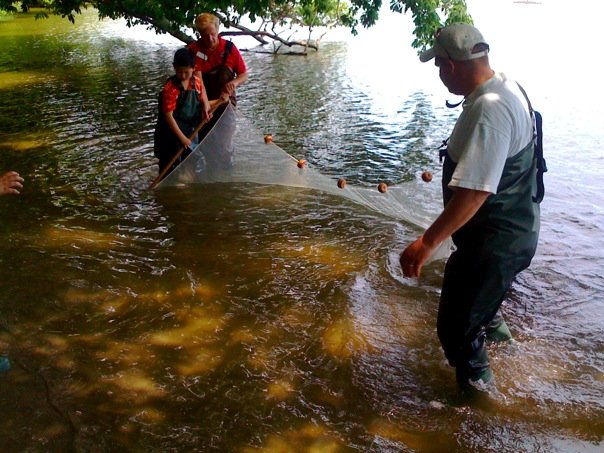


.

Coding
Engineering, Geography, World Cultures

Egypt
I read about Egypt as a child.There was a man with a red Fez who told me stories of Ancient Egypt who lived on my block.He was a black man from Egypt who told us about the country.

I read the accounts of the finds of Sir Howard Carter. I read these books and more.I saw the exhibit in Washington of King Tuts treasures and kept the catalogue for a very long time.There was a book of the Dead, This book told people dead people , who were buried with it, how to get to the kingdom of Osiris.
THere was a store called Ancient Discoveries in Alexandria , Virginia I learned a lot there, and then later in life I visited Egypt.I found things there to teach with.

Reading

I used ESS Structures for the engineering and a book given to me during Engineering week for the lessons.
We built a lot of things, using different materials, and tested structure.

THere are many books that we, the students and I read, some of which are copied here.
Pyramids
by David Macaulay ( ISBN 0-590-99518-9, Trumpet)
This is one of my favorite books for teaching about Egypt.

This book takes an impressive look at what many consider to be among the most awesome of man’s creations-the pyramids of Egypt. Macaulay, through word and blackline drawings, shows Egyptian life and how the pyramids were built. He also talks about the way that Egyptians were readied for the next life. This is a wonderful book about the architecture of the pyramids. THe illustrations are great and simply tell the story.ˆ

The Great Pyramid by Elizabeth Mann
This picture book contains a story within a story as it tells about the building of the great pyramid. While reading about King Khufu and his life, one, also learns why he wanted to build a pyramid, and how the pyramid was constructed. Great detail is given as to the Egyptian life style, including the life of the farmers, who became slaves while building the great pyramid. Beautiful illustrations help capture the essence of this time in history. This is a great book to read to the class, as well as have available for students to enjoy on their own. ˆ

Pyramids by Anne Millard ISBN #0-590-63247-7 (Scholastic)
Ever since ancient times the pyramid as a structural shape has captured out imaginations and played a meaningful and fascinating part in civilized societies. From the ziggurats of Babylon and the Valley of the Kings in ancient Egypt to the towering monuments built by the Aztecs and Maya in Central America, Pyramids examines the mythology and the history of these massive and intriguing creations. ˆ

The Egyptian News by Scott Steedman
This is an over-sized book that is written like a newspaper, telling about the life in Ancient Egypt. The articles are fun and informative, and written as though the events were just happening. Events such as “HYSOS HAMMERED”, “BOY-KING DIES”, “THE LONGEST BOAT IN OUR COUNTRY”, which tells of Pharaoh Khufu’s famous funerary boat. There are clever advertisements, a fitness quiz, a Who’s Who list of the famous men, The Top Gods, and how to mummify your body. There is a great gossip section telling about the latest banquet, what was eaten, and who was there. A great book to share while studying this fun time in history. It is fun to see a book that teaches facts in such a fun way. One forgets they are learning while enjoying the articles. ˆ
Hieroglyphs from A to Z by Peter Der Manuelian (ISBN 0-590-40008-8, Scholastic)

Hieroglyphs are drawings of ancient symbols found on Egyptian tombs and temple walls. On each page of this book there are hieroglyphs and information about Egyptian culture. The narrative is written in rhyme. Using a stencil of the hieroglyphs, you can learn how to write secret messages with Egyptian symbols.
*This book comes with a stencil of hieroglyphs. ˆ

Mummies, Tombs, and Treasure by Lila Perl ( ISBN 0-590-96226-4, Scholastic)
What happens to people after they die? The Egyptians thought if they mummified a dead person, his spirit would live forever. At first nature did the job; the desert sun dried and preserved bodies buried in shallow sandpit graves. Mummifying methods became more elaborate with time, as did after-life dwelling places. Eventually, the Egyptians built the largest known tombs-the pyramids-in which wealthy Egyptians were buried with food, household items, and treasure. The ancient Egyptian way of death has left us a rich legacy of information about a way of life of which there is no other record. Lila Perl’s thoroughly documented account is as fascinating as it is revealing. ˆ

But to have a good read, there are books of the discoveries of Sir Howard Carter, or reports about Howard Carter.
.
This is a book I read over and over.
There was also some book that shared how to make a mummy.
I was fascinated. THen there was a laser disc program about the examination of a mummy.I always wanted to know how they extracted the brain of the mummy through the nose.
I think I could have been an archaeologist if I had more knowledge in my early life of how to follow that career
Here is an online sharing about Sir Howard Carter.
http://www.touregypt.net/featurestories/carter.htm

I learned to make Koshari, and an Egyptian breakfast, but food was not the subject of my teaching .. the art teacher
and I had students making personal names in Egyptian symbols, and we learned a little astronomy, so different than American teaching of the night skies. Online there is a “Windows to the Universe” There are three levels of astronomy and culture on this site.

Technology? Web site

Little Horus was the first Egyptian website especially designed for children. The website consisted of over 700 pages of information and illustrations that address children between the ages 6 to 15 in both Arabic and English. Little Horus provides a comprehensive journey that transcends Egypt’s 7000 years of civilization into an educational and cultural experience for children, adults, educators and professionals. Not only this, but Little Horus also offered children games, fun and entertainment to suit all ages. The site offered a variety of portals that provide a contemporary view of Egypt through Pharonic, Coptic, Greek and Modern civilizations. Teachers and students from several countries use the site as an educational reference material.

Little Horus received both national and international recognition for its excellence and commitment to edutainment within the Arab region. The continued success of Little Horus resulted in prestigious awards and received the 1st place in the Cable & Wireless Childnet International Award, the best Achiever of the Internet Society of Egypt (ISE) 1999 Annual Award, and was published in Bill Gates book as one of the best sites for children but sadly, it is no longer on the Internet.

Most of the time I used museums and places of hands on as well, but this post is not about me, I am sharing ideas from International Art, and some words to the wise from friends of mine who are scientists.


http://www.windows2universe.org/mythology/myths_stories_art.html

Let me give you one other example.

%255BUNSET%255D-6

Rainforests, Reefs, and Jungles

When I taught Rainforests, I used resources from the National Geographic ( Started with the journey of a bar of chocolate), Earthwatch, The Jason Project. As a teacher I could Mix and match and use ( laser disks provided by the Lucas Foundation) we could create our own little stories.

Games became a focus. Do you remember Amazon Trail?http://www.myabandonware.com/game/the-amazon-trail-1mf the Voyage of the Mimi had its own games too. Navigation, Map Making.

Oh how we loved their focused programs, and Dr. Robert Ballard’s sharing of field trips into jungle environments. As a teacher of a group of National Geographic teachers I had access to the tapes of programs developed by George Stuart, on the Maya. Those tapes were archaeology, science, culture, history, astronomy and so much more and games.

The collective name for those was the “Voyage of the Mimi“.Here is the video, which then starred Ben Affleck. https://www.youtube.com/watch?v=3re1ROrBZsg

http://www.windows2universe.org/mythology/myths_stories_art.html

Let me give you one other example.

Rainforests, Reefs, and Jungles

When I taught Rainforests, I used resources from the National Geographic ( Started with the journey of a bar of chocolate), Earthwatch, The Jason Project. As a teacher I could Mix and match and use ( laser disks provided by the Lucas Foundation) we could create our own little stories. The Jason Project is powerfully innovative.http://www.jason.org
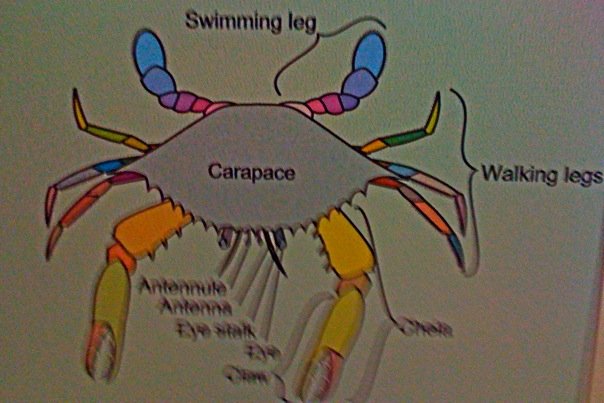
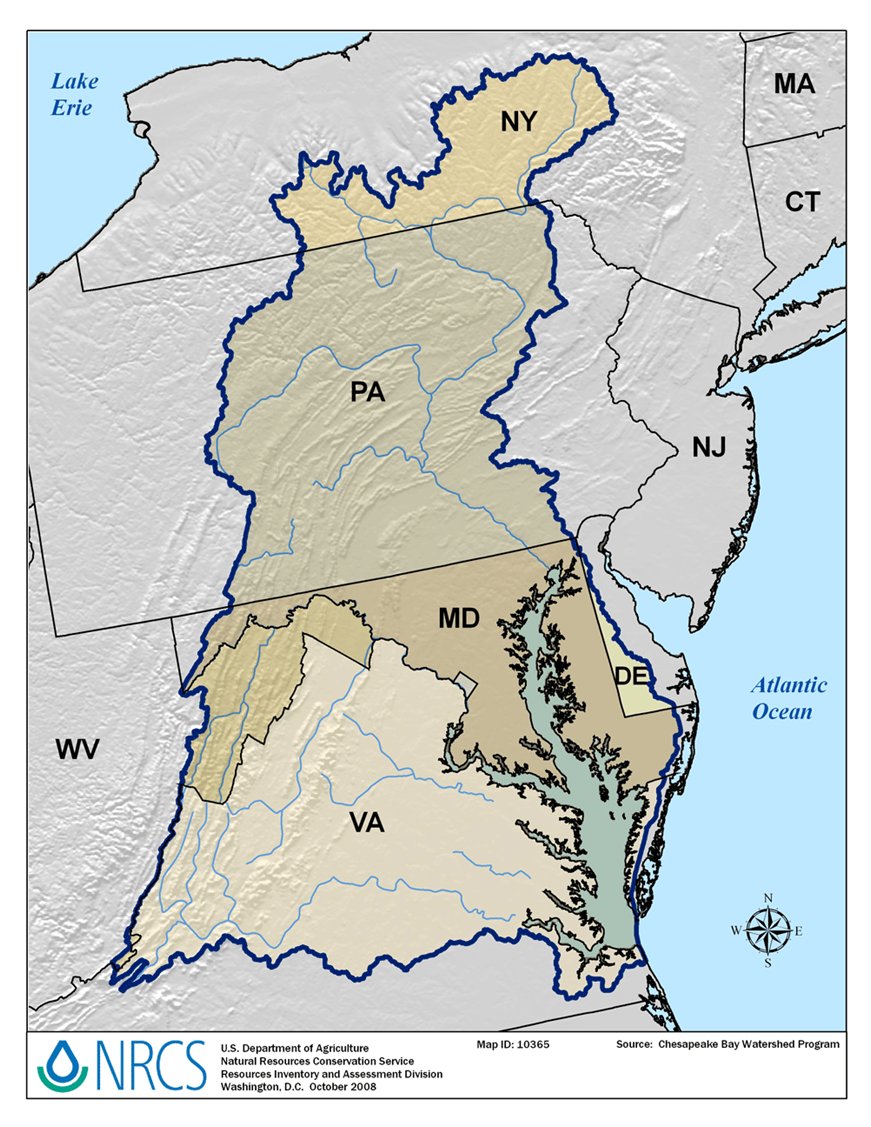
Games became a focus. Do you remember Amazon Trail?http://www.myabandonware.com/game/the-amazon-trail-1mf the Voyage of the Mimi had its own games too. Navigation, Map Making.

Oh how we loved their focused programs, and Dr. Robert Ballard’s sharing of field trips into jungle environments. As a teacher of a group of National Geographic teachers I had access to the tapes of programs developed by George Stuart, on the Maya. Those tapes were archaeology, science, culture, history, astronomy and so much more and games.

The collective name for those was the “Voyage of the Mimi”.Here is the video, which then starred Ben Affleck. https://www.youtube.com/watch?v=3re1ROrBZsg

Vinton Cerf says in a Magazine, Child Art, January -March 2014,

There are ways of collaborating on the Net Now that would allow multiple people to create works of art together. Those works of art may be in the virtual space. They could also be in the real world-suppose you created something that a three dimensional
printer could print. Collaboration is one thing .”

Vinton Cerf says in a Magazine, Child Art, January -March 2014,

There are ways of collaborating on the Net Now that would allow multiple people to create works of art together. Those works of art may be in the virtual space. They could also be in the real world-suppose you created something that a three dimensional
printer could print. Collaboration is one thing .”

He further says, “Another possibility is melding so many different modalities through one medium. I can send and receive imagery, sound and I have the opportunity to manipulate the perimeters of images, sound and other properties of something I’m working with.”

Most teachers don’t get a chance to do this type of innovation , based on the models of teaching and learning that have been presented to them in their educational landscape. To tell the truth, I was asked to leave a school, because the principal wanted me to teach only out of the book, and to prepare only for testing. I found a principal, Camay Murphy, who went on the learning journeys with me and took the rest of the staff. We won many prizes. But, as successful as I was, I could not find a home for creativity, innovation and new learning landscapes.

So I consult , write and dream.monday 050