Water, Water Everywhere, One Ocean- One Planet ( US Russian Best Practices)Vodakanal

href=”https://thepowerofus.org/wp-content/uploads/2014/03/gulffinland.jpg”>GulfFinlandTravel and Networking with Educators Stem and IT in Russia


Part One-Museum of Water-Saint Petersburg, Russia

The Project was the SEE U.S. Russia Expertise Exchange, Eurasia Foundation. It was a life-changing experience.
There is an international projection on water, All One Ocean, www.alloneocean.org
and there are courses that teachers from all over the world take on observing the oceans.Citizen science or youth and education projects are common in the US and in Russia.

Meeting the Challenge

Meeting the Challenge

1836866_10152188341376327_1972478766_o-2
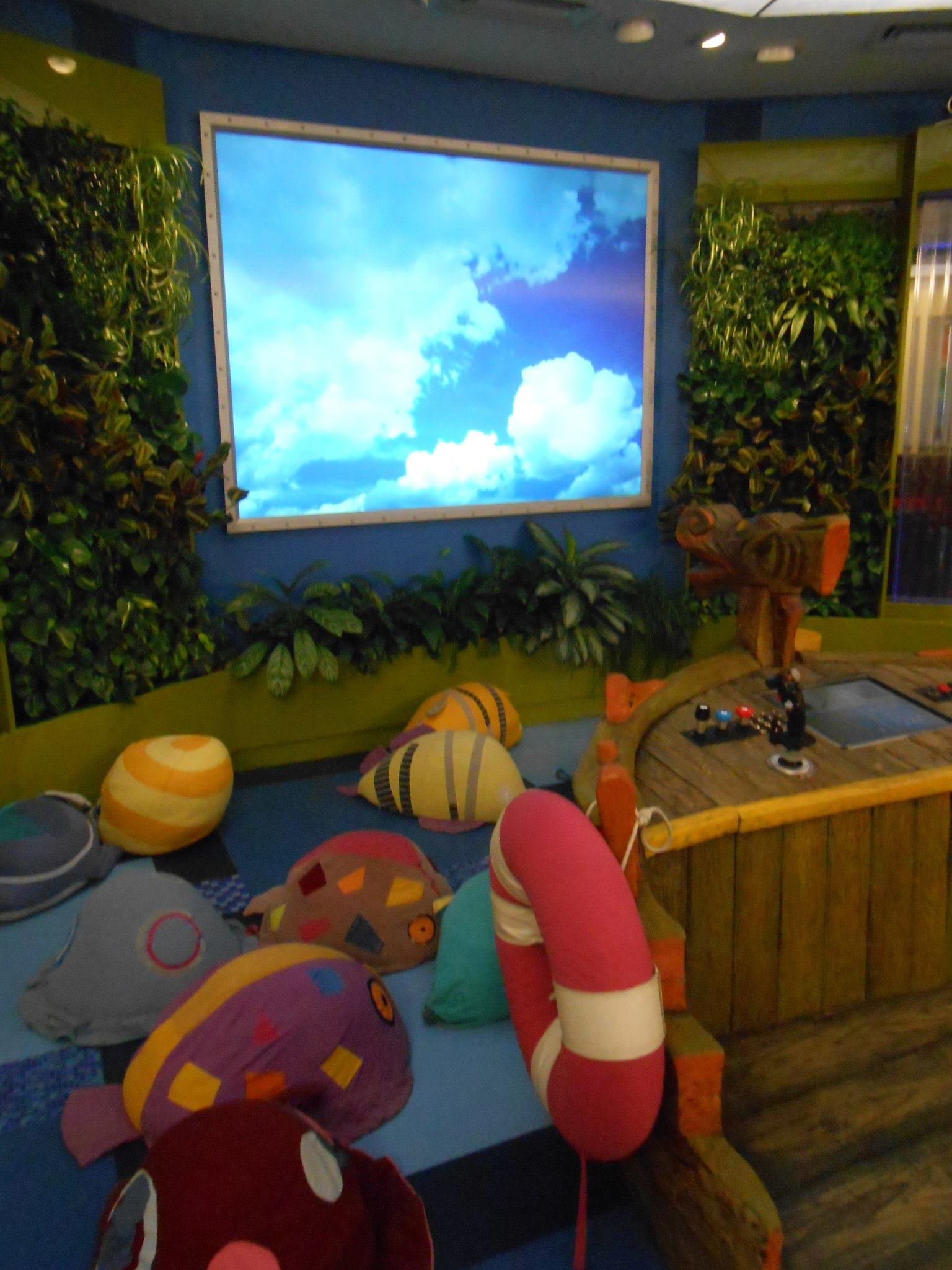
Here is an interactive game at the Children’s ecological center in St. Petersburg, Russia. This game table has different water-related educational and interactive games. This one teaches geography of the Baltic Sea countries. (Documentation for Youth and Education Working Group, US-Russia Social Expertise Exchange Fellowship 2014)image001

Welcome to Russia
voda

I found fascinating projects on science, technology, engineering and math. I was assisted in language by two outstanding Eurasian Fellows whose specialty was the Russian Language. Sarah Choi and Alexandra Kohut. They were taught Russian in College and the languages were their specialty, both had lived in various places in Russia and had a network of friends and language specialists with intense knowledge of Russia.That was very helpful.

Water is important to the earth. In photographs taken from space, we can see that our planet has more water than land. It is unexpected and somewhat inconceivable that less than three percent of Earth’s water is fresh water. According to the U.S. Geological Survey, most of that three percent is inaccessible. Over 68 percent of the fresh water on Earth is found in icecaps and glaciers, and just over 30 percent is found in ground water. Only about 0.3 percent of our fresh water is found in the surface water of lakes, rivers, and swamps. Of all the water on Earth, more than 99 percent of Earth’s water is unusable by humans and many other living things! It seems extraordinary that the water that supports all terrestrial, as well as aquatic, life on our planet is actually so scarce. With this stunning realization comes a recognition that we have to utilize this resource very wisely. An important first step is to educate ourselves and future generations of citizens. 563689_297167427070212_770290619_n

Russia and the US cooperate in space to share the mapping of the earth and its waters.
Children in the schools of Saint Petersburg, and in particular Epi School are involved in the Vodakanal Water studies. One project is a Crayfish. Yes, a crayfish. In the Chesapeake Bay, we study the crab. So it was wonderful to see the interactive resources and lab testing that the students participated in , in the Interactive program.

A lead character of this excursion is a Crayfish,” Where Do Crayfish Winter? ‘ will be a very unusual employee of Vodokanal – the Neva Crayfish. Participants of the program together with the Neva Crayfish will make a trip around ‘The Underground World of St. Petersburg’, learn how water is treated in a big city and find out how living creatures – crayfish, snails, little fish – help people in their work.
Museum complex specialists have also developed more than ten interactive programs, intended for children of different ages – from preschool children to teenagers.Here are some pictures of the testing, and other projects.

In the United States, my studies are on the Chesapeake Bay , and the Atlantic Ocean. It was great to find best practices in Russia and new ideas while studying the The Baltic Sea, and the Gulf of Finland. Here are the descriptions of the Interactive programs of the museum. http://www.vodokanal-museum.ru/en/interaktivnye_programmy/programmy_dlya_detej/

I learned from the Baltic competitions, which the Russians won, ways in which students learn about the environment that were interactive.I loved the interactive programs.

The Baltic Sea

The Baltic Sea is the least salty sea in the world. It is one of the youngest seas in the world and it is approximately 4000 years of age.In XIX century the Gulf of Finland was named ” Markizovz Luzha”The Marquis’ Puddle) due to its shallow depth ( the average depth-38M).Saint Petersburg is the biggest city at the Baltic Sea Coast. Both marine and freshwater species live in the Gulf of Finland

The Baltic Sea Project (BSP) is an international network among young people and teachers for a better environment in the Baltic Sea catchment area.
The Baltic Sea Project (BSP) is an international network among young people and teachers for a better environment in the Baltic Sea catchment area.https://www.facebook.com/unesco.bsp

Food, Kids, Nutrition and Culture- The Accidental Science

Most people know me because of my interest in science, math , technology and engineering. But lots of people love me for my cooking.  My mother was a great cook. SHe said if you can read you can cook. But she was from the country and cooked things in season and in a particular routine. She was excellent. She cooked in the fashion of Edna Lewis. I was confused until I understood that there are regional ways of cooking that lots of people enjoy. I had a great experience cooking and teaching at the Smithsonian in a “Seeds of Change” garden project. That got me to the skills that I needed for the classroom. The parents and students and I wrote a lot of grants to get started. Every  classroom is a food network. The various diversity of ways to cook are apparent if you have a pot luck dinner.

Historically, the potato, corn, tomato , horse and disease were a part of what happened with the Columbian exchange when two old worlds came together and the cultures mixed. (I think we are not supposed to talk about tobacco.

We had the Monticello Gardens as a resource for plants, and you can explore that here.

http://www.monticello.org/site/house-and-gardens/thomas-jefferson-center-historic-plants

I liked a wider range of foods and was always experimenting with food at home. Once in the classroom a teacher came from the Smithsonian. She was Japanese, cute, and was teaching and cooking all at the same time. I was jealous. She had everyone’s rapt attention and kids who were finicky about foods lined up to eat. That taught me a lesson. Hmn, the intersection of food, culture and hands on science. Great idea. I had to write grants to get the hot plates, utensils, pantry and money for spices and seeds. There are grants available from many places and I wrote to most of them.

4H , Parents and Principal.. There was help!!

My first help with cooking in the classroom was the 4 H. They had some kind of recipes that were very good and inexpensive.  My second help, was having a garden in the school that I taught in, which at the time was Long Branch Elementary. I think I said to a parent , I would like to have a garden. i was thinking about flowers , but there were strawberries growing in the back of the school near the park. So , all of a sudden parents and I were planning an early spring garden. Who knew it would be such fun? I don’t remember al of the parents, but Mr. Haithcock turned over the soil for us, and Nathan Lyon’s family helped me choose plants and one mother came in to teach me to harden plants before we set them out.

Nathan Lyon was just on the Today show. He is a chef. I don’t claim his skills, I think his grandmother influenced us all.

Cooking is an accidental science.

Did I mention Kolrabi…. I had no idea what it was. We had the soil tested by the 4H and we had written a grant so we had tools, gloves, shovels, sticks, seeds, and lots of garden resources. I think the hardest thing was to get the kids and the tools down to the field without injury. I was always worrying about some one getting hit with a shovel, but it never happened. We had buckets too. The hose only reached so far.You know what, we had fun!

Our school was on the edge of  a lovely park and there was room for a garden. My principal at the time loved the idea.and we explored gardens mostly colonial gardens, as that was the first level of instruction.

CHILDREN FOOD AGRICULTURE NUTRITION OBESITY. mitocw EXPLORING FOOD

  • A photograph of a child eating dim sum.

    Food plays an important role in our culture and relationships. (Photo courtesy of John Catnach on Flickr.)

    We did this before MIT, but this is a great online course to think about the accidental science of cooking.

    The Exploratorium link is here.http://www.exploratorium.edu/cooking/index.html The food groups and tasks for kids and families are here to explore.

    This is a three part blog. I start with the spices and the herbs and you can do this here.http://www.exploratorium.edu/cooking/seasoning/index.html

    Discover how a pinch of curiosity can improve your cooking! Explore recipes, activities, and Webcasts that will enhance your understanding of the science behind food and cooking.
    Food and Culture
    As taught in: Spring 2011
    A photograph of a child eating dim sum.
    http://ocw.mit.edu/courses/anthropology/21a-265-food-and-culture-spring-2011/Food plays an important role in our culture and relationships.
    Instructors:Prof. Heather Paxson
    MIT Course Number:21A.265
    Level:
    Undergraduate
    Course Features Assignments (no solutions)
    Course Description
    Explores connections between what we eat and who we are through cross-cultural study of how personal identities and social groups are formed via food production, preparation, and consumption. Organized around critical discussion of what makes “good” food good (healthy, authentic, ethical, etc.). Uses anthropological and literary classics as well as recent writing and films on the politics of food and agriculture.
    Mothers and fathers love a class cookbook or potluck dinner ..  starting with the ideas in the room, you can start interesting science development that is fun.

Digital Citizenship ,Preservice Education Initiative

On SITE 2012 in Austin: So What Is Digital Citizenship?

Posted on March 7, 2012 by JimS in the ETCJournal

Report from SITE2012 AACE in Austin, Texas.

Social Justice and Digital Equity SIG has, with Mike Searson, created a project in Digital Citizenship that is funded by Facebook. We have had our initial planning meeting.. We were at the SITE.org Conference in Austin, Texas.

Digital Citizenship is a concept which helps teachers, technology leaders and parents understand what students/children/technology users should know to use technology appropriately. Digital Citizenship is more than just a teaching tool; it is a way to prepare students/technology users for a society full of technology. Too often we are seeing students as well as adults misusing and abusing technology but aren’t not sure what we can do. The issue is more than what the users do not know but what is considered appropriate technology usage.

You have probably heard about the parent who shot his child’s computer. There was an interview with the student and parent on NBC to explore the incident.

We know a lot of ways in which people have blocked the use of the Internet by cutting the cords, taking away the computer. We think education works better. We use the topic of social networking, but since Facebook is the elephant in the room, here are their resources from the Facebook page:

Facebook Resources for Educators
https://www.facebook.com/education?sk=app_4949752878

Why a PreService Initiative for Colleges and Universities?
We want to give knowledge to pre-service and inservice teachers to prepare for teaching in a digital world. We want to create a curriculum to explore the learning landscape.

Who Else is Interested in Education for the use of Social Media?
In the CyberLearning Conference held at the National Geographic which involved SRI, NGS, and NGS, they shared this information.on Social Media. http://cyberlearning.sri.com/w/index.php/Cyberlearning:Social_Media

 Some National Groups
http://wiredsafety.org/

Family Online Safety Institute

Net Family News

Childnet International

Center for Safe and Responsible Internet Use

Cyberbullying.org

Youth Safety on a Living Internet” NTIA
The Online Safety and Technology Working Group (OSTWG) reviewed and evaluated: 1. The status of industry efforts to promote online safety through educational efforts …

You may also have seen this headline. Lady Gaga Goes to Harvard:

Pop star Lady Gaga descended on Harvard University with some powerful friends Wednesday to launch her new foundation aimed at empowering young people. The singer was joined by Oprah Winfrey, spiritual leader Deepak Chopra, and Health and Human Services Secretary Kathleen Sebelius to kick off the Born This Way Foundation that Gaga’s mother and inspiration will help steer. Gaga spoke to more than 1,100 students from several states, faculty and invited guests at Harvard, urging the young audience to “challenge meanness and cruelty.”

There was a Born this Way Foundation symposium of educators and groups at Harvard, funded by Lady GAGA who is intent on creating a difference using her connection with her audiences to fund an initiative by bringing together McArthur Foundation, Harvard law and education faculty, and Danah Boyd, a Microsoft researcher, as well as other people who have projects in this area. Students were also invited to the initiative, and they had their own meeting with Lady Gaga. Her foundation is BornThisWay.

So we talk about many subjects inclusively when we talk about Digital Citizenship.

The topic of digital citizenship is certainly gaining momentum. In June 2010, the Online Safety Working Group sent a report to Congress titled “Youth Safety on a Living Internet.” There are many organizations and individuals that are working on this topic.

Let us know if you are interested  helping with or being a part of our preservice initiative.

Bonnie Bracey Sutton

Austin the Destination, Integrating Computational Thinking Into K-12, Sharing Supercomputing Resources and Education

Austin, Texas

Theme: Teaching in Exponential Times! K-12 to Teragrid  and the Future of Supercomputing!XSEDE

In case you are advanced .. go to https://www.xsede.org/education-outreach-blog

We Raise the Bar for K-12 and Preservice Candidates

Years ago, members of the Supercomputing Conference and the Teragrid allowed us as teachers  to create a window of interest into SC and computational thinking for the SITE members. We had involvement from Henry Neeman and Diane Baxter over the years and support to become a part of the SITE community and to do workshops over several years. We have had incredible support and exposure to the educational activities including the work of Shodor.org  and the resources at that site and their workshops.We learned from the Broadening Engagement community how to share the message.

We learned at the SC Education conference and then disseminated lessons and practices. Ray Rose, ManoTalaiver, Vic Sutton, and I have been quietly integrating the computational sciences and HPC into K-12 practices. Mano works in rural areas to bring the dreams of education into reality with NSF funding. Ray is now a college instructor in technology at an HBCU in Austin. Vic and I are working with a K-12 School, Tracy Learning Center to infuse computational thinking into the curriculum. Bob Plants is the researcher in our group and he has a STEM initiative in Mississippi. He shares resources on line as outreach to teachers too.

Dr. Paul Resta is about Broadening Engagement

Change takes a Visionary!

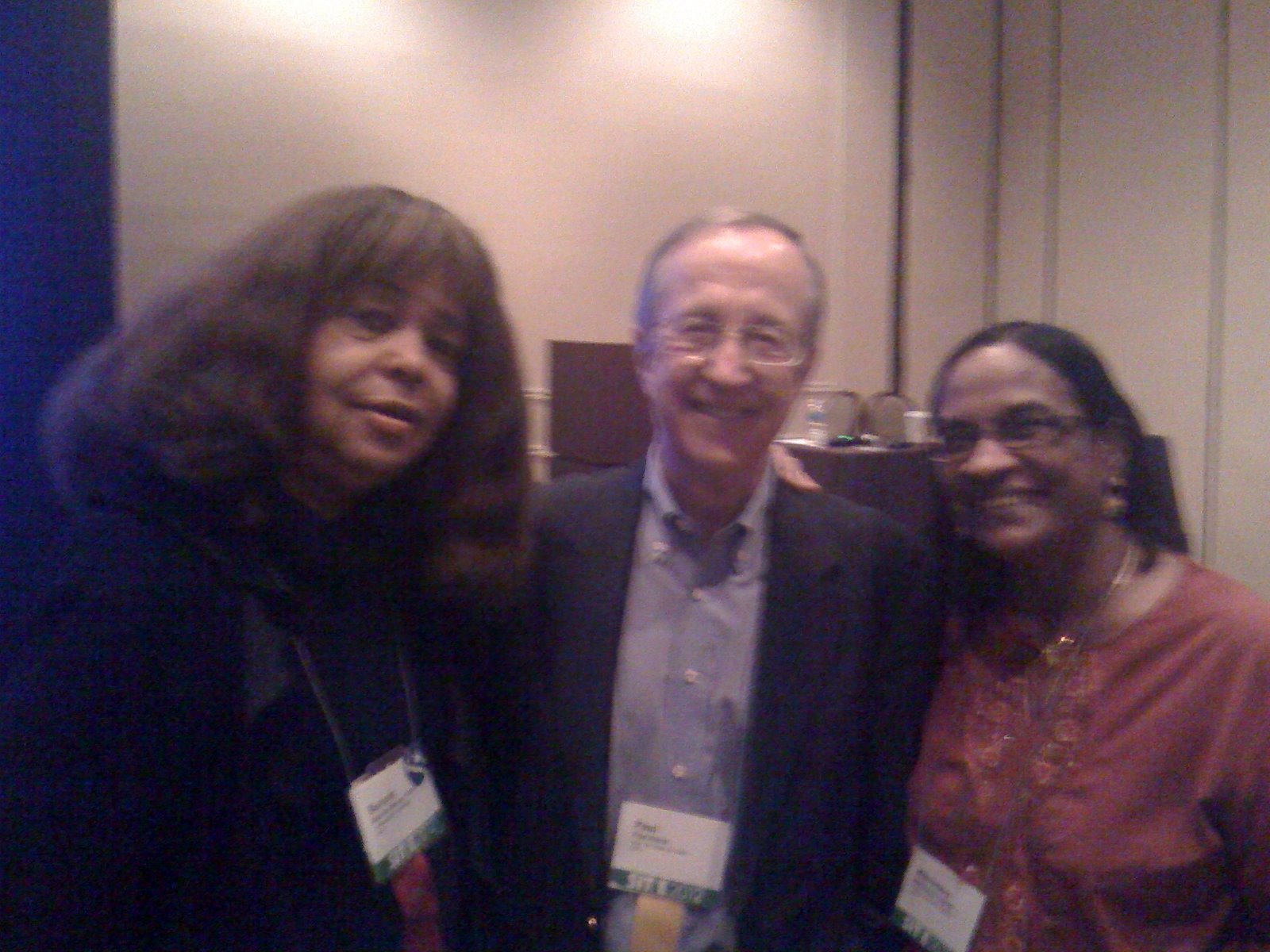
One of my best friends is Dr. Paul Resta who put ideas of education into reality. We were so proud of his accomplishments and his center that we planned a tour for participants at SITE, Austin. The resources are a great way to create change in the learning landscape. Dr. Resta is a leader in teacher education nationally and internationally. He has worked with tribal groups in the Four Corners Project and works Internationally in education as well.

Middle School

East Austin Academy College Prep
 – This middle school is designed to help low-income minority inner city students prepare for college and success in the future. All students participate in an innovate program known as Globaloria. Globaloria is a social network for learning, in which they learn to create educational web-games for social change. East Austin College Prep Academy is the first charter school to integrate the Globaloria network and curriculum as a school-wide teaching and learning opportunity, and offers required daily curriculum to all students starting at 6th grade.

Project on Games and Workforce Readiness. Globaloria.org

Idit Harel Caperton works in areas of need with her Globaloria project. Ray, Vic and I also encouraged her to share her project, Globaloria.org with the SITE membership. We , Ray, Vic and I also were involved with the group in training and research as learners in professional development.

We have come of age. Look at the tours and the participants of SITE who were involved in thinking , learning, planning, and being involved in a special resource for educators at UT. The university of Texas.

Highlights

Manor New Tech High School (NTHS) This high school is a technology-rich learning environment using a constructivist approach to learning. It has become a model NTHS site and educators from newly established NTHSs come to Manor for orientation and training. Participants will meet with the district superintendent and the director, faculty and students at the school. (Limit 30) Depart 9:30 AM, Return 1:30 PM

View the Student-Generated Video for a Preview of this tour!

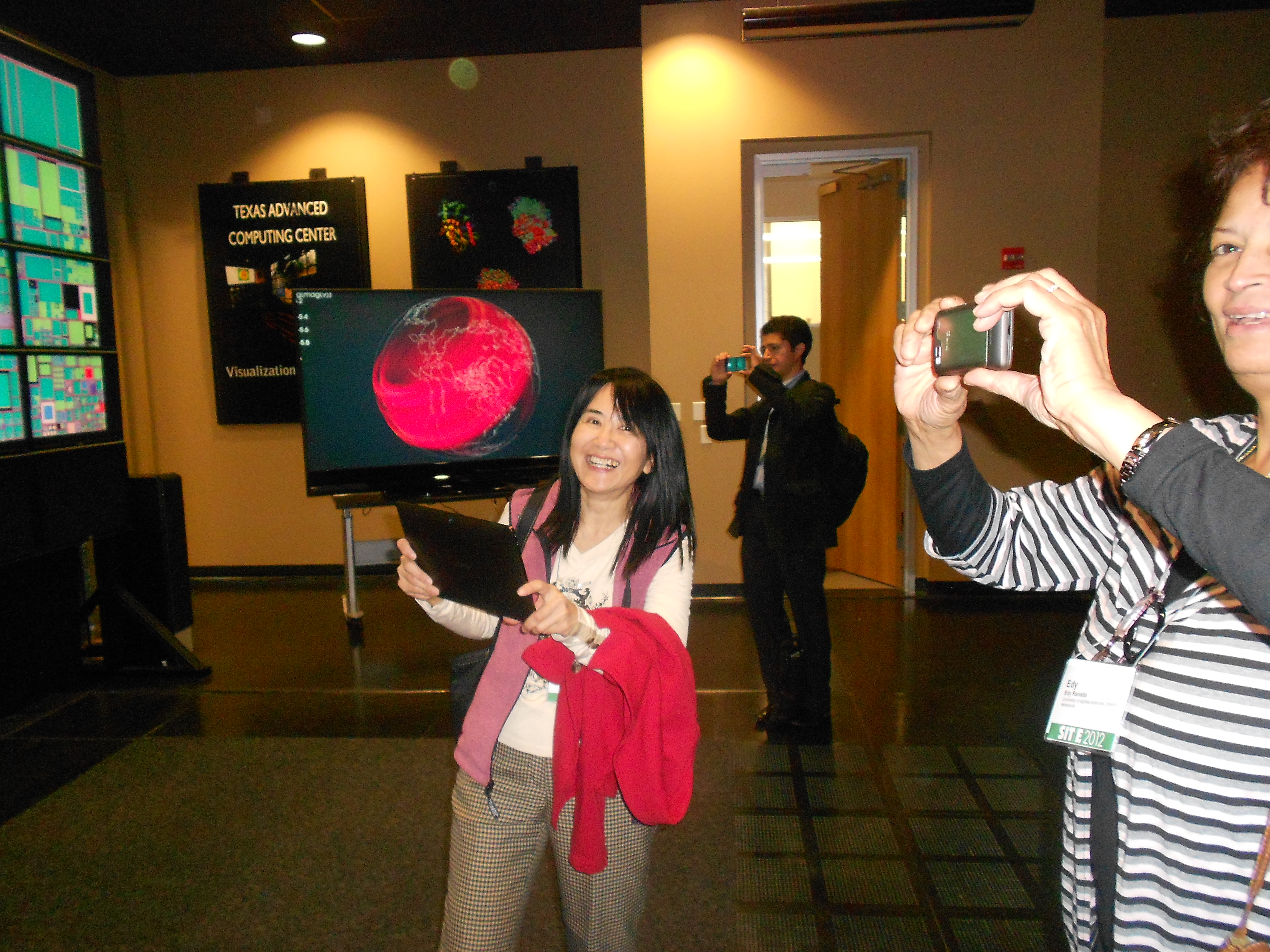
Education Visualization Lab and Visualization Center, The University of Texas at Austin – The Learning Technology Center Educational Visualization Lab is focused on the use of visualization technologies to understand patterns and relationships in massive education data sets. The visit will include a tour of the Learning Technology Center and

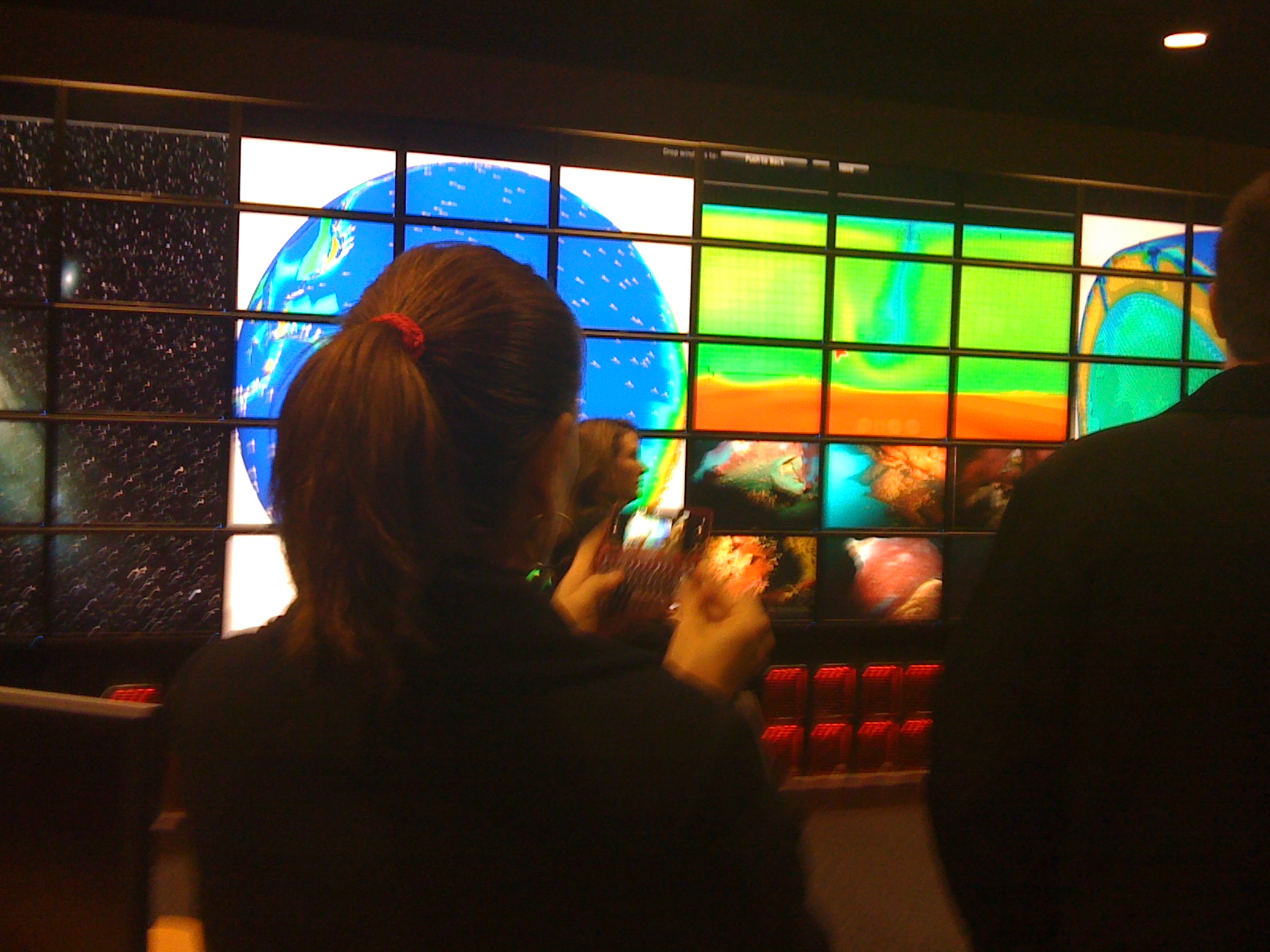
also a visit to the TACC Visualization Center that includes, Stallion, the highest resolution tiled display in the world; Longhorn, the largest hardware accelerated, remote, interactive visualization cluster. Was used by NOAA in predicting path for Katrina. » Newsletter

The Learning Technology Center in the College of Education at The University of Texas at Austin supports the instructional and research activities of the College’s students and faculty by providing computer facilities, telecommunications services, and digital media production equipment. The LTC also participates in projects that advance the use of technology to meet the educational needs of learners throughout the state and nation, and around the world.

You can check equipment out to use.

You can take your laptop to be checked.

You can work in the lab.

You can sit with professionals who can help you plan your lessons to be technology integrative.

Teachers can plan to be in workshops to enhance their knowledge .

I have many photos , and I am sure that I am only sharing a bit of what is possible.

Learning at the University of Texas

There are links and resources that have been created for teachers in this center for national, regional and local learning on the website

The information here comes from the newsletter and information gathered during the tour.

Kelly Gaither, Director of Visualization for the Texas Advanced Computing Center, describes the information conveyed in a simple mapped visualization.

Kelly Gaither, Director of Visualization for TACC, led the workshop, which included an overview of information visualization and visual analytics concepts and how they apply to educational data. Attendees learned the basics of Processing, a popular visualization programming language, to develop information visualizations with their own data. They were later able to view their work on the EdVisLab’s large display.

A participant learns Processing, a visualization programming language.

Both Google Apps for Education and visualization techniques for educational research represent new directions for the College of Education and its use of technology in education. The LTC is constantly exploring new technologies and their benefit to education, and has led the way in bringing these new technologies to the College. The apps will be part of the online tools that are replacing TeachNet and will allow student groups to have increased online collaboration, including co-creation of documents, presentations, and Web sites. The EdVisLab will allow faculty to better analyze large and complex data sets, more easily seeing and understanding patterns, trends, and relationships. For more information about the Google Apps for Education pilot, contact Karen French. Contact Ken Tothero to learn more about the EdVisLab. ( If you live in Tcxas)

.

The LTC equips teaching professionals with new knowledge.

 COE Education Visualization Lab

LTC Director Paul E. Resta speaks to those gathered for the EdVisLab grand opening.

The College of Education (COE) community, staff of the Texas Advanced Computing Center (TACC), and many others interested in visualization on campus gathered Friday, in early February 3 to celebrate the Learning Technology Center’s grand opening of the COE Education Visualization Laboratory (EdVisLab). The event culminated more than a year of planning the lab and designing its equipment and software systems.

Brandt Westing, TACC Research Engineer, shows visitors how visualization can help researchers detect trends and patterns in large amounts of data.

The lab is a joint project with TACC, which provided technical assistance and will help run the lab. The new facility will allow COE researchers to use visualization techniques to better analyze large data sets. The lab features a 15-monitor high resolution tiled display, a 3-D visualization system and a workstation with specialized visualization software.

COE Dean Manuel Justiz spoke first during the opening, praising LTC Director Paul Resta for all his efforts over the years to make the LTC a top-notch, nationally recognized learning technology facility. Dr. Resta then spoke, thanking the Dean for the lab’s funding and thanking all the LTC and TACC staff for the long hours spent creating the lab. Finally, Jay Boisseau, TACC Director, described how the process of adapting TACC visualization programming for use in the EdVisLab led to the development of an improved version of the software.


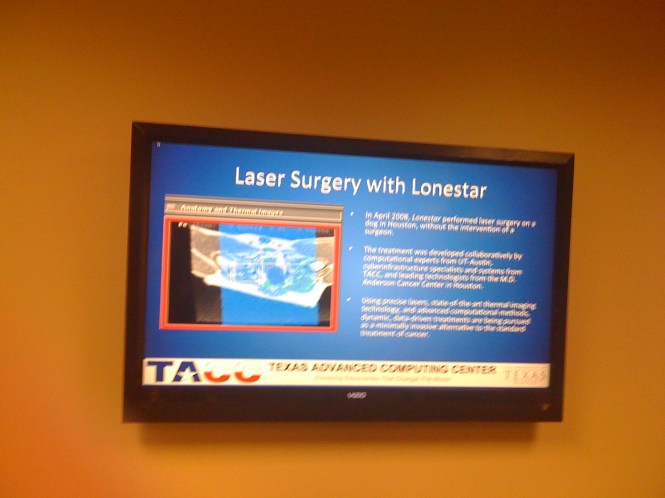
Texas Advanced Computing Center – Texas Advanced Computing Center is a leading resource provider in the NSF TeraGrid and operates two of the most powerful high performance computing systems in the world, which are used by thousands of scientists and engineers each year to perform research in nearly every branch of knowledge. TACC’s largest supercomputer, Ranger, can perform 579.4 trillion operations per second (or teraflops), and is nearly 30,000 faster than today’s desktop computers. TACC’s newest system, Lonestar 4, which went online in Feb. 2011, clocks in at more than 302 teraflops and offers nearly 200 million computing hours per year to researchers around the world.
The Society for Information Technology & Teacher Education is an international association of individual teacher educators, and affiliated organizations of teacher educators in all disciplines, who are interested in the creation and dissemination of knowledge about the use of information technology in teacher education and faculty/staff development.

The Society seeks to promote research, scholarship, collaboration, exchange, and support among its membership, and to actively foster the development of new national organizations where a need emerges. SITE is the only organization that has as its sole focus the integration of instructional technologies into teacher education programs.

As the official blog of SITE, this website exists to promote dialog and interaction among SITE members as well as non-members about a variety of issues relating to our mission.

Bonnie Bracey Sutton

Digital Citizenship, a SITE Initiative

When I started thinking about the use of the Internet, I remembered all of the people who could not read who asked me to teach them to read when they found out I was a teacher.  That was many years ago and reading literacy is still a problem.

Now I have a new way of thinking, there needs to be more than just reading literacy, I believe digital literacy is a civil rights issue. The headline here talks about the urban poor but it is more than just the urban poor who are worried.

Digital Divide

Without Internet, Urban Poor Fear Being Left Behind In

Digital Age


You must read this article and then think urban, rural, distant, tribal and isolated .http://www.huffingtonpost.com/2012/03/01/internet-access-digital-age_n_1285423.html

Originally published: March 1, 2012

Author: Gerry Smith

[Commentary] An estimated 100 million Americans have no way of accessing the Internet at home. They are on the wrong side of the so-called “digital divide” — the chasm between those who are connected to technology and those who are not.

Some live in remote areas where broadband service doesn’t exist. Many live in blighted urban neighborhoods, unable to afford a computer, let alone Internet service. But being disconnected isn’t just a function of being poor. These days, it is also a reason some people stay poor. As the Internet has become an essential platform for job-hunting and furthering education, those without access are finding the basic tools for escaping poverty increasingly out of reach. “The cost of being offline is greater now than it was 10 years ago,” said John Horrigan, vice president of policy research at TechNet, a trade association representing high-tech companies. “So many important transactions take place online. If you don’t have access to high-speed Internet, you’re missing out on a lot.

 FCC workshops ,  taught me these descriptors.

Barriers to Use

  • Affordability: 36 percent of non-adopters, or 28 million adults, said
    they do not have home broadband because the monthly fee is too
    expensive (15 percent), they cannot afford a computer, the installation
    fee is too high (10 percent), or they do not want to enter into a
    long-term service contract (9 percent). According to survey
    respondents, their average monthly broadband bill is $41.

    We know that there are initiatives for that change. We also know that community organizations can create learning spaces such as libraries, civic centers and chapter houses, or other venues to allow people to have community access.


    Digital Literacy: 22 percent of non-adopters, or 17 million adults,
    indicated that they do not have home broadband because they lack the digital skills (12 percent) or they are concerned about potential
    hazards of online life, such as exposure to inappropriate content or
    security of personal information (10 percent)

    This is a gating reason for many, not just homes but schools. We hope to create awareness , information and resources that will create a pathway to great use of the Internet in our project.

    Relevance: 19 percent of non-adopters, or 15 million adults, said they do not have broadband because they say that the Internet is a waste of time, there is no online content of interest to them or, for dial-up users, they are content with their current service.

    Having been a  teacher Internet pioneer, and having many professionals in our SITE.org to help disseminate  best practices, we in the educational field can help to bridge the gap. There are long-standing projects like Project Zero that provide a model of dissemination. There is the Digital Generation Project. Many of today’s kids are born digital — born into a media-rich, networked world of infinite possibilities. But their digital lifestyle is about more than just cool gadgets; it’s about engagement, self-directed learning, creativity, and empowerment if they have the right learning landscape. The Digital Generation Project tells their stories so that educators and parents can understand how kids  can learn, communicate, and socialize in very different ways than any previous generation was able to do.


    Digital Hopefuls, who make up 22 percent of non-adopters, like the idea of being online but lack the resources for access.
    Few have a computer and, among those who use one, few feel comfortable with the technology. Some 44 percent cite affordability as a barrier to adoption and they are also more likely than average to say digital literacy are a barrier. This group is heavily Hispanic and has a high share of African-Americans.

    There are still some community center initiatives and funding that are created that need replication. Tutor Mentor in Chicago is a great example. 


Literacy today depends on understanding the multiple media that make up our high-tech reality and developing the skills to use them effectively

Years ago Andy Carvin wrote this.

Giving people access doesn’t instantly solve the manifold woes of our communities and schools. If it did, every kid with Internet access would be getting straight A’s and every adult with access would be gainfully employed and prosperous. It’s just not that simple. Technology access is only one small piece of a much larger puzzle, a puzzle that if solved might help raise the quality of life for millions of people. None of us can rightfully say we’ve found all the individual pieces yet, but some of the pieces are obvious enough that we can begin to put the digital divide puzzle together:

The digital divide is about content. The value of the Internet can be directly correlated to the value of its content. If all you can find online is shopping, Pokémon trading clubs, and porn, you could make a pretty good argument that it’s not very important to give people access to the Internet. As anyone who’s used it knows, the Internet can offer a wealth of opportunities for learning and personal enhancement, but we’ve only scratched the surface in terms of its potential. As more underprivileged and disenfranchised communities gain access, the Internet itself must provide the right tools so people are able to take advantage of and use it for more varied purposes, more learning styles, more languages and cultures. The Internet may feel like a diverse place, but when compared with the wealth of diversity and knowledge amongst humanity in the real world, it’s still pretty weak. Until the Net contains content that has true value to all of its potential users it will remain a place for the elite.

There is a bifurcation in use as well. Many only play with 2.O applications, they are good users of simple tools, but building the Internet and creating ideas takes computational thinking. But that’s another subject. Thinking about data mining, visualization, use of languages to build, and other skills needed to do Supercomputing are not in the thinking of educators. Here is the problem, ten years later, there are still people who are not on the Internet.The Pew Charitable Trust gives an update to Andy’s ideas. The slides are here In short they say,.Pew – The emerging information landscape – 8 realities of the “new normal”

“Pew Director Lee Rainie gave a keynote at the NFAIS annual conference about the way the internet and mobile connectivity have transformed the worlds of networked individuals. He discussed how normal life has changed in the past decade because of three revolutions in technology: 1) the spread of broadband; 2) the rise of mobile connectivity; and 3) the emergence of technological social networks. He discussed trends and likely future developments in technology that will shape the way people learn, share, and create information. The slides are here.”

The digital divide is about literacy. As much as we hate to admit it, functional illiteracy amongst adults is  one of America’s dirty little secrets. Millions of adults struggle to fill out forms, follow written instructions, or even read a newspaper. The 1993 National Adult Literacy Survey suggest as many as 44 million American adults—one out of four—are functionally illiterate, while another 50 million adults are plagued by limited literacy. We often talk about the importance of information literacy when it comes to using the Internet. Information literacy is an obviously vital part of the equation, but how can we expect to conquer the digital divide when nearly half of all American adults can’t even process written information competently? Literacy must be tackled at the most basic level in order to afford more people the opportunity to use technology effectively.

The digital divide is about pedagogy. As I wrote recently in the e-journal the Digital Beat  Internet access in schools isn’t worth a hill of beans if teachers aren’t prepared to take full advantage of technology. Research has shown that educators who are resistant to constructivist teaching practices are less likely to utilize the Internet in their lessons, while educators who are more comfortable with constructivist practices are more likely to do so. Teachers who employ more real-world interaction are thus more inclined to employ online interaction. How can professional development be reformed to take these differences into account?

The digital divide is about community. One of the greatest strengths of the Internet is in its facility for fostering communities. Communities often appear in the most low-tech of places: You can surf the Web until your knuckles implode and yet not feel like you’ve actually bonded with anyone, but you can subscribe to a simple e-mail listserv and join a gathering of people who have been enjoying each others’ wisdom for years. It’s paramount for people coming to the Internet for the first time to have opportunities to join communities and forge new communities of their own. Public spaces must be preserved online so that people can gather without feeling like direct marketing or more popular and powerful voices are crowding them out. If people can’t build meaningful relationships online, how can they be expected to gravitate to it? 

We must continue fighting the scourge of illiteracy—among students, their parents, and among the community—by expanding formal and informal opportunities that improve reading and critical-thinking skills. We must demand engaging content from online producers and refuse to buy into mediocre content when it doesn’t suit our teaching needs. We must encourage all learners to be creators as well, sharing their wise voices both online and offline. And we must open our schools and libraries to more connections with our communities—no computer lab or training room should sit idly during evening and weekend hours. These are but a few examples of what the education community can do.These five puzzle pieces—access, content, literacy, pedagogy and community—may not be enough to complete the entire digital divide puzzle, but they go a long way in providing us a picture of what’s at stake. Giving people access to technology is important, but it’s just one of many issues that need to be considered. Schools, libraries, and community centers have taking that first step in getting wired, but they must also consider the needs of the learners, the teachers, and the communities that support them. Broadband accessibility and speed are a problem.

Digital Citizenship is a concept which helps teachers, technology leaders and parents to understand what students/children/technology users should know to use technology appropriately. Digital Citizenship is more than just a teaching tool; it is a way to prepare students/technology users for a society full of technology. Too often we are seeing students as well as adults misusing and abusing technology but not sure what to do. The issue is more than what the users do not know but what is considered appropriate technology usage.

Cyberbullying and Adults

Cyberbullying isn’t just for kids. It never was. But when adults are involved, it’s called “cyberharassment” not “cyberbullying.” WiredSafety’s award-winning website dedicated to the issue of cyberbullying and young people is StopCyberbullying.org . It’s the most popular cyberbullying website in the world. Adult cyberharssment is handled here at WiredSafety.org’s cyberbullying section
* Pew – The emerging information landscape – 8 realities of the “new normal”

“Pew Director Lee Rainie gave a keynote at the NFAIS annual conference about the way the internet and mobile connectivity have transformed the worlds of networked individuals. He discussed how normal life has changed in the past decade because of three revolutions in technology: 1) the spread of broadband; 2) the rise of mobile connectivity; and 3) the emergence of technological social networks. He discussed trends and likely future developments in technology that will shape the way people learn, share, and create information. The slides in PDF are here.”

.

  Facebook’s Digital Citizenship Research Grants

Introduction

Facebook’s Digital Citizenship Research Grants support world-class research to improve our understanding of how social media can impact the next generation. In August 2011, we invited academic and non-profit institutions to apply for the $200,000 in grants funding research that highlights trends associated with digital citizenship. Nearly 100 researchers from more than 10 countries submitted outstanding applications. Based on in-depth evaluation from a team of Facebook employees and our Safety Advisory Board, we are awarding the inaugural Digital Citizenship Research Grants to FOUR researchers who will advance our global understanding of digital citizenship.

Original

Our leader

Dr. Michael Searson, SITE

Dr. Searson is President of the Society for Information Technology & Teacher Education (SITE) and heads the School for Global Education and Innovation program at Kean University. SITE represents approximately 1500 educators, from about 500 institutions of higher education throughout the world. In these roles, Dr. Searson works with educators across the globe to explore issues related to information technologies, informal learning, mobile devices and social media.The SITE project will bring together a coalition of international scholars, researchers and practitioners who will develop an open source course and course modules for the preparation of future teachers to teach digital citizenship.

Original

http://www.netfamilynews.org/?p=31281

Transformational Learning in a CyberLearning Summit

Some of us as pioneers in STEM and in technology, have been working in computer learning and use of technology so long that we had begun to think that change would never happen. Working in minority areas we are always running to catch up.

I was participating in technology well  enough to be on the National Information Infrastructure Advisory Council. We helped to frame the vision of what technology would be in the United States. We wrote documents and shared methodology. But change was slow in coming. Years have passed and not much has happened in some teaching and learning spaces. Some of our dreams and ideas are still waiting to be fulfilled, like Broadband for all. In case this information is history here is a link if you need a history lesson.

So we go from conference to conference and speak those who believe change will come. We continue to learn and try to keep carrying the message of the use of technology. But it has been hard. We pioneers are talking about computational sciences and the latest headlines from Apple regarding the repurposing of textbooks. You have to look at that picture, because the end of the conference talked about the reality of that happened. That was Chad Dorsey of Concord.org. He is the reason I was able to sit and sit and sit.. though the conference was great it was a long time to actually BE on line. Did I mention NSF? I take it for granted having taught in Arlington, with access  to their information. I remember being laughed at when we used the first iterations of digital media, but NSF was firmly in support. CUSEEME? the reporters said it was stupid. So much they did not know.

There was a reference to a cyber conference from the National Geographic . If you have ever had professional development from the National Geographic you would jump at the chance….the resources for teachers are so many. Their  training is outstanding and it is inclusive learning. So with NSF and SRI and National Geographic  I knew the offerings would be outstanding.  You can still participate in the portal to help build knowledge.

This was the site, for the webcast. If you know me,You know that I do not love webcasts because so many of them are really bad.  I also love the excitement of talking to the participants and the exchange of ideas. What I usually do  to go to the National Academy of Sciences and attend the workshops , when I know about them. It is a singular joy to learn in this way, but the experience from yesterday expanded the audience, created a collaborative group of people even beyond the projects that I love the most wbich are the Supercomputimg Comference and Cilt.org which is no longer an entity but a great model for what happened yesterday.So I was not included.. well really I was, there was the online group  you can look here to see the program  for the webcast. My friend from SRI gathered the best and the brightest to inform the public and to share the resources. I knew their work was from excellence since they were a part of Cilt.org. This may be their new way of :

What a powerful example of transformational learning . Here’s to the creators of the conference. You should join the thought parade. Thanks to all who created an inspirational day. Hopefully some of these ideas will be made a part of the national conversation on the use of technology.

Fixing the STEM Problem by Asking the Right Questions-Don’t ask “Who, What, When, Where”; ask, “Why, and How?”

Fixing the STEM Problem by Asking the Right Questions 

Essay by

Allan C. Jones, President

Emaginos Inc.- Engaging Every Child Through Customized Education

Don’t ask “Who, What, When, Where”; ask, “Why, and How?”

Education in the No Child Left Behind era is all about answering “who, what, when and where” (4W) questions. But the questions that really matter are why and how. In a European history class, students are asked, “Who fought at the battle of Hastings?”, “What armies fought in the battle?”, “When was it fought?”, and “Where is Hastings?”. I can still remember that the English fought the Normans led by William the Conqueror in 1066. I don’t remember where Hastings is, if I ever did know it. What I don’t know is why it was fought and how it affected history. In considering what I know and don’t know, it seems like the stuff I know doesn’t matter and the stuff I don’t know does matter. In general, what matters is the stuff you learn by asking why and how.

The country’s leaders constantly complain about today’s students not learning enough about Science, Technology, Engineering and Math (STEM). STEM topics are boring if you focus on the 4W questions.  But if you focus on “why and how” they come to life. Eli Whitney invented the cotton gin in the southern US before the civil war. Boring! Why did he invent it? How did it work. How was it powered? Why was it important? What recent inventions have had a similar impact on a nation’s economy? The last is a “What” question, but not a recall question. These are the interesting questions about the cotton gin – and they lead to a rich discussion of STEM.

Let’s make the issue more contemporary.

We tell children to use soap when they wash their hands. When they ask why they need the soap, the typical response is that soap gets the hands cleaner. This is usually where inquiry stops and authority takes over – just do it! But any healthy, curious child is thinking, “How does soap work?” The answer is, “Soap makes water wetter.” What does that mean? Soap breaks down the surface tension bonds between the water molecules. So the next obvious question is, “Why does that matter?” Because it allows the water to penetrate the dirt better to float it away. It also emulsified the grease molecules; allowing them to detach from the object and rinse away. I like to give the students another use for this piece of knowledge so I tell them that the next time they find a tick and are trying to kill it, the easiest way is to drop the tick into a cup of tap water. Initially, the tick will appear to float. (The little suckers are really hard to kill.) But ticks are not buoyant. They are not floating. They are standing on the surface tension. Add a drop of dishwashing liquid to the water and the tick will sink like a stone and drown.

We were recently at yet another STEM meeting where the people were all excited about an excellent robotics activity that they were proposing to engage more girls and minorities in STEM. Robots are cool; and designing and playing with them can be engaging and instructional. But why go the expense of creating an artificial world for STEM learning? Students are surrounded by STEM every minute of their lives. Some questions they might enjoy answering could include:

  • How do they get stone-washed denim to look that way? Do they really stone-wash it?
  • Why do the tires on a mountain bike look so different from the tires on a racing bike? Do car and truck tires have the same or different tread designs? How do they decide what is the best tread design for different uses? How does changing the amount of air pressure affect the performance of the tires? When do you use low tire pressure and when do you use high pressure and why?
  • Why does it get easier or harder to pedal a 12-speed bike when you shift the gears? How does the Derailleur work? How is the Derailleur different from a manual transmission on a car? Why does a manual transmission need a clutch and an automatic transmission does not? How does the clutch work? Why does a clutch burn out?
  • How do iPods store all that music? What other options are available to store it? Why was the one they use chosen? What may be the next better storage mechanism?

If you want to tie it into history, ask how people 200, 400, 600, 800, and 1,000 years ago did what we do routinely today. What did tires and treads look like at those different time periods? How were vehicles propelled? How was music stored and enjoyed? How does communications technology affect social unrest? Which technologies that were originally invented for military uses have become everyday household products? Did you know that microwave ovens came from radar technologies developed for guiding missiles?

The list of fascinating STEM topics is endless. More importantly, they are an integral part of everybody’s world. All of the inventions and the underlying technologies were designed and built by engineers and technologists based on work by scientists and mathematicians. STEM is not some remote esoteric set of knowledge reserved for nerds. It’s a fascinating set of knowledge and skills that make up the world we live in. The 4W questions are only interesting if they are used in the context of why and how.

Dropout prevention is another big issue in education. Because understanding why and how something happened are much more interesting than the 4W questions, students get more engaged in their learning when seeking answers to why and how. We need to get away from the model where the teacher asks the 4W questions and students answer them. We need to pose problems that require the students to determine what the questions are that they need answered in order to solve the problem. If you put the students in small ability-level based groups and frame the questions as problems to be solved, every student is actively engaged in learning. This student-centered learning environment also allows the teachers to work individually with every student and customize the learning for each of them.

Going back to the battle of Hastings, knowing why and how it was fought and how the result of the battle impacted the subsequent history of England might be of use in looking at the US invasions of Afghanistan and Iraq. Can we learn any lessons from Viet Nam, Afghanistan, and Iraq that will enable us to make better decisions about the value of those strategies?

We need to change the questions we ask our students and the way we pose them, not only in class, but also on assessments. There is an old axiom that applies; “You get what you pay for.” Since educational institutions get ‘paid’ for good assessments, they will structure the teaching and learning activities to produce what is assessed. So we need to do less assessing of who, what, when, and where; and start doing a better job of assessing students’ mastery of why and how.

STEM , Education Supports Racial and Ethnic Equality in STEM

I attended a workshop at the Brookings Institute on this subject. The press reported it , but they did not give it much space or report some of the new ideas that are in place in thinking about STEM education. It is not just the US that has this problem. I know this from working in many countries as a part of WSIS, and the role of science in the information society.

While we have many kinds of new technologies that people take time to learn, the culture of learning in the US is not about STEM , so far. Robotics have made a leapfrog, but since most teachers in the lower grades are women, you cannot take that as a step to engineering for granted.

Here is the link to the report.  US Dept of Commerce   www.esa.doc.gov

There are actually three reports within the esa site. You can also read this blog.

http://www.esa.doc.gov/Blog/2011/09/13/education-promotes-racial-and-ethnic-equality-science-tech-engineering-and-math-jobs

Three important things to learn from the data.

K-12 all through K-12 we should be teaching and giving examples of STEM initiatives.

We used to say, or the people in charge used to only mostly targer students in the higher grades.

That does not work. Remarkably this is now being understood.

Teachers deserve respect for their jobs and interestingly enough in math there is a group that compensates math teachers  for being math teachers.

Math for America is the project he founded. I put the link here for those without broadband.

Math for America (MƒA) is a nonprofit organization with a mission to improve mathematics education in US public secondary schools by recruiting, training and retaining outstanding mathematics teachers. Founded in New York City in 2004, MƒA also has sites located inBerkeleyBostonLos AngelesSan DiegoUtah and Washington, DC. MƒA offers Fellowships for new and experienced teachers and school leaders, including: the MƒA Fellowship, which aims to increase the number of mathematically talented individuals entering the teaching profession; the MƒA Early Career Fellowship and the MƒA Master Teacher Fellowship, which support outstanding mathematics teachers already in the classroom; and the MƒA School Leader Fellowship, which is designed to support experienced mathematics teachers who have moved into administrative positions and oversee mathematics instruction in their schools.

Engineering

Dr. Charles M. Vest is the president of the National Academy of Engineering and president emeritus of the Massachusetts Institute of Technology. He shared this from the National Academy of Sciences.

 A report released in July  by the National Research Council presents a new framework for K-12 science education that identifies the key scientific ideas and practices all students should learn by the end of high school.  The framework will serve as the foundation for new K-12 science education standards, to replace those issued more than a decade ago.  The National Research Council is the operating arm of the National Academy of Sciences and National Academy of Engineering; all three are independent, nongovernmental organizations. The committee that wrote the report sees the need for significant improvements in how science is taught in the U.S.  The new framework is designed to help students gradually deepen their knowledge of core ideas in four disciplinary areas over multiple years of school, rather than acquire shallow knowledge of many topics.  And it strongly emphasizes the practices of science – helping students learn to plan and carry out investigations, for example, and to engage in argumentation from evidence. 


The overarching goal of the framework, the committee said, is to ensure that by the end of 12th grade, all students have some appreciation of the beauty and wonder of science, the capacity to discuss and think critically about science-related issues, and the skills to pursue careers in science or engineering if they want to do so — outcomes that existing educational approaches are ill-equipped to achieve.


“Currently, science education in the U.S. lacks a common vision of what students should know and be able to do by the end of high school, curricula too often emphasize breadth over depth, and students are rarely given the opportunity to experience how science is actually done,” said Helen Quinn, committee chair and professor emerita of physics at SLAC National Accelerator Laboratory in Stanford, Calif.  “The new framework is designed to address and overcome these weaknesses.  It builds on what is known to work best in science education, based on research and classroom experience both in the U.S.and around the world.  It provides a blueprint that will guide improvements in science education over many years.”


From NIST Tech Beat ( Last summer’s offer)

NIST Summer Institute for Middle School Science Teachers Accepting Applications

The National Institute of Standards and Technology (NIST) is soliciting nominations of middle school science teachers from eligible U.S. public school districts or accredited private educational institutions to participate in the NIST Summer Institute for Middle School Science Teachers. The NIST Summer Institute provides hands-on activities, lectures, tours and visits with scientists and engineers in NIST laboratories.

The Summer Institute will be held at the NIST campus in Gaithersburg, Md., from July 18 to 29, 2011.

The two-week workshop is designed to increase teachers’ understanding of the subjects they teach through exposure to the cutting-edge measurement science research pursued at NIST. The workshop provides teachers with instructional materials and ideas to use in their teaching, experience in how scientific research is carried out, and an opportunity to develop an ongoing network with the scientists and engineers at NIST. NIST provides a $2,000 stipend for teachers attending the workshop and travel and lodging funds for those traveling more than 50 miles to the workshop.

U.S. public school districts or accredited private educational institutions that offer science courses such as earth science, physical science, chemistry, physics and/or biologyat the middle school level (Grades 6-8) are eligible to nominate no more than one teacher per school for the program. Applications are due by 3 p.m. Eastern Time, on Thursday, March 24, 2011.

NIST also is soliciting nominations from school districts or educational institutions of middle school science teachers who have successfully completed the NIST Summer Institute to participate in the NIST Research Experience for Teachers (NIST RET) program. The NIST RET will allow the selected teachers to participate in scientific research with NIST scientists and engineers at the NIST campus in Gaithersburg, Md., that will encourage the teachers to inspire their students to pursue careers in fields of science, technology, engineering or mathematics.

So you can put that on your agenda to look at for the offerings next year.

If you are interested in the elementary level, or the new standards, look here.

A Framework for K-12 Science Education  for those without broadband http://www.nap.edu/catalog.php?record_id=13165

http://www.nap.edu/catalog.php?record_id=13165

Charles Giancarlo sahred with us the concern of meeting the needs of the businesses that do not have

the degrees and knowhow that is needed. He said that companies have to go abroad to find these workers. We had a long discussion on the lack of diversity and the rationale for companies to seek employees outside of the US and the problems that it causes and the  current problem is that the workers cannot stay and that others come, learn and then go home and earn, also taking their new ideas to their countries.

The H-1B is a non-immigrant visa in the United States under the Immigration and Nationality Act, section 101(a)(15)(H). It allows U.S. employers to temporarily employ foreign workers in specialty occupations. If a foreign worker in H-1B status quits or is dismissed from the sponsoring employer, the worker must either apply for and be granted a change of status to another non-immigrant status, find another employer (subject to application for adjustment of status and/or change of visa), or leave the United States.

The regulations define a “specialty occupation” as requiring theoretical and practical application of a body of highly specialized knowledge in a field of human endeavor[1]including but not limited to architectureengineeringmathematicsphysical sciencessocial sciencesbiotechnologymedicine and healtheducationlaw, accounting, business specialties, theology, and the arts, and requiring the attainment of a bachelor’s degree or its equivalent as a minimum[2] (with the exception of fashion models, who must be “of distinguished merit and ability”

Great teachers and great schools have the ability to transform the living standard of Americans.  Over the past century, investments in education have boosted the productivity and earnings of American workers, forged a path out of poverty for many families, and developed a productive and innovative workforce.  However, those gains have stagnated and even declined in recent years.  Despite one of the highest rates of per-pupil spending among industrialized countries, the United States ranks as mediocre on most measures of student achievement.

We spent more per person on incarceration than education per person.

Here is the Brookings Institute summary of the event.

The need for better science, technology, engineering, and math (STEM) teacher training and investment was emphasized today at a Brookings Institution forum on the topic. Dr. Rebecca Blank, the Acting Secretary of Commerce, presented several Commerce reports showing the importance of STEM education for job creation and economic development, and significant underrepresentation in the field for women, African-Americans, and Hispanics. Its report on “Women in STEM: A Gender Gap to Innovation” found that STEM workers were 76 percent male and only 24 percent female. A new report released today on “Education Supports Racial and Ethnic Equality in STEM” noted that 74 percent of STEM workers are male, compared to 6 percent who are Hispanic, 6 percent African-American, and 14 percent Asian-American. She noted the importance of the United States doing a better job attracting students into STEM fields and the need to reach out to under-represented communities. Since STEM workers earn a premium of 25 percent over other workers and have only a 5.5 percent unemployment rate, there are strong economic incentives to get more people into STEM fields.

Jim Simons, the founder of Math for America and board chairman of Renaissance Technologies, discussed his non-profit’s interest in improving teacher training in high school STEM courses. He said we need “knowledgeable and inspiring teachers” and that today we have a “shortage of such teachers”. The way to make STEM teaching more attractive so instructors do a better job introducing students to science and math is “higher pay and better working conditions”. Math for America proposes bonuses and stipends for high school STEM teachers and has provided funding for this across the country. The organization helps 350 math teachers in New York City and hopes to raise that figure to between 700 and 800 in the near future.

Charles Vest is president of the National Academy of Engineering and MIT president emeritus. He pointed out that South Korea graduates more engineers than the United States and the China graduates 10 times as many as America. In many Asian countries, 21 percent of college graduates are engineers, compared to 12 percent in Europe and 4.5 percent in the United States.

Charles Giancarlo is managing director and head of value creation for Silver Lake Partners. He noted that Cisco (where he used to serve as executive vice president) employs 24,000 engineers and Silver Lake Partner’s companies employ 87,000. Yet the United States graduates only 86,000 engineers, indicating a mismatch between supply and demand. He also explained that 35 percent of graduates are foreign born, yet we only provide 85,000 H-1b visas for scientists and engineers so many foreign students who would like to stay in the United States are forced to return to their home country. This robs the United States of valuable talent and sources of future innovation and job creation.

ADD YOUR VIEW

My view is at the top of the event and I believe that urban, rural, distant and gender .. we have a lot to do to change the face of education.

Bonnie Bracey Sutton

Passport to the World, Geography! Are you Up to Date?

On the Great Wall

No one has ever described the Great Wall in the media to my satisfaction

There are children who do not know the intersection of geography, history, story and maps.

Actually there are lots of people reporting the news to us from various media platforms who have little in the way of geography education or real knowledge. It is a national shane.

There is a tool that we can all use at http://www.mywonderfulworld.org.

There are resources for teachers that are incredibly wonderful at the National Geographic Society.

There are also alliances, that you can join in your state. The alliancesare here.. More resources are here. Resources

The Alliances

Geography Education Alliances connect K-12 teachers with university faculty, offering professional development opportunities and promoting improvements in geographic education at state and local levels.( http://education.nationalgeographic.com/education/program/geography-alliances/) The alliances breakj the silos of education , you have the professors, researchers, professional photographers, teachers , all working for change in a state. The resources and the opportunities are many.. My principal joined the alliance and went to some conferences with me.  I love going to Geographic conferences. They are an experience to learn a LOT from.!!! Geography is an adventure.

Vendor solutions for Geography? Well there is a lot that is free on the National Geographic Education site.

Classroom materials have been developed by geographers and geographic educators to teach the field as a discipline rather than through fact and recall. I was lucky enough to be a geographic educator a teacher, before technology called me to national service with the White House for a long term initiative. NIIAC.

Cast the students as researchers who use geography to solve real world problems. Each activity:introduces a skill for analyzing data geographically provides information about a specific place employs a specific kind of map (isoline, choropleth, profile, etc., illustrates a useful explanatory theory of modern geography. What is geography? See this cartoon for a visual definition

The 21st Century Partnership has added geography to their skills bank.

Here is a philosophical discussion about geography. Title:

Reconceptualizing Geography as Democratic Global Citizenship Education

Find the reference here in a PDF

(Bednarz, 2002)

Teaching geography in this manner is far better than didactic traditions if one values critical thinking and the development of transferable student insight about spatiality. Yet this still falls short of what we have described as democratic citizenship education.

As a teacher, I was lucky enough to be involved in a National Summer Workshop from the National Geographic Society. I was teaching in Virginia and there was a great Alliance that I was able to learn from and work with. My mentor was killed in the (/11 crash at the Pentagon. They were taking students to a meeting in California. The Virginia Geographic Alliance was a rich resource for me and other teachers.

History can be boring, but not if you use the resources available to make it real. GIS, GPS, Stories and pictures , the Internet and You Tube, enhance a lot of what you THINK you know.

In reality do you know place geography? Interactive Maps?

What is Geography?

Children, parents and the media audience see the world without really knowing much about the cuture of the groups that we talk about. A real friend of mine has NO understanding of the cultures that are in the Middle East. He told me that “we” liberated Arab women? I was too challenged to peacefully explain that he did not know the culture to reply. I think that also such misconceptions are best solved by the person with the misunderstanding. But what would lead him to such a misunderstanding. What does he read? What did he learn? What is his guide to the world? Perhaps some one of the many media minute mavens. Those reading the scripts on TV. often have no geographical idea of where the place is that they are talking about.

Maps. Maps. Maps. are here.

I like the articles that talk about geography education. Many school systems do not use geography as a subject of interest, because it is not tested. It may be offered after the fact. That is because of the politics of education, and the lack of knowledge of those with the power to make a difference in real world education.

My husband and I have traveled to many places in the world. Vic has lived in Africa, and started his career teaching English as a foreign language in Africa. His parents were missionaries to China,

I have lived in Greece. I thought I knew Greek History and the literature. I thought I did. I only touched the surface of the information available at the time. I loved living in Athens, and studying various elements of the Greek History. I particularly loved the  studying in the museum in Thessalonki, Greece.

All Roads Lead to Rome

I started my world ttravels late, on a Fulbright to India . Travel experiences, seeing your own country from afar are also quite an education. You can believe we have some very interesting discussions in our household about various elements of culture in the places we have lived and worked.

Earthwatch was a project related to something I was doing in the geographic. It was my first scientific study sponsored , to learn archaeology , of the Beaker people. But what little real history of the area of the Med did I have. Not much. That experience was eye opening to me.

But the definition geo-literacy probably is best for us in a media centric world. You will love the visualization of the topic on the page. You might also like the longer definition and explanations by Dr. Danny Edelson Photo: Daniel Edelson.

A geo-literate population can make far-reaching decisions about their health, their environment, and their community.

http://education.nationalgeographic.com/education/geoliteracy/?ar_a=1&ar_r=1

National Geographic Society Education Network www.ngsednet.org 

For updates and newletters, sign up here.

This is a beta site

http://education.nationalgeographic.com/education/programs/?ar_a=1&ar_r=1

Do you know Science on a Sphere. It is a transformative use of media to teach. It is awesome.

I was working with NTIA, NOAA, when I was pulled away from Geography as my main sphere of Interest.
NOAA is a federal agency focused on the condition of the oceans and the atmosphere. It plays several distinct roles within the Department of Commerce with a broad mission. Some of NOAA’s more widely-known divisions include the National Weather Service, The National Hurricane Center, and the National Marine Fisheries Service.

Science On a Sphere (SOS)® is a room sized, global display system that uses computers and video projectors to display planetary data onto a six foot diameter sphere, analogous to a giant animated globe. Researchers at NOAA developed Science On a Sphere® as an educational tool to help illustrate Earth System science to people of all ages. Animated images of atmospheric storms, climate change, and ocean temperature can be shown on the sphere, which is used to explain what are sometimes complex environmental processes, in a way that is simultaneously intuitive and captivating.

Science On a Sphere® extends NOAA’s educational program goals, which are designed to increase public understanding of the environment. Using NOAA’s collective experience and knowledge of the Earth’s land, oceans, and atmosphere, NOAA uses Science On a Sphere® as an instrument to enhance informal educational programs in science centers, universities, and museums across the country. Science On a Sphere® is available to any institution and is currently in operation at a number of facilities in the US.

See if you can get a kid to move, when there is this exhibit to learn from. It is mostly in museums or may be coming to a conference near you.

FInally, the 21st Century Partnership now shares the ideas of geography, and they have involved schools in the blueprint. Here is their set of resources.

   Games in Education , yes, yes and yes,

Featured Games

  • Photo: A screen from the games Lost Chronicles-Fall of Caesar, showing Brutus walking through an ornate hall

    Lost Chronicles: Fall of Caesar

    Reveal the conspiracy behind Caesar’s murder in this hidden object investigation. Meet historical figures, including Marc Antony, and learn of their role in the conspiracy.  Explore historically-detailed locations in Rome and Greece, searching for clues, as you follow the path of Marcus Brutus after he murdered Caesar.  Play various mini-games, puzzles, and more, and access informative articles courtesy of National Geographic in this compelling game.


  • salem-game.jpg

    Lost Chronicles of Salem

    Help a mother and daughter who have been accused of witchcraft escape superstitious mobs in this captivating hidden object thriller. Explore 1692 Salem in richly detailed screens, and play mini-games like word jumbles, puzzles, and more.


  • Photo:  A photo montage of migrating animals--zebras, crabs, butterflies

    Great Migrations

    Based on the breathtaking National Geographic Channel miniseries Great Migrations, this game challenges you to protect and guide your animals on their dangerous migration journeys. Select a leader, collect your herd, evade predators, and heal all wounds!


  • Photo: Logo of the game Build It Green--Back to the Beach

    Build It Green: Back to the Beach

    You love this tropical island, and now it is up to you to protect it and everything around it. Build it green

    I cannot share everything that is of the National Geographic. Go to the home page, sign up, sign in and get working.

    Bonnie Bracey Sutton

    Victor Sutton

    PowerofUs

Teachers ask about STEM, is it a Flower? No , It is the flowering of new ways to teach Science, Technology , Engineering and Math

Family STEM Learning

AAAS Science Days

Science, technology, engineering and mathematics (STEM) workers drive our nation’s innovation and competitiveness by generating new ideas, new companies and new industries. However, U.S. businesses frequently voice concerns over the supply and availability of STEM workers. Over the past 10 years, growth in STEM jobs was three times as fast as growth in non-STEM jobs. STEM workers are also less likely to experience joblessness than their non-STEM counterparts. Science, technology, engineering and mathematics workers play a key role in the sustained growth and stability of the U.S. economy, and are a critical component to helping the U.S. win the future.

In 2010, there were 7.6 million STEM workers in the United States, representing about 1 in 18 workers.

STEM occupations are projected to grow by 17.0 percent from 2008 to 2018, compared to 9.8 percent growth for non-STEM occupations.

STEM workers command higher wages, earning 26 percent more than their non-STEM counterparts.

More than two-thirds of STEM workers have at least a college degree, compared to less than one-third of non-STEM workers.

 • STEM degree holders enjoy higher earnings, regardless of whether they work in STEM or non-STEM occupations.

application/pdf iconstemfinalyjuly14.pdf

Robert Ping, sharing visualization and modeling images from the Teragrid

STEM Initiatives,, Outreach, Teragrid , Family Science Days

 
What is a girl to do, earn and learn!!
Just a few NCWIT resources for your perusal
NCWIT Resources

NCWIT offers a range of resources to suit your needs.  All of our resources are FREE, easy-to-use, downloadable, and printable.

  • Practices NCWIT promising practices use social science research as a foundation for advice, case studies, and activities that are proven to attract, retain, and advance girls and women in IT.
  • Talking Points NCWIT Talking Points are a series of easy-to-use conversation cards designed to promote the involvement of women in IT by helping people talk about the issues.
  • Programs-in-a-Box NCWIT Programs-in-a-Box offer turnkey solutions to pressing issues facing the IT community. Programs-in-a-Box provide all the components necessary for quick and strategic action, right out-of-the-box.
  • Workbooks & Guides NCWIT workbooks and guides provide you with practical, hands-on steps for changing your recruitment and retention practices and implementing institutional reform.
Never too early to learn to love science!

Family science days at AAAS in Washington DC

Women in STEM: An Opportunity and An Imperative

Today Commerce's Economic and Statistics Administration released the second in a series of reports on science, technology, engineering and mathematics (STEM). This report, entitled Women in STEM: A Gender Gap to Innovation (PDF), looked at women and STEM. The results offer an opportunity and an imperative for women and America. The results showed that women are vastly underrepresented in STEM jobs and among STEM degree holders despite making up nearly half of the U.S. workforce and half of the college-educated workforce. That leaves an untapped opportunity to expand STEM employment in the United States, even as there is wide agreement that the nation must do more to improve its competitiveness.

Other key findings are:

Although women fill close to half of all jobs in the U.S. economy, they hold less than 25 percent of STEM jobs. This has been the case throughout the past decade, even as college-educated women have increased their share of the overall workforce.
Women with STEM jobs earned 33 percent more than comparable women in non-STEM jobs–considerably higher than the STEM premium for men. As a result, the gender wage gap is smaller in STEM jobs than in non-STEM jobs.
Women hold a disproportionately low share of STEM undergraduate degrees, particularly in engineering.
Women with a STEM degree are less likely than their male counterparts to work in a STEM occupation; they are more likely to work in education or healthcare
For more information on this topic, read Chief Economist Mark Doms's blog post about the report and ESA's first report on STEM: Good Jobs Now and For the Future.
Women in STEM: An Opportunity and An Imperative

Although women fill close to half of all jobs in the U.S. economy, they hold less than 25 percent of STEM jobs. This has been the case throughout the past decade, even as college-educated women have increased their share of the overall workforce.
Women with STEM jobs earned 33 percent more than comparable women in non-STEM jobs–considerably higher than the STEM premium for men. As a result, the gender wage gap is smaller in STEM jobs than in non-STEM jobs.
Women hold a disproportionately low share of STEM undergraduate degrees, particularly in engineering.
Women with a STEM degree are less likely than their male counterparts to work in a STEM occupation; they are more likely to work in education or healthcare
For more information on this topic, read Chief Economist Mark Doms's blog post about the report and ESA's first report on STEM: Good Jobs Now and For the Future.

Post new comment
Comment Policy
To ensure that everyone can participate in polite conversation, these comments may be moderated. For detailed information on how and what we moderate, view our comment policy.

Women in STEM: An Opportunity and An Imperative

Submitted on August 3, 2011 – 11:30am
Categories:
Printer-friendly version

<a href=”http://www.commerce.gov/sites/default/files/images/2011/august/stem-totalworkforcetotalste.jpg&#8221; rel=”lightbox[field_photo][Gender Shares of Total and STEM Jobs, 2009Download Original]”>Gender Shares of Total and STEM Jobs, 2009

Today Commerce’s Economic and Statistics Administration released the second in a series of reports on science, technology, engineering and mathematics (STEM). This report, entitledWomen in STEM: A Gender Gap to Innovation(PDF), looked at women and STEM. The results offer an opportunity and an imperative for women and America. The results showed that women are vastly underrepresented in STEM jobs and among STEM degree holders despite making up nearly half of the U.S. workforce and half of the college-educated workforce. That leaves an untapped opportunity to expand STEM employment in the United States, even as there is wide agreement that the nation must do more to improve its competitiveness.

Other key findings are:

  • Although women fill close to half of all jobs in the U.S. economy, they hold less than 25 percent of STEM jobs. This has been the case throughout the past decade, even as college-educated women have increased their share of the overall workforce.
  • Women with STEM jobs earned 33 percent more than comparable women in non-STEM jobs–considerably higher than the STEM premium for men. As a result, the gender wage gap is smaller in STEM jobs than in non-STEM jobs.
  • Women hold a disproportionately low share of STEM undergraduate degrees, particularly in engineering.
  • Women with a STEM degree are less likely than their male counterparts to work in a STEM occupation; they are more likely to work in education or healthcare

For more information on this topic, read Chief Economist Mark Doms’s blog post about the report and ESA’s first report on

STEM: Good Jobs Now and For the Future.http://awesome.good.is/transparency/web/1107/stem-education/flash.html


Engineering new ideas at Tracy Sdhool, Tracy Learning Center, Tracy, CA.

Girls can learn to engineer.