Google Glass…Cracking up Ideas!! Breaking into Possibilities!!!

glass

glass2Here is what I wrote when I was wishing and hoping to get Google Glass. I wanted it.. dreamed about it.
Fretted about it. Wrote about it.

glass

So what is Google Glass and how can I tell you about it if I don’t have it? 

Oh I have lots of reference points, I have been following the use of Google Glass since it was announced. One use that immediately got my attention was in a STEM related trip to CERN. ( I have been there, and the Google related lesson were accurate.

This really got my attention because I have wanted to go back to CERN to learn what it looks like now, vs. the time frame in which I saw it.

Here is the link.<a href="http://blog.ted.com/2013/05/06/a-virtual-field-trip-to-cern-via-google-glass/“>

Then, I got a break. I was able to purchase Google Glass. It came just before the Christmas Holiday. I did not tell anyone. I was so excited. I also got the shades. Being a fashionista, I wanted the dark glasses. Sunglasses are a part of my visual signature.
I don’t always wear sunglasses but I thought the GLASS looked really hot with the shades. Now I have them.

I am going to play around with Google Glass.
These are other people’s ideas.

glass4
Since I am on vacation I will probably make a map of touring Jamaica.. and of the resort I am in. I can cruise the beach and take pictures without being observed.

But I have to study first. child Head Ideas are popping.

Merry Christmas!!!! Thank you Santa…

Changing the Learning Landscape..University, Community College and High School Teachers Tackle Computer Science

google4

Changing the Learning Landscape..University, Community College and High School Teachers Tackle Computer Science
Posted by Bonnie Bracey Sutton
Report by

A version of this was first published in the SITE.org blog.

Vic Sutton
Bonnie Sutton

UMBC Google CS4HS Teacher Development Workshop 2013

“I have been going to computer science conferences for 28 years and this is the best one I have ever been to.”
– Arlington County Tech Ed Supervisor

August 4-7, 2013
CSTA has sponsored an initiative to transform education. *The Computer Science Teachers Association is a membership organization that supports and promotes the teaching of computer science and other computing disciplines. CSTA provides opportunities for K–12 teachers and students to better understand the computing disciplines and to more successfully prepare themselves to teach and learn.
There is a series of workshops that are called.CS4HS. I have attended one CSTA workshop before. It was excellent, so I wondered if the excellence has continued. It has.

What is CS4HS?

CS4HS was started as a joint effort between Carnegie Mellon University, UCLA, and University of Washington to help introduce high school and middle school CS teachers to new and exciting technologies. CS4HS bring these teachers together for a summer workshop with the goals of invigorating them about computer science and computational thinking, and to provide them with tools and networking opportunities to help them in the classrooms. Google provides funding to universities develop the workshop and is committed to having our local employees participate in workshop sessions.

google10

First, we attended the CSTA National Conference, Then we attended a local workshop.The national perspective gave us insight and networks.

google11

An Important National Outreach Initiative

Two Workshops ( National CSTA Conference)

Computational Thinking: from Game Design to STEM in one week
Presented by Dr. Alexander Repenning

Computational Thinking: from Game Design to STEM in one week
Presented by Dr. Alexander Repenning

Participants will be immersed in the Scalable Game Design (SGD) initiative that is developed at the University of Colorado, and funded by NSF. The SGD strategy is based on a path that introduces students to computational thinking through game design and then advances to the creation of STEM simulations. Through our approach of exposure, motivation, pedagogy, and education, the SGD approach has been successful at broadening participation in STEM across ethnic and gender barriers. Participants will learn about our approach, the latest research results and how to scaffold game design into a classroom with unique tools for “pre-bugging” and automatic evaluation. Hands-on activities include designing and creating 2D and 3D arcade games in both the AgentSheets and AgentCubes programming environments. Workshop materials will include a complete introductory curriculum, and links to additional curriculum and information. No prior programming experience is required!

Download presentation as PDF

Here is the Local Workshop

Why so Few?  Broadening Participation of Women and Minorities
Dr. Jan Plane
[Presentation]

CS Education at the National and State Level
AP CS Principles Pat Yongpradit
CS Principles and CS Pedagogy at CS4HS 8.5.13

This is a presentation not just about CS Principles, but about inquiry, equity, and pedagogy in the CS classroom. Teachers learned about all of this by doing two famous activities from the Exploring Computer Science curriculum.AP CS Principles
Pat Yongpradit
[Presentation and Materials]

AP Computer Science Principles is a proposed AP course, currently in pilot phase, that seeks to broaden participation in computer science.

The course is focused on building computational thinking practices and is guided by seven Big Ideas: Creativity, Abstraction, Data, Algorithms, Programming, Internet, and Impact. Visit CSprinciples.org for more details.

What we took:
Hands-On with Cryptology
Getting Started in Teaching Computer Science
Increasing Student Enthusiasm with LiveCode
Introduction to AppInventor
Arduino Programming
Computing for Good
Coaching the Design Process
Best Practices for Starting After-School Programs
Why so Few? Broadening Participation of Women and Minorities
A Smorgasbord of Tools for CS Education
Dinner with Industry
CS at the College Level
CSEdWeek

http://maple.cs.umbc.edu/cs4hs/schedule/ ( you will want this link to download the presentations from the list above..
You may also want this link if you are thinking about going to the workshop next year
This year’s ‘Computer Science for High School’ workshop, held on 4-7 August at the University of Maryland Baltimore Campus, brought together nearly 40 computer science teachers. Most were from Maryland schools, though there were also participants from DC, Pennsylvania, West Virginia,Texas and Virginia.

The three-day workshop covered everything from computer science principles to practical applications such as MIT’s App Inventor and Arduino’s Amici. Dianne O’Grady Cunniff facilitated a session covering on-line resources for educators, and Dr. Jan Plane led a session on broadening participation of women and minorities in computer science.This is an acute problem: according to the annual CRA Taulbee Survey, in 2011 (latest year for which data are available) only 11.7% of computer science graduates were women, with a similar number for computer engineering.

White students made up two-thirds of the graduates in computer science and over half of those in computer engineering, with minorities tailing way behind. African American students, for example, made up only 3.6% of graduates in computer science, and 5.9% in computer engineering.

This, when the U.S. expects a huge growth in well-paying, computer-based jobs over the next few years.google7

The courses are not there.

CS at the College Level
Dr. Marie desJardins and Dr. Jan Plane
[Presentation] [ABET Presentation]

In this panel, faculty members from the University of Maryland – College Park and UMBC provided  information about computing majors in college and “best practices” for preparing students to succeed in these majors. Dr. Michael Milligan from ABET discussed  what teachers and parents should know about accreditation.

Solutions, however, are not so obvious. Perhaps this year’s Computer Science Education week, to be held on 8-14 December 2013, will provide an opportunity to start redressing the balance. To start with , we can explore computational thinking.

Curated Articles on Computational Thinking here:

http://www.scoop.it/t/computational-thinking-in-k-12

IDEAS TO THINK ABOUT
http://blog.acm.org/archives/csta/2013/08/coming_soon_to.html
Advocacy, Equity & Social Justice, UncategorizedComputational Sciences, computational thinking, CS4, CS4HS, CSTA, teacher development

google3

Changing the Equation by an Uncommon Gift- A Surface Tablet

ISTEI am at the ISTE conference in San Antonio.

I enjoyed the SIG work, I participated in sharing my concerns with the board, I attended some workshops,  did the conference floor, but also I witnessed some empowerment that was caused by the gift of a computer to 10,000 ISTE participants.

Microsoft gave away 10.000 Surface tablets to ISTE participants who signed up to get them. I have of course been reading various articles on the use of mobile technologies for groups who need help.  To understand the need? Read “ Falling Behind: A Technology Crisis Facing Minority Students.”

The access problem is something the White House is dealing with. You can read about it here.

surface instruction

Tablets have been disruptive. Pew tells us here about the statistics , this is a summary of the full report.

For the first time, a third (34%) of American adults ages 18 and older own a tablet computer like an iPad, Samsung Galaxy Tab, Google Nexus, or Kindle Fire—almost twice as many as the 18% who owned a tablet a year ago.

Demographic groups most likely to own tablets include:

  • Those living in households earning at least $75,000 per year (56%), compared with lower income brackets
  • Adults ages 35-44 (49%), compared with younger and older adults
  • College graduates (49%), compared with adults with lower levels of education

“One of the things that is especially interesting about tablet adoption compared to some of the patterns of other devices we’ve studied is how these technologies’ growth has played out between different age groups,” Research Analyst Kathryn Zickuhr said. “With smartphones, for instance, we’ve seen a very strong correlation with age where most younger adults own smartphones, regardless of income level. But when it comes to tablets, adults in their thirties and forties are now significantly more likely than any other age group to own this device.”

ABOUT THE SURVEY

The findings in this report are based on data from telephone interviews conducted by Princeton Survey Research Associates International from April 17 to May 19, 2013, among a sample of 2,252 adults ages 18 and older.  Telephone interviews were conducted in English and Spanish by landline and cell phone. For results based on the total sample, one can say with 95% confidence that the error attributable to sampling is plus or minus 2.3 percentage points.  More information is available in the Methods section at the end of this report.

surface

Of all of the years I have been working in technology, I have not witnessed such a sharing. Everyone says that all of the students are digital natives.. but there are many students who do not have the tools. the teachers who know it , or the broadband access to be able to share the new technology and ideas. Thank you to those who still remember that teachers are an important part of the equation.

Yes, there Still is a Digital Divide, and a Broadband Problem , There Should Be a National Consideration of Digital Equity

Future Learning

Wireless shows the way to the future ways of learning
if we can conquer the digital divide.

Bonnie Bracey-Sutton

I was the only K-12 teacher on the National Information Infrastructure Advisory Council. I have been waiting years for transformational change to happen.We still have need, lack of access, and a broadband problem.

Let’s start with this set of charts.  Source (http://mashable.com/2013/06/14/digital-divide-problem/)

I have been researching and working with these issue for a long time.

Take a look at this info-graphic. (http://mashable.com/2012/02/05/digital-divide-infographic/)

Early exposure and interest

Early exposure and interest are key!

Recently people talked to me and said, you know, people are tired of hearing about the digital divide, and broadband access, it is boring.Why don’t you do something that is more interesting!( It was depressing to hear) But recently the White House, and other reports confirm the concerns that I had about the  two Americas we have in technology. Most people with the technology went their merry way , not remembering that many had neither the tools, technology or knowledge to make the change we want for 21st century learning. see this report from NTIA.

RESEARCH PROOF

Here’s a bit of disappointing but not-so-surprising news: according to a new report from the nonprofit think tank Center for American Progress (CAP), U.S. schools aren’t doing enough to enable technology in the classroom to live up to its potential.

Oh really? Oh really…

Not only are students across the country frequently using technology for basic skills (for example, middle school students are mostly using computers for drills and practice exercises, not data analysis or other activities that really take advantage of computing power and sophisticated software), schools aren’t looking at the returns on their technology-related investments. The CAP also found that students from high-poverty areas were less likely to get access to rigorous science and technology learning opportunities.

“In this analysis, it quickly became clear to us that many schools and districts have not taken full advantage of the ways that technology can be used to dramatically improve education-delivery systems,” the report said.

The White House

The White House’s new broadband report is embedded below. What can be done to bridge the digital divide? Share your thoughts in the comments.

White House Broadband Report

( This is a document that can be downloaded )

This isn’t about faster Internet or fewer dropped calls. It’s about connecting every part of America tothe digital age. It’s about a rural community in Iowa or Alabama where farmers and small business owners will be able to sell their products all over the world. It’s about a firefighter who can download the design of a burning building onto a handheld device; a student who can take classes with a digital textbook; or a patient who can have face-to-face video chats with her doctor.”
– President Obama

 ” Committing to high-speed connectivity for all our students in five years will unleash the potential of the education technology market, where a lack of infrastructure has held back innovation.”

In June , the White House announced an initiative  to expand high-speed broadband Internet access to virtually every school in the country. The program is expected to cost several billion dollars; according to a senior administration official. The White House argues that the expanded Internet access will provide teachers with more tools; make learning more engaging and better prepare students for 21st century jobs. The plan does not require congressional approval. Instead; an existing program that subsidizes Internet access in schools and libraries. E-Rate is funded through fees on monthly telephone bills. The White House officials said officials expect the president’s plan would add no more than 40 cents to every phone bill per month for the next few years. The proposal would be a one-time investment with the goal of providing schools with Internet connections of one gigabit per second—about 100 times faster than the average home broadband connection. The White House expects 99 percent of students to have access to at least a 100-megabit-per-second connection within five years. The administration notes that many schools currently rely on a single slow connection for hundreds of students and teachers. The officials argue that next-generation Internet speeds will allow students to download up-to-date learning materials.

The announcement was a relief to me , it signified that official Washington understood that the new initiatives based on technology, digital textbooks and common core , and other STEM initiatives are not possible without new infrastructure.

Richard Bennett in a recent article states that

“The major causes for low subscribership, as extensive survey research shows, are low interest in the Internet and minimal digital literacy. And too many American households lack the money or interest to buy a computer. As a result, more Americans subscribe to cable TV and cellphones than to Internet service. Our broadband subscription rate is 70 percent, but could easily surpass 90 percent if computer ownership and digital literacy were widespread.”

Indeed, the most critical issue facing American broadband has nothing to do with the quality of our networks; it is our relatively low rates of subscribership.

What ever the reason. There is digital inequality in the US. Mr. Bennet may not work or travel in rural and distant areas. I assume that he has no real experience with the schools in these areas.

White House Initiative

http://www.whitehouse.gov/blog/2013/06/06/bringing-america-s-students-digital-ageImage“In this analysis, it quickly became clear to us that many schools and districts have not taken full advantage of the ways that technology can be used to dramatically improve education-delivery systems,” the report said.

What ever the reason. There is digital inequality in the US. Mr. Bennet may not work or travel in rural and distant areas. I assume that he has no real experience with the schools in these areas. There are some efforts kind of complicated to get people comfortable with being on line.

Google also sees the problem and this is one of their solutions.

Most of you might have heard of Google's new global Internet access 
experiment - Project Loon. 

See http://www.pcmag.com/article2/0,2817,2420540,00.asp 

Check out the beautifully done motion graphics video at 

http://www.youtube.com/watch?v=m96tYpEk1Ao

Read More about the Digital Divide and STEM here.
http://www.scoop.it/t/broadband-and-connectivity-in-america

Is America Really a Digitally Literate Nation? Do People Really Understand Inequity?Social Justice?

530786_458585780849208_709306110_n

Recently a lot of articles and workshops have come to us about the digital divide and that it still exists. It is a relief that people are coming back to the realization that we have an uneven learning landscape. Here is a whole article. The following is an excerpt. This is a lot of information, but it is very important to understand the challenges in education.
“For children in the U.S., their homes, their communities, and their schools both represent and perpetuate inequity. In fact, the inequity of childhood is increasing, not shrinking.”

At the Broadband Summit hosted by the FCC and NTIA, I heard  stories of people who are new to technology and how difficult it is for some populations to embrace technology. Many people are still waiting to embrace the mouse. Of course now we can leapfrog to a tablet. But understanding is the key to embracing technology in meaningful ways. Outstanding were the NTIA projects that support the uses of technology in community ways.

Sadly, many communities are still not well-connected.

563689_297167427070212_770290619_n

SHARING THE VISION

In February, there was an uncommon event. It was the 2013 Broadband Summit ( Broadband Adoption and Usage- What Have We Learned?)NTIA and the FCC shared the day in sharing knowledge.

The FCC is a leader in encouraging the safe use of electronic media by children.Educators are held to the idea of digital textbooks while many do not have connectivity in their schools. Students do not have the skills for workforce readiness. Many teachers don/t have the skills they need to be effective in the use of technology. Some of these ideas are shared in Digital Nation from Edutopia.

https://www.youtube.com/watch?feature=player_embedded&v=nKIu9yen5nc

From televisions to laptops to cell phones, electronic media have become some children’s almost constant companions. The commission provides parents with a variety of resources to improve children’s safety in today’s complex media landscape, including:

At the SITE Conference in New Orleans… we will share the results of our work and research so that you don’t have to guess about resources . We have a Facebook Grant. The work will be published in the society’s journals.Here is a little information to frame the research that has been conducted.What is SITE?

We are the Society for Information Technology & Teacher Education, and it is our mission to promote research, scholarship, collaboration, exchange and support.

SITE Conference 2013 – Teaching in Exponential Times!

Sheraton San Diego

The 24th Annual International SITE Conference will be held March 25 – 29, 2013 in New Orleans, LA, USA

DIGITAL CITIZENSHIP?

Definitions of Digital Citizenship In Our Facebook Grant Work

“Digital citizenship” is an umbrella term that covers a whole host of important issues. Broadly, it’s the guidelines for responsible, appropriate behavior when one is using technology. But specifically, it can cover anything from “netiquette” to cyber-bullying; technology access and the digital divide; online safety and privacy; copyright, plagiarism, and digital law, and more. In fact, some programs that teach digital citizenship have outlined no less than nine elements that intersect to inform a well-equipped digital citizen. It’s an overwhelming array of skills to be taught and topics to explore.The source of the nine elements is ISTE.org.

But while there is much talk about the importance of teaching digital citizenship in this information society, not many are sure what that really looks like. What tools are out there for teaching it? And how in the world can teachers make time in an already overcrowded curriculum?What  about those who do not have broadband access? Or limited bandwidth?

Digital Passport?

WHO USES TECHNOLOGY?Back Camera
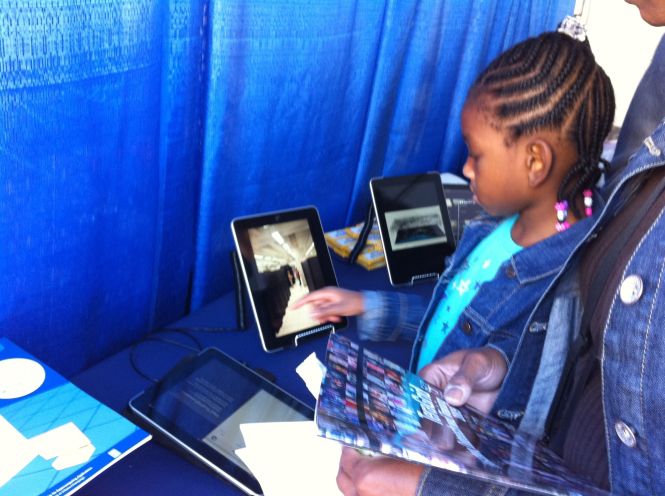
There are lots of users of technology. My concern is that there are people who do not use, know about or are interested in the use of technology , nor do they know how they benefit from the ways in which technology is used at the highest levels in Supercomputing. They innocently use GPS, weather resources from Supercomputing, watch on television the news from around the world, get climate updates, and earthquake and seismic information without thinking of the source. They get visualization and modeling examples daily, and do not think at all of computational thinking , problem solving and the math that is required to be able to participate in computing.Many people use the cloud without knowledge of what it is. A good reference or starting point is at Shodor.org.

There is a higher form of computing that facilitates a lot of tasks for us and few people seem to be aware of it.

You will hear people say, I don’t need technology. Sure. Invisible uses are everywhere.

It is called Supercomputing.

GOT BROADBAND?

This morning several  articles caught my eye. But more than the articles is the interesting interaction on-line and the discussions about have and have-nots. Friends of mine,  a professor, a code writer and a mathematician had a late night discussion following my posting this video by Jeannette Wing.

Dr. Jeannette Wing was the Assistant Director for Computer and Information Science and Engineering (CISE) Directorate at the National Science Foundation.Social Media helps us to communicate, though we may not always agree, at least there is the opportunity to exchange ideas and to think deeply with reflection. Dr. Wing has moved into the private sector. Microsoft announced that it has hired Dr. Jeannette Wing as Vice President of its Research division. Microsoft Research is an expansive group of technologists, scientists, and dreamers that build technology that may, or perhaps more often may not make it to market.

GOT PEDAGOGICAL KNOWLEDGE?

Such interesting conversations I have on Facebook. This is what I am talking about as a model for use of technology. It is not happening in most inner city and rural and distant schools. People have the tools but not the pedagogical knowledge of integration . ( TPACK)

TPACK Image (rights free)

The TPACK Model
The TPACK Model was created in response to the need to provide a framework around the important pieces of innovating learning with a focus on Technology, Pedagogy, and Content Knowledge.  The overlap of these three components is where the 21st Century classroom is most powerful.

Here is general information on TPACK

Got Computational Thinking?

Computational thinking will be a fundamental skill used by everyone in the world. To reading, writing, and arithmetic, lets add computational thinking to every child’s analytical ability. Computational thinking is an approach to solving problems, building systems, and understanding human behavior that draws on the power and limits of computing. While computational thinking has already begun to influence many disciplines, from the sciences to the humanities, the best is yet to come.Looking to the future, we can anticipate even more profound impact of computational thinking on science, technology, and society: on the ways new discoveries will be made, innovation will occur, and cultures will evolve.

It is this that we learn with. So we had a person who writes code, a scientist and me, a teacher.. in a late night discussion with a professor about the video.This is one of the things about social media. It cuts the silos. Ground truths in social media.

I

In this interview from the Education Technology & Change blog, Henry Neeman from the University of Oklahoma describes the increasing accessibility of HPC.

“You may not see the supercomputers, but every single day supercomputing is making our lives better. Everything from the cars we drive to the weather forecast on TV to the movies we watch to the detergent bottles in our laundry rooms are made, or made better, by supercomputing. Today, there are a number of ways for citizens to access supercomputing. Often, these are known as “science gateways,” and they provide a simple interface to a complicated back end. An example is nanoHUB, which K-12 and postsecondary students can use to do nanotechnology simulations. In fact, the nanoHUB website has curricula and teaching materials that any teacher can put to work in their classroom.”

Early exposure and interest

early exposure and interest through outreach

This article caught my eye because it says the things that I have been blogging about, talking about and sharing for some time.

The article is entitled “By the Numbers: Teachers, Tech, and the Digital Divide” it extracts information from the latest Pew Report which is here. The new Pew Research survey of more than 2,400 middle school and high school teachers released today shows that, while teachers believe technology has helped with their teaching, it’s also brought new challenges — including the possibility of creating a bigger rift between low-income and high-income students.

858711_10151522638751327_826085403_o

Reading first.. . and there is free technology of excellence….Many of us know the challenges first hand . Many of us work at different levels of understanding of the difficulty. Often people dismiss what we who are on the ground , in the classrooms and in the places of need as if what we are saying is untrue. We have children who cannot read. Technology can help solve that problem. Early learning is important. Books and technology work too.

We know that people use the tools of technology, but that expense is a problem. We know that the cell phone has brought many people to a mobile use of technology and that “bring your own device” has become the salvation for some schools.Mobile use was shared in the Wireless Technology conference.

                         Wireless EdTech Beyond Being There – The Mobile Future of Learning ( in case you missed it)

There are a few other pieces of research that affect those of us of diversity in very important ways. We have always known that the digital divide is a problem based on access to broadband, hardware and access to teachers who may not have achieved the transformational skills to use technology in meaningful ways.

Some examples of ways in which people are trying to help are:


By Sean Cavanagh in Education Week

“Can online graphic novels help teenagers cope with difficult social situations?

Are 3-D technologies a tool for helping English-learners acquire language skills outside traditional educational settings? And what about the potential for mobile apps that let students manipulate on-screen images with their fingers to help them learn fractions?”

“A federal program, still in its infancy, is supporting research that seeks to answer those and other questions by wedding partners that often operate in isolation—educational technology and scientific research on learning—with the goal of transforming teaching and learning in schools.”

The federal government has been funding projects focused on technology and education for decades, and it has backed research on cognition in many forms. But the relatively new program, called Cyberlearning: Transforming Education , is the National Science Foundation ’s attempt to create a space within the agency devoted to supporting research on advanced learning technologies.

Some of the beginning steps of the program were shared in a conference .

NSF Funds Research to Identify What Works

Jeremy Rochelle of SRI

http://www.youtube.com/watch?v=fHmR0G_NmsE

The conference, which was hosted at the National Geographic, involved SRI ,  and NSF

you can find the portal here.They invite you to help write pages for the cyber-learning topic areas listed below. Their aim is to develop definitions that are strong enough to show the direction of the field but open enough to allow for innovation (see Defining Cyber-learning, below). If you have expertise in any of these areas and would like to be involved in editing these pages, please email cyberlearning-info@sri.com to request a wiki account.

Here are the topics:

The Technology Enhanced Learning (TEL) project is also defining key TEL topics

This is the portal for this important work.( http://cyberlearning.sri.com/w/index.php/Cyberlearning:Community_portal)
There are many teachers, educators, administrators who are still learning to understand these topics and so even with help from various groups trying to make a difference, the leap of faith is a broad one. Edutopia has a program that starts to share why we must go digital.
There are still people who resist personal and educational use of technology for various reasons. Many teachers have the tools,but not the know how or support or the ideational  scaffolding that is needed to be technology fluent. The Pew Report outlined many of the things that I would say, but also lets us know that it is not just
those of us who talk about the digital divide and social justice who are complaining about lack of broadband, access, tools and support for learning the technology.
Edutopia has videos, blogs, and all manner of resources to share with educators on how to use and integrate technology into good practice.
There is no cost for exploring good practices in education at the site.

Reading and Digital Literacy, Efforts and Projects Making a World Wide Difference

Bonnie Bracey  Sutton sharing Sunshine Online Books in  the Languages of South Africa with Educators at an IEarn Conference
I did get to work in Africa, in South Africa, Namibia, Tunisia, Egypt

Download 169516_437660446285449_229687393_o.jpg (73.6 KB)
Mobile Matters
Download 430747_10151240327229917_453427881_n.jpg (54.8 KB)
Powerful Ideas Spread
Download 530786_458585780849208_709306110_n.jpg (31.3 KB)
There are all kinds of games, simulations and events that kids get to experience on devices. Whatever the learning landscape let’s do it to encourage reading.
 Here is a way in which my mentor helps with literacy in South Africa. Kevin Federle is featured in the video using her work. We change the world one reader at a time, one learning community at a time.. if needed.
There are all kinds of games, simulations and events that kids get to experience on devices. Whatever the learning landscape let’s do it to encourage reading.
“To read is to fly: it is to soar to a point of vantage which gives a view over wide terrains of history, human variety, ideas, shared experience and the fruits of many inquiries.”
 – A C Grayling, Financial Times (in a review of A History of Reading by Alberto Manguel)
Nelson Mandela said “Education is the most powerful weapon which you can use to change the world.” This infographic <http://www.example-infographics.com/literacy-in-the-world/&gt;  visualizes data on literacy rates in the world, and the correlation between literacy rates and democracy. (Source: uis.enesco.org (direct document download) <http://www.uis.unesco.org/literacy/Documents/literacy-peace-infographic-final-en.pdf&gt; For those of us who are tasked with helping with the transformation of learning there is a huge task.
To work in Africa was a dream of mine. I had never been there, but studied it from afar. My uncle taught many Africans when he was working at Lincoln University and he traveled often to Africa when I was a student. My mother would not let me go. I was able to teach there with the support of a mentor. I am sharing the back story to encourage you to live your dreals
But I need to tell the whole story. To keep your attention here is a video to show what I am talking about a journey of dusty roads, townships and villages and eternal thanks. But this time the traveler is Kevin Federle and not me. He played tennis with them too, I cooked in townships with the people. I loved it. My work was ten years earlier.
Books and Bytes
Teaching reading was always a great skill of mine. My mother and I enjoyed reading and sharing idea.  I used a lot of integrated methods to share life experiences. I also worked with a skilled teacher, Deloris Davis. I think she could have taught dead people to read. She and I teamed up in using the skills we had to teach children to read. She taught vocabulary and life experiences. I liked people to tell their own stories. Children made their own books, wrote their own poetry, and went to the theater at the Smithsonian. We did plays and we cooked. We were all purpose in getting kids to read.So I wrote once in a while on the early Internet about these methods. I admit to integrating the arts into my work. ( How could I not, if I was personalizing the learning?)
One day I got a request to visit New Zealand.
 
New Zealand? 
It seemed so far away and I was battling to keep my job. My principal kept telling me that Arlington Schools could hire three people with my salary. She said nothing about my skills or the fact that I worked with President Clinton, Vice President Gore,  and that we were crafting the document to shape the way that technology would be used in the US. Inside the school system administrators were casting dark eyes at me. But I did not go on the trip. I thought I needed to tend fires at home. Eventually I was so badgered that I did decide to go to visit.
Wendy Pye sent me Sunshine Books.
Who is Wendy Pye?
Wendy is the owner and Managing Director of the Wendy Pye Publishing Ltd, publishers of educational products. Wendy’s Sunshine Book and Galaxy Kids brands have taken the company to the ends of the earth and she became a publishing phenomenon when she launched Sunshine Books in 1985. Through her vision, passion, drive and energy, Wendy has built her company into one of the world’s most successful educational export companies. Her educational products consist of over 1800 titles which have sold over 218 million copies worldwide.The books were like the personal books the kids and I wrote, not as funny ok, and the illustrations were not as priceless, but she said that she had a digital way of turning kids stories into their personal stories. I was intrigued. New Zealand, maybe I thought and then my little niece threw me a curve.
I was on my way to demonstrate technology in the inner city to schools who did not believe in the Internet. I could not find the books that had been sent to me. I had started using them because they were interesting to children.
Finally, I discovered that the books were in her school backpack. I asked her why. She said she liked the books and wanted to keep them and share with her friends, so I used my original student product to share.
I decided to go to New Zealand. I was privileged to travel there to learn Wendy’s  ways of crafting a learning landscape to teach reading in wonderful ways.Wendy pioneered the use of multimedia – animated internet and CD-Rom – to complement the print and other components of her products. She was a leader in the development of an early literacy program and learning technologies, and she worked with many institutes and universities worldwide to develop strategies for literacy through research.
I decided I had to go to New Zealand to see the way the technology worked when my principal decided that I would go back into a regular classroom with limited use of technology ( or I could retire). So since I decided to retire, and change the world outside of the classroom, I needed new tools.New Zealand here I come ,I thought.
 
Working with the Maori/ Sunshine Books/ Researching in New Zealand
Sunshine Books had programs in Maori schools. I visited, learned, and understood that Wendy and I had similar ways of thinking about reading. I loved the art and ways in which she integrated the learning process. Barefoot to School was a descriptor for some of my writings about being in New Zealand. I explored the museums in Wellington and we talked to educators from the Beehive about digital technology. We worked with professors in the Universities.
 I had a new friend, who understood how to let the creator in the child emerge. I was excited about the travel and synergy. We toured universities and visited in cities to share our ideas. I was always thinking these books would work in inner city schools too. Children at the age of five were introduced to technology, it was amazing and it worked. I have to share about the letter getter later. Here is a tease.http://www.awardinteractive.com/lettergetter/AboutLGO.php

What Do You Need to Know About Broadband and the Digital Divide?It Might Be Here!!

So many people talk about technology without sharing the nuts and bolts of what we are using.
Some resources here.
Bonnie Bracey Sutton
 First, here is the broadband map.
Broadband?

Getting Broadband

What Is Broadband?

Broadband or high-speed Internet access allows users to access the Internet and Internet-related services at significantly higher speeds than those available through “dial-up” Internet access services. Broadband speeds vary significantly depending on the particular type and level of service ordered and may range from as low as 200 kilobits per second (kbps), or 200,000 bits per second, to 30 megabits per second (Mbps), or 30,000,000 bits per second. Some recent offerings even include 50 to 100 Mbps. Broadband services for residential consumers typically provide faster downstream speeds (from the Internet to your computer) than upstream speeds (from your computer to the Internet).

How Does Broadband Work?

Broadband allows users to access information via the Internet using one of several high-speed transmission technologies. Transmission is digital, meaning that text, images, and sound are all transmitted as “bits” of data. The transmission technologies that make broadband possible move these bits much more quickly than traditional telephone or wireless connections, including traditional dial-up Internet access connections.

Once you have a broadband connection to your home or business, devices such as computers can be attached to this broadband connection by existing electrical or telephone wiring, coaxial cable or wireless devices.

Another way to measure/ M-Lab Open Source

Measurement Lab is an open platform for researchers to deploy Internet measurement tools. By enhancing Internet transparency, M-Lab helps sustain a healthy, innovative Internet. Find out more Find out more

Updates

 This was a combination of FCC and NTIA projects that were funded. Here is the site. Overall there were panels that presented their work. Because I have been working in this field I know of projects like this but I think the public does not know about these projects. Often in DC the people who attend the conferences already know the projects. They are there out of courtesy.
 
The focus was to identify and discuss best practices learned from broadband adoption programs and academic 

studies/surveys, and how implementation of these best practices can close the broadband adoption gap
among Americans – particularly low-income households, racial and ethnic minorities, seniors, rural
residents, residents of Tribal lands and people with disabilities. 

Here is how they shared on the website the mission of the Summit. 
 
The Federal-State Joint Conference on Advanced Services, with the National Telecommunications and Information Administration (NTIA), held a Summit on February 7, 2013 to identify and discuss best practices learned from broadband adoption programs and academic studies/surveys, and how implementation of these best practices can close the broadband adoption gap among Americans – particularly low-income households, racial and ethnic minorities, seniors, rural residents, residents of Tribal lands and people with disabilities. The agenda listing committed and invited panelists for the Summit is below. In addition, the Summit included a keynote speech by Assistant Secretary of Communications and Information and Administrator of NTIA, Department of Commerce, Lawrence E. Strickling.” I was most impressed with the health care project in Arkansas , the Mass Vets Program and the project to help the aging.. but there is more.These are not per se education projects but service projects that serve the connected.
Julius Genachowski was there as a cheerleader. He spoke and shared his vision.He likes BYOD( bring your own device)  and thinks that 4G is going to change the face of connectivity in America and particularly in education .
I was most impressed with a couple of the presentations .I think the public does not know the power of these projects.
 
 
 Subsquently SETDA issued this Broadband Initiative for their member states. They have been on this initiative for some time. It is very important to teachers, to education and to families.

The FCC Broadband Summit was interesting but a lot of it was.. same old same old, but I realize that there is still an unwashed public out there some trying to understand why they should use technology. Not like they are not already benefitting, weather systems, GPS, visualization and modeling and all kinds of medical innovation. Jobs are mostly on line too. There are a lot of benefits that people have gained from using technology, but ..the benefits are invisible to many.

 
The FCC brought forward this new report in a couple of days after the summit.
 
Further resources and references

A Deeper Look at the FCC from the Points of View of Its Former Leaders

by TIFFANY BAIN on FEBRUARY 18, 2013

Former FCC Chairs Wiley Powell and Hundt at 2013 BBSJ Summit - by Jason Miccolo JohnsonThe Minority Media and Telecommunications Council has long worked – and sometimes been at odds – with the Federal Communications Commission in MMTC’s efforts to ensure equal opportunity and civil rights in the mass media and telecommunications industries. To address FCC issues, MMTC recently invited four former FCC chairmen to an “FCC Chairs’ Roundtable” panel at its 2013 Broadband and Social Justice Summit.  During the panel, the former chairmen provided a deeper look into the federal agency and revealed their thoughts on a few communications industry regulatory matters.

Serving as the panel’s moderator, MMTC President David Honig used the historic opportunityto ask Hon. Michael Powell, Hon. Reed Hundt, Hon. Michael Copps, and Hon. Richard “Dick” Wiley about why the FCC moves so slowly to consider and rule on issues that have been pending for several years. He also inquired about their thoughts on hot-button issues such as media cross-ownership rules and broadband usage-based pricing.


The Broadband Imperative: Recommendations to Address K-12 Educational Infrastructure Needs
 Press Release
 Summary
 Access the Full Report
Learn more, visit the Broadband Imperative Report Release and Briefing event.
To learn more about broadband for learning policy and practice in the states, visit the State Education Policy Center (SEPC).
To self-assess your school’s broadband speed, visit SETDA’s freebroadband speed test tool.
The Broadband Imperative provides an up-to-date assessment of access to broadband by students and teachers (in and out of schools); current trends driving the need for more broadband in teaching, learning and school operations; and specific recommendations for the broadband capacity needed to ensure all students have access to the tools and resources they need to be college and career ready by 2014-15 and beyond.
Building upon SETDA’s 2008 report “Class of 2020 Action Plan for Education“, High-Speed Broadband Access for All Kids: Breaking Through the Barriers, The Broadband Imperative provides numerous examples of successful broadband implementation by states and leading school districts.
Notable Mentions:

Family Involvement, School and Community Networking, Resources

A New Framework: Improving Family Engagement

Duncan at Stanton

Secretary Duncan visited a classroom at DC’s Scholars Stanton Elementary School. Official Department of Education photo by Paul Wood.

For many, it’s just common sense. The more a student’s family is engaged in their child’s learning and in the improvement of their child’s school, the better off the student and the school. On Wednesday, Secretary Duncan joined more than 80 family engagement thought leaders at DC’s Scholars Stanton Elementary School to discuss the strong correlation between family engagement and academic outcomes, and how the Department of Education can provide more support.

Research supports the common sense idea that family plays a vital role in student performance. Yet despite the evidence and logic, many schools and educators struggle with how to cultivate and sustain effective family engagement initiatives. The Department of Education has taken some steps to provide more support in the area of family engagement, but Secretary Duncan readily admits that it hasn’t done enough.

As part of Wednesday’s event, Dr. Karen Mapp of the Harvard Graduate School of Education, and a consultant to Department, unveiled a draft framework of new ideas about the possible future direction and focus for family engagement at the Department of Education.

The framework had been a year in the making as Dr. Mapp met with a variety of senior staff members to gauge how a framework embedded with research and modeled after best practices would be operationalized at the Department.

Stanton Elementary is an example of how a school can build positive relationships with families and allow teachers to gain family support in and out of the classroom. Stanton’s family engagement strategy is the type of initiative the new framework would endorse. Through a partnership between the Flamboyan Foundation and Scholar Academies, Stanton utilizes Academic Parent Teacher Teams (APTT), replacing traditional parent-teacher conferences.

Panel at Stanton

Stanton Teacher Melissa Bryant explains how family engagement made her want to keep teaching. Official Department of Education photo by Paul Wood.

APTT, developed by Maria Paredes, brings parents into classroom more often than once a year and creates an environment where families work as a team to improve the class’s performance, sharing strategies for supporting their students at home and learning techniques from the classroom teacher. Teachers also visit their students’ families at home, too. Stanton’s success with APTT, as well as help from a Department of Education School Improvement Grant, has contributed to a dramatic increase in the academic performance of students and a cultural shift at the school.

During the visit, which included classroom visits, Secretary Duncan listened to a panel discussion with panelists Principal Caroline John, teachers Melissa Bryant and Megan Lucas, and parents Katrina Branch and Michael Hudson. The panelists spoke passionately in support of family engagement and how it has benefited the entire school community. Bryant said that family engagement “made me want to keep being a teacher.”

Mapp and ED will continue to receive feedback on the framework in the coming year. Stay tuned to the Homeroom Blog for future updates. You can also watch a short video of the APTT model at Stanton.

There are families who have not had the resources to share learning with their students. This ia more a post than an essay.

Transforming the World of Education with Technology.. Starting Points and Resources

Future  Learning

Wireless shows the way to the future ways of learning
if we can conquer the digital divide.

My friend Mano works in areas of need in rural Virginia. There are lots of us who have the aptitude to teach students. Permission is something else.

My friend Mano works in areas of need in rural Virginia. There are lots of us who have the aptitude to teach students. Permission is something else.

Tpack-contexts

There is the content divide, teachers can learn to master information on the web. Here is where to start. You will love learning the Tpack Framework. It seems complicated? Not. It is an ideational scaffolding for teaching and learning. It works and , it is free. Tpack.

http://tpack.org/

A problem that is a dividing factor for many people is the lack of access. Broadband access is a problem and the tools to use technology are a problem.

All classrooms do not look like the schema above. For one thing teachers using technology often are in an active classroom. Not a lot of sitting down happens.

Or the classroom may be a flipped classroom. In case you need a good example here is one from Edutopia.http://www.edutopia.org/blog/flip-stem-classroom-ainissa-ramirez and all flipped classrooms do not look alike.

To see how technology transforms or changes view some of the projects in the Digital Generation. The digital generation has a great introduction and then it broadens engagement from gamers to students interested in making change in their community. I love the story of Luiz.

           Technology Changing How Students Learn, Teachers Say

Nancy Palmieri for The New York Times

Lisa Baldwin, a chemistry teacher, works with her students to fight through academic challenges.

By 

There is a widespread belief among some  teachers that students’ constant use of digital technology is hampering their attention spans and ability to persevere in the face of challenging tasks, according to two surveys of teachers released in November and confirmed in December reports. But then there is this. Digital Generation

Monica Almeida/The New York Times

Hope Molina-Porter, an English teacher in Fullerton, Calif., worries that technology is deeply altering how students learn.

The researchers note that their findings represent the subjective views of teachers and should not be seen as definitive proof that widespread use of computers, phones and video games affects students’ capability to focus.

Even so, the researchers who performed the studies, as well as scholars who study technology’s impact on behavior and the brain, say the studies are significant because of the vantage points of teachers, who spend hours a day observing students.

The timing of the studies, from two well-regarded research organizations, appears to be coincidental.

You can find the rest of the article here:

http://www.nytimes.com/2012/11/01/education/technology-is-changing-how-students-learn-teachers-say.html?smid=fb-share

Broadband? Here is a perspective on broadband from the FCC

Where are you on the map?

                       THE CONSENSUS UNDERSTANDING OF THE FCC’S ROLE WITH RESPECT TO BROADBAND

A challenge for the FCC in recent years has been how to apply the time-honored purposes of the Communications Act to our 21st Century communications platform—broadband Internet—access to which is generally provided by the same companies that provide telephone and cable television services.

Broadband is increasingly essential to the daily life of every American. It is fast becoming the primary way we as Americans connect with one another, do business, educate ourselves and our children, receive health care information and services, and express our opinions. As a unanimous FCC said a few weeks ago in our Joint Statement on Broadband, “Working to make sure that America has world-leading high-speed broadband networks—both wired and wireless—lies at the very core of the FCC’s mission in the 21st Century.”

Over the past decade and a half, a broad consensus in the public and private sectors has developed about the proper role and authority for the FCC regarding broadband communications. This bipartisan consensus, which I support, holds that the FCC should adopt a restrained approach to broadband communications, one carefully balanced to unleash investment and innovation while also protecting and empowering consumers.

It is widely understood—and I am of the view—that the extreme alternatives to this light-touch approach are unacceptable. Heavy-handed prescriptive regulation can chill investment and innovation, and a do-nothing approach can leave consumers unprotected and competition unpromoted, which itself would ultimately lead to reduced investment and innovation.

The consensus view reflects the nature of the Internet itself as well as the market for access to our broadband networks. One of the Internet’s greatest strengths—its unprecedented power to foster technological, economic, and social innovation—stems in significant part from the absence of any central controlling authority, either public or private. The FCC’s role, therefore should not involve regulating the Internet itself.

Want to measure your broadband   http://www.speedtest.net. it is easy..

Google’s Coolest Project? Broadband

By QUENTIN HARDY
A sign in Kansas City encouraged residents to pre-register for Google Fiber.Steve Hebert for The New York TimesA sign in Kansas City encouraged residents to pre-register for Google Fiber.
  • FACEBOOKAccording to Eric Schmidt, Google‘s executive chairman, the most interesting project going on at the search giant is its high-speed broadband trials in Kansas City. (Missouri and Kansas versions)

The business, called Google Fiber, promises speeds 100 times faster than conventional high-speed Internet services. Mr. Schmidt, who was speaking at a New York Times Dealbook conference in New York, said Google was delivering 760 megabits per second to the customer, and taking 720 megabits a second from customers.

Some of our have robust broadband and others of us do not. There are tools that are used to measure broadband, that are national , and some are international.

You can measure broadband  in your community and then go raise a ruckus if it is not adequate with this tool.

     I Like this quote I dislike this quote“For the last decade, we have been amazed and delighted by what we can do online. And yet people feel increasingly powerless to stop unscrupulous individuals and companies from infecting their computers with programs that they didn’t request. The providers of Internet services and software simply must get this problem under control so the users can realize the full potential of their access to the Internet.”
 Vint Cerf quote

The use of broadband in the area of education is deep and wide, but still in its earliest stages of development. In the pre-broadband era – about 15 years ago – “distance learning” was generally conducted on a set schedule in a professional facility with the capability of satellite video to a small group able to pay a high fee.

With the wide availability of broadband this definition has been turned 180 degrees. Today an individual student can see a lecture at a time and place which best fits his or her schedule at little or no cost. Not only does broadband provide better access to coursework, but students taking those courses appear to do better than those sitting in a traditional classroom.

Broadband permits a wide variety of online learning experiences. Students can be directed to websites different from the course website. There they can stream a video or examine a famous painting; they can have an online chat with their teacher or professor; or students studying the same coursework can come together in learning communities in real time without regard to their physical geographic location. These “virtual study groups” have not been possible before the general availability of broadband.

Of greatest interest is the acceptance of adults to taking courses on-line. According to Philip R. Regier, the dean of Arizona State University’s Online and Extended Campus program, growth will be in continuing education programs In three to five years, he estimates, the current census of 5,000 continuing education students “could triple, with nearly all the growth coming online.” The use of broadband as students’ “in-home tutor” is well-documented. The ability to search the world’s libraries from a student’s home has had an enormous impact on the quality and depth of the educational experience for serious students.

Teachers who have had to use the traditional red pen to correct and edit papers and reports, can now use their computers to “track changes” and send the work back to students (and their parents) via e-mail for their review.

If education is the foundation of society, then broadband is quickly becoming the mortar which binds and strengthens that foundation.

Got Milk? Got Broadband? Then you can learn to transform using whatever tools that are  available to you with also some really good face to face , or mentoring examples.

In many urban, distant and rural communities there is a lack of the technology tools, broadband and teachers who know how to use the technology, but once we get connectivity many free resources, ideas, and projects are on line. You need the time to explore, examine, extricate the ideas for your use, learn to evaluate and to engage using your ideas and the prescribed curriculum that you deal with. There are many , many teacher groups that provide lesson plan examples and ideas.

About Being the Best Teacher You Can Be…. Choose NASA .. the educational resources are great! You will leave dullness behind!!

5206_137672091326_268879_nI love teaching.

How can you fulfill this ? I am a Challenger Center Fellow and a Christa McAuliffe Educator. I went to minority schools. I did not have science in the elementary school. But I had NASA. Courses and workshops. So wonderful.

There are people who have given me immense gifts in the way of mentoring.NASA gave me the universe and project based learning  and the ideas about ecology. I loved learning and helping teachers to learn within the educational groups of NASA. The learning started with projects and went on to large and interesting project based learning, some of these are old, Moon Base America, The Challenger Center Initiative and the online NASA resources. I loved most the programs on Mars. I also use museums to teach with. They have a bigger budget than I have.

What an investment in teachers! You can find resources here. http://www.nasa.gov/audience/foreducators/index.html If you ever do any of the projects and are truly interested, there is much, much more and it is not at costs.


The Challenger Center is a little different but the project based learning is outstanding. You need not go to the Challenger Center, but it would be for kids, a life changing experience. There are lots of teachers who have been prohibited from this type of learning called project based learning  because it is not regurgitative test measured information. Project based learning? I loved wearing an astronaut suit and sharing information with students. I felt as if I was sharing , teaching and giving information to the children that was awesome. Here are some teacher resources. Now there is a different way of being involved.

Challenger Center for Space Science Education offers dynamic, hands-on exploration and discovery opportunities to students around the world. These programs equip students with the knowledge, confidence, and skills that will help better our national social and economic well-being. But the center also offers courses and learning experiences for teachers. There is support and there are resources. There is a cost to some programs.

Our <a href="/teacher_resources/nitrogen_main.html">Traveling Nitrogen Game</a> makes a fun activity for students to learn about the <a href="/earth/Life/nitrogen_cycle.html">nitrogen cycle</a>.  The activity includes a student worksheet ("Traveling Nitrogen Passport"), 11 reservoir signs, and stamps.  The activity is available in our <a href="/php/teacher_resources/activity.php#8">Classroom Activities section</a>, including a free html version, and a pdf version free for  <a href="/new_membership_services.html">Windows to the Universe subscribers</a>.  The Traveling Nitrogen Game Kit is available in our <a href="/store/home.php">online store</a>, including laminated signs and a set of 11 dice.<p><small><em></em></small></p>

A unique and proven teaching model – Challenger Learning Centers – gives students the chance to become astronauts and engineers and solve real-world problems as they share the thrill of discovery on missions through the Solar System. Using space simulation and role-playing strategies, students bring their classroom studies to life and cultivate the skills needed for future success. Learning Centers reach into communities around the globe, engaging more than 400,000 middle school-age students and 40,000 educators each year.

Challenger Center’s teaching model is an effective approach to strengthen knowledge and interest in Science, Technology, Engineering, and Mathematics (STEM). The McLain 2011 report examined two decades of evaluations from students who experienced a Challenger Learning Center mission, and the findings indicate overall positive gains by students. The study also recognized the psychological nature of career-choice, decision-making embedded in Challenger Center’s model. It found the hands-on simulation experiences are important contributors to that process, perhaps more than any other single experience that might be remembered as extraordinary in a young person’s exposure to STEM. In some cases it is a hard sell to the administrators. They often do not understand this kind of project or are worried about NCLB stats and so well, you are not allowed to do this project based learning. Not on the test they say. In this project you develop sophisticated knowledge that the general public may not know.

We in a 5th grade classroom, knew about the Horsehead Nebulae before the public saw it months later. It helps to talk to astronauts and scientist who care about their subjects.Horsehead Nebula

An assortment of containers and science equipment on a table
The STS-118 crew transported plant growth chambers, seeds and watering devices like these to the space station for an in-orbit experiment.

12682_493292470701096_2082112609_n

With these kinds of experiences, the imagination of children and critical thinking skills are challenged. It is not just the technology, it is the creation of the learning landscape to enhance learning.

It enhances discovery through simulation and exploration of new concepts

Explore this NASA program it is free.. and excellent..

Artists concept of 2 people sitting in a spacecraft on Mars

We connect individuals to new people and ideas and expand content beyond what was previously available.

It promotes equity by providing a diverse array of resources and experiences to those who might not otherwise be able to afford them.

It allows teachers to adapt to and to accommodate different learning styles through modularized , self -paced , just in time learning and non threatening learning

I was challenged to learn new science to be able to teach it well. It was supported with great curriculum and posters and resources.There is also this website

Windows to the Universe  What is different about this web site is that it is on three different levels and it is rich in resources.

If your principal will not let you teach during the school day. Do this.. it is fun!!!

Vic and I took this course, it is great!
Cut a pound cake in half, and what do you have? It is still pound cake, but in two pieces instead of one. What if you keep slicing and dicing the pound cake all the way down to single crumbs? No matter how many times the pound cake is cut, it’s still pound cake.

Three training participants look at materials about the solar systemAfterschool Universe training sessions are offered throughout the year at locations across the United States. Image Credit: NASA

What does pound cake have to do with the universe? Just like the chemical elements that are the building blocks for all the matter in the universe, pound cake retains its identity no matter how many times it’s divided. Pound cake also plays a key role in an activity that’s part of Afterschool Universe, a NASA-sponsored astronomy program for middle school students.

Afterschool Universe is targeted for settings outside the normal school day. The program consists of 12 standalone sessions in which students explore basic astronomy concepts.

“We saw a need for the program because existing astronomy education materials covering such topics were mostly aimed at high school students. Middle school students were fascinated by these concepts but had few options to learn more about them,” said Anita Krishnamurthi, the program’s project lead. “There’s a great potential to engage students and adults in astronomy in the afterschool setting.”

Each session usually begins with a brief introductory discussion facilitated by the program leader, followed by a hands-on activity in which students participate individually or in groups. A session typically runs about 45-60 minutes and culminates with a wrap-up discussion focusing on what was learned through the activity.

In most cases, program leaders must undergo training before they can run the program or train others to do so. Information sessions and training workshops are offered at various locations across the country, including at the NASA Goddard Space Flight Center in Greenbelt, Md.

Four training participants look at a light through cardboard tubesHands-on activities play a role in each of the 12 Afterschool Universe sessions. Image Credit: NASA

Upon completion of training, program leaders receive a NASA certificate, a comprehensive program manual, downloadable files, worksheets and evaluation forms, posters, and a kit of materials that are only available from specialized suppliers. Program leaders are responsible for obtaining the basic materials needed to implement the program. NASA encourages leaders to partner with a local scientist.

The manual provides background information and detailed descriptions of how to conduct each session, including listings of objectives, concepts addressed and materials needed. No activities require use of a computer, though the manual gives suggestions for optional Web-based activities.

Afterschool Universe, funded entirely by several grants for NASA’s Science Mission Directorate including the Chandra Mission, was developed by the education and public outreach team in the Astrophysics Science Division at NASA’s Goddard Space Flight Center in Greenbelt, Md.

Related Resources
Afterschool Universe   → 
Beyond Einstein   → 
Imagine the Universe   → 

page2image60856